 Bullish Portfolio

Introduction to Industrial REITs and E-Commerce Growth
Industrial real estate investment trusts (REITs) have emerged as a compelling option for investors seeking passive income through dividends in 2026. These specialized REITs own and operate warehouses, distribution centers, and logistics facilities that directly benefit from the ongoing expansion of e-commerce and evolving supply chain dynamics. As online retail continues to capture greater market share, demand for modern industrial space remains robust, supporting higher occupancy and rental growth that translates into reliable dividend streams. Growth-oriented dividend investors are increasingly turning to this sector because it combines structural tailwinds from consumer behavior shifts with the potential for consistent income distributions that can compound over time.
Investors focused on growth-oriented dividend strategies will find industrial REITs particularly attractive due to their structural tailwinds. Unlike traditional office or retail REITs, industrial properties align closely with consumer shifts toward faster delivery and efficient logistics. This article explores the mechanisms driving performance, practical selection criteria, real-world examples, portfolio integration steps, risk management, and comparisons to broader REIT benchmarks. By examining data-backed trends and actionable steps, readers can develop a clearer strategy for incorporating these assets into long-term passive income plans.
How E-Commerce and Supply Chain Trends Fuel Industrial REIT Performance
E-commerce sales growth has accelerated the need for strategically located fulfillment centers. Major retailers and third-party logistics providers require facilities near population centers to meet same-day and next-day delivery expectations. Industrial REITs positioned in key logistics corridors capture this demand through long-term leases that provide predictable cash flows for dividend distributions. The rise of omnichannel retailing further amplifies this effect, as companies expand both online and physical distribution networks simultaneously.
Supply chain resilience initiatives further support the sector. Companies are diversifying warehousing footprints to mitigate disruptions, increasing overall space utilization. This trend creates opportunities for REITs with modern, adaptable properties featuring high ceilings, advanced automation compatibility, and proximity to transportation hubs. As global trade patterns evolve, industrial REITs that emphasize sustainability features such as energy-efficient designs also gain favor with institutional tenants seeking to meet environmental goals.
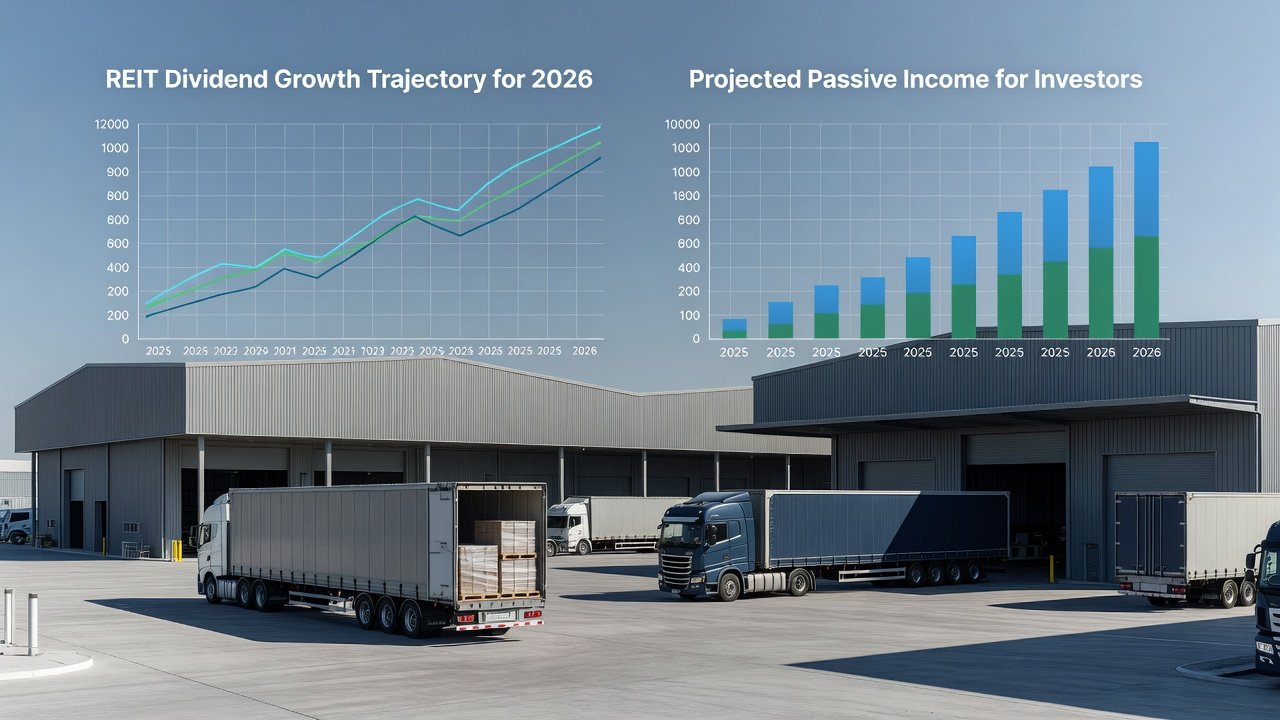
These dynamics position industrial REITs to deliver dividend growth that outpaces many other property sectors. Historical patterns show rental rate increases tied directly to e-commerce penetration, offering a data-backed pathway for passive income expansion in 2026. Investors monitoring quarterly occupancy reports and lease renewal data can identify early signals of continued strength in the space.
Key Selection Criteria for Industrial REITs
Evaluating industrial REITs requires focus on several measurable factors that influence long-term dividend sustainability and growth potential.
- Occupancy Rates: Target REITs maintaining occupancy above 95 percent, indicating strong tenant demand and minimal vacancy risk. High occupancy reduces the likelihood of income gaps that could pressure dividend coverage ratios.
- Lease Structures: Prioritize triple-net or modified gross leases that shift operating expenses to tenants, protecting REIT margins and supporting consistent payouts even during periods of rising costs.
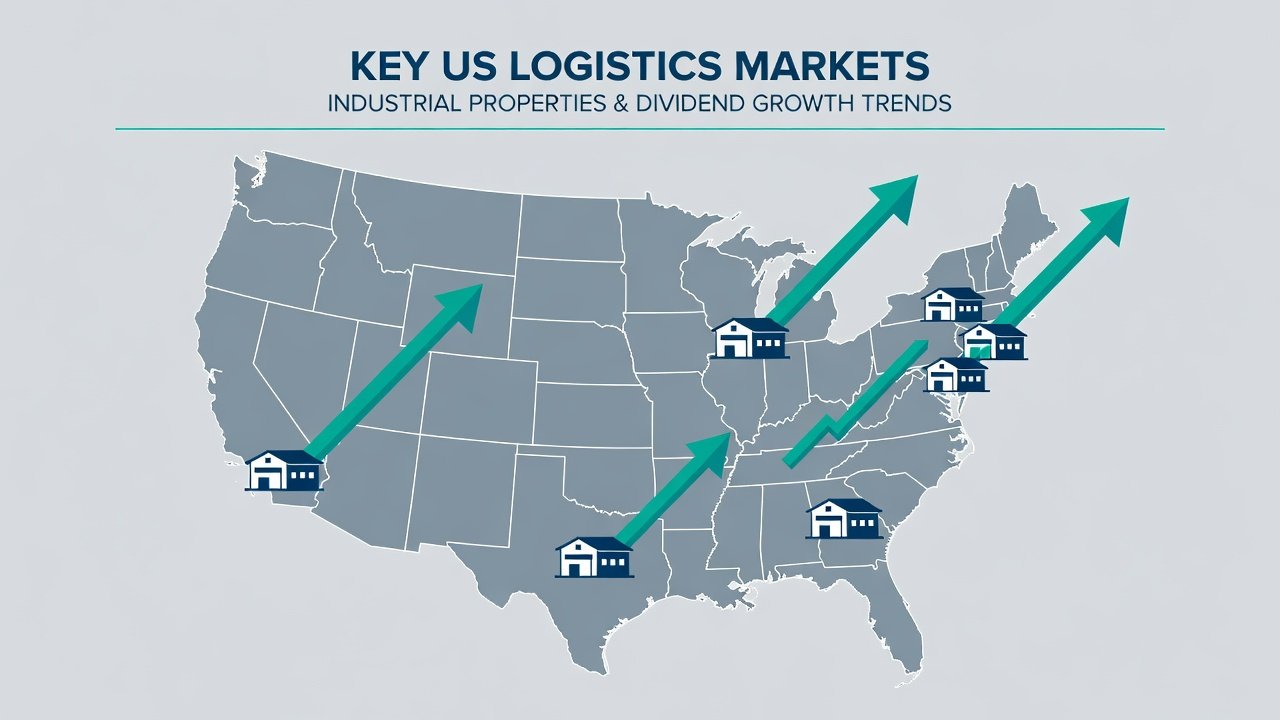
- Geographic Exposure: Favor portfolios concentrated in high-growth logistics markets such as the Inland Empire, Dallas-Fort Worth, and Atlanta, where population density and infrastructure support sustained rental growth and lower turnover.
Additional considerations include tenant credit quality, lease duration (ideally averaging five years or more), and development pipelines that expand future income without excessive leverage. Investors should also review management track records for capital allocation discipline and history of dividend increases during varying economic cycles.
Real-World Examples of Top Industrial REIT Performers
Leading industrial REITs illustrate these criteria in action. Prologis, for instance, operates one of the largest global portfolios with heavy exposure to e-commerce tenants and maintains high occupancy through strategic market selection. Similarly, EastGroup Properties focuses on sunbelt logistics hubs, delivering consistent dividend increases supported by strong lease renewals and targeted acquisitions in high-demand corridors.
Another notable example is Duke Realty, which has demonstrated resilience through diversified tenant bases and proactive property upgrades that command premium rents. These examples highlight how geographic and lease discipline translate into superior total returns compared to broader market indexes. Investors can review filings on the SEC website for detailed occupancy and lease data, enabling deeper due diligence before committing capital.
Portfolio Allocation Steps for Dividend Investors
Integrating industrial REITs into a passive income portfolio involves a structured approach that balances growth potential with risk awareness.
- Assess current allocation to real estate and determine an appropriate target weight, often 10-20 percent of equity holdings for income-focused investors, while considering overall portfolio diversification needs.
- Screen candidates using the criteria above, emphasizing dividend growth history and payout ratios below 80 percent to leave room for future increases.
- Diversify across multiple REITs to reduce single-company risk while maintaining sector exposure, perhaps combining large-cap leaders with smaller specialized players.
- Rebalance annually based on performance and changing e-commerce trends, using tax-advantaged accounts where possible to minimize drag from distributions.
This methodical process helps align holdings with 2026 income objectives while managing volatility and ensuring the portfolio remains responsive to market shifts.
Risk Mitigation Tactics
While attractive, industrial REITs carry risks including interest rate sensitivity and economic downturns affecting retail spending. Mitigation strategies include selecting REITs with low debt-to-EBITDA ratios, monitoring interest coverage, and maintaining a mix of stabilized and development assets. Geographic diversification across regions also buffers against localized slowdowns. Investors may further hedge by pairing industrial REIT holdings with defensive sectors and maintaining adequate cash reserves for opportunistic purchases during market dips.
Comparison of Top Performers Versus Broader REIT Indexes
Industrial REITs have historically outperformed broader REIT indexes during periods of e-commerce expansion. Metrics such as funds from operations growth and dividend yield stability often exceed those of diversified or retail-focused peers. Investors should compare total returns and volatility data to confirm alignment with growth-oriented goals, noting that industrial properties tend to exhibit lower correlation to traditional office and retail cycles.
Practical Yield Calculations
Calculating expected yields begins with current dividend per share divided by share price. For forward-looking estimates, incorporate projected rental growth rates derived from occupancy trends and lease escalations. This approach provides a realistic view of passive income potential without relying on speculative assumptions. Regular monitoring of these calculations allows investors to adjust expectations and portfolio weights as new data emerges throughout 2026.
FAQ on Tax Implications
How are industrial REIT dividends taxed? Most dividends qualify as ordinary income, though a portion may be classified as return of capital, reducing cost basis and deferring taxes until sale. Qualified dividends are rare in REITs due to their distribution requirements.
Are there tax-advantaged account benefits? Holding REITs in IRAs or 401(k)s defers taxes on distributions, enhancing compounding for retirement-focused passive income strategies and protecting against annual tax drag.
What about state taxes? REIT dividends are generally subject to state income tax unless held in tax-deferred accounts; consult local regulations for specifics and consider state-specific REITs where advantageous.
Conclusion
Industrial REITs offer a data-supported avenue for 2026 passive income growth by capitalizing on e-commerce and supply chain evolution. By applying rigorous selection criteria, following disciplined allocation steps, and addressing risks proactively, investors can build resilient dividend portfolios. Resources like the NAREIT site and government economic data portals provide ongoing sector insights to support informed decisions and long-term wealth building.

No comments yet. Be the first!