 Bullish Portfolio

Introduction: Why Industrial REITs Stand Out in 2026
The rapid expansion of e-commerce continues to reshape global supply chains, creating sustained demand for logistics real estate. Industrial REITs, which own and operate warehouses, distribution centers, and fulfillment facilities, have emerged as a compelling vehicle for generating passive income through dividends. As online retail penetration deepens and companies optimize inventory positions, these specialized REITs offer a combination of stable rental income and growth potential that traditional dividend stocks often lack. Investors seeking reliable cash flow in 2026 should consider how industrial properties benefit from structural tailwinds like nearshoring and last-mile delivery networks. This article examines the key drivers, selection criteria, real-world examples, and practical portfolio construction methods to help build a resilient income stream. Understanding these dynamics allows investors to position themselves ahead of broader market shifts while focusing on consistent distributions.
Key Drivers Behind Industrial REIT Growth in 2026
E-commerce sales growth directly fuels occupancy in industrial spaces. Companies require more square footage to store goods closer to consumers, reducing delivery times. Supply chain evolution, including diversification away from single-country sourcing, further increases the need for modern logistics hubs in strategic locations. These dynamics support higher rents and occupancy rates, translating into stronger funds from operations for REITs. Unlike cyclical sectors, industrial demand shows resilience even during economic slowdowns because essential goods movement persists. Additional factors include the rise of automation in warehousing and the push for sustainable building practices that attract premium tenants. As consumer habits evolve toward faster deliveries, REITs with properties near major population centers gain a competitive edge in lease negotiations and renewal rates.
Market data from government sources highlights how e-commerce continues to claim a larger share of retail activity, directly correlating with industrial space absorption. Investors benefit when REIT management teams actively develop or acquire assets in high-growth corridors, creating a compounding effect on dividend potential over multiple years.
Essential Selection Criteria for Industrial REITs
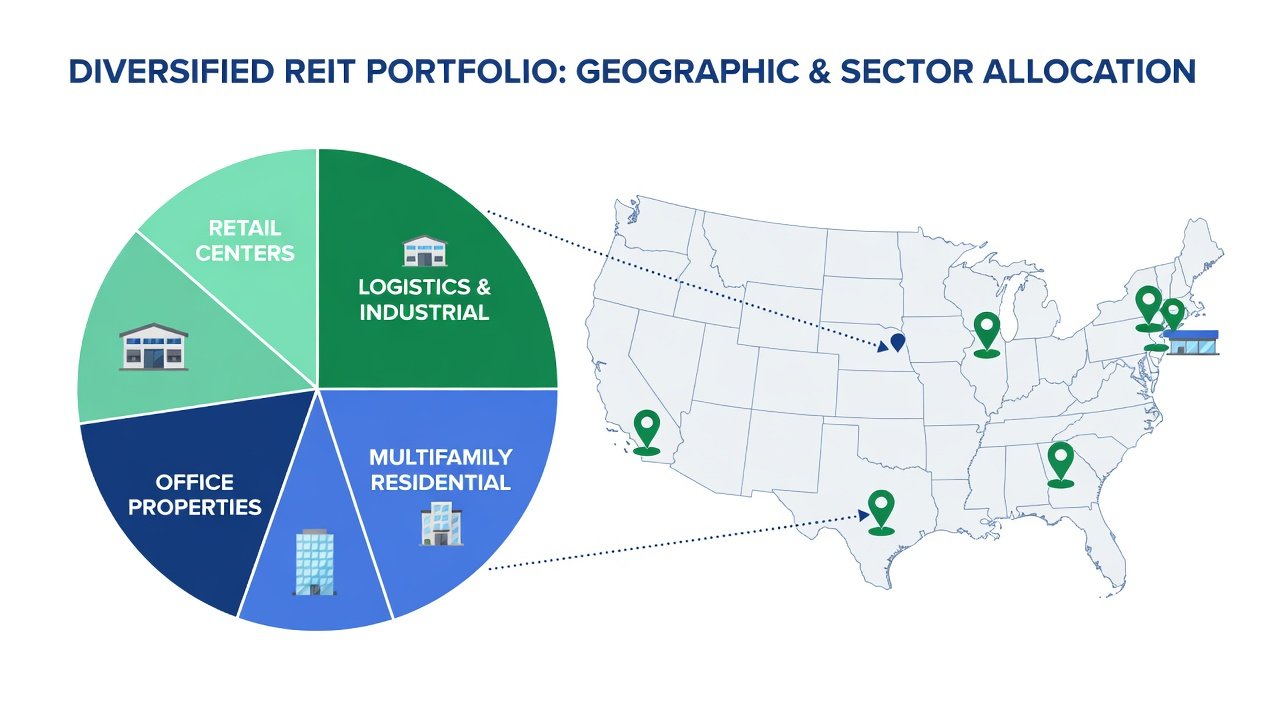
When evaluating industrial REITs for dividend investing, focus on three primary metrics. First, occupancy rates should exceed 95 percent across the portfolio, signaling robust tenant demand and the ability to push rents higher during renewals. Second, yield sustainability requires reviewing dividend coverage ratios, payout history, and the proportion of income derived from contractual escalations rather than one-time gains. Third, geographic advantages matter greatly; properties clustered in major logistics corridors such as the Inland Empire, Dallas-Fort Worth, and Atlanta metro areas benefit from port proximity, interstate access, and dense consumer bases.
Additional considerations include average lease duration, tenant credit quality with a preference for investment-grade companies, and the scale of the development pipeline that can fuel future earnings growth. Reviewing these elements together helps filter out REITs vulnerable to economic shifts or oversupply in secondary markets.
Top Performers and Real-World Examples
Leading industrial REITs have demonstrated consistent dividend growth through disciplined capital allocation. Prologis maintains a global portfolio concentrated in high-demand markets and has a track record of raising distributions annually while expanding its development platform. Another example is Rexford Industrial Realty, which focuses on infill properties in Southern California and benefits from limited new supply combined with strong rent growth. Investors can also examine EastGroup Properties for its Sun Belt emphasis and Duke Realty for its balanced mix of existing assets and build-to-suit projects. Reviewing public filings on official regulatory databases provides detailed occupancy trends and rent roll information. These examples illustrate how location-specific strategies and proactive management translate into reliable passive income streams for shareholders.
Building Your Portfolio: Step-by-Step Process and Sample Allocation
Follow these steps to construct an industrial REIT allocation suited to long-term passive income goals. Begin by defining personal risk tolerance and target income needs, typically allocating between 5 and 15 percent of a diversified portfolio to the sector. Next, conduct thorough research on individual REITs using financial metrics, geographic exposure maps, and management commentary from earnings calls. Diversify across three to five REITs to reduce single-property or single-tenant risk while incorporating both large-cap global operators and regional specialists. Rebalance positions annually or after major market events to maintain intended weightings and capture new opportunities.
A sample allocation model might include 40 percent in large-cap global players, 35 percent in regional specialists focused on high-growth domestic markets, and 25 percent in a broad industrial-focused ETF for added liquidity and lower transaction costs. This balanced approach helps capture both current yields and long-term appreciation from rising property values. Investors should also maintain records of all distributions for tax planning purposes.
Industrial REITs vs. Traditional Dividend Stocks
Traditional dividend stocks in sectors such as consumer staples or utilities provide stability but limited growth tied to earnings expansion. Industrial REITs, by contrast, combine above-average yields with appreciation potential linked to real estate values and built-in rent escalations. They often exhibit lower correlation to broad equity markets, enhancing overall portfolio diversification. However, REITs carry greater sensitivity to interest rate changes that can affect borrowing costs and property valuations. Comparing total returns over multi-year periods shows how industrial REITs have delivered competitive income plus capital gains during periods of e-commerce acceleration, though they require more active monitoring of sector-specific trends.
Risk Mitigation Tactics
To protect income streams, investors should monitor interest rate environments because higher rates can pressure REIT valuations and increase financing expenses. Maintain a margin of safety by selecting REITs with strong balance sheets, low leverage ratios, and staggered lease expirations that reduce rollover risk. Consider dollar-cost averaging into positions over several quarters and hold an emergency cash reserve outside the REIT allocation to avoid forced sales during downturns. Another tactic involves reviewing tenant concentration reports to avoid overexposure to any single industry or company. Regular portfolio reviews using resources from industry association sites help identify emerging risks early.
FAQ: Tax Implications and Entry Strategies
How are industrial REIT dividends taxed?
REIT dividends are typically taxed as ordinary income at the investor’s marginal rate, though a portion may qualify as return of capital that reduces cost basis or as long-term capital gains when distributed from property sales. Qualified account structures such as IRAs can defer or eliminate immediate tax liability. Always consult a tax professional familiar with real estate investment trust rules for guidance tailored to your situation.
What is the best entry strategy for beginners?
Start with a low-cost brokerage account that offers commission-free ETF and REIT trading. Use dollar-cost averaging over three to six months to reduce timing risk. Focus initially on established REITs with multi-year dividend growth histories before exploring smaller or development-heavy names. Consider beginning with a diversified industrial ETF as a core holding while adding individual names for targeted exposure.
Are there any common mistakes to avoid?
One frequent error is chasing the highest current yield without verifying coverage from recurring rental income. Another is concentrating holdings in a single geographic market that could face localized oversupply. Investors should also avoid ignoring interest rate sensitivity and should not treat REITs as set-it-and-forget-it holdings without periodic rebalancing.
Conclusion
Industrial REITs represent a strategic opportunity for passive income in 2026, fueled by enduring e-commerce and logistics trends. By applying rigorous selection criteria, diversifying holdings across quality operators, and implementing sound risk management practices, investors can build a reliable income portfolio that benefits from structural economic shifts. Begin research today using regulatory filings and industry resources to position yourself for sustainable dividend growth over the coming years.

No comments yet. Be the first!