 Bullish Portfolio

Introduction to Industrial REITs for Passive Income
Industrial real estate investment trusts (REITs) have emerged as a powerful vehicle for generating reliable passive income through dividends. As e-commerce continues to reshape supply chains, these REITs offer exposure to warehouses, distribution centers, and logistics facilities that benefit from sustained demand. This guide provides a complete, actionable framework for constructing an industrial REIT dividend portfolio tailored for 2026 growth, emphasizing data-driven selection and ongoing management. Readers will find concrete steps, real-world allocation examples, and strategies to navigate risks while maximizing income potential in a dynamic market environment.
Why Focus on Industrial REITs in 2026?
Industrial properties stand out due to their resilience during economic shifts. Unlike retail or office REITs, industrial assets often maintain high occupancy because of structural tailwinds from online shopping and global trade. Investors seeking steady income can leverage these characteristics while mitigating broader market volatility through targeted diversification. The sector benefits from long-term lease structures that provide visibility into future cash flows, making it particularly suitable for those building retirement or supplemental income streams. Additionally, industrial REITs frequently incorporate built-in rent escalations that help preserve purchasing power over time.
Step-by-Step Selection Criteria
Selecting the right industrial REITs requires evaluating three core metrics: occupancy rates, yield sustainability, and e-commerce supply chain alignment. Begin by screening a broad universe of publicly traded industrial REITs using financial databases and company reports. Narrow the list by applying quantitative thresholds before conducting qualitative reviews of management quality and tenant concentration.
Evaluating Occupancy Rates
High occupancy indicates strong tenant demand and stable rental income. Aim for REITs with portfolio-wide occupancy above 95 percent, as this signals efficient property management and limited vacancy risk. Review quarterly filings to track trends over multiple periods rather than relying on a single snapshot. For example, compare year-over-year changes in same-property occupancy to identify operators who consistently fill space even during periods of economic uncertainty. Cross-reference occupancy data with lease expiration schedules to anticipate potential future vacancies.
Assessing Yield Sustainability
Dividend yields must be supported by consistent funds from operations (FFO). Look beyond headline yields to examine payout ratios and growth in FFO per share. Sustainable yields typically come from REITs with long-term leases and creditworthy tenants in essential logistics sectors. Calculate the ratio of dividends to FFO and ensure it remains below 80 percent for a margin of safety. Examine the history of dividend increases and any special distributions to gauge management’s commitment to shareholder returns.
Incorporating E-Commerce Supply Chain Metrics
Measure exposure to last-mile delivery and fulfillment centers. REITs with significant holdings near major population centers or transportation hubs tend to capture e-commerce growth. Analyze tenant rosters for major retailers and logistics providers to gauge this alignment. Review geographic footprints for proximity to highways, ports, and rail lines, as these locations reduce transportation costs for tenants and support higher renewal rates. Consider the percentage of revenue derived from e-commerce-related tenants as a forward-looking indicator.
Allocation Examples Across Sub-Sectors
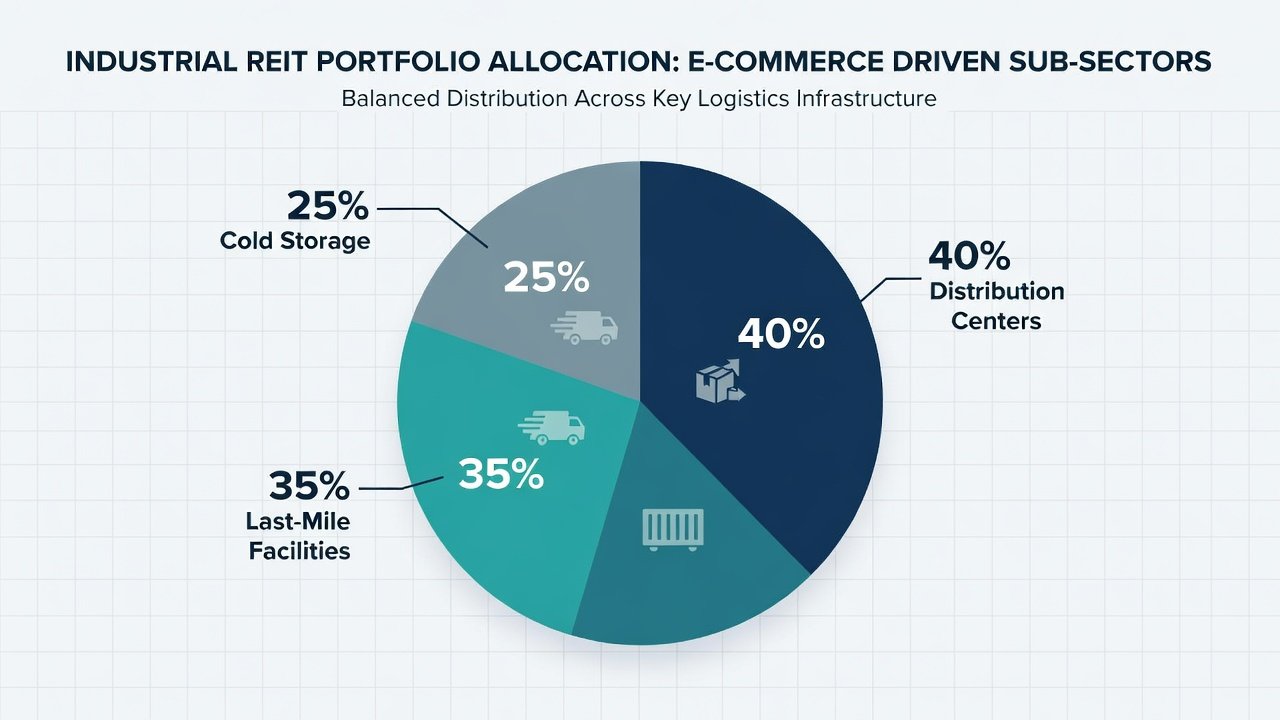
A balanced portfolio spreads risk across warehouse, distribution, and cold-storage sub-sectors. Consider an example allocation of 40 percent to large-scale distribution centers, 30 percent to last-mile urban facilities, 20 percent to specialized cold storage, and 10 percent to flex industrial space. This mix captures broad demand while hedging against sector-specific slowdowns. Within each sub-sector, further diversify by selecting REITs with varying average lease durations and tenant credit profiles. For instance, pair a REIT heavy in long-term leases with one focused on shorter-term flex space to balance income stability and growth opportunities.
Rebalancing Tactics for Long-Term Success
Review your portfolio quarterly and rebalance when any single REIT exceeds 25 percent of total holdings or when occupancy metrics shift materially. Use dividend reinvestment to gradually adjust weights without triggering excessive transaction costs. Annual deep reviews should incorporate macroeconomic indicators such as interest rate trends and trade policy changes. Establish predefined triggers, such as a 10 percent deviation from target allocations, to automate decision-making and reduce emotional bias. Maintain a cash reserve equivalent to 5 percent of portfolio value to facilitate opportunistic purchases during market dips without selling existing positions at unfavorable prices.
Risk Comparisons to Traditional Dividend Stocks
Industrial REITs differ from dividend-paying stocks in several ways. REIT dividends often provide higher current yields and inflation protection through rent escalators, yet they carry interest-rate sensitivity and regulatory requirements to distribute most taxable income. Compared with equities, REITs offer tangible asset backing but may exhibit greater short-term price swings during rate-hike cycles. Diversifying across both asset classes can smooth overall portfolio volatility. Equity dividends may be cut during corporate downturns, while REIT income is contractually supported by leases; however, REITs face property-specific risks such as maintenance costs and local market oversupply. A blended approach allocating 60 percent to industrial REITs and 40 percent to high-quality dividend stocks can provide complementary risk-return characteristics.
Practical Monitoring Tools and Resources
Investors should leverage earnings transcripts, property-level data from company supplements, and industry reports to stay informed. Set up alerts for occupancy updates and tenant announcements. Utilize free resources from regulatory bodies to review filings and compare peer performance. Regular engagement with these tools helps identify early warning signs, such as rising tenant concessions or delayed rent collections, before they impact distributions.
Common Mistakes to Avoid
Many investors overlook geographic concentration, leading to outsized exposure to single regional economies. Another frequent error is chasing the highest yields without verifying FFO coverage, which can result in unsustainable payouts. Avoid over-allocating to new entrants with limited operating histories. Finally, neglecting tax-efficient account placement can erode net returns through unnecessary annual taxation. Documenting each investment thesis before purchase helps maintain discipline during market fluctuations.
Case Study: Projected 2026 Portfolio Performance
Consider a hypothetical $100,000 industrial REIT allocation diversified across four holdings. Using conservative growth assumptions derived from historical sector performance, the portfolio could deliver growing cash distributions through 2026 while maintaining principal stability. Key assumptions include sustained occupancy near 96 percent and moderate FFO expansion driven by e-commerce leasing. Scenario analysis reveals that even in a moderate slowdown, the diversified structure limits income decline to low single digits. In an optimistic case with accelerated leasing, distributions could increase meaningfully. Actual results will vary based on execution of the outlined selection and rebalancing steps, underscoring the importance of ongoing oversight.
FAQ: Tax Implications of Industrial REIT Investing
- How are REIT dividends taxed? Most distributions are taxed as ordinary income, though a portion may qualify as return of capital or long-term capital gains.
- Are there advantages to holding REITs in tax-advantaged accounts? Yes, placing REITs inside IRAs or 401(k)s defers or eliminates immediate tax on distributions.
- What about state taxes? REIT income is generally subject to state income tax unless held in a retirement account.
- Do foreign investors face different rules? Non-U.S. investors may encounter withholding taxes and should consult cross-border tax guidance.
- Can capital gains from REIT sales be deferred? Like-kind exchanges under Section 1031 may allow deferral when swapping into similar properties, subject to strict IRS rules.
- How do qualified business income deductions apply? REIT dividends may qualify for the 20 percent QBI deduction through 2025, potentially reducing effective tax rates for eligible taxpayers.
Conclusion
Constructing an industrial REIT dividend portfolio for 2026 requires disciplined attention to occupancy, yield quality, and supply-chain relevance. By following the selection framework, allocation guidelines, and rebalancing tactics above, investors can position themselves for sustainable passive income growth while managing risk relative to traditional dividend stocks. Regular monitoring and adherence to tax-efficient structures will further enhance long-term outcomes. For foundational REIT regulations, consult the U.S. Securities and Exchange Commission and explore educational resources at Investopedia.

No comments yet. Be the first!