 Bullish Portfolio
Introduction to Industrial REITs for Passive Income
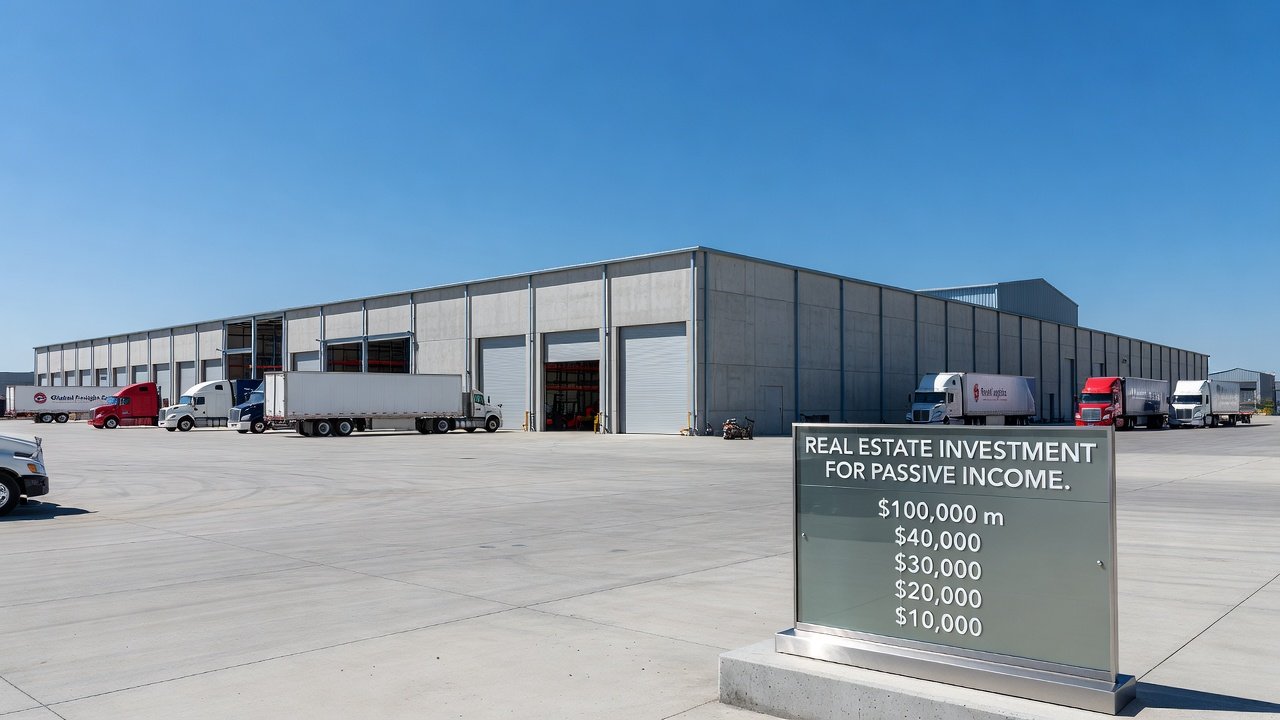
Industrial real estate investment trusts (REITs) offer investors a practical way to generate steady passive income through dividends. As e-commerce continues to drive demand for logistics and warehouse space, these assets are positioned for growth in 2026. This guide provides a complete framework for constructing an industrial REIT portfolio focused on dividend reliability and total returns. Industrial REITs own and operate properties such as distribution centers, manufacturing facilities, and flex spaces that benefit from global supply chain dynamics. Unlike residential or office REITs, industrial properties often feature longer lease terms and lower tenant turnover, creating more predictable cash flows for income-focused investors.
Core Allocation Principles
Successful portfolio construction starts with clear allocation rules. Aim for 60-70% in core logistics and warehouse REITs for stability, with 20-30% allocated to specialized sub-sectors like cold storage or data centers. Limit any single holding to under 15% of the total portfolio to maintain diversification. Focus on REITs with strong balance sheets and consistent occupancy rates above 95%. Investors should also consider geographic spread, favoring regions with strong population growth and infrastructure investment. For example, allocating across the Sun Belt states and major port cities can reduce regional economic risks while capturing e-commerce tailwinds.
Sub-Sector Breakdown: Logistics, Warehouses, and More
Industrial REITs span several key areas. Logistics facilities support distribution networks, while warehouses handle storage needs. Emerging segments include last-mile delivery hubs and temperature-controlled facilities. Investors should evaluate each sub-sector's exposure to supply chain trends and e-commerce expansion. Logistics REITs typically benefit from high-volume throughput, whereas warehouse properties emphasize long-term storage contracts. Cold storage assets serve food and pharmaceutical industries with specialized requirements that command premium rents. Data center components within industrial portfolios are gaining attention due to rising digital infrastructure demands.
Essential Metrics: Occupancy Rates and FFO Growth
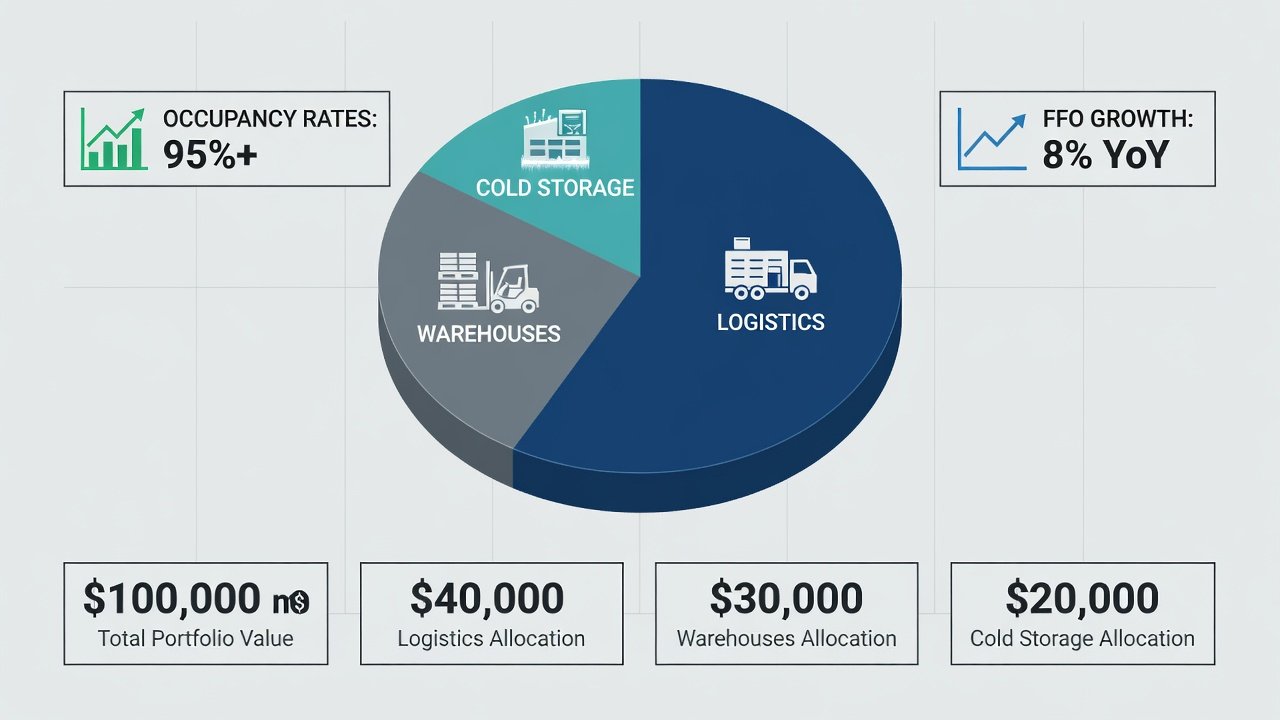
Track occupancy rates closely, as they directly impact rental income. Funds from operations (FFO) growth serves as the primary profitability measure for REITs. Target REITs showing annual FFO growth of 4-8% alongside occupancy levels consistently exceeding 94%. Review quarterly filings for these figures to ensure portfolio health. Additional metrics include net asset value per share, debt-to-EBITDA ratios, and same-store net operating income growth. These indicators help assess operational efficiency and financial resilience. Comparing these metrics across peer REITs allows for informed selection of holdings that support sustainable dividend payouts.
Step-by-Step Portfolio Construction Examples
Follow this process to build your holdings:
- Define your total investment amount and risk tolerance.
- Research REITs with dividend yields in the 3-5% range and proven track records.
- Construct a sample portfolio: 40% in broad logistics REITs, 30% in warehouse specialists, 20% in mixed industrial, and 10% in growth-oriented names.
- Project yields by combining current dividends with expected FFO increases.
- Reassess quarterly and adjust based on performance data.
This approach creates a balanced mix supporting reliable passive income streams. In a practical example, an investor with $100,000 might allocate $40,000 across two large logistics REITs, $30,000 to established warehouse operators, $20,000 to diversified industrial names, and $10,000 to emerging specialized assets. Monitor each position for dividend coverage ratios above 80% to ensure payout sustainability. Adjust allocations if one sub-sector shows signs of oversupply or declining demand.
Risk Management Techniques
Protect your portfolio with these strategies. Monitor interest rate sensitivity, as rising rates can pressure REIT valuations. Diversify across geographic regions to reduce local market risks. Use stop-loss guidelines or position sizing to limit downside exposure. Regularly review tenant credit quality and lease expiration schedules. Additional techniques include stress-testing the portfolio against economic downturns and maintaining a cash reserve for opportunistic purchases during market dips. Hedging with broader market ETFs can further stabilize returns when industrial property values fluctuate due to macroeconomic events.
Rebalancing Strategies Tied to E-Commerce Trends
E-commerce growth favors industrial properties near urban centers. Rebalance annually or when sector weightings drift more than 5% from targets. Increase exposure to last-mile assets if online retail metrics accelerate. Reduce holdings in oversupplied markets by shifting to stronger performers. This keeps the portfolio aligned with evolving demand patterns. Watch indicators such as warehouse vacancy rates in key metros and e-commerce sales growth reports. When certain regions experience rapid rent escalation, consider trimming positions there to lock in gains and redeploy capital into undervalued opportunities elsewhere.
Common Mistakes to Avoid
Many investors overlook the importance of thorough due diligence on tenant concentration. Avoid portfolios where a few large tenants represent excessive revenue shares. Another pitfall is ignoring environmental and regulatory risks associated with industrial properties. Always review sustainability practices and compliance records. Finally, failing to account for transaction costs and tax drag can erode net returns over time.
Conclusion
Constructing an industrial REIT portfolio requires disciplined allocation, metric monitoring, and proactive rebalancing. By focusing on logistics and warehouse assets with solid fundamentals, investors can build a reliable source of 2026 passive income. Start with small positions and scale as you gain confidence in the strategy. Consistent application of these principles positions the portfolio for both income generation and capital appreciation amid shifting market conditions.
FAQ
What are typical entry points for industrial REIT investing?
Investors often begin through brokerage accounts purchasing individual REIT shares or exchange-traded funds. Dollar-cost averaging helps manage timing risk when entering positions. Many start with established players before expanding into niche sub-sectors.
How are industrial REIT dividends taxed?
REIT dividends are generally taxed as ordinary income, though qualified dividends may receive preferential rates. Consult a tax advisor for personalized guidance on your situation. Consider holding REITs in tax-advantaged accounts like IRAs when possible to defer or reduce tax liabilities.
Which resources provide reliable REIT data?
Official sources include REIT.com for industry reports and SEC.gov for regulatory filings. Additional insights can be found on Investopedia for educational overviews of REIT metrics and strategies.
How often should investors review their industrial REIT holdings?
Quarterly reviews are recommended to assess occupancy trends, FFO performance, and dividend coverage. Annual deep dives help align the portfolio with long-term e-commerce and economic shifts.
No comments yet. Be the first!