 Bullish Portfolio

Introduction to Industrial REIT Dividend Investing in 2026
Industrial real estate investment trusts (REITs) provide investors with opportunities for passive income through dividends supported by warehouses, distribution centers, and logistics properties. In 2026, these investments continue to attract attention due to ongoing shifts in global supply chains and the expansion of e-commerce. This comprehensive guide delivers a practical, step-by-step framework for selecting and investing in industrial REITs, emphasizing metrics such as occupancy rates, yield sustainability, and supply chain exposure. Readers will find detailed comparisons of sub-sectors, real-world portfolio examples with suggested allocations, and strategies to avoid common pitfalls while managing risks associated with evolving e-commerce trends.
Successful dividend investing in this sector requires more than surface-level research. Investors must evaluate long-term lease structures, tenant credit quality, and geographic advantages that support consistent cash flows. By focusing on these elements, individuals can build income-generating portfolios that withstand economic fluctuations and capitalize on structural demand for modern industrial space.
Understanding the Role of Industrial REITs in the 2026 Economy
Industrial REITs own and operate properties essential to manufacturing, storage, and distribution. These assets benefit from structural tailwinds including nearshoring initiatives, increased automation in fulfillment centers, and sustained consumer preference for rapid delivery. In 2026, demand remains robust in key corridors such as the U.S. Gulf Coast, Midwest logistics hubs, and West Coast ports. REITs with well-located portfolios often achieve higher rental growth through lease renewals and built-in escalators. Understanding these macroeconomic drivers helps investors distinguish between short-term opportunities and durable income sources.
Step-by-Step Framework for Selecting Industrial REITs
Begin by clarifying personal financial objectives, including desired annual income, time horizon, and acceptable volatility levels. Next, screen for REITs with properties in high-traffic logistics zones that benefit from proximity to highways, rail lines, and airports. Review historical dividend records to confirm consistency across multiple economic cycles. Examine the quality of the management team through their track record of acquisitions and development projects. Assess tenant diversification by analyzing the percentage of revenue from top lessees. Finally, incorporate macroeconomic monitoring of interest rates, trade policies, and consumer spending patterns that influence occupancy and rental rates.
Each step involves quantitative and qualitative analysis. For instance, when reviewing tenant diversification, seek portfolios where no single occupant exceeds 10-15% of total revenue. This approach reduces concentration risk and supports more predictable dividend streams over time.
Key Evaluation Metrics: Occupancy Rates, Yield Sustainability, and Supply Chain Exposure
Occupancy rates serve as a primary indicator of property demand. Target REITs maintaining rates above 95% across their portfolios, as lower figures may signal oversupply or location disadvantages. Yield sustainability depends on the balance between current distribution rates and underlying funds from operations growth. Look for REITs that cover dividends comfortably with FFO while retaining capital for property improvements.
Supply chain exposure evaluates how well a REIT's assets align with major trade routes and distribution networks. Properties near major ports or intermodal facilities often command premium rents due to reduced transportation costs for tenants. Investors should review geographic breakdowns in annual reports to identify concentrations in growing versus declining corridors.
Additional metrics include debt maturity schedules and interest coverage ratios. Strong balance sheets allow REITs to pursue accretive acquisitions without compromising dividend safety. Regular review of these indicators supports informed decisions throughout market cycles.
Comparing Top Industrial REIT Sub-Sectors
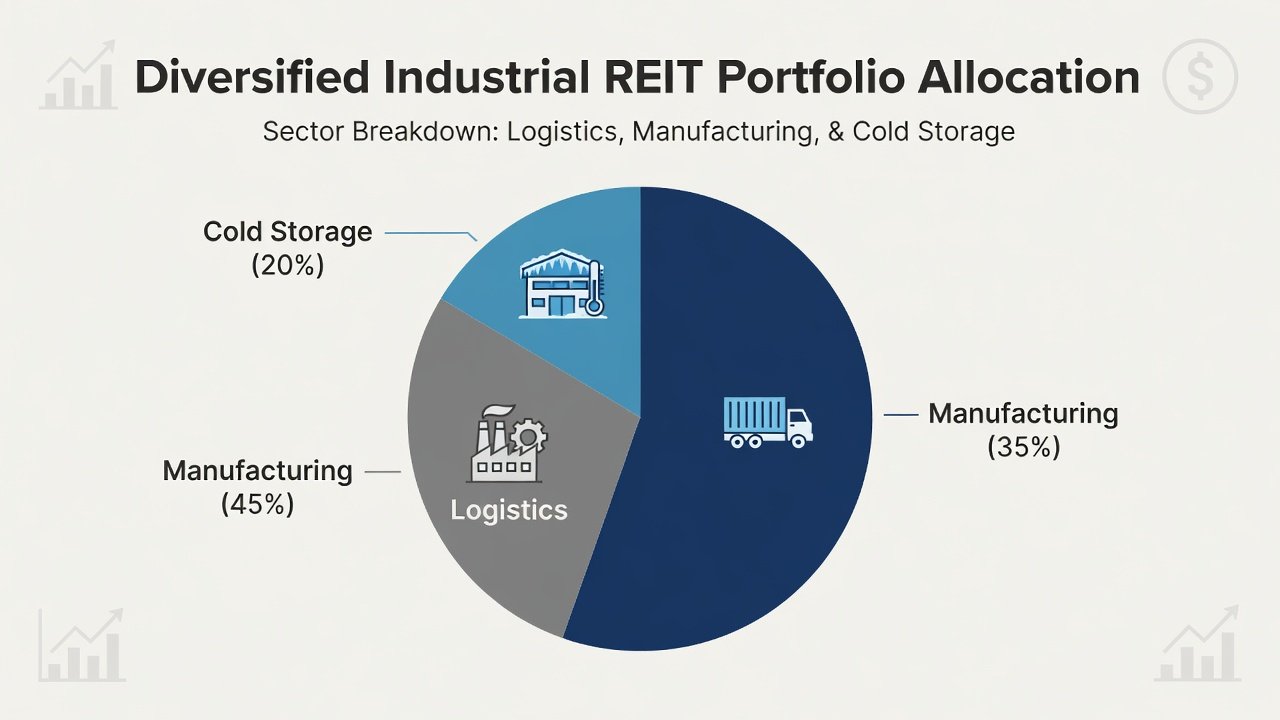
Logistics-focused REITs emphasize last-mile and regional distribution centers, offering higher growth potential from e-commerce but facing competition from new supply. Manufacturing REITs provide stability through long-term leases with industrial operators, delivering moderate yields with lower turnover. Cold storage REITs serve food, beverage, and pharmaceutical companies, benefiting from essential demand and inflation-linked rent escalations. Emerging sub-sectors include facilities supporting data centers and life sciences, which combine industrial and specialized infrastructure features.
- Logistics REITs: Advantage in high tenant demand but require ongoing capital for modernization.
- Manufacturing REITs: Defensive profile with multi-year leases and creditworthy tenants.
- Cold Storage REITs: Resilient cash flows and limited new competition due to high development costs.
- Specialized Facilities: Higher barriers to entry and potential for premium pricing.
Real Portfolio Examples with Allocation Suggestions
Example Portfolio A targets moderate income with growth: allocate 45% to logistics REITs, 25% to manufacturing properties, 20% to cold storage, and 10% to specialized facilities. This configuration balances yield with exposure to expanding e-commerce infrastructure. Rebalance when any allocation drifts more than 5% from targets.
Example Portfolio B emphasizes income stability: 30% logistics, 35% manufacturing, 25% cold storage, and 10% in diversified holdings. Investors nearing retirement may prefer this structure for its emphasis on predictable distributions and lower volatility. Both examples illustrate how geographic and sub-sector diversification can enhance overall portfolio resilience.
Common Pitfalls and Risk Management Tactics Tied to E-Commerce Trends
One frequent mistake involves concentrating holdings in older facilities that lack sufficient clear height or loading capabilities for modern automated operations. Mitigate this by prioritizing REITs with active redevelopment pipelines. Another pitfall is ignoring interest rate sensitivity; use staggered debt maturities and monitor Federal Reserve policy signals. Overexposure to single markets vulnerable to trade policy changes can be addressed through national or international diversification. Finally, chasing high yields without verifying coverage ratios often leads to dividend cuts during downturns. Implement regular stress testing of portfolio income under various economic scenarios to maintain discipline.
Actionable FAQs on Entry Points and Reinvestment Strategies
When should investors consider entering industrial REIT positions in 2026?
Monitor quarterly earnings releases and economic data releases for signs of stabilizing occupancy and rental growth. Dollar-cost averaging during periods of market uncertainty often provides attractive long-term entry points while reducing timing risk.
How can dividends be reinvested effectively for compounding growth?
Enroll in dividend reinvestment plans where available to purchase additional shares automatically. Combine this with tax-advantaged accounts to maximize compounding over multi-year horizons and accelerate portfolio growth without incurring immediate tax liabilities.
What role do industrial REITs play alongside other asset classes?
They contribute income stability and partial inflation protection through contractual rent increases, complementing equity growth strategies and fixed-income holdings in a diversified allocation.
How do e-commerce trends specifically affect industrial REIT performance?
E-commerce drives demand for modern logistics space while pressuring older properties. REITs adapting through redevelopment and strategic acquisitions tend to outperform those with static portfolios.
Are there specific tax considerations for industrial REIT dividends?
Most distributions qualify as ordinary income, though a portion may represent return of capital. Consult tax professionals to optimize placement within taxable or retirement accounts.
For authoritative resources on REIT structures and regulations, consult NAREIT. Review detailed corporate filings through SEC.gov to verify portfolio details and risk factors.
Conclusion
Industrial REIT dividend investing in 2026 offers meaningful passive income potential when approached with a structured framework. By mastering occupancy analysis, yield evaluation, and supply chain positioning, investors can compare sub-sectors effectively and construct diversified portfolios. Awareness of pitfalls related to e-commerce evolution, combined with proactive risk management, supports sustainable outcomes. Begin with thorough due diligence and consider aligning allocations with individual risk tolerance and income needs for long-term success.

No comments yet. Be the first!