 Bullish Portfolio
Introduction: Building Resilient Dividend Portfolios Amid 2026 Uncertainty
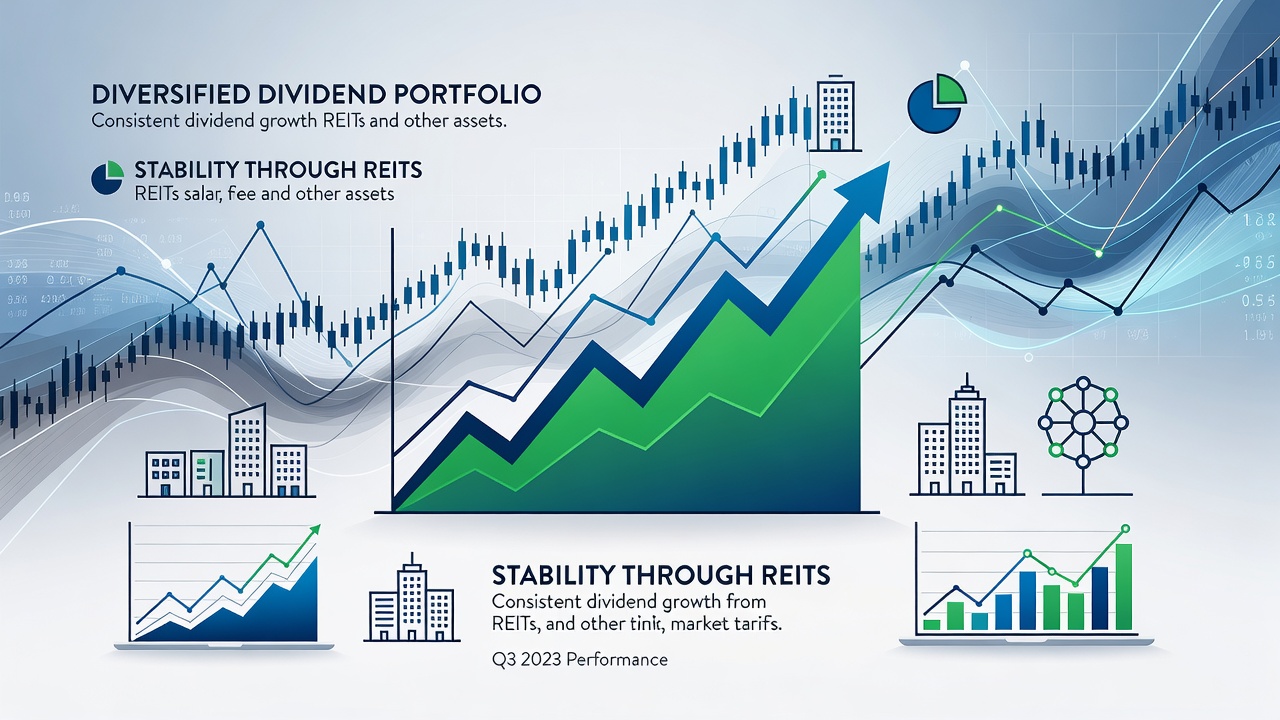
Investors seeking passive income often turn to dividend stocks for reliable yields, yet market volatility can erode principal and disrupt income streams. In 2026, combining real estate investment trusts (REITs) with dividend equities offers a strategic hedge. REITs provide exposure to income-generating properties while exhibiting lower correlations to traditional equities during turbulent periods, helping preserve portfolio stability without sacrificing overall returns. This approach aligns with search intent from income-focused investors who want risk mitigation strategies that sustain yields. By understanding REIT-equity correlations, selecting defensive property sectors, and implementing disciplined allocation and rebalancing, portfolios can weather downturns more effectively. Many retirees and income investors face the challenge of balancing growth with downside protection, and REITs serve as a bridge between equity-like returns and real-asset stability.
The core appeal lies in REITs' unique structure, which mandates distributing at least 90 percent of taxable income as dividends, creating a steady cash flow that complements traditional dividend stocks from companies in utilities or consumer staples. In uncertain markets, this combination reduces reliance on any single asset class and smooths out income fluctuations that pure equity portfolios often experience.
Analyzing REIT Correlations with Equities
REITs historically show moderate positive correlation with broad stock markets but often decouple during equity sell-offs, particularly when driven by growth concerns rather than interest-rate spikes. Data from major indices indicate correlations averaging 0.6-0.7 over long periods, dropping below 0.4 in certain recessionary phases. This diversification benefit stems from REITs' underlying real-asset cash flows tied to leases and rents rather than corporate earnings volatility. For example, when technology stocks plummet due to valuation resets, healthcare REITs holding medical office buildings may continue generating rent from long-term tenants, providing a buffer. Investors can review correlation matrices through resources like NAREIT for sector-specific insights. Incorporating REITs thus reduces overall portfolio beta while adding a distinct income layer. To deepen this analysis, consider rolling correlations over five- and ten-year windows, which reveal how REIT behavior shifts with economic cycles. During periods of high inflation, REITs may even show negative short-term correlation to equities as property values adjust upward, offering an additional layer of protection for dividend-focused investors.
Selecting Defensive Property Sectors
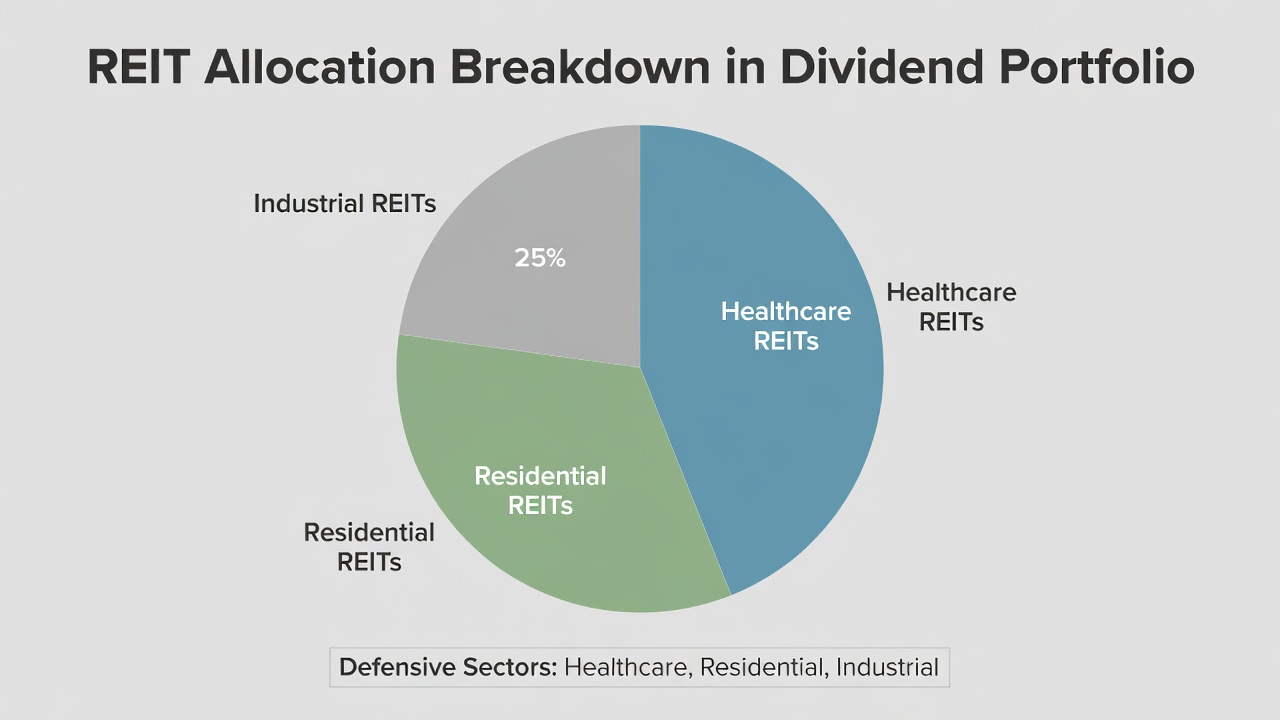
Not all REIT sectors perform equally in volatile environments. Defensive choices include healthcare REITs (senior housing and medical offices), residential REITs (apartments and single-family rentals), and select industrial properties serving essential logistics. These sectors benefit from inelastic demand, supporting occupancy rates above 90 percent even in economic slowdowns. Healthcare REITs, for instance, lease to hospitals and clinics with multi-year contracts that remain stable regardless of stock market swings. Residential REITs thrive because people always need housing, and industrial facilities benefit from e-commerce-driven demand for warehouses. Avoid cyclical areas like retail malls or hospitality during uncertainty. Focus on sectors with long-term leases and inflation-protected rent escalators to maintain real yields. When evaluating specific REITs, examine metrics such as funds from operations growth, debt-to-equity ratios below 50 percent, and geographic diversification across stable regions. This careful selection process ensures the REIT portion of the portfolio contributes reliable income rather than amplifying volatility.
Allocation Examples for Different Risk Tolerances
Portfolio construction varies by investor profile. Conservative investors might allocate 15-25 percent to REITs within a dividend-heavy portfolio, emphasizing healthcare and residential holdings. Moderate risk tolerances could target 25-35 percent, blending in industrial exposure. Aggressive investors comfortable with higher volatility may reach 35-45 percent, using REITs to enhance total yield. For illustration, a balanced example: 60 percent dividend equities (utilities, consumer staples), 25 percent defensive REITs, 10 percent bonds, and 5 percent cash. Adjust based on personal goals and market conditions. A more conservative retiree might use 70 percent dividend stocks, 15 percent REITs, and 15 percent short-term fixed income to prioritize capital preservation. In contrast, a mid-career investor building wealth could split 50 percent equities, 30 percent REITs, and 20 percent growth assets. These examples demonstrate how REIT weightings can be tailored while keeping the overall strategy focused on passive income generation.
Practical Steps for Quarterly Portfolio Rebalancing
Rebalancing ensures allocations stay aligned with targets. Follow these steps each quarter: Review current weights using portfolio tracking software. Calculate drift from targets caused by price movements. Sell overweight positions and buy underweight ones to restore balance. Reinvest dividends strategically into lagging sectors. Document changes and rationale for tax and performance tracking. This disciplined process prevents emotional decisions and maintains the hedging benefits of REITs. Consider a hypothetical case where equity markets rally 15 percent while REITs lag, pushing REIT allocation from 25 percent to 20 percent. In this scenario, an investor would sell portions of the equity holdings and purchase additional REIT units to realign. Tools such as spreadsheets or brokerage rebalancing alerts simplify the process, and scheduling reviews on fixed dates like the first Monday of each quarter removes guesswork.
Comparisons of Performance in Past Downturns
Historical analysis reveals REITs' resilience. During the 2008 financial crisis, equity REITs fell sharply initially but recovered faster than broad markets due to underlying asset values. In the 2020 COVID downturn, defensive REIT sectors declined less than 20 percent while the S&P 500 dropped over 30 percent, rebounding within months. Similar patterns appeared in 2022 when rising rates pressured growth stocks yet certain residential and industrial REITs maintained dividend payouts better than cyclical equities. These patterns underscore REITs' role in smoothing income volatility. Investors referencing long-term studies from authoritative sources like the Federal Reserve can apply similar lessons to 2026 positioning. Additional context from economic data repositories such as FRED shows how REIT total returns, including dividends, often exceed pure equity drawdowns when measured over full market cycles.
Conclusion
Integrating REITs into dividend portfolios creates a more robust passive income strategy for uncertain markets. Through careful sector selection, measured allocations, and quarterly rebalancing, investors can mitigate volatility while pursuing attractive yields. This framework supports long-term wealth preservation and income reliability, empowering investors to navigate 2026 and beyond with greater confidence.
FAQ
How does liquidity compare between REITs and dividend stocks?
Publicly traded REITs offer daily liquidity similar to stocks via exchanges, though some private REITs impose lock-up periods. Most income investors stick with listed REITs for seamless trading and transparent pricing.
What impact do interest rates have on REIT performance?
Rising rates can pressure REIT prices due to higher borrowing costs, but defensive sectors with strong rent growth often offset this. Monitor rate trends and favor REITs with low leverage and high occupancy.
Can REITs replace bonds in a dividend portfolio?
REITs provide equity-like returns with income traits but carry more volatility than bonds. They complement rather than fully replace fixed-income holdings for diversification.
Are there tax advantages to holding REITs in taxable accounts?
REIT dividends often qualify as ordinary income rather than qualified dividends, making them more tax-efficient inside IRAs or 401(k)s. Investors should consult tax professionals for personalized guidance.
How do inflation and supply chain issues affect defensive REIT sectors?
Inflation can boost rents in residential and industrial properties, while supply constraints may support occupancy. Healthcare REITs tend to benefit from steady demand regardless of broader economic pressures.

No comments yet. Be the first!