 Bullish Portfolio
Introduction to AI in REIT Dividend Investing
Building passive income through Real Estate Investment Trusts (REITs) has long appealed to investors seeking steady dividends without managing physical properties. In 2026, emerging AI tools are transforming how investors screen, select, and manage REIT portfolios by analyzing vast datasets on occupancy rates, payout ratios, and market trends. This guide explores AI-driven strategies for maximizing yields while minimizing risks, providing actionable steps for tech-enhanced portfolio building. REITs offer exposure to real estate sectors ranging from residential to data centers, and AI helps identify those with sustainable dividend streams. By leveraging machine learning, investors can move beyond basic screening to predictive modeling that anticipates shifts in property values and tenant demand.
How AI Optimizes REIT Selection and Dividend Screening
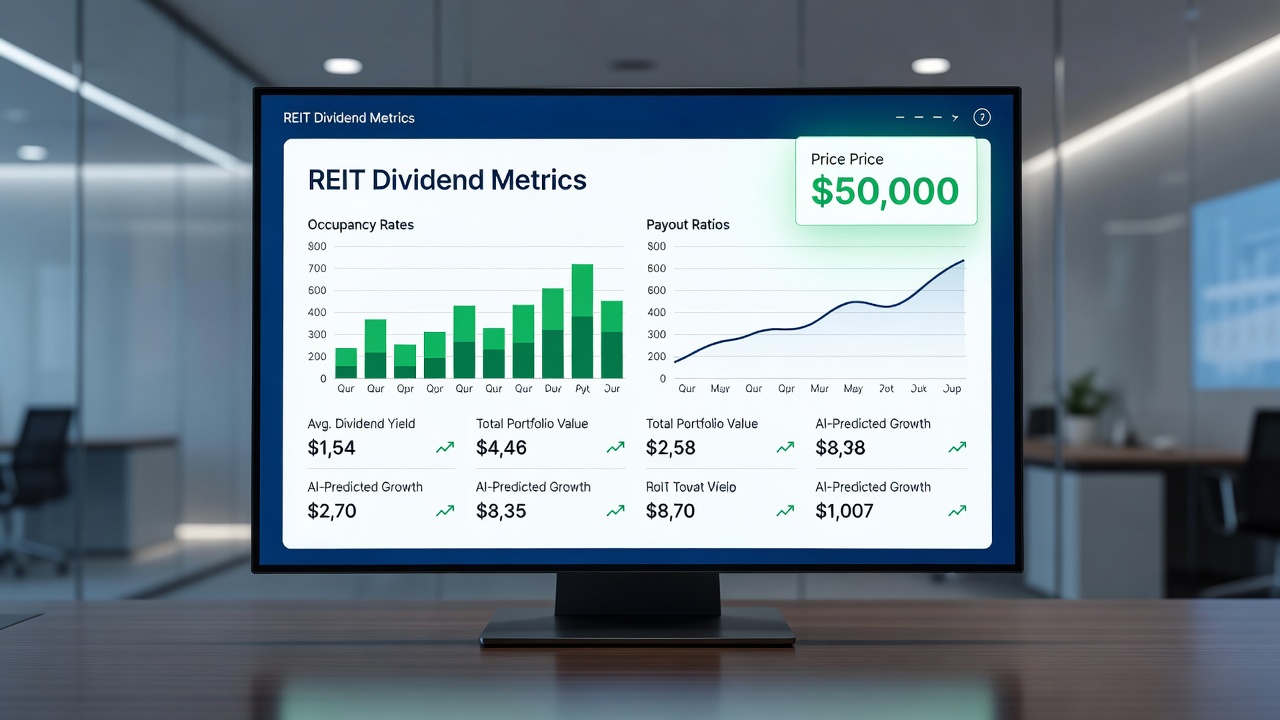
Traditional REIT analysis involves manual review of financial statements, but AI platforms use machine learning to process real-time data from multiple sources. These tools evaluate metrics like occupancy rates, which indicate property demand, and payout ratios, which show dividend sustainability. For instance, predictive analytics can forecast occupancy trends based on economic indicators, helping investors avoid REITs in declining sectors. AI also cross-references SEC filings with news sentiment and satellite data on commercial properties to deliver ranked recommendations. Practical steps include connecting your brokerage account to an AI dashboard, inputting target yield parameters (such as 6-8%), and letting algorithms rank REITs by historical performance adjusted for future projections. This approach speeds up screening from hours to minutes while reducing human bias in decision-making.
Predictive Analytics on Key Metrics
AI excels at forecasting metrics critical to REIT performance. Occupancy rates are modeled using satellite imagery analysis and local economic data, while payout ratios are stress-tested against interest rate scenarios. Investors can set alerts for when a REIT's projected payout drops below a threshold, enabling proactive adjustments. Additional layers include analyzing lease renewal rates and regional employment statistics to predict cash flow stability. One effective method is integrating AI with public data feeds to simulate portfolio impacts. This builds diversified holdings across residential, commercial, and industrial REITs, aligning with broader economic outlooks from sources like the Federal Reserve.
Risk Assessment Algorithms
Risk assessment is vital for sustainable passive income. AI algorithms calculate volatility scores by correlating REIT performance with macroeconomic variables like inflation and employment rates. They also detect red flags such as high debt levels through natural language processing of earnings calls. Advanced systems incorporate scenario modeling for events like recessions or regulatory changes in commercial real estate. Consider these practical steps when using risk tools:
- Step 1: Upload your current holdings to the AI tool for baseline analysis.
- Step 2: Run a risk simulation focusing on interest rate sensitivity and sector concentration.
- Step 3: Review generated reports highlighting diversification gaps and suggested hedges.
- Step 4: Set automated thresholds for alerts on metrics exceeding predefined risk limits.
This systematic process helps maintain stable yields even in volatile markets and draws on comprehensive datasets from the U.S. Securities and Exchange Commission for regulatory context.
Automated Rebalancing Examples
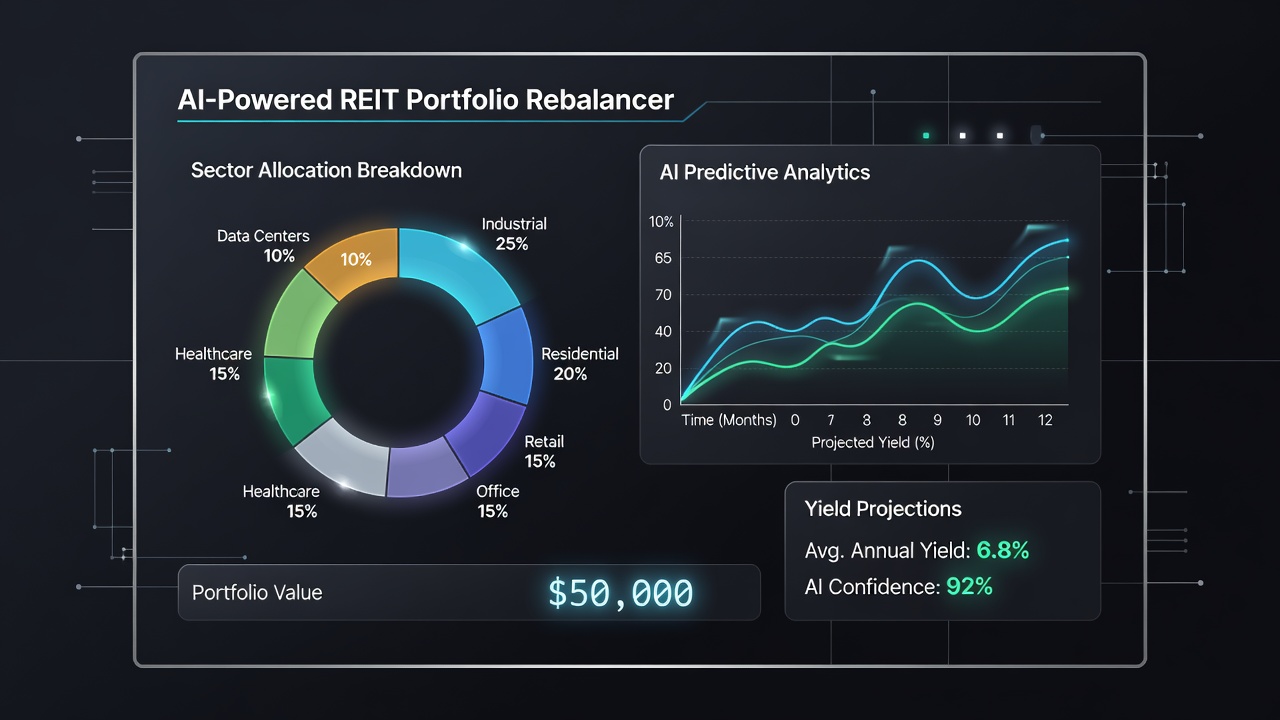
Automated rebalancing uses AI to maintain target allocations without constant manual intervention. For example, if a retail REIT's occupancy forecast declines, the algorithm might suggest shifting funds to healthcare REITs with stronger metrics. Investors set rules like quarterly rebalancing triggers based on yield targets and volatility bands. A detailed sample workflow: An investor starts with a $50,000 portfolio aiming for 7% yield. The AI monitors 20+ REITs daily, evaluates correlations between holdings, and executes small trades to keep the portfolio balanced, reducing emotional decision-making and transaction costs over time. In another scenario, during a period of rising interest rates, the system automatically tilts exposure toward REITs with lower leverage ratios.
Comparisons of Free vs Paid AI Tools
Free AI tools offer basic screening and alerts but often lack advanced predictive models or brokerage integrations. Paid platforms provide deeper analytics, custom reporting, and real-time data access. Choose based on your portfolio size and need for automation—beginners may start free to learn the interface before upgrading. Paid options typically include API access for seamless execution and multi-asset correlation analysis that free tiers omit. Users should evaluate trial periods to test accuracy on historical REIT data before committing.
Actionable Case Examples for 6-8% Yields
Consider an investor building a diversified REIT portfolio targeting 6-8% yields. Using AI, they screen for REITs with payout ratios under 80% and occupancy above 90%. One case involved allocating across five sectors: 30% residential, 25% industrial, 20% healthcare, 15% data centers, and 10% retail. The AI flagged a potential occupancy dip in retail, prompting a reallocation that preserved overall yield stability. Over six months, the portfolio achieved an annualized yield near 7.2% with lower drawdowns than a benchmark index. Another example demonstrates integration with brokerage APIs for seamless execution, resulting in a balanced portfolio resilient to sector-specific downturns. The system also generated monthly performance reports comparing actual yields against initial projections.
Getting Started: Practical Implementation Steps
Begin by selecting an AI platform compatible with your brokerage. Next, define clear investment criteria including minimum yield, maximum payout ratio, and sector diversification rules. Import historical data for backtesting, then activate monitoring features. Review outputs weekly initially to understand algorithm behavior before enabling full automation. This phased approach minimizes errors during the learning curve.
Common Pitfalls to Avoid
Investors often overlook data quality when feeding AI systems outdated filings or ignore transaction fees in rebalancing simulations. Another mistake is over-relying on a single tool without cross-verifying with multiple sources. Always maintain human oversight for final trade approvals, especially during major market events.
Conclusion
AI tools are reshaping REIT dividend investing by delivering data-driven insights that enhance passive income strategies. By focusing on predictive analytics, risk management, and automated features, investors can build robust portfolios aligned with 2026 market conditions. Resources such as the National Association of Real Estate Investment Trusts provide foundational industry data to complement AI outputs.
FAQ
How does AI handle data privacy in REIT investing tools?
Reputable platforms use encryption and comply with regulations like GDPR, ensuring your financial data remains secure during analysis and brokerage integrations.
Can AI tools integrate directly with brokerage accounts?
Yes, many support API connections to major brokerages for automated monitoring and rebalancing, though always verify security protocols first.
Are free AI tools sufficient for beginners?
Free versions provide solid entry points for basic screening, but paid upgrades unlock advanced features needed for complex portfolios.
What data sources do AI REIT tools typically use?
They aggregate public filings, economic indicators, property-level statistics, and alternative data like foot traffic analytics to generate forecasts.

No comments yet. Be the first!