 Bullish Portfolio

Introduction to Dividend REIT Investing for Legacy Wealth
Building generational wealth requires a disciplined focus on assets that generate reliable passive income while preserving and growing principal over decades. Dividend-paying Real Estate Investment Trusts (REITs) stand out as a powerful vehicle because they distribute a significant portion of rental income directly to shareholders. In 2026, investors seeking sustainable wealth transfer are increasingly turning to diversified REIT portfolios that emphasize dividend growth and resilience across economic cycles. This approach combines the benefits of real estate ownership without the operational burdens of direct property management. By targeting REITs with strong track records of increasing distributions, families can create income streams that compound and transfer seamlessly to heirs. The appeal lies in the combination of high distribution rates, professional management, and liquidity that direct real estate often lacks. Families planning for multiple generations benefit from the ability to scale positions gradually while maintaining focus on long-term total returns rather than short-term price fluctuations.
Understanding REITs and Their Role in Passive Income Strategies
REITs are companies that own, operate, or finance income-generating real estate across various sectors. They must distribute at least 90 percent of taxable income as dividends to maintain their tax-advantaged status. This legal requirement creates a natural alignment with investors seeking consistent cash flow. Equity REITs, which own physical properties, form the core of most generational portfolios because they provide exposure to rent growth and property appreciation. Mortgage REITs offer higher yields but carry different interest rate risks and are typically used in smaller allocations. In 2026 market conditions, equity REITs focused on essential sectors continue to demonstrate resilience even as broader economic variables shift.
Portfolio Construction for Long-Term Legacy Planning
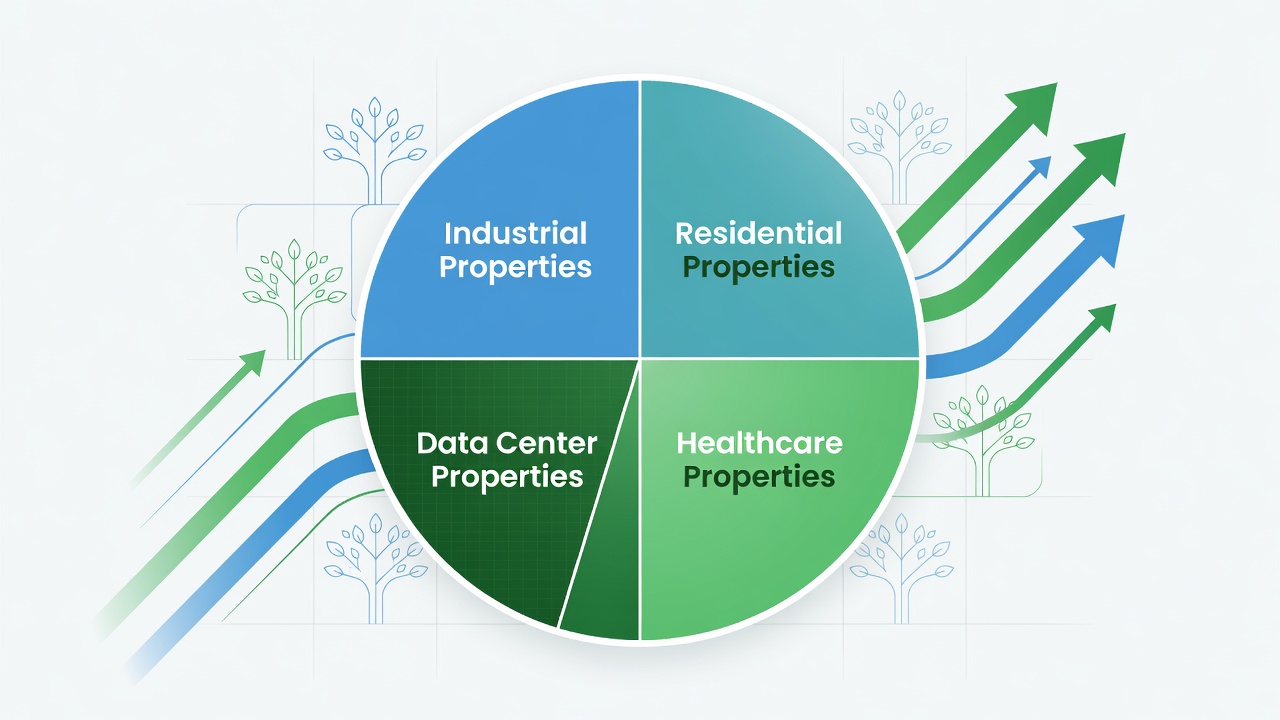
Effective portfolio construction begins with allocating across multiple property types to reduce sector-specific risks. Residential, industrial, healthcare, and data center REITs often provide complementary cash flow profiles. For instance, industrial REITs benefit from e-commerce demand while healthcare REITs offer stability from aging demographics. Data center REITs have gained prominence due to increasing digital infrastructure needs. Dividend growth rates matter as much as current yields. Prioritize REITs with consistent annual increases of 3-5% or more, which help income keep pace with inflation over multiple generations. A balanced allocation might include 30% in industrial, 25% in residential, 20% in healthcare, and 25% in specialty sectors, adjusted based on individual risk tolerance and time horizon. Investors should also consider geographic diversification within the United States to avoid regional economic downturns. Rebalancing annually ensures that no single sector dominates as market values change.
Compounding Timelines and Real-World Family Examples
Compounding timelines illustrate the power of reinvested dividends. A portfolio yielding 4% with 4% annual growth can double income every 12-15 years. Families that started similar strategies in the early 2000s now report yields exceeding 7% on original cost basis after decades of reinvestment and growth. One documented approach involves three generations: grandparents allocate seed capital into a diversified REIT basket, parents add contributions during peak earning years, and adult children receive distributions for education or home purchases while the principal continues growing for grandchildren. Another example shows a family that began with a modest allocation in the 1990s and now uses the resulting income to fund charitable giving and support multiple households without depleting the core holdings. These timelines highlight the importance of starting early and maintaining consistency rather than attempting to time market entries.
Tax-Efficient Transfer Methods
Transferring REIT holdings efficiently minimizes tax drag on heirs. Using step-up in basis at death, Roth conversions where appropriate, and gifting strategies under annual exclusion limits can preserve more wealth. IRS guidelines provide the framework for these transfers. Joint accounts with right of survivorship offer simplicity for spouses, while irrevocable trusts provide stronger creditor protection. Beneficiary designations on brokerage accounts can bypass probate entirely for faster transfer. Families should also explore 529 plans or education trusts if distributions will support younger generations' schooling needs. Coordination with estate attorneys ensures alignment with state-specific inheritance laws and federal estate tax thresholds that may apply in future years.
Risk Mitigation Strategies for Heirs
Risks include interest rate sensitivity, property market downturns, and regulatory changes. Mitigation involves maintaining a 10-15 year holding horizon, dollar-cost averaging into positions, and including a small allocation to REIT ETFs for instant diversification. Regular portfolio reviews every 18-24 months help adjust for shifting market conditions. Additional protections include maintaining emergency cash reserves outside the REIT allocation and using stop-loss or hedging strategies only sparingly to avoid unnecessary tax events. Families should also educate heirs about the long-term nature of the strategy so that sudden market volatility does not prompt premature sales. Stress testing the portfolio against scenarios such as prolonged recessions or sector-specific disruptions builds confidence in its durability across generations.
Step-by-Step Checklist for Setting Up Trusts or Joint Accounts
- Assess current net worth and define income goals for each generation, including projected living expenses and charitable intentions.
- Consult an estate attorney to draft revocable or irrevocable trusts tailored to REIT holdings and review state-specific requirements for asset protection.
- Open brokerage accounts in the name of the trust and fund them with diversified REIT positions, ensuring all cost basis records are transferred accurately.
- Establish joint ownership documents for immediate family members where appropriate and update beneficiary designations to reflect multi-generational intent.
- Schedule annual reviews with financial and tax advisors to update beneficiary designations and rebalance allocations as family circumstances evolve.
- Document all cost basis information for future step-up calculations and maintain digital copies of trust documents in secure, accessible locations.
- Educate adult children on the portfolio strategy through family meetings so they understand distribution rules and reinvestment policies before inheriting responsibility.
Comparing REITs to Other Wealth Building Vehicles
While stocks and bonds form traditional portfolio foundations, REITs add a distinct real estate component that often correlates differently with broader markets. Direct property ownership requires active management and higher capital thresholds, whereas REITs allow fractional ownership with professional oversight. Compared to private equity or alternative investments, publicly traded REITs offer greater transparency and liquidity. Investors evaluating options should weigh these characteristics against their specific time horizons and involvement preferences. In many cases, a core allocation to dividend REITs complements rather than replaces other asset classes for comprehensive generational planning.
FAQ: Common Pitfalls in 2026 Market Conditions
What are the biggest mistakes new REIT investors make?
Chasing the highest yields without examining payout ratios or debt levels often leads to dividend cuts. Focus on quality over headline yield and review financial statements regularly.
How do rising interest rates affect REIT dividends?
Higher rates can pressure property valuations but well-managed REITs with strong occupancy and rent growth continue raising dividends over time. The impact varies significantly by property sector.
Can REIT income truly support multi-generational needs?
Yes, when combined with proper estate planning and reinvestment, many families achieve sustainable 6-8% effective yields on original capital after 20+ years of consistent execution.
Should heirs sell REIT positions upon inheritance?
Generally no, unless the portfolio requires rebalancing. The step-up in basis often makes continued holding more tax-efficient than liquidation.
Conclusion
Dividend REIT investing offers a practical path to generational wealth when executed with diversification, patience, and sound estate planning. By focusing on quality holdings, tax efficiency, and clear transfer mechanisms, investors position their families for decades of passive income that can support multiple generations without eroding principal. Success depends on ongoing education, professional guidance, and a commitment to long-term thinking over short-term market noise.
No comments yet. Be the first!