 Bullish Portfolio

Introduction to ESG REITs and Ethical Passive Income
Investors seeking sustainable passive income in 2026 are increasingly turning to ESG REITs, which integrate environmental, social, and governance factors into real estate investment trusts. These vehicles allow beginners to generate recurring dividends while supporting responsible property development and operations. Unlike traditional REITs focused solely on financial returns, ESG REITs prioritize metrics like carbon reduction and ethical governance, aligning portfolios with long-term societal benefits. This approach addresses growing demand for socially conscious strategies. By selecting REITs with strong ESG scores, investors can mitigate risks associated with regulatory changes and climate impacts while pursuing yields in the 6-8% range through diversified holdings. For socially conscious beginners, ESG REITs offer an accessible entry point into real estate without direct property ownership, providing liquidity through stock market trading and professional management of assets.
The appeal lies in dual returns: financial income plus measurable positive impact. In 2026, rising awareness of climate risks and investor preferences for transparency have accelerated adoption of these vehicles across retirement accounts and taxable brokerage platforms alike.
Evaluating Environmental and Governance Metrics in REIT Selection
Selecting the right ESG REITs requires careful analysis of key metrics. Environmental criteria include energy efficiency ratings, renewable energy adoption, and waste reduction targets. Governance factors encompass board diversity, executive compensation transparency, and anti-corruption policies. Investors should review third-party ratings from agencies that assess these elements consistently. Practical steps include examining annual sustainability reports and using screening tools to filter REITs by ESG performance. Focus on properties with LEED or BREEAM certifications for environmental credibility. Governance evaluation involves checking proxy statements for shareholder rights protections and ensuring management teams demonstrate accountability through regular disclosures.
Key Environmental Indicators to Review
Look for reductions in greenhouse gas emissions over multiple years and commitments to net-zero targets by 2030 or 2040. Water usage efficiency and biodiversity protection around development sites also matter. These indicators help predict long-term resilience against tightening environmental regulations.
Governance Best Practices
Strong boards with independent directors and diverse representation reduce agency risks. Transparent reporting on executive pay tied to ESG goals signals alignment with investor values. Beginners can start by comparing REITs on publicly available sustainability dashboards before diving into detailed filings.
Identifying High-Yield Sustainable Sectors: Green Data Centers and Renewable Energy Properties
Certain sectors stand out for combining strong yields with ESG alignment. Green data centers, powered by renewable sources, benefit from surging digital demand while minimizing environmental footprints through advanced cooling and efficiency technologies. Renewable energy properties, such as solar farms and wind facilities leased under long-term contracts, offer stable income streams backed by policy incentives. Other promising areas include sustainable residential complexes with green building standards and logistics hubs optimized for electric vehicle infrastructure. These sectors often demonstrate resilience against market volatility due to essential demand and regulatory tailwinds. For instance, data centers supporting cloud computing and AI operations are expanding rapidly, creating opportunities for REITs that prioritize renewable power purchase agreements.
Renewable energy assets provide inflation-protected cash flows through fixed-rate leases, appealing to those building long-term passive income streams. When evaluating these sectors, consider location-specific factors such as regional renewable energy availability and local permitting ease.
Step-by-Step Portfolio Construction Examples
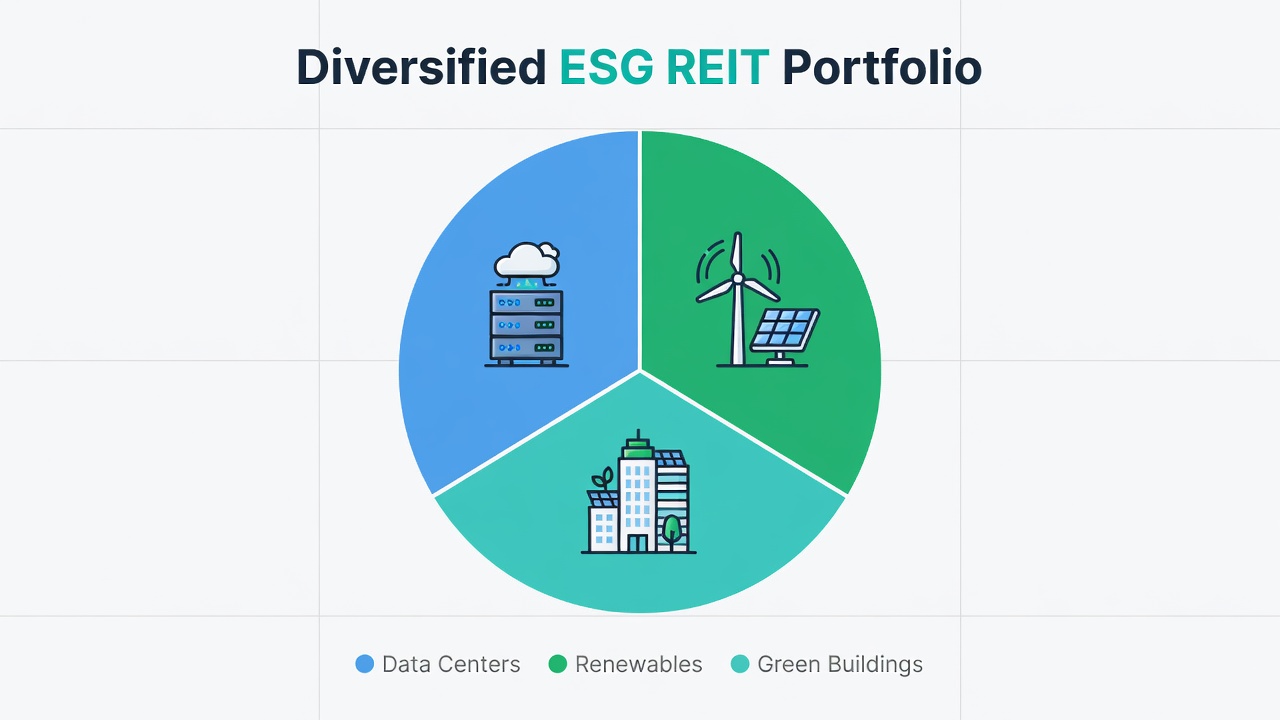
Building an ESG REIT portfolio starts with defining risk tolerance and income goals. Step 1: Allocate 40-60% to established green data center REITs for growth potential. Step 2: Dedicate 20-30% to renewable energy properties for stability. Step 3: Fill the remainder with diversified holdings in sustainable residential or industrial assets. Rebalance quarterly based on updated ESG scores and dividend consistency. Example allocation for a beginner: 50% data centers, 25% renewables, 15% green offices, and 10% cash reserves for opportunities. This structure targets balanced exposure while emphasizing ethical criteria. Another practical example involves starting small with $5,000 in a broad ESG REIT ETF, then adding individual holdings as knowledge grows. Track performance against benchmarks like the MSCI World REIT Index while overlaying custom ESG screens.
Monitoring and Rebalancing Tactics
Set calendar reminders for quarterly reviews. Adjust allocations if any holding drops below minimum ESG thresholds or if sector fundamentals shift. This disciplined process helps maintain both income targets and ethical standards over multi-year horizons.
Comparisons of ESG vs Traditional REIT Yields and Risk Mitigation Tactics
ESG REITs frequently deliver competitive yields to traditional counterparts, with added benefits in risk reduction. Traditional REITs may offer higher short-term payouts but face greater exposure to fossil fuel dependencies or poor labor practices. ESG versions often show lower volatility through better resource management and stakeholder relations. Risk mitigation includes geographic diversification, limiting single-sector exposure below 30%, and monitoring interest rate sensitivity. Investors can use hedging via broad market ETFs and maintain liquidity buffers. Case studies from 2026 portfolios highlight how ESG focus helped preserve capital during sector downturns. Additional tactics involve stress-testing portfolios against rising energy costs or new disclosure mandates. Diversifying across continents can further reduce regulatory concentration risk.
Real-World Case Studies of 2026 Portfolios Targeting 6-8% Returns
Consider a hypothetical 2026 portfolio constructed with $100,000 initial capital across five ESG REITs. Emphasis on green data centers and renewables yielded approximately 7% average returns through dividends, with capital appreciation from rising property values. Another example involved a retiree-focused allocation that maintained 6.5% income while improving ESG scores year-over-year. A third case featured a younger investor who combined REITs with dividend growth stocks, achieving 8% blended yield while keeping portfolio carbon intensity 40% below market averages. These cases underscore the importance of ongoing monitoring and adaptation to evolving standards, such as updated climate disclosure rules. Success depended on thorough initial screening and consistent rebalancing rather than market timing.
Common Mistakes Beginners Should Avoid
- Over-concentrating in one sector without checking ESG credentials thoroughly.
- Ignoring governance red flags in favor of headline yields.
- Failing to account for management fees that can erode net passive income.
- Neglecting tax-advantaged account placement for REIT distributions.
Future Outlook for ESG REITs in 2026 and Beyond
Regulatory developments and technological advances in green building are expected to favor well-managed ESG REITs. Investors who stay informed through reliable sources will be positioned to capture both income and impact opportunities as the market matures.
Conclusion
ESG REITs provide a robust pathway to ethical passive income in 2026 by blending financial performance with positive impact. Through disciplined evaluation, sector selection, and portfolio management, socially conscious investors can achieve sustainable returns while contributing to a greener economy.
FAQ on Tax Implications and Screening Tools
- What are the tax implications of ESG REIT dividends? Dividends are typically taxed as ordinary income, but qualified accounts like IRAs can defer taxes. Consult IRS guidelines for specifics.
- Which screening tools help identify top ESG REITs? Platforms from major financial data providers offer ESG filters; cross-reference with SEC filings for transparency.
- How do ESG REITs handle capital gains taxes? Sales may trigger gains, mitigated by holding periods or tax-advantaged structures. Review EPA resources on sustainable property incentives that can influence overall returns.
- Are there beginner-friendly platforms for ESG screening? Many brokerages now integrate basic ESG scores; supplement with official government data for accuracy.

No comments yet. Be the first!