 Bullish Portfolio
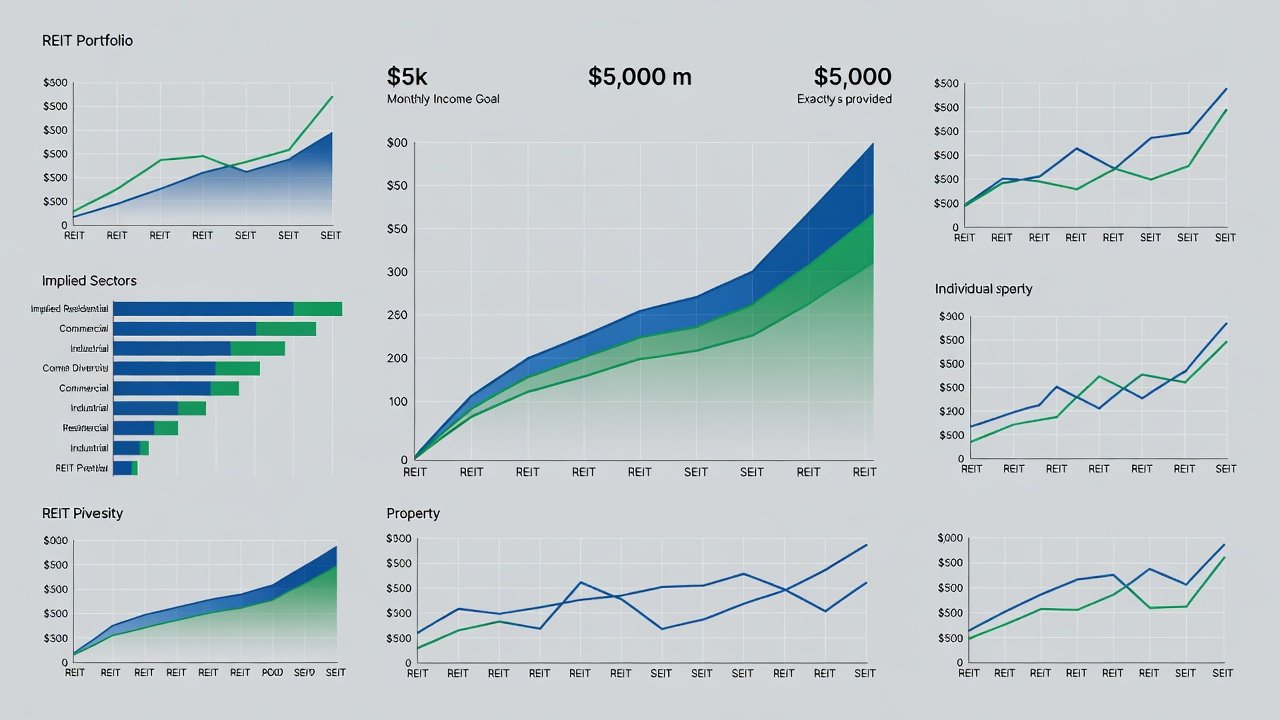
Introduction: Building Sustainable REIT Dividend Income in 2026
Real Estate Investment Trusts (REITs) provide investors with an accessible route to passive income by owning shares in portfolios of income-producing real estate. These trusts are legally required to distribute at least 90 percent of their taxable earnings as dividends, creating a consistent cash flow stream for shareholders. In the 2026 market environment, reaching a target of $5,000 in monthly passive income demands a structured approach that balances yield generation with capital preservation and risk management. This comprehensive guide details six practical steps, incorporating sector analysis, compounding techniques, and performance monitoring to help investors build a resilient portfolio.
REIT investing appeals to those seeking regular income without direct property management responsibilities. Whether focusing on residential rentals, commercial offices, or specialized sectors like healthcare facilities, success hinges on thorough research and disciplined execution. Investors must navigate interest rate fluctuations, economic cycles, and tenant stability to sustain long-term results. Beyond basic ownership, understanding macroeconomic influences such as employment rates and consumer spending patterns becomes essential for forecasting dividend reliability over multiple years.
Step 1: Define Your Income Goals and Risk Tolerance
Begin by establishing clear financial objectives. Calculate your required annual income and adjust for factors such as inflation, potential tax liabilities, and desired portfolio growth over time. Assess personal risk tolerance through honest evaluation of past investment experiences and emotional responses to market volatility. Conservative investors may prioritize lower-yield but stable residential REITs, while those comfortable with moderate risk can incorporate commercial properties for potentially higher returns. Document your timeline, emergency fund status, and overall net worth to create a realistic roadmap that avoids overexposure. Consider stress-testing your plan against hypothetical scenarios like a prolonged economic slowdown to ensure your strategy remains viable under pressure.
Step 2: Master REIT Selection Criteria
Effective selection starts with analyzing key financial metrics including funds from operations, adjusted funds from operations for a clearer picture of cash generation, occupancy rates consistently above 90 percent, and conservative debt levels. Examine management quality through leadership track records and strategic plans. Review tenant diversification to reduce reliance on single industries. Compare historical dividend growth against payout ratios to confirm sustainability. Cross-reference multiple data sources for a holistic view before committing capital. Additionally, evaluate lease expiration schedules and renewal probabilities to gauge future income stability, ensuring selections align with both current yields and projected resilience.
Step 3: Diversify Across Sectors and Property Types
Portfolio diversification minimizes the impact of sector-specific downturns. Allocate holdings between residential REITs, which benefit from steady housing demand, and commercial REITs that may deliver elevated yields during economic expansions. Further spread exposure across industrial warehouses, medical facilities, and retail centers. Geographic diversification across regions can also buffer against localized recessions or regulatory changes. Investors should periodically review correlations between holdings to maintain true independence rather than unintended overlap in economic sensitivities.
Step 4: Calculate Yields and Build Your Initial Portfolio
Determine yields by dividing annual dividends per share by current share price. Aim for a blended portfolio yield that supports your income goal while maintaining growth potential. Construct the portfolio with core positions in established, lower-risk REITs and supplement with targeted holdings for enhanced returns. Revisit allocation percentages periodically to align with evolving market conditions and personal circumstances. Incorporate example scenarios where shifting 10-15 percent of assets between sectors demonstrates measurable impacts on both income consistency and total return projections.
Step 5: Implement Dividend Reinvestment for Compounding
Enroll in dividend reinvestment plans to automatically purchase additional shares with distributions. This compounding effect accelerates portfolio growth over multiple years, helping close the gap to income targets faster. Utilize tax-advantaged accounts where possible to defer or reduce tax burdens on reinvested amounts. Track the increasing share count and projected future income to stay motivated. Explore how consistent reinvestment over a five- to ten-year horizon can transform modest starting capital into substantial income generators through the power of exponential growth.
Step 6: Track Performance and Adjust Regularly
Monitor holdings using brokerage dashboards, financial news platforms, and specialized REIT analysis tools. Review quarterly reports for occupancy trends, earnings surprises, and debt management updates. Adjust allocations annually or in response to significant economic shifts to preserve diversification and optimize yields. Set alerts for material changes in interest rates or sector performance. Incorporate annual portfolio audits that include peer benchmarking to identify opportunities for improvement or underperforming assets requiring replacement.
Residential vs Commercial REITs: A Detailed Comparison
Residential REITs typically offer more predictable cash flows due to consistent renter demand and lower vacancy sensitivity during downturns. Commercial REITs can provide higher dividend yields but face greater challenges from remote work trends and retail shifts. Investors often blend both categories, weighting toward residential for stability and commercial for growth opportunities. Consider lease duration, location quality, and property maintenance costs when evaluating options. Detailed side-by-side analysis reveals that residential assets often excel in inflation hedging while commercial properties may benefit more from urban revitalization projects.
Practical Portfolio Examples and Yield Calculations
Consider sample allocations that emphasize broad diversification across five to eight individual REITs. Calculate expected income by multiplying total invested capital by the weighted average yield. Factor in expense ratios and potential fee impacts when projecting net returns. These examples illustrate how incremental adjustments in sector weighting can influence overall income stability and growth trajectory. Walk through a multi-year projection showing how initial yield targets evolve with reinvestment and market appreciation.
Performance Tracking Tools and Resources
Leverage free and paid platforms for real-time data on REIT prices, dividend histories, and peer comparisons. Government resources provide regulatory context and market statistics. Regular review of these tools supports informed decision-making and early identification of underperforming holdings. Supplement digital tools with industry reports that offer forward-looking insights into supply and demand dynamics within specific property types.
Common Mistakes to Avoid
- Chasing the highest yields without evaluating underlying fundamentals.
- Over-concentrating in a single property type or geographic area.
- Ignoring rising interest rate environments that can pressure REIT valuations.
- Neglecting ongoing education about tax rules and reporting requirements.
- Failing to maintain adequate liquidity for opportunistic purchases during market dips.
Tax Implications and FAQs
REIT dividends generally receive ordinary income tax treatment rather than qualified dividend rates. Investors should consult official guidance for accurate filing. Common questions include handling of return of capital distributions and strategies for minimizing tax drag through account selection. Review authoritative materials at irs.gov, sec.gov, and reit.com. Additional macroeconomic context is available via federalreserve.gov. Further FAQs address the treatment of capital gains upon sale and the benefits of holding REITs inside retirement accounts versus taxable brokerage accounts.
Conclusion
Following these six steps equips investors with a repeatable framework for pursuing $5,000 monthly passive income through REIT dividends. Consistent application, combined with periodic adjustments, supports sustainable results in the 2026 landscape while mitigating unnecessary risks.


No comments yet. Be the first!