 Bullish Portfolio

Introduction to Asia-Pacific REITs for Passive Income
Asia-Pacific real estate investment trusts (REITs) present compelling opportunities for investors seeking high-yield dividend passive income in 2026. These vehicles own and operate income-generating properties across dynamic markets like Singapore, Japan, Australia, and Hong Kong. They distribute most rental income as dividends, offering geographic diversification beyond domestic holdings while potentially delivering attractive yields compared to many US alternatives. With economic recovery and urbanization trends strengthening across the region, 2026 could favor sectors benefiting from e-commerce growth and consumer spending. US investors can access these opportunities without direct property ownership through listed REITs, ETFs, or ADRs. The appeal lies in the region's robust infrastructure spending, rising middle-class populations, and increasing adoption of digital technologies that drive demand for modern commercial spaces. Unlike purely domestic strategies, Asia-Pacific exposure introduces uncorrelated returns that can smooth overall portfolio volatility over multi-year periods.
Many investors overlook how local regulatory reforms have improved transparency and governance in key jurisdictions. This evolution supports more reliable cash flows, making these REITs suitable for retirement accounts or income-focused portfolios. Historical performance patterns show resilience during global disruptions, particularly when backed by essential sectors like logistics and healthcare.
Why Consider Asia-Pacific REITs for Geographic Diversification?
Adding Asia-Pacific REITs helps reduce portfolio concentration risk tied to US real estate cycles. The region's economies often move independently due to local factors like infrastructure development and tourism recovery. This diversification can stabilize income streams during periods when US markets face headwinds such as rising interest rates or regional slowdowns. Investors gain exposure to fast-growing urban centers where property demand remains robust. Regulatory frameworks in places like Singapore emphasize transparency, supporting reliable dividend flows for passive income strategies. Furthermore, demographic shifts including aging populations in Japan and rapid urbanization in Southeast Asia create sustained needs for specialized real estate assets that US markets do not fully replicate.
Portfolio managers frequently note that cross-border allocations enhance resilience against inflation or policy changes confined to North America. Over the long term, this geographic spread may capture growth from emerging trade corridors and technology hubs.
Economic and Market Outlook for Asia-Pacific in 2026
Projections for 2026 highlight continued expansion in digital infrastructure and green building initiatives across the region. Governments are investing heavily in connectivity projects that boost logistics and data center demand. Consumer recovery in retail and hospitality sectors supports adaptive reuse of properties. According to analyses from major institutions, stable political environments in core markets reduce downside risks for property owners. Investors should watch interest rate trajectories set by central banks, as these influence borrowing costs and property valuations. Broader global trade patterns also play a role, with supply chain diversification benefiting warehouse operators in multiple countries.
Top-Performing Sectors: Logistics and Retail
Logistics REITs stand out due to surging e-commerce and supply chain needs. Modern warehouses and distribution centers in key hubs like Shanghai and Sydney generate steady rental income from long-term leases with multinational tenants. Retail REITs benefit from recovering consumer spending and experiential retail formats. Malls and shopping centers in Australia and Japan adapt with mixed-use developments that include residential and entertainment components, increasing foot traffic and ancillary revenue. Other notable sectors include data centers driven by digital transformation and healthcare facilities supporting aging populations in Japan and South Korea. Industrial properties tied to manufacturing reshoring also show promise in markets like Vietnam and Malaysia.
Key Selection Criteria for Asia-Pacific REITs
Regulatory Environments
Strong legal protections for minority investors matter greatly. Markets with clear disclosure rules and tax-advantaged REIT structures, such as those in Singapore and Australia, tend to foster more predictable distributions. Review local securities laws and enforcement records before committing capital.
Currency Risks
Fluctuations in local currencies versus the US dollar can impact returns. Investors should evaluate hedging options or focus on REITs with USD-denominated assets where available. Tools like forward contracts or hedged ETF share classes help manage this exposure.
Other Factors
Assess occupancy rates, debt levels, and management track records. Favor REITs with diversified tenant bases and conservative leverage to weather economic shifts. Analyze lease expiration schedules and renewal trends for sustainability of income.
Practical Steps for US Investors to Buy International REITs
US investors typically access Asia-Pacific REITs through exchange-traded funds (ETFs) that hold baskets of regional securities. These provide instant diversification and liquidity on US exchanges. American Depositary Receipts (ADRs) offer another route for individual REITs listed on major exchanges. Start by opening a brokerage account with international trading capabilities, then research specific tickers. Begin with small allocations and use dollar-cost averaging to manage entry timing. Review fund prospectuses for expense ratios and underlying holdings. Consider consulting a financial advisor registered with the U.S. Securities and Exchange Commission for personalized guidance on account types and suitability.
Yield Comparisons to US REITs
Asia-Pacific REITs frequently offer higher dividend yields than their US counterparts due to growth dynamics and market valuations. This can enhance passive income portfolios, though total returns depend on capital appreciation and currency movements. Qualitative analysis shows many regional names delivering robust payouts supported by strong fundamentals. Investors often compare distribution coverage ratios and payout histories to gauge sustainability rather than chasing headline yields alone.
Risk Mitigation Tactics
- Limit exposure to any single country to avoid geopolitical or policy risks.
- Use currency-hedged ETF options where possible.
- Monitor interest rate trends, as REITs are sensitive to borrowing costs; cross-reference data from the Federal Reserve.
- Rebalance annually to maintain target allocations.
- Diversify across multiple REIT managers and property types.
- Stay informed via economic reports from the International Monetary Fund on regional developments.
Real-World Portfolio Allocation Examples
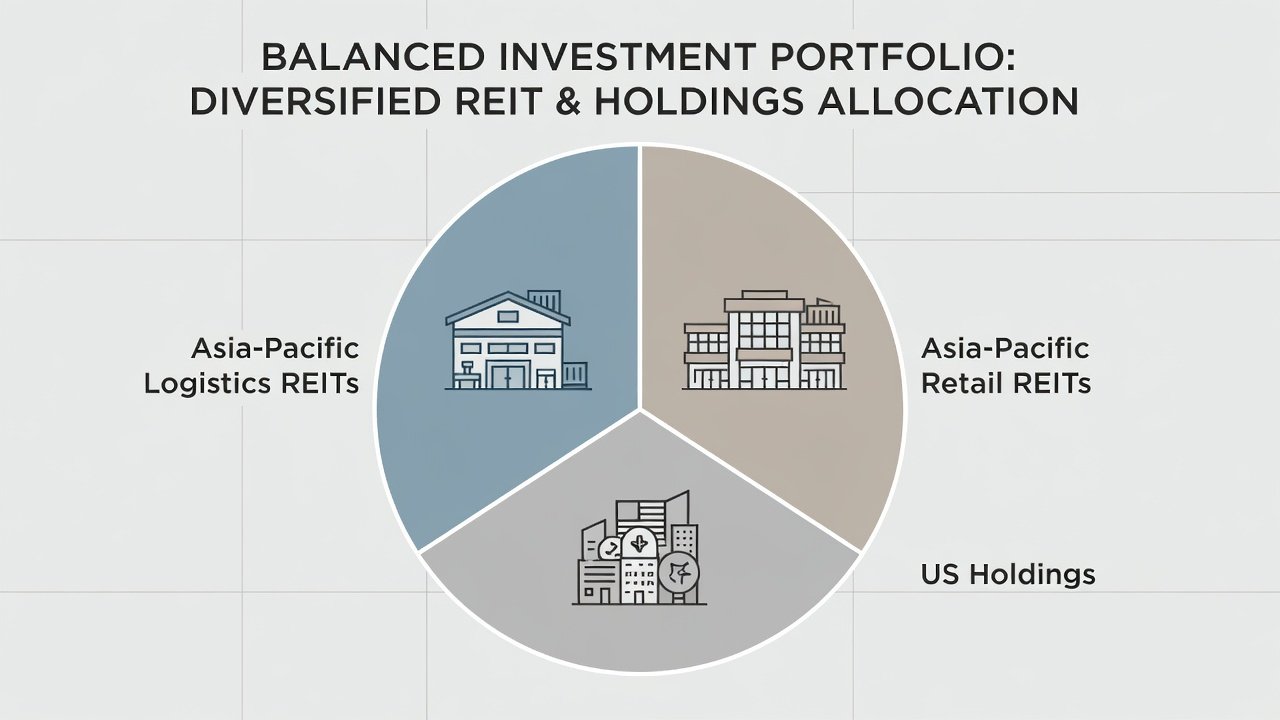
A balanced approach might allocate 10-15% of a diversified portfolio to Asia-Pacific REITs within the broader real estate sleeve. For example, pair Singapore logistics exposure with Australian retail holdings alongside US REIT ETFs for overall stability. Conservative investors could start at 5% and increase based on performance and risk tolerance. Aggressive growth portfolios may target 20% with careful monitoring of sector concentrations. One sample allocation could include 40% logistics, 30% retail, 20% data centers, and 10% healthcare across three country-focused ETFs. Review performance quarterly and adjust for any significant currency or occupancy shifts.
Tax Implications for US Investors
Dividends from foreign REITs may face withholding taxes in the source country. The IRS provides guidance on foreign tax credits to offset these on US returns. Report income on appropriate forms and consult a tax advisor familiar with international investments. Qualified accounts like IRAs can defer or eliminate certain tax complications. Track cost basis carefully for any capital gains realized upon sale of ADR positions or ETF shares.
Common Pitfalls to Avoid
Overlooking currency volatility often erodes gains. Ignoring local regulatory changes or high management fees can also diminish net yields. Avoid chasing the highest advertised yields without examining sustainability and underlying property quality. Another frequent error involves neglecting liquidity differences between ETFs and thinly traded individual ADRs. Finally, failing to account for political or trade policy developments can lead to unexpected drawdowns.
Conclusion
Asia-Pacific REITs offer a strategic path to high-yield passive income and diversification in 2026. By focusing on strong sectors, applying rigorous selection criteria, and using accessible vehicles like ETFs, US investors can build resilient income streams while managing risks effectively.
FAQ
What are typical entry points for Asia-Pacific REIT ETFs?
Investors can begin with established ETFs tracking regional indices through any major brokerage platform. Research current holdings and minimum investment requirements before purchasing.
How should investors monitor Asia-Pacific REIT performance?
Track quarterly dividend announcements, occupancy reports, and macroeconomic indicators from the region. Set up alerts for currency movements and regulatory updates affecting key markets.
Are there liquidity concerns with international REITs?
ETFs generally provide high liquidity on US exchanges. Individual ADRs vary by trading volume, so prioritize those listed on major venues.
What entry timing strategies work best for new investors?
Dollar-cost averaging over several months reduces timing risk compared to lump-sum purchases during volatile periods.
No comments yet. Be the first!