 Bullish Portfolio

Introduction to 401k Allocation for Passive Income
Retirement investors in 2026 are increasingly focused on generating consistent passive income within tax-advantaged accounts. Allocating a 401k toward dividend-paying stocks and real estate investment trusts (REITs) offers a strategic path to reliable yields while benefiting from deferred taxes. This guide provides in-depth strategies for optimizing your 401k to maximize these income streams through careful selection of assets that produce regular distributions.
Effective allocation requires understanding contribution rules, selecting appropriate funds, maintaining balance through scheduled reviews, and managing risks. Investors who combine dividend equities with REITs often achieve diversified exposure to both corporate earnings and property markets. The approach supports long-term wealth building by leveraging compounding in a sheltered environment.
Understanding Contribution Limits and Tax Advantages
Staying within annual contribution limits is essential for maximizing growth. The 401k structure allows pre-tax contributions that reduce taxable income today while allowing investments to compound without annual tax drag. This tax deferral is particularly powerful for income-oriented assets like dividends and REIT distributions, which can be reinvested fully each year.
Compared to taxable brokerage accounts, the advantage becomes clear over time. In a taxable account, qualified dividends and REIT income face annual taxation, reducing compounding power. Within a 401k, all distributions can be reinvested immediately, accelerating portfolio growth. The IRS provides official guidance on contribution limits and eligibility rules through its dedicated retirement pages.
Fund Selection Criteria for Dividend Stocks and REITs
When choosing funds, prioritize those with strong dividend histories, reasonable expense ratios, and sustainable payout ratios. Look for broad-market dividend ETFs or targeted REIT funds that hold diversified property portfolios across residential, commercial, and industrial sectors. Key criteria include consistent dividend growth over multiple market cycles, low turnover to minimize internal costs, and alignment with overall retirement timeline.
Investors should review fund prospectuses for yield sustainability and underlying holdings. Additional factors include the fund's beta relative to the broader market, liquidity of holdings, and management team track record. A diversified selection might combine a dividend aristocrats ETF with a global REIT fund to spread exposure across geographies and property types.
Recommended Rebalancing Schedule
Rebalancing maintains target allocations as market values shift. A practical approach involves reviewing your 401k allocation quarterly and making adjustments annually or when allocations drift beyond preset thresholds, such as 5%. This disciplined process prevents overexposure to any single asset class. For example, strong REIT performance in one year may require trimming to restore balance with dividend stock holdings.
Automated tools within many 401k platforms can help flag drifts, but manual oversight ensures alignment with personal goals. Rebalancing also provides an opportunity to harvest gains within the tax-deferred wrapper without immediate tax consequences.
Risk Management Strategies
Diversification across multiple dividend payers and REIT sectors reduces concentration risk. Investors should also consider their time horizon and risk tolerance when determining the percentage allocated to income assets versus growth holdings. Monitoring interest rate environments is important for REITs, as rate changes can influence property valuations. Pairing REIT exposure with stable dividend stocks helps offset potential volatility.
Additional safeguards include setting stop-loss equivalents through allocation caps and stress-testing the portfolio against historical downturns. Maintaining an emergency cash buffer outside the 401k further protects long-term holdings from forced liquidations.
Practical Steps for Implementation
- Review your current 401k lineup and identify available dividend and REIT options by examining the plan's investment menu and fund fact sheets.
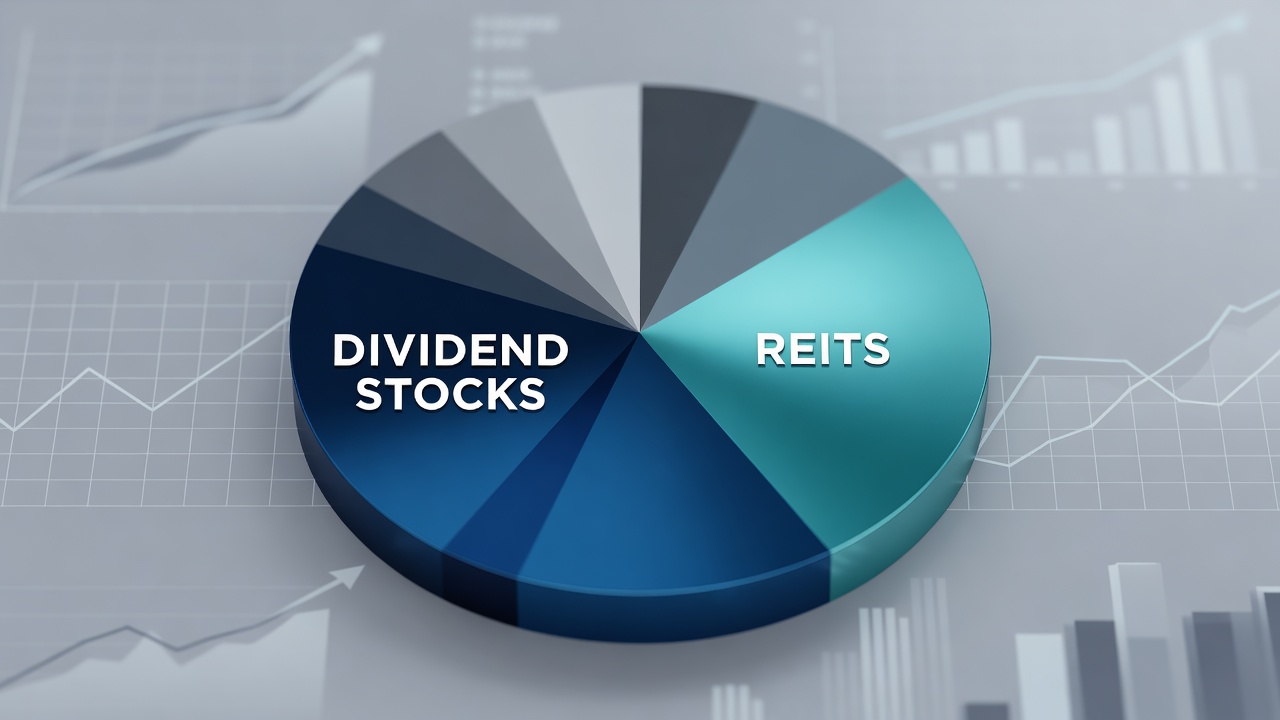
- Determine an initial allocation, such as 40% dividend-focused funds and 30% REITs, with the remainder in balanced holdings, based on your age and income needs.
- Set up automatic contributions to maintain consistent investment and take advantage of dollar-cost averaging.
- Schedule annual reviews to adjust based on performance and life changes, documenting decisions for future reference.
- Consult plan-specific resources or a fiduciary advisor to confirm choices align with overall retirement objectives.
Real-World Portfolio Examples
Consider a mid-career investor allocating 35% to a dividend aristocrat ETF, 25% to a broad REIT index fund, 25% to total stock market index, and 15% to bonds. This mix targets both income generation and moderate growth while keeping volatility in check. Over a decade, the dividend and REIT portions can generate meaningful cash flow that compounds within the account.
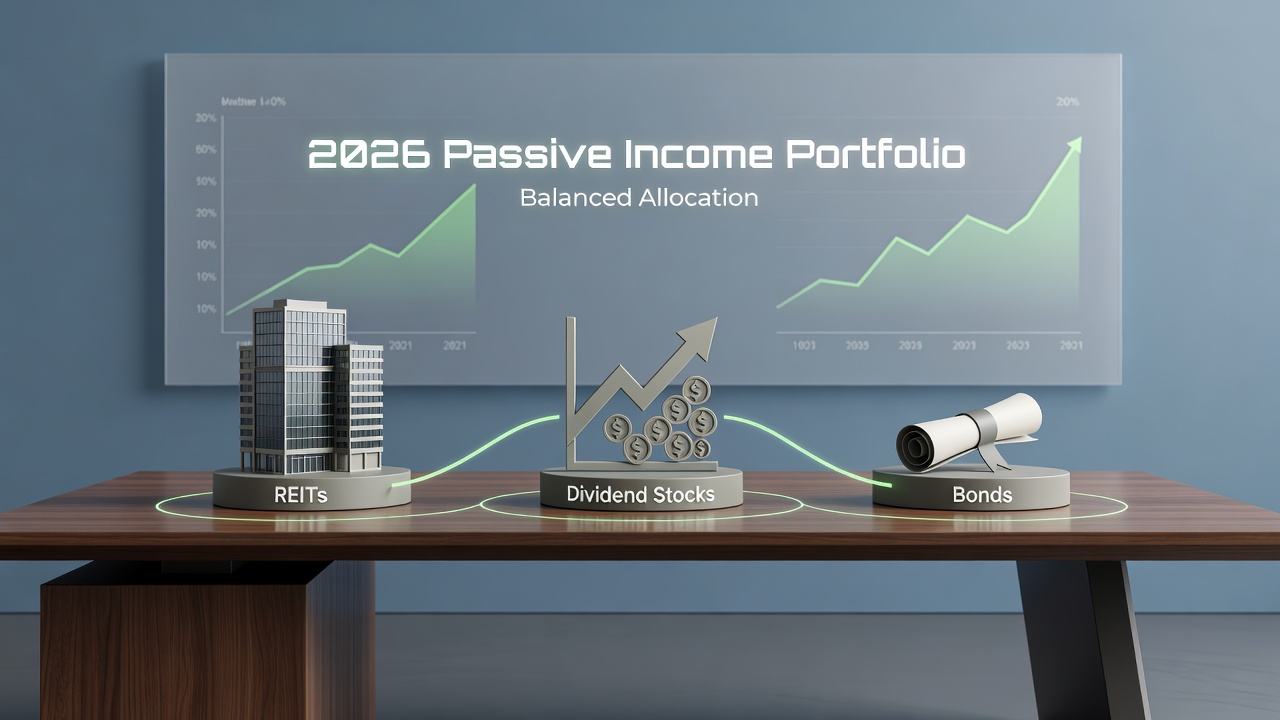
Another example features heavier REIT weighting for those nearing retirement who prioritize current yield over capital appreciation. A retiree might shift to 30% dividend stocks, 40% REITs, 20% bonds, and 10% cash equivalents to emphasize income stability. These examples illustrate how allocation percentages can evolve with life stage while remaining focused on passive income objectives.
Taxable vs Tax-Advantaged Outcomes
Over a 20-year horizon, the compounding effect within a 401k significantly outperforms equivalent holdings in a taxable account due to the absence of annual tax on distributions. REITs especially benefit because their distributions often include non-qualified income taxed at ordinary rates outside tax-advantaged accounts. Detailed comparisons show that the after-tax difference can exceed several percentage points annually when yields are reinvested.
Resources like the IRS website provide detailed guidance on retirement account rules, while SEC investor resources offer insights into fund disclosures. Additional authoritative information is available from Federal Reserve publications on economic factors affecting yields.
Common Mistakes to Avoid
Many investors overlook expense ratios when selecting funds, leading to eroded returns over decades. Another frequent error is failing to rebalance after market rallies, resulting in unintended concentration in REITs. Avoiding these pitfalls requires regular education and disciplined processes rather than reactive decisions.
Monitoring Performance in Changing Markets
2026 market conditions may include shifting interest rates and sector rotations. Regular performance tracking against benchmarks helps identify when adjustments are warranted. Combining quantitative metrics with qualitative assessments of economic trends supports informed decision-making.
Conclusion
Strategic 401k allocation toward dividend stocks and REITs can create substantial passive income for 2026 retirees. By focusing on disciplined selection, regular rebalancing, and risk controls, investors position themselves for sustainable long-term results that support financial independence.
FAQ
What percentage should I allocate to REITs?
Many investors target 10-30% depending on risk tolerance and time horizon, adjusting as retirement approaches.
How often should I rebalance?
Annual reviews with threshold-based adjustments work well for most 401k participants to maintain target weights.
Are REIT dividends taxed differently?
Inside a 401k, all distributions grow tax-deferred regardless of character, simplifying tax planning.
Can I include international REITs?
Yes, many plans offer global REIT funds that add geographic diversification to domestic holdings.
What happens if I exceed contribution limits?
Excess contributions must be withdrawn by the tax deadline to avoid penalties, so tracking is essential each year.

No comments yet. Be the first!