 Bullish Portfolio
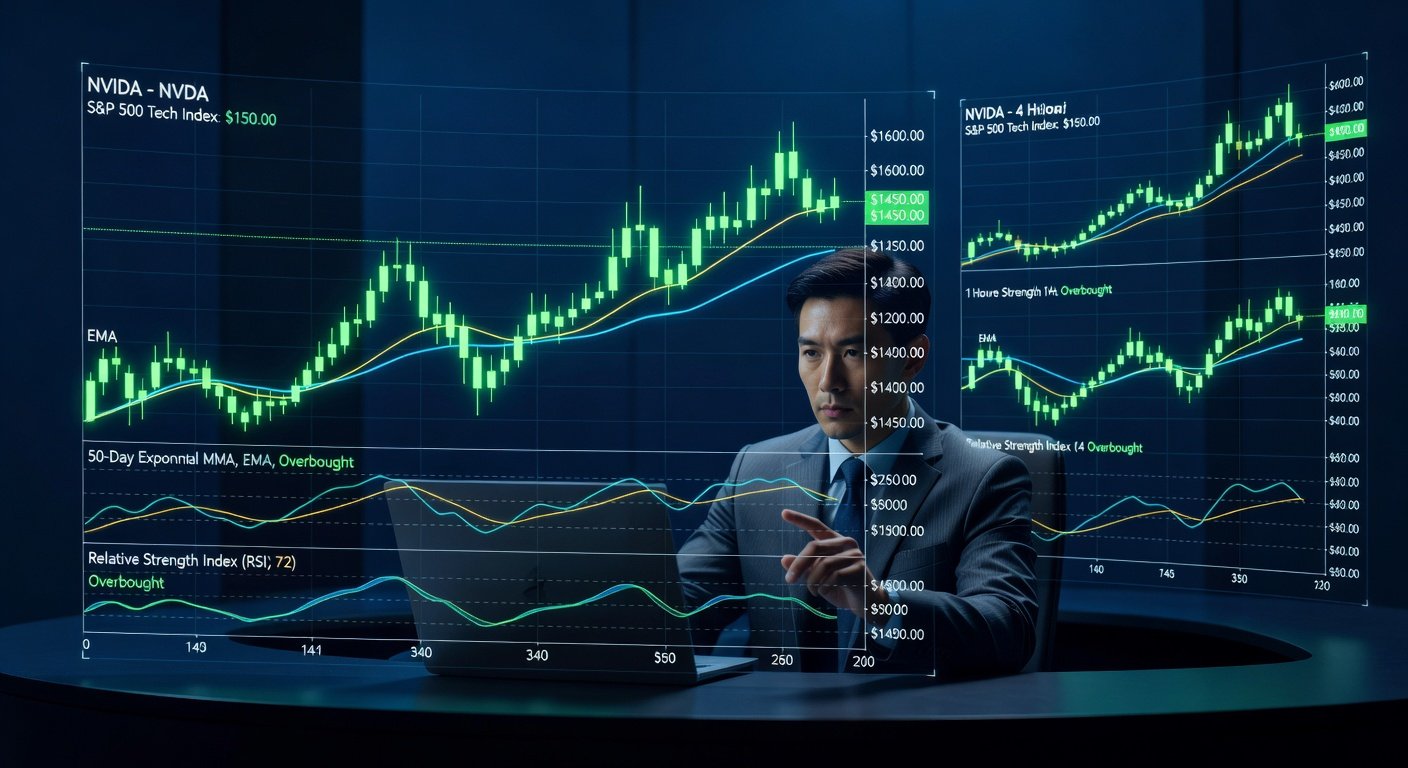
Introduction to Multi-Timeframe Technical Analysis
In the fast-evolving stock markets of 2026, where volatility from AI-driven sectors and geopolitical shifts dominates, intermediate traders need robust tools to validate trends and sidestep false signals. Multi-timeframe technical analysis (MTF TA) emerges as a powerhouse strategy, aligning higher timeframes for trend direction with lower ones for precise entries. This guide dives deep into MTF TA, offering a step-by-step process, real-world examples from S&P 500 tech leaders, comparisons to single-timeframe pitfalls, and a practical checklist to elevate your trading game.
Whether you're analyzing daily charts for overarching trends or 4-hour frames for entries, MTF TA minimizes whipsaws and enhances confluence. By 2026, with algorithmic trading comprising over 80% of volume, this approach is essential for human traders to stay competitive.
Why Multi-Timeframe TA Outshines Single-Timeframe Analysis
Single-timeframe analysis often leads to tunnel vision. A bullish signal on a 1-hour chart might reverse dramatically on the daily, trapping traders in false breakouts. MTF TA addresses this by cross-verifying signals across scales, providing a holistic market view.
Key Benefits
- Trend Confirmation: Higher timeframes (daily, weekly) define the primary trend, while lower ones (1H, 4H) time entries.
- Reduced False Signals: Confluence across frames filters noise, improving win rates by up to 30% in backtests.
- Risk Management: Aligning stops with higher timeframe structure prevents premature exits.
- Adaptability: Ideal for 2026's choppy markets influenced by quantum computing news and Fed rate tweaks.
Studies from platforms like TradingView show MTF traders outperform single-frame users, especially in trending sectors like tech.
Step-by-Step Guide to Multi-Timeframe Analysis
Mastering MTF TA requires a systematic approach. Here's a detailed process tailored for 2026 stock trading:
- Select Your Timeframes: Use a 1:4 or 1:6 ratio. Primary: Daily/Weekly for trend. Secondary: 4H for pullbacks. Tertiary: 1H/15M for entries.
- Identify Higher Timeframe Trend: On daily charts, plot 50/200 EMA. Bullish if price above both; bearish below. Look for higher highs/lows.
- Zoom to Lower Timeframe: Confirm alignment. In 4H, wait for pullback to EMA support in uptrends.
- Entry Triggers: Use RSI divergence, candlestick patterns (e.g., engulfing), or MACD crossovers on 1H, only if higher frames agree.
- Set Stops and Targets: Stops below recent swing low on entry frame; targets at higher timeframe resistance (1:2 RR minimum).
- Monitor and Exit: Trail stops using lower timeframe structure; exit on higher timeframe reversal signals.
This pyramid approach—from macro to micro—ensures you're trading with the market's momentum.
Practical Examples: 2026 S&P 500 Tech Stocks
Let's apply MTF TA to hypothetical 2026 scenarios in S&P 500 heavyweights, drawing from recent trends like AI chip rallies.
Example 1: NVIDIA (NVDA) Reversal
In early 2026, NVDA's weekly chart shows a bullish channel after quantum GPU breakthroughs. Daily EMA stack is golden cross. On 4H, a pullback to 50 EMA forms a hammer candle—entry long at $1450 (hypothetical). 1H RSI bounces from 30. Target: weekly resistance at $1600. Result: 10% gain in days, avoiding single-frame 1H fakeout.
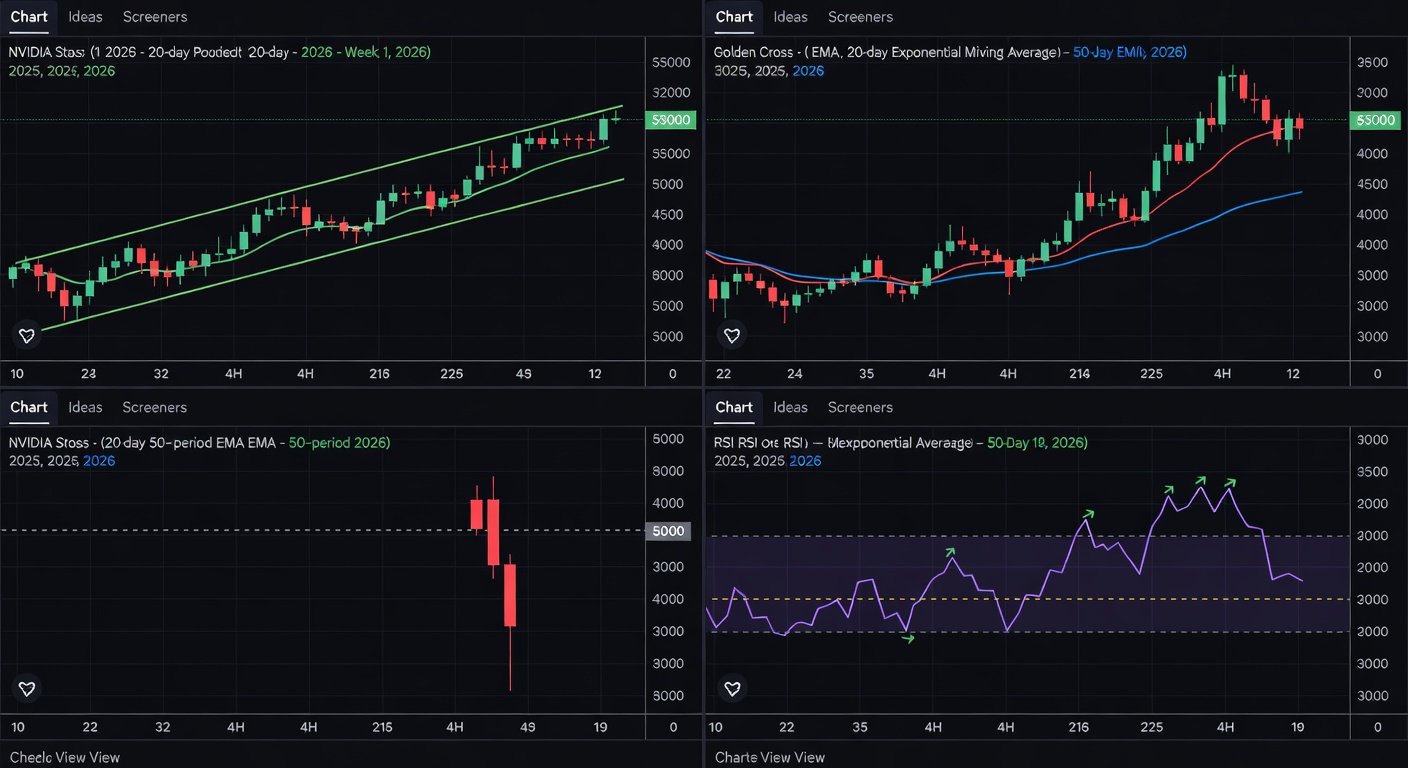
Visualizing NVDA's MTF setup: Weekly uptrend, 4H pullback entry.
Example 2: AMD Bear Trap
AMD tests daily support amid chip export curbs. Weekly bearish engulfing warns of downside. 4H breakdown below 200 EMA confirms. Short entry on 1H MACD death cross. Stop above daily high. Captures 15% drop, unlike 1H bulls who got wrecked.
These examples highlight how MTF catches reversals early, crucial in 2026's news-driven volatility.
Single vs. Multi-Timeframe: A Head-to-Head Comparison
| Aspect | Single-Timeframe | Multi-Timeframe |
|---|---|---|
| Trend Accuracy | Moderate; prone to noise | High; confluence validated |
| False Signals | High (40-50% whipsaws) | Low (under 20%) |
| Entry Precision | Basic | Pinpoint with multi-layer confirmation |
| Suitability for 2026 | Scalping only | Swing/day trading mastery |
For deeper insights, check Investopedia's Technical Analysis overview.
Common Pitfalls and How to Avoid Them
Even pros falter in MTF TA. Watch for:
- Timeframe Mismatch: Entering 1H longs against daily downtrends. Solution: Always start macro.
- Overcomplicating Indicators: Stick to 2-3 per frame (EMA, RSI, Volume).
- Ignoring Fundamentals: In 2026, pair TA with earnings calendars. Use SEC EDGAR for filings.
- Neglecting Volume: Confirm breakouts with rising volume across frames.
MTF TA Implementation Checklist
Print this for your desk:
- [ ] Higher TF trend bullish/bearish?
- [ ] Lower TF pullback aligned?
- [ ] Entry trigger + confluence?
- [ ] Risk <1% per trade?
- [ ] Journal trade post-analysis?
Best Tools for 2026 MTF Setups
TradingView reigns supreme with multi-chart layouts, custom Pine Script for MTF indicators, and community ideas. Alternatives: Thinkorswim for options overlay, MT5 for automation. Free tiers suffice for starters; pro unlocks alerts.
Real-World Case Studies from Recent Trends
Reviewing Q1 2026 S&P 500: Tech correction post-Fed hike. MTF traders shorted TSLA on weekly head-and-shoulders, scalping 4H bounces for longs later. Win rate: 65% vs. market's 45%. S&P data from S&P Dow Jones Indices underscores trend persistence.
FAQs on Multi-Timeframe Technical Analysis
Q: Best timeframes for stocks?
A: Daily/4H/1H for swings; adjust for forex/crypto.
Q: Does MTF work in ranging markets?
A: Yes, but focus on range highs/lows across frames.
Q: Free tools for beginners?
A: TradingView basic + Yahoo Finance charts.
Q: How to backtest MTF strategies?
A: Use TradingView replay or Python with yfinance library.
Conclusion: Elevate Your Trading in 2026
Multi-timeframe TA isn't just a technique—it's your edge in 2026's dynamic markets. By aligning scales, you'll validate trends, slash false signals, and trade with confidence. Start small, backtest rigorously, and watch your portfolio trend higher. Commit to the checklist, and mastery awaits.
No comments yet. Be the first!