 Bullish Portfolio
Introduction to Risk Management in 2026 Market Trends
As markets evolve in 2026, integrating robust risk management with technical analysis becomes essential for navigating shifting trends. This guide provides practical steps for position sizing, stop-loss placement, and portfolio diversification to safeguard gains during volatile periods. Investors face unique challenges from economic shifts, geopolitical events, and rapid technological changes that can amplify both opportunities and risks. By combining quantitative tools with disciplined rules, traders can maintain consistency even when trends reverse unexpectedly.
Understanding Search Intent: Protecting Gains in Shifting Trends
Investors searching for 2026 stock market analysis often seek methods to mitigate downside while capitalizing on trends. Key concerns include volatility spikes and trend reversals, addressed through disciplined techniques rather than reactive trading. Search data reveals users want actionable frameworks that cover everything from entry decisions to exit strategies, emphasizing protection of capital over aggressive profit chasing. This intent drives the need for comprehensive coverage of tools that adapt to changing market regimes.
Position Sizing Fundamentals
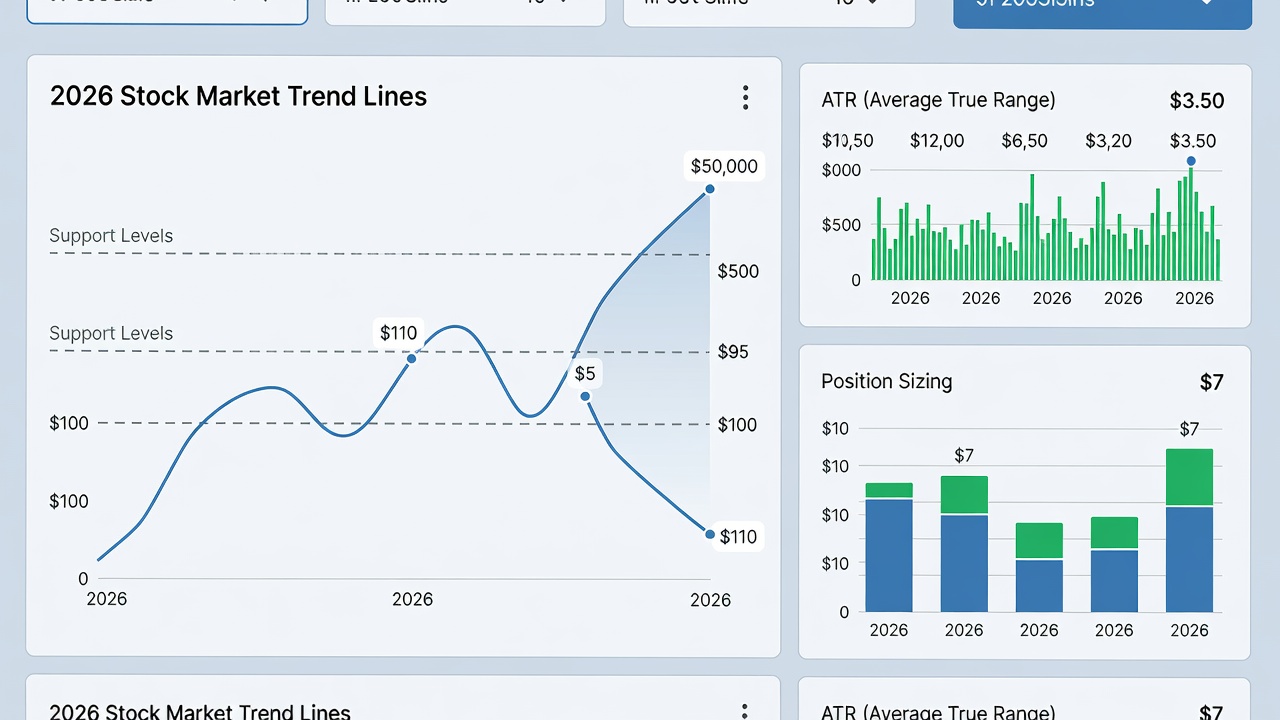
Effective position sizing determines how much capital to allocate per trade based on account size and risk tolerance. Calculate position size by dividing total risk amount by the distance to your stop-loss level. For example, with a $50,000 account risking 1% per trade, limit exposure to $500 per position. Advanced practitioners further adjust for correlation between assets to avoid over-concentration. Consider volatility-adjusted sizing where higher beta stocks receive smaller allocations. This approach prevents any single trade from jeopardizing the overall portfolio during unexpected drawdowns common in 2026's dynamic environment.
Stop-Loss Placement Using Support Levels
Place stop-loss orders just below key support levels identified on charts to allow normal price fluctuations while exiting losing trades early. This technique prevents small losses from escalating during trend shifts. Combine horizontal support with trendline breaks for added confirmation. In practice, review multiple timeframes to identify the strongest levels, such as daily chart supports reinforced by weekly ones. Avoid placing stops at obvious round numbers where clusters of orders may trigger slippage.
Portfolio Diversification Techniques for Volatility
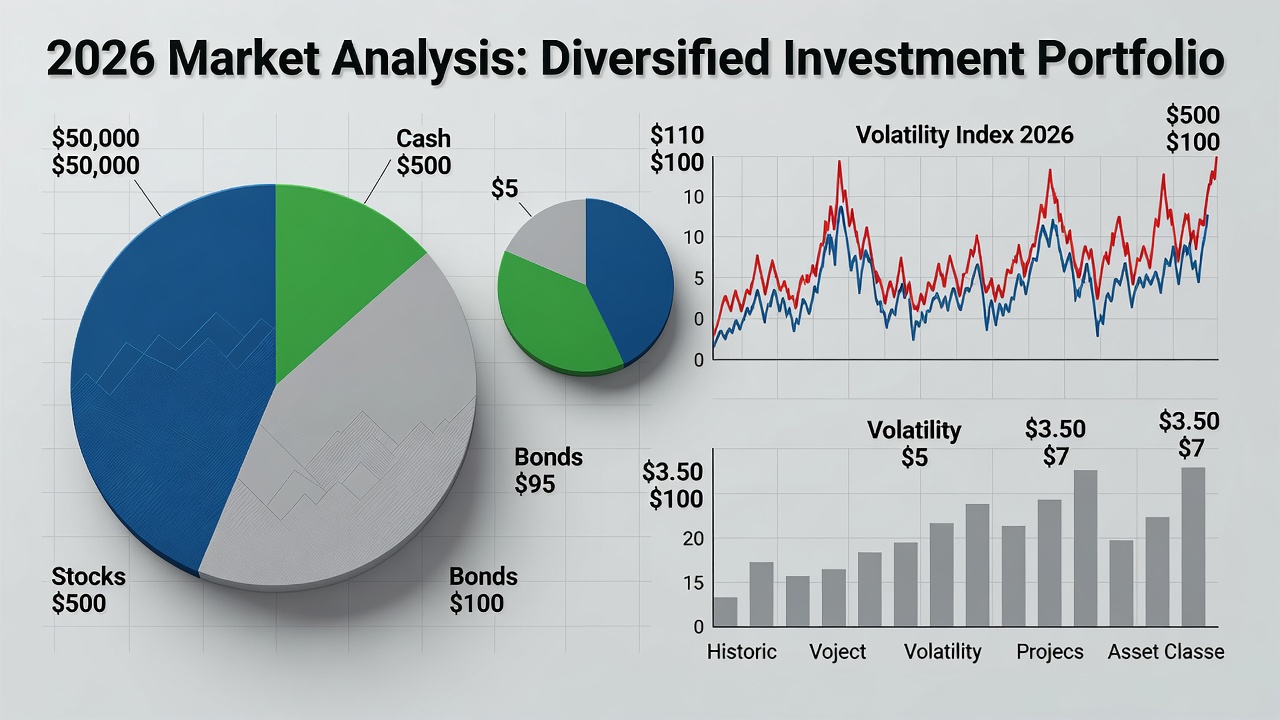
Spread investments across sectors, asset classes, and geographies to reduce unsystematic risk. In volatile 2026 conditions, consider allocating to defensive stocks alongside growth names and maintaining cash reserves for opportunities. Implement correlation analysis to ensure holdings do not move in lockstep. For instance, pair technology equities with utilities and international emerging market ETFs. Rebalance quarterly to maintain target allocations, and incorporate alternative assets like commodities when equity correlations rise. This layered approach cushions portfolios against sector-specific shocks while preserving upside exposure.
Calculating Risk-Reward Ratios
Aim for a minimum 1:2 risk-reward ratio, where potential profit is at least twice the risked amount. This ensures profitability even with a 40% win rate. Review historical trade data to refine ratios for current market conditions. Walk through an example: entering a long position at $100 with a stop at $95 risks $5 per share. Target at least $110 to achieve the 1:2 ratio. Track win rates and average win/loss sizes over 50 trades to optimize the ratio dynamically. Adjust expectations upward in strong trending markets and tighten during range-bound periods.
Using ATR for Dynamic Stop-Losses
The Average True Range (ATR) indicator measures volatility to set adaptive stops. Multiply ATR by 1.5 or 2 and subtract from entry price for long positions. This method adjusts automatically as market volatility changes. Calculate a 14-period ATR on the daily chart for most stocks. In a high-volatility stock with ATR of $3.50, a 2x multiplier sets the stop $7 away. Update stops as ATR expands or contracts, trailing winners while protecting profits. This prevents stops from being too tight in choppy markets or too loose in calm ones, improving overall trade expectancy.
Avoiding Over-Leveraging Pitfalls
Over-leveraging amplifies both gains and losses. Limit leverage to 2:1 or less during uncertain trends, and monitor margin requirements closely to avoid forced liquidations. Track total portfolio leverage daily and maintain a buffer above broker minimums. Educate yourself on margin call mechanics and set personal alerts at 50% of available margin. Conservative leverage preserves flexibility for adding to winning positions or weathering volatility spikes without emotional decisions.
Conservative vs Aggressive Approaches Compared
- Conservative: Smaller positions (0.5% risk), wider stops based on major supports, emphasis on diversification across 15+ holdings, lower turnover, and focus on capital preservation during uncertain 2026 trends.
- Aggressive: Higher risk per trade (2%), tighter ATR-based stops, concentrated positions in 5-8 high-conviction trends, higher turnover, and willingness to scale into breakouts with strict rules for quick exits.
Choose based on experience and market environment, starting conservative when trends are unclear. Hybrid models allow scaling risk up only after consistent profitability over multiple quarters.
Real-World Example: Applying These Strategies
Consider a hypothetical 2026 tech stock breaking support: size the position to risk 1%, set stop below recent low using ATR, and diversify with bonds. Step one involves confirming the breakout on volume and aligning with broader market trend via moving averages. Next, calculate exact shares using the risk amount and stop distance. Monitor the position daily for any fundamental changes like earnings surprises. If the trade moves favorably, trail the stop using a chandelier exit based on ATR. This step-by-step application demonstrates how rules-based risk management turns a potentially emotional decision into a repeatable process that limits losses to predefined levels while allowing winners to run.
Common Mistakes to Avoid
- Ignoring overall market context when placing stops, leading to premature or delayed exits.
- Adjusting stops emotionally instead of rules-based, which often widens losses.
- Neglecting correlation between holdings during diversification, creating hidden concentration risk.
- Over-relying on backtested ratios without forward-testing in live 2026 conditions.
- Failing to account for slippage and commissions in risk calculations.
FAQ on Common Pitfalls
How often should stops be reviewed?
Review weekly or when significant news emerges, but avoid daily tinkering that leads to premature exits. Use alerts to maintain discipline without constant screen time.
What role does the Federal Reserve play in 2026 volatility?
Policy decisions influence trends; monitor updates via federalreserve.gov for context on rate environments and forward guidance.
Is diversification enough during black swan events?
Combine with stop-losses and position sizing, as diversification alone may not fully protect against systemic shocks. Consult resources at sec.gov for regulatory perspectives on investor protections.
Should beginners start with paper trading these techniques?
Yes, practice position sizing and ATR stops in simulated environments for at least three months before risking real capital to build confidence and refine personal rules.
Conclusion
Integrating these risk management practices into 2026 technical analysis empowers traders to handle trend shifts confidently. Consistent application protects capital and supports long-term success across varying market conditions.
No comments yet. Be the first!