 Bullish Portfolio

Introduction to Active Value Investing in 2026
Active value investing merges the discipline of identifying undervalued securities with proactive management to capitalize on market inefficiencies. As markets evolve with technological advancements and shifting global dynamics in 2026, this strategy demands rigorous adherence to core principles to deliver superior long-term returns. Many investors blend active tactics like frequent rebalancing and deep fundamental analysis with value metrics such as low price-to-book ratios, yet they frequently encounter pitfalls that undermine performance. These errors often stem from psychological biases, incomplete data analysis, or failure to adapt to macroeconomic changes. This comprehensive guide dissects the most common mistakes, drawing on historical precedents and forward-looking insights to equip readers with tools for refinement. By examining overvaluation traps, position sizing issues, and overlooked economic indicators alongside real case studies, investors can build more resilient portfolios.
Overvaluation Traps: Misjudging Intrinsic Value
Overvaluation occurs when investors purchase stocks that seem inexpensive based on surface-level metrics but exceed their true worth after thorough scrutiny. In 2026, rapid innovation cycles in sectors like artificial intelligence and renewable energy can inflate expectations, leading to mispriced opportunities. A frequent error involves relying solely on trailing earnings without adjusting for normalized or forward-looking figures. For example, during the 2025 market upswing, many targeted industrial stocks trading at apparent discounts to peers, only to discover hidden liabilities in supply chains that eroded margins. To avoid this, employ multi-stage discounted cash flow models that incorporate conservative growth assumptions and stress-test against various scenarios. Compare valuations against industry medians using data from regulatory filings. Cross-reference with qualitative factors such as competitive moats and management track records. Investors should also monitor for value traps where declining businesses appear cheap due to temporary earnings dips. Practical steps include setting strict thresholds for margin of safety, typically requiring at least 30% undervaluation before entry, and revisiting theses quarterly to detect shifts in fundamentals.
Poor Position Sizing and Risk Management
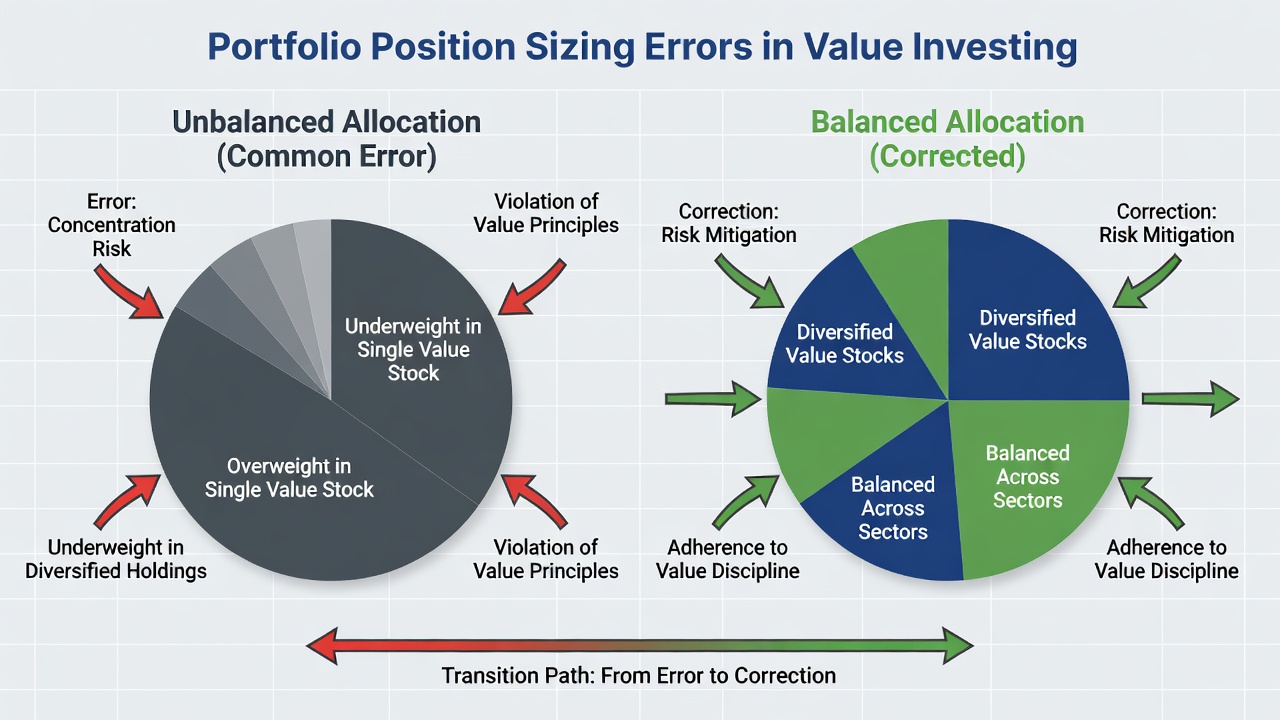
Improper allocation of capital across holdings represents another critical oversight that magnifies losses during adverse events. Active value strategies thrive on concentration in high-conviction ideas, yet excessive bets on single names expose portfolios to idiosyncratic risks. Historical patterns show that investors who placed 25% or more of assets in one underperforming value stock during downturns experienced prolonged recovery periods compared to those maintaining diversified limits. Effective sizing incorporates volatility measures like beta and standard deviation to scale positions proportionally. For instance, a high-beta stock might warrant half the allocation of a stable utility name. Compare unsuccessful approaches, where fixed dollar amounts were used regardless of conviction, against successful ones that apply percentage-based rules tied to overall portfolio volatility. Incorporate stop-loss mechanisms or predefined review triggers to rebalance when positions drift beyond targets. This disciplined framework preserves capital for better opportunities while allowing active adjustments.
Neglecting Economic Signals and Macro Factors
Economic indicators provide essential context for value assessments, yet many active investors prioritize micro-level analysis at the expense of broader trends. Ignoring signals such as interest rate trajectories, inflation data, or employment statistics can result in holdings that appear undervalued in isolation but suffer from systemic headwinds. In recent cycles, portfolios heavy in cyclical value stocks faltered when unexpected policy shifts altered discount rates. To integrate these factors effectively, establish a routine of reviewing reports from central banking authorities and adjusting valuation multiples accordingly. Create scenario analyses that model impacts from varying GDP growth rates or commodity price fluctuations. This macro overlay enhances timing decisions and prevents entries into sectors misaligned with prevailing conditions.
Real-World Case Examples and Corrections
Examining past errors offers concrete lessons for 2026 strategies. One notable instance involved retail-focused value hunters in 2024 who accumulated positions in brick-and-mortar retail chains based on low price-to-sales ratios, disregarding e-commerce disruptions. The correction came through implementing enhanced competitive analysis and pivoting to hybrid business models with stronger digital footprints. Another example highlights energy sector miscalculations in 2025, where geopolitical tensions were underestimated, leading to volatile cash flows. Successful investors countered this by layering in sensitivity testing for external shocks. In contrast, approaches modeled after enduring principles emphasize patience and continuous education, yielding steadier compounding through market cycles.
Actionable Checklists for Active Value Investors
- Conduct full fundamental reviews including balance sheet strength, cash flow consistency, and earnings quality before committing capital.
- Apply dynamic position limits scaled to asset volatility and personal conviction scores, never exceeding 10% in any single holding initially.
- Monitor key economic releases monthly and update intrinsic value estimates to reflect new data points.
- Document investment theses in writing with clear entry, monitoring, and exit criteria to reduce emotional decision-making.
- Perform annual portfolio audits to ensure alignment with value criteria and rebalance as needed.
- Evaluate behavioral influences such as confirmation bias during research phases.
Comparisons to Successful Approaches
Failed active value efforts often chase apparent bargains without sufficient margin of safety or diversification buffers. In comparison, proven methods integrate rigorous quantitative screens with qualitative judgment, resulting in lower drawdowns during corrections. For instance, portfolios that pair active selection with systematic rebalancing have historically outperformed static holdings in fluctuating environments. Adopting frameworks from established investment education resources further refines execution and fosters long-term discipline.
FAQ on Active Value Methods
How does active value differ from passive indexing?
Active value strategies involve selective stock picking based on detailed analysis of undervalued opportunities, whereas passive indexing replicates market benchmarks with minimal intervention. The hybrid model seeks alpha through targeted holdings while maintaining some broad exposure for stability.
What tools help avoid overvaluation?
Advanced financial modeling platforms combined with official regulatory disclosures enable precise intrinsic value calculations. Regular peer benchmarking and scenario planning add layers of protection against misjudgments.
Is position sizing more critical in 2026?
Market interconnectedness and rapid information flows heighten the importance of calibrated allocations to mitigate amplified risks across correlated assets.
How can investors incorporate economic signals effectively?
Subscribe to scheduled data releases and build simple dashboards tracking leading indicators to inform ongoing thesis adjustments without overreacting to noise.
Conclusion
Mastering active value investing in 2026 requires vigilant avoidance of these prevalent errors through structured processes and continuous learning. By prioritizing accurate valuations, prudent sizing, and macro awareness, investors enhance their capacity for sustainable returns. Implement the provided checklists and draw insights from documented cases to strengthen portfolio construction and decision-making in the year ahead.


No comments yet. Be the first!