 Bullish Portfolio
Introduction to Active Value Stock Selection in 2026
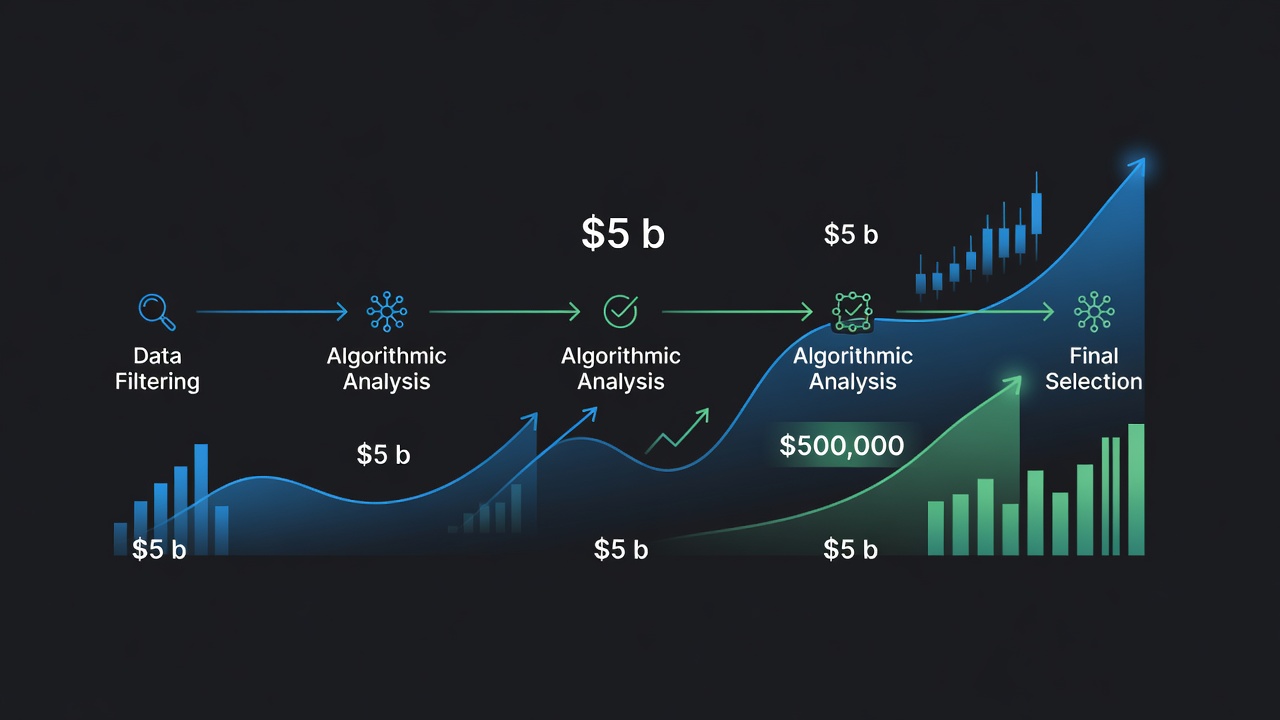
Active value stock selection combines disciplined fundamental analysis with proactive portfolio management to identify undervalued opportunities. In 2026 markets, investors face evolving economic conditions, technological shifts, and regulatory changes that demand a structured approach. This framework provides intermediate investors with actionable steps to define criteria, screen opportunities, analyze companies deeply, calculate risk-reward profiles, and monitor holdings actively. Unlike passive strategies, active value investing requires ongoing engagement to capture mispricings while protecting capital through margin of safety principles.
Successful value investors focus on companies trading below their intrinsic worth while maintaining the flexibility to adjust positions based on new information. The process outlined here draws from established principles and adapts them for current conditions, including higher interest rate environments and sector rotations driven by innovation. By following this sequential method, investors can build resilient portfolios that weather volatility and deliver superior long-term returns.
Step 1: Define Your Investment Criteria
Begin by establishing clear, measurable criteria that align with your risk tolerance, time horizon, and financial goals. Key elements include minimum market capitalization, acceptable debt levels, and target valuation multiples such as price-to-earnings or price-to-book ratios. Consider sector preferences and geographic exposure to ensure diversification across cyclical and defensive industries.
Document these criteria in a written investment policy statement to maintain discipline during market volatility. For example, an investor might set a minimum market capitalization of $5 billion to ensure liquidity and institutional interest. Debt-to-equity ratios should remain below 0.5 for most holdings to minimize bankruptcy risk, while return on equity targets above 12% signal efficient capital allocation by management teams.
- Minimum market cap: Focus on mid- and large-cap stocks for liquidity and analyst coverage.
- Debt-to-equity ratio: Typically below 0.5 for financial stability across economic cycles.
- Dividend yield: Seek sustainable payouts above the market average where possible, with payout ratios under 60%.
- Return on equity: Target consistent historical performance above 10% over five years.
- Free cash flow yield: Prioritize companies generating at least 5% free cash flow relative to enterprise value.
Review these criteria annually and adjust only when personal circumstances or broad market regimes shift significantly.
Step 2: Screen for Undervalued Opportunities
Use quantitative filters to narrow the universe of stocks. Reliable screening tools from financial data providers help identify candidates trading at discounts to their historical averages or peer groups. Apply filters for low price-to-earnings ratios, high free cash flow yields, and improving earnings trends while excluding companies with recent accounting red flags.
Common quantitative filters include price-to-earnings ratio below the sector median, price-to-book ratio under 1.5, positive earnings growth over the past three years, and free cash flow margin exceeding 8%. After running initial screens on platforms connected to public filings, review results for data accuracy and eliminate outliers caused by one-time events such as asset sales or litigation settlements.
Refine screens further by incorporating momentum indicators like 52-week price performance to avoid value traps where cheap stocks remain cheap due to deteriorating fundamentals. This step typically reduces thousands of listed equities to a manageable list of 50 to 100 candidates for deeper review.
Step 3: Conduct Deep Fundamental Analysis
Move beyond numbers to qualitative assessment. Examine management quality, competitive advantages, industry dynamics, and potential catalysts for value realization. Review the latest 10-K and 10-Q filings available on the U.S. Securities and Exchange Commission website for detailed financial disclosures and risk factors.
Assess business models by asking whether the company possesses a durable moat through brand strength, network effects, or cost advantages. Analyze the income statement for revenue stability, the balance sheet for asset quality and leverage trends, and the cash flow statement for sustainable free cash generation. Incorporate ESG considerations if they materially affect long-term performance, such as regulatory risks in energy sectors or supply chain vulnerabilities in technology.
Compare the target company against three to five direct competitors using standardized financial ratios. Identify specific catalysts such as new product launches, cost-cutting initiatives, or industry consolidation that could close the valuation gap within 12 to 24 months.
Step 4: Apply Risk-Reward Calculations
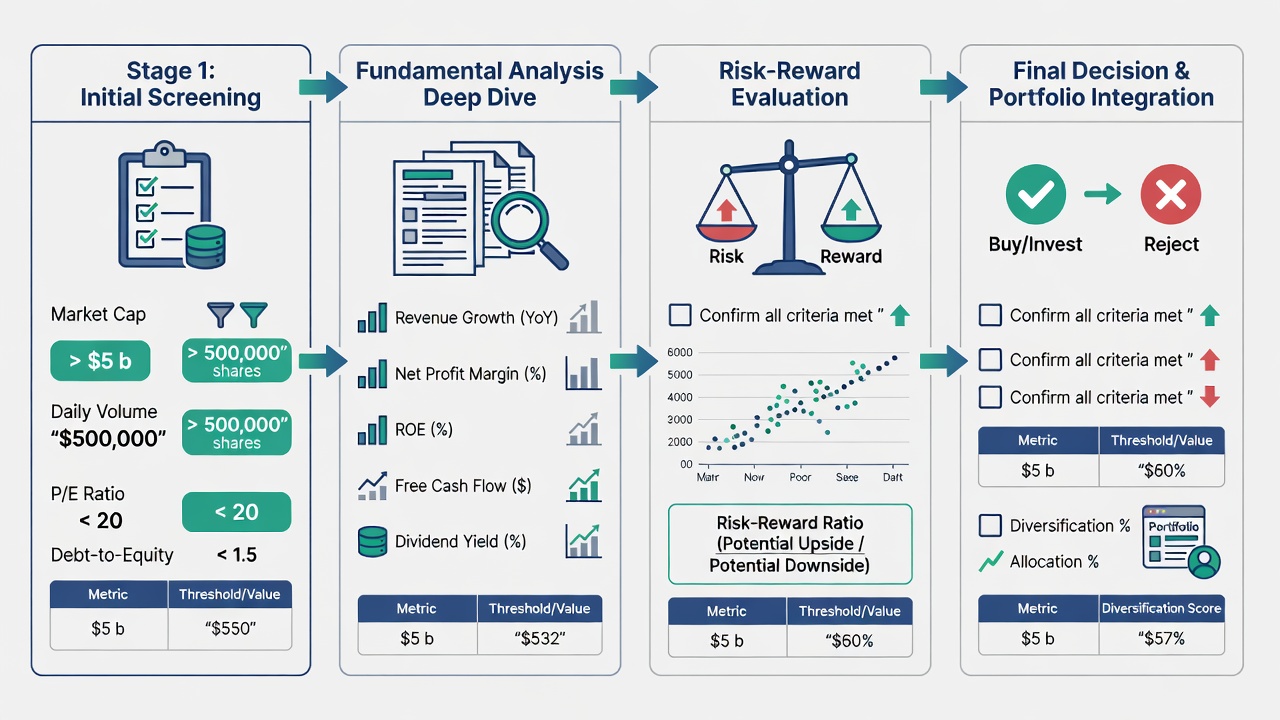
Quantify potential upside and downside before committing capital. Estimate intrinsic value using discounted cash flow models or comparable company analysis. Compare your target price to the current market price to determine margin of safety, ideally 20-30% or more depending on the volatility of the underlying business.
Calculate position sizing based on portfolio risk parameters. Limit any single holding to 5-10% of total assets to avoid concentration risk. Stress-test assumptions against various economic scenarios, including higher interest rates or slower GDP growth, and assign probability weights to each outcome. Document the base, bull, and bear cases with specific price targets for transparency.
Step 5: Implement Active Monitoring Techniques
Active value investing requires ongoing vigilance. Set alerts for earnings releases, analyst revisions, and material news events through reliable financial platforms. Re-evaluate holdings quarterly or when fundamentals change significantly, such as a sudden increase in debt or loss of a major customer. Maintain a watchlist of secondary candidates ready for deployment when better opportunities arise or existing holdings reach target prices.
Track key performance indicators such as revenue growth, operating margins, and return on invested capital on a rolling basis. Adjust or exit positions when valuation targets are reached or when thesis-invalidating events occur, such as management turnover or regulatory changes that impair competitive positioning.
Real-World Portfolio Example
Consider a hypothetical $500,000 portfolio constructed using this framework. Allocate across five holdings in consumer staples, industrials, and financials sectors after rigorous screening and analysis. For instance, one position might involve a regional bank trading at 1.1 times book value with strong capital ratios and a history of consistent dividend growth. Rebalance annually while maintaining strict adherence to the original criteria and margin-of-safety requirements. Review performance against benchmarks like the S&P 500 value index at the end of each quarter.
Common Pitfalls to Avoid
Investors frequently fall into traps such as chasing low valuations without understanding underlying business quality, ignoring macroeconomic headwinds, or failing to diversify across sectors. Overtrading and emotional decision-making also erode returns. Maintain a checklist that includes verifying data sources, documenting every buy or sell decision with supporting rationale, and avoiding leverage that amplifies downside risk.
Conclusion
Implementing a step-by-step framework for active value stock selection empowers investors to navigate 2026 markets with greater confidence. By combining quantitative screening, qualitative insight, disciplined valuation, and proactive monitoring, you can build a resilient portfolio positioned for long-term outperformance. Start with clear criteria today and refine the process as market conditions evolve. For additional regulatory guidance, consult resources from the U.S. Securities and Exchange Commission and educational materials at Investor.gov.


No comments yet. Be the first!