 Bullish Portfolio
Introduction to Active Value Investing in Dynamic Markets
Active value investing requires disciplined analysis of undervalued assets while remaining responsive to economic shifts. In 2026, investors face evolving conditions driven by interest rate policies, geopolitical factors, and technological disruptions. This guide provides actionable steps to maintain core value principles like margin of safety while adapting to cycle phases for improved outcomes. Investors who master this balance can navigate volatility with greater confidence and achieve superior compounded returns over time.
Successful practitioners combine fundamental research with cycle awareness. They avoid abandoning value tenets during volatility and instead refine approaches based on data-driven signals. The year 2026 presents unique challenges including potential shifts in monetary policy and sector rotations that demand proactive yet principled adjustments. By understanding how economic cycles influence asset prices, active value investors can identify opportunities that passive strategies often overlook.
Identifying Market Cycle Phases in 2026
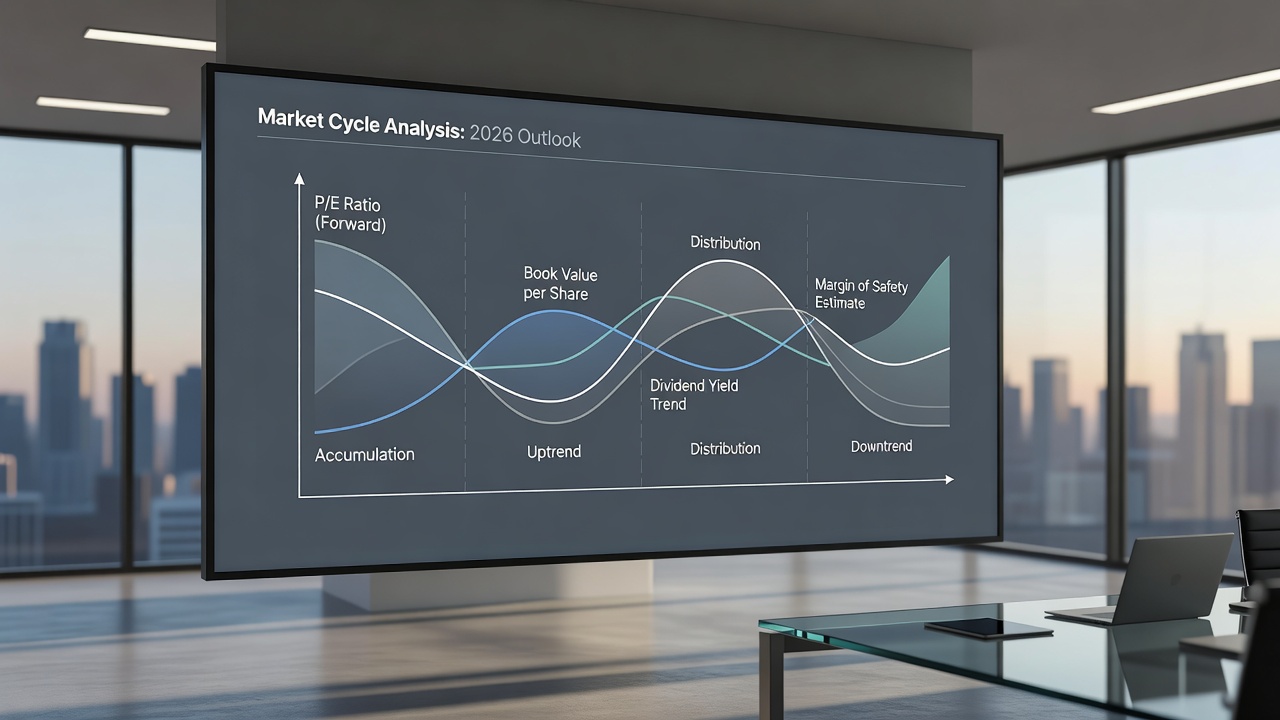
Market cycles typically progress through expansion, peak, contraction, and trough stages. In 2026, monitor leading indicators such as GDP growth, unemployment rates, and corporate earnings reports from sources like the Federal Reserve. Early expansion often features rising valuations in quality businesses, while contraction phases highlight distressed opportunities that align perfectly with value principles. Recognizing these phases early allows investors to adjust exposure levels systematically rather than reactively.
Use economic calendars and yield curve analysis to pinpoint transitions. For instance, an inverted yield curve has historically preceded slowdowns, prompting value investors to increase cash reserves ahead of bargains. Additional signals include changes in commodity prices, manufacturing PMI data, and consumer confidence surveys. In 2026, pay special attention to technology sector earnings and global supply chain metrics, as these can accelerate or delay cycle shifts. Building a personal dashboard with these indicators helps maintain objectivity when markets become emotional.
Adjusting Valuation Metrics Across Cycles
Core metrics like price-to-earnings and price-to-book remain foundational, yet their application shifts. During expansion, emphasize free cash flow yields to filter high-quality names with sustainable competitive advantages. In downturns, focus on liquidation values and asset coverage to identify deep discounts that offer substantial margins of safety. Investors should also incorporate adjusted metrics such as enterprise value to EBITDA when comparing companies across different capital structures.
Rebalance screens quarterly. Incorporate forward-looking adjustments for inflation or sector-specific multiples without straying into growth speculation. For example, in a high-interest-rate environment common in late-cycle phases, prioritize companies with strong balance sheets and predictable cash flows. This disciplined recalibration prevents overpaying for assets that appear cheap on outdated metrics but carry hidden risks.
Incorporating Timing Signals Without Abandoning Value
Timing complements rather than overrides value. Signals include moving average crossovers on broad indices and sentiment surveys. Combine these with valuation thresholds—for example, only initiate positions when a stock trades below 70% of estimated intrinsic value regardless of momentum. This approach ensures that timing serves as a filter rather than a driver of decisions.
This hybrid method reduces drawdowns while capturing rebounds. Avoid over-trading by setting strict entry rules tied to both cycle data and fundamentals. Practical implementation involves creating a scoring system that weights valuation at 60% and cycle signals at 40%, providing a clear framework for when to act. Many successful investors maintain a watchlist of pre-qualified value stocks and only deploy capital when both conditions align.

Real-World Case Studies from Past Cycles
Historical examples illustrate adaptation. During the 2008-2009 contraction, value investors who adjusted for credit spreads found opportunities in financials trading at fractions of book value, leading to strong recoveries. In the 2020 expansion phase, focus shifted to resilient consumer staples with stable earnings that weathered the initial shock. Another notable period was the early 2000s tech bust, where value-oriented investors avoided overvalued internet stocks and instead bought traditional industrials at attractive prices.
These cases show that sticking to margin-of-safety calculations while scaling exposure based on cycle stage produced superior compounded returns over buy-and-hold peers. In each instance, the key was patience during euphoria and decisive action during pessimism, always grounded in thorough fundamental analysis rather than market timing alone.
Performance Comparisons: Bull Versus Bear Markets
Value strategies have historically outperformed in bear markets through capital preservation and opportunistic buying. In bull phases, active selection within value universes still beats passive benchmarks when avoiding overvalued cyclicals. Comparative studies reveal that cycle-aware value portfolios experience lower volatility and faster recovery times compared to pure growth approaches during downturns.
Data from multiple decades confirms cycle-aware adjustments narrow the gap with growth strategies during expansions while excelling in downturns. Investors benefit from reviewing rolling five-year returns across different market regimes to understand how their specific adjustments perform under stress. This evidence-based perspective reinforces the importance of remaining flexible without abandoning core principles.
Step-by-Step Portfolio Adjustments
Follow this checklist for cycle-responsive management:
- Review holdings against updated intrinsic value models monthly, documenting any changes in assumptions due to new economic data.
- Reallocate 10-15% of equity exposure toward defensive sectors in late-cycle signals, such as utilities or healthcare, while trimming cyclical exposure.
- Maintain 5-10% cash buffer for opportunistic purchases during contractions, ensuring liquidity without excessive drag on returns.
- Stress-test positions using historical downturn scenarios to identify vulnerabilities in earnings or balance sheet strength.
- Document rationale for every trade to enforce discipline and enable post-cycle performance reviews.
- Conduct annual portfolio audits that include scenario analysis for inflation spikes, rate hikes, and geopolitical events common in 2026.
Implementing these steps consistently helps transform reactive decisions into a repeatable process that compounds advantages over full market cycles.
Building a Cycle-Aware Value Screen
Develop custom screens that layer traditional value criteria with cycle indicators. Start with quantitative filters for low price-to-book and high return on equity, then overlay qualitative assessments of management quality and industry structure. Update the screen parameters as cycle phases evolve to capture the most relevant opportunities at each stage.
Risk Mitigation Tactics
Diversify across sectors and geographies to reduce single-point exposures. Use options sparingly for downside protection only when valuations warrant it. Regularly audit for behavioral biases like anchoring to past prices or confirmation bias in research. Position sizing rules, such as never allocating more than 5% to any single holding, further limit downside risk during unexpected cycle accelerations.
Consult official resources such as Federal Reserve economic data and SEC filings database for transparent company information. Additional authoritative sources include the International Monetary Fund for global economic outlooks that inform cycle assessments.
Frequently Asked Questions
How do I avoid common timing mistakes?
Never sell core value holdings solely on short-term signals. Instead, use timing only to modulate new capital deployment and maintain a long-term ownership mindset for qualifying positions.
What if cycles shift rapidly in 2026?
Maintain flexibility through broad screens and avoid concentrated bets. Revisit models quarterly using fresh economic releases and maintain a cash reserve for rapid deployment when opportunities arise.
Should beginners start with active value or simpler approaches?
New investors benefit from paper trading cycle-adjusted strategies first to build experience without real capital risk before committing meaningful funds.
How often should valuation models be updated?
Refresh key assumptions whenever material new information emerges, such as quarterly earnings or significant macroeconomic announcements, while avoiding constant tinkering that leads to over-analysis.
Conclusion
Mastering active value investing in 2026 demands blending timeless principles with cycle intelligence. By following structured identification, adjustment, and risk processes, investors position portfolios for resilience and opportunity across all phases. Consistent application of these methods builds the discipline needed for long-term success in any market environment.

No comments yet. Be the first!