 Bullish Portfolio

Introduction to Dynamic Watchlists in Active Value Investing
Creating an effective watchlist is essential for investors seeking to merge active management with value principles in 2026 markets. A dynamic watchlist allows you to track opportunities based on intrinsic value, emerging catalysts, and liquidity filters while adapting to market shifts. This comprehensive guide provides detailed steps, practical examples, monitoring routines, and decision frameworks to build and maintain such a tool over time. By focusing on actionable criteria rather than static lists, investors can position themselves to capitalize on undervalued opportunities as economic conditions evolve throughout the year.
Core Principles of Active Value Investing
Active value investing focuses on identifying undervalued securities through rigorous fundamental analysis and timely action when discrepancies arise between price and worth. Unlike purely passive strategies, it requires ongoing evaluation of company fundamentals against prevailing market prices. Key elements include calculating intrinsic value using discounted cash flow models, spotting catalysts such as earnings surprises, management changes, or regulatory shifts, and maintaining discipline during periods of volatility. This approach demands both quantitative rigor and qualitative judgment to separate temporary market noise from genuine mispricings that can deliver superior long-term returns.
Essential Criteria for Stock Selection
When populating your watchlist, prioritize three primary filters supported by secondary metrics. First, intrinsic value calculations help determine if a stock trades below its estimated worth using models like discounted cash flows or comparable company analysis. Second, catalyst identification reveals potential triggers for price appreciation, such as upcoming product launches or industry tailwinds. Third, liquidity filters ensure you can enter and exit positions efficiently without significant slippage. Additional supporting metrics include free cash flow yield above industry averages, manageable debt-to-equity ratios, and consistent return on invested capital. Use these together to create a scoring system that ranks candidates objectively.
- Intrinsic value discount threshold of at least 15-20 percent
- Identifiable catalyst expected within 12 months
- Average daily trading volume exceeding 500,000 shares
- Positive free cash flow for the trailing twelve months
Step-by-Step Setup Using Free and Paid Platforms
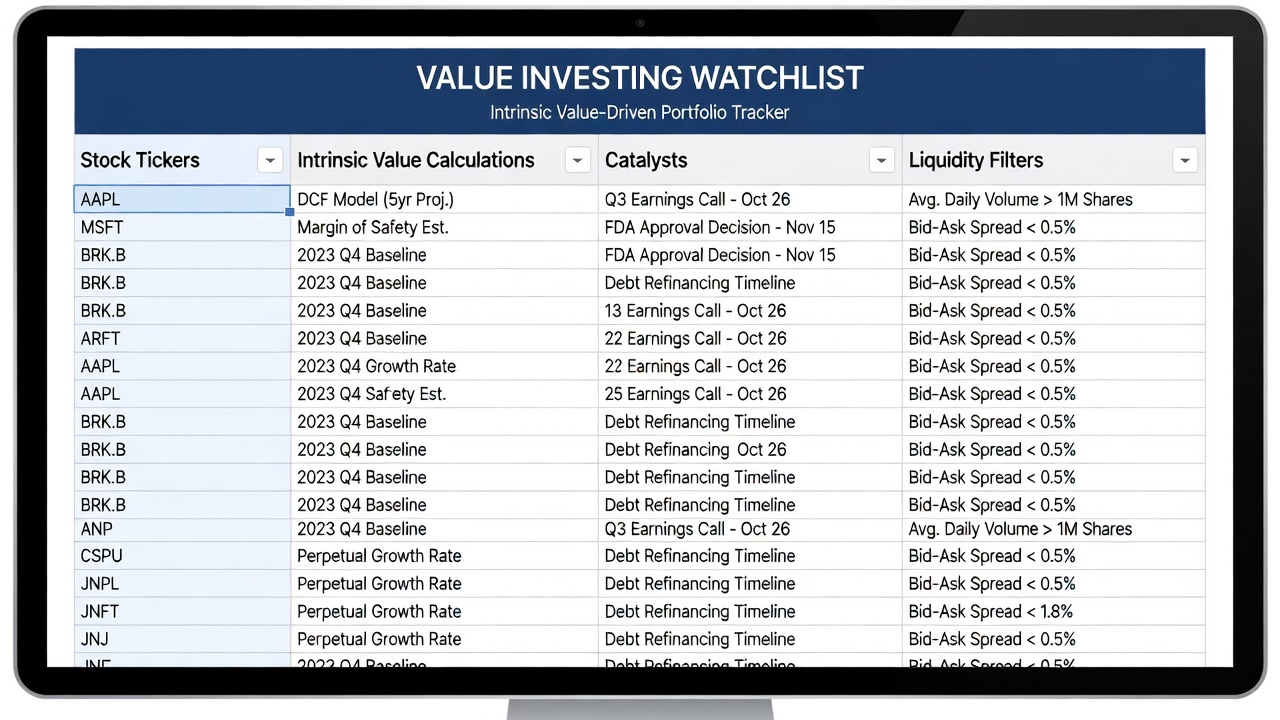
Begin by selecting platforms that support custom screening and data export. Free tools like Yahoo Finance allow basic watchlist creation with real-time quotes and simple alerts. For advanced features such as API access or automated screening, consider paid services that integrate fundamental data. Set up your list by importing an initial set of tickers that meet your criteria, then organize columns for intrinsic value estimates, catalyst notes, liquidity scores, and last review dates. Test the setup with historical data to validate alert accuracy before going live. Export the structure regularly to maintain backups and enable cross-platform analysis.
Daily Monitoring Routines for 2026 Markets
Establish a consistent routine to review your watchlist each morning before market open. Scan for price movements against your intrinsic value targets and update catalyst statuses based on news feeds. Allocate dedicated time midday for deeper dives into quarterly filings and another focused session post-close for performance tracking against benchmarks. This disciplined approach prevents emotional decisions while capturing timely opportunities. Consider breaking the routine into segments: 20 minutes on pre-market movers, 15 minutes reviewing analyst notes, and 10 minutes logging changes to maintain an audit trail of decisions.
Diversification Rules to Manage Risk
Apply strict diversification guidelines to your watchlist holdings. Limit exposure to any single sector at 20 percent of total portfolio allocation and maintain at least 15-20 entries across multiple industries and market capitalizations. Rebalance quarterly by removing stocks that no longer meet value thresholds or have reached target prices. This structure reduces concentration risk while preserving upside potential from active selections. Track sector weights visually in a simple spreadsheet to quickly identify imbalances before they become problematic.
Real-World Examples of Watchlist Success
Consider a 2025 example where a watchlist entry in the energy sector highlighted a mid-cap company with strong free cash flow generation and a pending regulatory catalyst around renewable incentives. The position was added after intrinsic value analysis showed a meaningful discount and executed upon confirmation of the catalyst, resulting in a profitable trade within six months. Another case involved a healthcare stock flagged for improving liquidity metrics after a secondary offering, leading to a timely entry ahead of positive clinical trial results. A third illustration from consumer staples demonstrated how adding a company with recurring revenue and a new distribution catalyst allowed investors to build a position gradually over several weeks as price action aligned with value estimates.
Comparing Manual Versus Automated Tracking Methods
Manual tracking offers full control and deeper insight into qualitative factors but demands significant daily time commitment. Automated methods, using scripts or platform alerts, handle routine price and volume updates efficiently yet may miss nuanced developments such as subtle shifts in management commentary. A hybrid approach often works best: automate price and liquidity alerts while manually reviewing catalysts and financial statements on a weekly schedule. Investors can explore resources at Investopedia for model templates and further methodology guidance.
Red-Flag Avoidance Strategies
Watch for common pitfalls such as ignoring macroeconomic shifts or over-relying on historical data without forward-looking adjustments. Avoid entries with deteriorating fundamentals even if prices appear statistically cheap. Cross-reference data from official sources like SEC filings to verify management claims and stay informed on broader policy impacts via Federal Reserve updates. Additional red flags include sudden increases in short interest, repeated missed guidance, or unexplained related-party transactions that warrant deeper investigation before adding to the list.
Integrating Your Watchlist with Portfolio Goals
Align watchlist activity with overall portfolio objectives by setting clear allocation targets for value positions within your broader asset mix. Review performance against relevant benchmarks monthly and adjust for changing risk tolerance or life circumstances. This integration ensures the watchlist serves as a tactical tool that supports long-term wealth building rather than operating as an isolated or overly active list that could lead to excessive turnover.
Tools and Resources for Ongoing Maintenance
Beyond initial setup, leverage free screeners from major financial data providers to refresh candidate pools monthly. Combine these with paid fundamental databases when greater depth is required for complex valuation models. Maintain a simple log of every addition and removal decision to identify patterns in your process and refine criteria over successive market cycles. This documentation becomes invaluable for improving future performance and avoiding repeated mistakes.
Conclusion
A well-maintained dynamic watchlist empowers active value investors to navigate 2026 markets with greater precision and discipline. By focusing on intrinsic value calculations, identifiable catalysts, liquidity considerations, and structured routines, you can identify high-conviction opportunities while mitigating common risks. Start building yours today and refine it continuously based on real-world results for sustained long-term success.
FAQ
How often should I update intrinsic value calculations?
Review them quarterly or immediately after major earnings releases and material corporate events to keep estimates current and reflective of new information.
What is the biggest pitfall in watchlist management?
Over-monitoring often leads to unnecessary trades and higher costs; instead, set price and news alerts to reduce screen time while staying informed.
Can I combine this approach with passive strategies?
Yes, many investors allocate 20-30 percent of their portfolio to actively managed value positions identified via the watchlist while maintaining the remainder in low-cost index funds for core exposure.
How many stocks should a typical watchlist contain?
Most practitioners find 20 to 40 names provide sufficient coverage without becoming overwhelming to monitor effectively on a daily basis.
No comments yet. Be the first!