 Bullish Portfolio

Introduction to Retirement Portfolio Strategies in 2026
Pre-retirees and retirees often seek stable growth through blended investment approaches that balance income generation with capital preservation. Active value investing combines fundamental analysis with ongoing oversight to identify undervalued stocks, particularly dividend payers, while adapting to market conditions. This method suits those planning for retirement timelines of five to fifteen years or already in retirement, emphasizing low-stress tactics over speculative trading. In 2026, with evolving economic indicators including interest rate policies and inflation trends, investors benefit from strategies that prioritize long-term resilience rather than short-term gains.
Effective strategies begin with tailored asset allocation, progress through rigorous screening processes, and incorporate risk controls. Investors must also evaluate sustainable withdrawal rates and address tax implications to maintain portfolio longevity. This guide provides in-depth, actionable advice to help build and manage such portfolios successfully.
Asset Allocation Tailored to Retirement Timelines
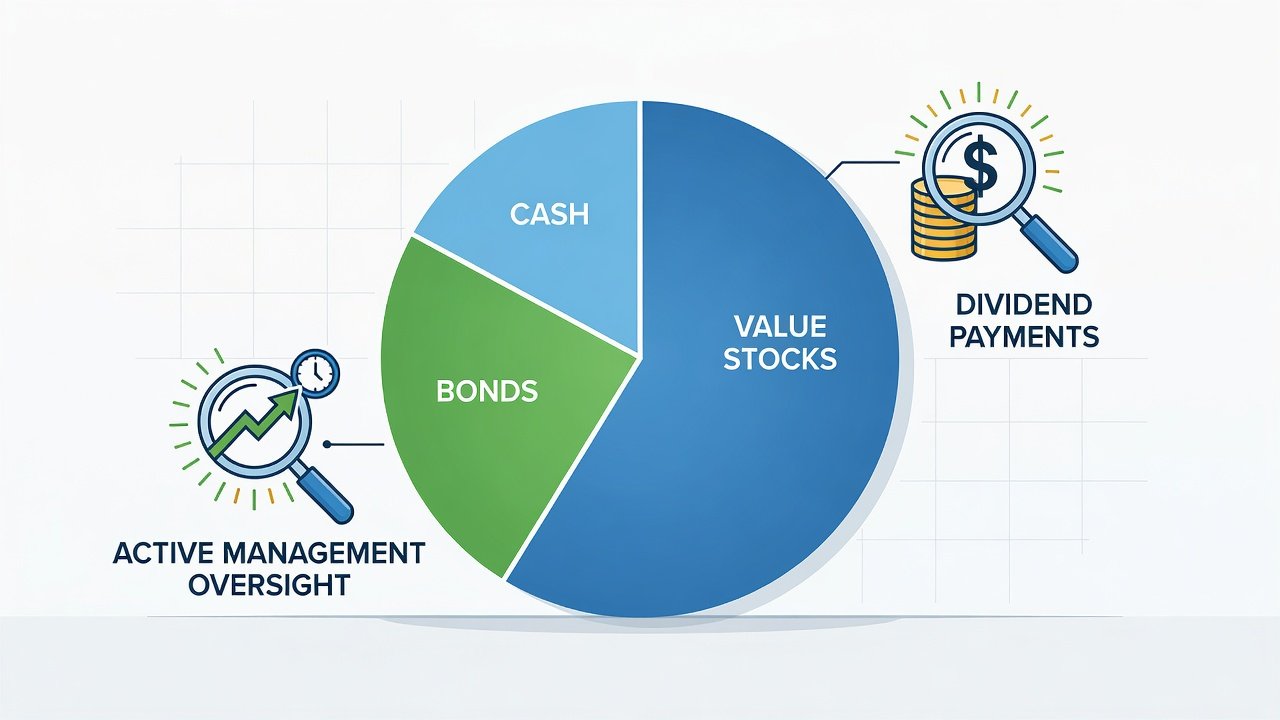
Asset allocation forms the foundation of any retirement portfolio. For individuals five years from retirement, a moderate allocation might include 50-60% equities focused on value stocks, 30-40% fixed income for stability, and 10% alternatives such as REITs. Those already retired typically shift toward 40% equities, 50% bonds, and 10% cash equivalents to reduce volatility. Age-based adjustments are critical; for example, someone aged 55 might maintain higher equity exposure to combat inflation, while a 70-year-old prioritizes income stability.
Active oversight allows adjustments based on economic indicators like interest rate changes or inflation data. Rebalancing annually or when allocations drift more than 5% helps maintain the target mix without excessive trading costs. Consider factors such as personal health, expected longevity, and other income sources like pensions when fine-tuning these percentages. Diversifying within equities across market caps and geographies further strengthens the allocation against sector-specific downturns.
Screening for Undervalued Dividend Payers with Active Oversight
Screening starts with quantitative filters: companies trading at a price-to-earnings ratio below the sector average, dividend yields above 3%, and consistent payout ratios under 60%. Active management adds qualitative review of balance sheets, competitive advantages, and management quality to confirm intrinsic value. Look for firms with strong free cash flow, low debt-to-equity ratios, and history of dividend growth during various economic cycles.
Tools from established financial platforms enable ongoing monitoring. Investors review earnings reports quarterly and sell positions when fundamentals deteriorate or valuations exceed fair value by 20%. Incorporate environmental, social, and governance factors where relevant to align with modern investment preferences. This dual quantitative-qualitative approach reduces the risk of value traps while capturing genuine opportunities in dividend-paying stocks.
Step-by-Step Portfolio Construction
- Define goals and risk tolerance using retirement calculators from authoritative sources such as the U.S. Securities and Exchange Commission.
- Allocate assets according to timeline as outlined above, documenting the rationale for each percentage.
- Build a core of 15-25 value dividend stocks across sectors like consumer staples, healthcare, and industrials, ensuring no single holding exceeds 5% of the portfolio.
- Incorporate low-cost index funds or ETFs for broad diversification within the equity sleeve to complement individual stock picks.
- Establish an emergency cash reserve covering 2-3 years of expenses in high-yield savings or short-term Treasuries.
- Implement tax-efficient account placement, holding bonds in tax-deferred accounts and growth stocks in taxable ones where possible.
- Set up automatic dividend reinvestment initially, then transition to cash flow as retirement begins.
This process creates a resilient structure ready for market shifts. Document every decision to facilitate future reviews and adjustments.
Real-World Examples of Successful Retiree Holdings
One common example involves a retiree portfolio holding shares in established firms like those in the Dow Jones Industrial Average with strong dividend histories. Another features a mix of blue-chip value stocks yielding 4% combined with municipal bonds for tax-free income. These holdings demonstrate how active selection of companies with moats and reasonable valuations supports steady distributions while allowing modest growth. A third example might include a healthcare sector focus with holdings in pharmaceutical giants that have consistent dividend increases and defensive characteristics during recessions.
Risk Mitigation During Market Shifts
Market downturns require predefined rules such as stop-loss thresholds at 15-20% below purchase price for individual holdings or shifting 10% of equities to cash during elevated volatility. Diversification across at least eight sectors and use of dividend aristocrats with 25+ years of increases provide buffers. Stress testing the portfolio annually against scenarios like a 30% equity drop helps prepare for corrections. Additional tactics include maintaining a separate bucket for near-term expenses and using options strategies sparingly for hedging if comfortable with their complexity.
Monitoring macroeconomic signals from sources like the Federal Reserve enables proactive shifts, such as reducing exposure to interest-rate-sensitive sectors before policy changes. This layered approach minimizes emotional decision-making and preserves capital over extended periods.
Comparing Withdrawal Rates
The 4% rule remains a benchmark, yet active value strategies may support 3.5-4.5% initial withdrawals depending on market valuations at retirement. Lower rates of 3% suit conservative investors prioritizing longevity, while higher rates require more frequent rebalancing and dividend focus. Historical data from major institutions shows blended portfolios often sustain 30+ years when withdrawal adjustments occur during poor return periods. Scenario planning is essential: model a sequence of poor returns in the first decade and adjust spending accordingly.
Monitoring, Rebalancing, and Tax Considerations
Regular portfolio reviews every six months allow for timely rebalancing and identification of underperformers. Tax efficiency improves by harvesting losses, timing capital gains realizations, and utilizing tax-advantaged accounts strategically. For deeper guidance on tax rules, refer to official resources at the IRS website.
FAQs on Tax Efficiency and Rebalancing Frequency
How can retirees improve tax efficiency?
Place high-yield bonds in IRAs and municipal bonds in taxable accounts. Harvest tax losses annually and consider Roth conversions in lower-income years. Consult IRS guidelines for qualified dividend treatment at IRS.gov.
How often should portfolios be rebalanced?
Annual rebalancing suffices for most, with threshold-based adjustments when drifts exceed 5%. This approach minimizes transaction costs while keeping allocations aligned.
What role does active oversight play in tax efficiency?
Active managers can time sales to realize long-term capital gains rates and avoid high-turnover funds that generate taxable distributions.
How do market shifts affect withdrawal strategies?
During downturns, temporarily reduce withdrawals by 10-20% and rely more on dividends and bond interest to preserve principal.
Common Mistakes to Avoid
Many retirees over-concentrate in a single sector or chase high yields without assessing sustainability. Others neglect inflation protection or fail to update allocations after major life events. Avoiding these pitfalls through disciplined processes leads to better outcomes.
Conclusion
Active value investing within retirement portfolios delivers stable growth through disciplined allocation, targeted screening, and proactive risk management. By following structured construction steps and addressing tax and withdrawal considerations, pre-retirees and retirees can build resilient holdings suited to 2026 market dynamics. Regular reviews ensure the strategy adapts to personal circumstances and economic changes for lasting financial security.


No comments yet. Be the first!