 Bullish Portfolio

Investment Strategies 101: Starting with Active and Value Investing
Investing can seem overwhelming for beginners, but understanding active and value investing provides a solid foundation. These timeless approaches help individuals build wealth by focusing on research, patience, and strategic decisions in evolving markets like those in 2026. Whether you are just opening your first brokerage account or seeking to refine an existing strategy, grasping these concepts allows you to make informed choices rather than relying on guesswork or hype. This guide breaks down the essentials without jargon, offering practical steps, real-world examples, and tools to get started confidently.
Core Principles of Active Investing
Active investing involves hands-on management where investors or fund managers buy and sell securities to outperform the market. It relies on thorough analysis, market timing, and quick responses to news or economic shifts. Key principles include identifying undervalued opportunities through fundamental research and maintaining flexibility to adjust holdings based on new information. For instance, an active investor might monitor quarterly earnings reports closely and reallocate funds when a company shows unexpected strength in a growing sector. In 2026, this approach benefits from access to real-time data tools, allowing beginners to track sector rotations driven by technological advancements or policy changes. Success often comes from combining quantitative screens with qualitative assessments of management quality and competitive positioning. Active strategies require discipline to avoid overtrading, which can erode returns through transaction costs.
Core Principles of Value Investing
Value investing focuses on purchasing stocks trading below their intrinsic worth, often measured by metrics like earnings and assets. Pioneered by Benjamin Graham, it emphasizes a margin of safety and long-term holding. In 2026, this means looking beyond short-term volatility to companies with strong fundamentals that the market has temporarily overlooked. Practitioners calculate intrinsic value by analyzing balance sheets, cash flow statements, and future earnings potential, then buy only when the price offers a significant discount. A classic example is identifying a mature company in a cyclical industry whose stock price has dipped due to temporary economic concerns but whose underlying assets remain robust. This method rewards patience, as positions may take years to reach full potential. Beginners are encouraged to start with well-known firms that have transparent financials rather than obscure names.
Key Differences Between Active and Value Investing
While both involve research, active investing is more dynamic and can include growth stocks, whereas value investing prioritizes bargains with a buy-and-hold mindset. Active strategies may incur higher costs from frequent trades, while value approaches stress discipline to avoid emotional decisions. Active investors often focus on short- to medium-term catalysts such as product launches or regulatory approvals, whereas value investors ignore noise and concentrate on the gap between market price and true worth. In practice, many successful portfolios blend elements of both, using active tactics to identify initial opportunities and value principles to determine entry points and holding periods. Understanding these distinctions helps beginners choose an approach aligned with their time availability and temperament.
Simple Stock Selection Criteria for Beginners
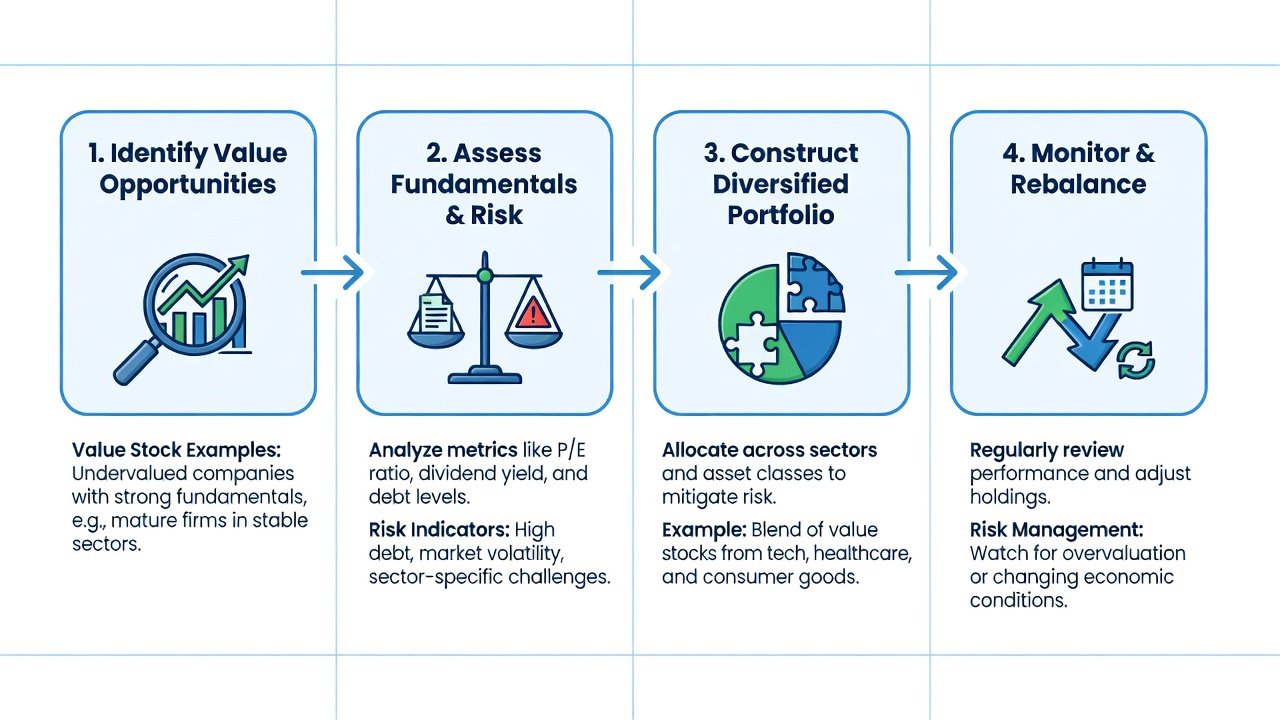
Start by screening for companies with low price-to-earnings ratios for value plays or strong momentum indicators for active ones. Assess financial statements for consistent revenue, manageable debt, and competitive advantages. Avoid complex derivatives initially and focus on established sectors. Additional criteria include evaluating return on equity above industry averages, positive free cash flow trends, and a history of dividend payments for value stocks. For active selections, look for rising trading volume accompanied by positive analyst revisions. Use free online screeners to filter by market capitalization, preferably starting with mid- to large-cap companies for better liquidity. Always cross-reference multiple data points rather than relying on a single metric to reduce the chance of selecting distressed firms.
Portfolio Building Examples
Consider a beginner allocating 60% to value stocks in stable industries and 40% to actively managed positions in emerging trends. Rebalance annually to maintain targets. A real-world case involves an investor who began with broad market exposure, then gradually added individual value picks after studying annual reports over six months. Another example shows a young professional building a portfolio with defensive value holdings in consumer staples alongside active bets on renewable energy firms showing accelerating earnings growth. In both cases, the investors documented their rationale for each purchase and set predefined review dates to prevent impulsive selling. These examples illustrate how starting small and documenting decisions leads to measurable progress without excessive risk.
Risk Awareness Tips
Always diversify to mitigate losses and set clear exit rules. Understand that markets fluctuate, and no strategy guarantees returns. Educate yourself continuously through reliable resources and consider your personal risk tolerance before committing capital. Additional tips include maintaining an emergency cash reserve outside investments, avoiding leverage until experienced, and recognizing behavioral biases such as chasing recent winners. In 2026 market conditions, staying informed about macroeconomic indicators like interest rate trends helps anticipate volatility. Review positions regularly but avoid daily monitoring that can lead to overreaction.
Step-by-Step Starter Checklist
- Define your investment goals and timeline by writing specific targets such as retirement savings or home purchase funding.
- Open a brokerage account with low fees and enable features like automatic dividend reinvestment.
- Research basic financial ratios using free tools and practice calculating them on sample companies.
- Build a watchlist of 10-15 potential stocks and track their performance for at least one quarter before buying.
- Start small with diversified positions representing different sectors to spread exposure.
- Review performance quarterly without overreacting to short-term movements and adjust only when fundamentals change.
- Consult Investor.gov for regulatory basics and investor protections.
- Consider macroeconomic context by reviewing updates from Federal Reserve resources on economic conditions.
Common Mistakes to Avoid
Many beginners overlook the importance of a written investment policy statement, leading to inconsistent decisions. Another frequent error is ignoring transaction costs that accumulate with active trading. Failing to maintain a margin of safety in value selections can result in permanent capital loss during downturns. Over-concentration in a single sector or stock amplifies risk unnecessarily. Beginners should also resist the urge to time the market perfectly and instead focus on consistent execution of their plan.
FAQ: Addressing Common Misconceptions
Is active investing just day trading?
No, active investing can involve longer holding periods focused on outperformance through analysis, not constant trading. It encompasses swing trading or event-driven strategies as well.
Does value investing only work in bear markets?
Value principles apply across cycles by seeking quality at reasonable prices, as highlighted in guidance from SEC.gov. Bull markets also present opportunities when temporary setbacks create discounts.
Can beginners combine both strategies?
Yes, many start with a hybrid approach, using active tactics for a portion while anchoring the rest in value holdings for balance and reduced overall volatility.
How much time does active investing require weekly?
Effective active investing can be managed with 3-5 hours per week once initial research systems are established, focusing on key reports rather than constant monitoring.
Conclusion
Mastering active and value investing equips beginners with practical tools for long-term success. Begin with education, apply the checklist, and remain patient as you navigate 2026 markets and beyond. Consistent application of these principles builds both wealth and confidence over time.

No comments yet. Be the first!