 Bullish Portfolio

Introduction to Patience in Active Value Investing
In the dynamic markets of 2026, blending active investing tactics with value principles demands exceptional discipline. Patience separates successful investors from those chasing fleeting gains. This framework emphasizes building long-term outperformance rather than reacting to short-term noise. Active value investing involves identifying undervalued securities through fundamental analysis while actively managing positions. Yet without patience, even the best opportunities can lead to premature exits. Search intent around this topic centers on developing the mental fortitude required during uncertain periods, ensuring investors stay committed to their theses amid volatility.
The 2026 landscape features evolving macroeconomic factors such as shifting monetary policies and global supply chain adjustments. Investors who cultivate patience position themselves to capture compounding returns that impulsive traders often miss. This article provides a complete roadmap including trigger recognition, holding period extension tactics, detailed examples, and decision frameworks.
Understanding Active Value Investing in 2026 Market Conditions
2026 presents unique challenges including evolving interest rate environments and sector rotations. Investors must combine rigorous stock selection with the willingness to hold through volatility. Patience here means resisting the urge to sell during temporary setbacks that do not alter underlying business fundamentals. For deeper context on value principles, refer to established resources such as Investopedia. Market participants also benefit from monitoring official economic data releases available through Federal Reserve publications, which help contextualize broader conditions without prompting reactive trades.
The Power of Patience During Market Drawdowns
Drawdowns test resolve. Recognizing patience triggers—such as negative headlines or peer performance—helps maintain course. Historical patterns show that patient active value strategies often recover stronger as markets normalize. In 2026, drawdowns may stem from technological disruptions or geopolitical tensions, yet companies with strong balance sheets typically rebound over multi-year horizons. Patience transforms these periods into opportunities for additional research rather than forced sales.
Recognizing Patience Triggers and Building Discipline
Key triggers include quarterly earnings misses without fundamental changes, broader market corrections, or social media hype around trendy stocks. To counter these, maintain a personal investment thesis document updated only on material new information. Additional triggers encompass analyst downgrades that ignore long-term cash flow projections and sudden sector-wide selloffs driven by sentiment rather than data. Building discipline involves journaling emotional responses during volatility and cross-referencing decisions against predefined criteria. This reflective practice reduces the likelihood of panic exits that erode long-term returns.
Practical Steps to Extend Holding Periods
Follow this expanded checklist for disciplined holding:
- Define exit criteria at purchase based on valuation targets, not price movements, and document them in a dedicated notebook or digital file.
- Schedule quarterly reviews focused solely on business metrics such as revenue growth, margin stability, and competitive positioning.
- Set a minimum 3-year horizon for core positions while allowing flexibility only when original theses materially break.
- Use position sizing that limits emotional impact from short-term swings, ensuring no single holding exceeds risk tolerance thresholds.
- Implement a 48-hour cooling-off period before any sale decision to allow rational analysis.
- Track dividend reinvestment and earnings retention effects annually to visualize compounding benefits.
These steps create structure that supports compounding over impulsive reactions. Investors who adhere consistently report higher conviction levels during uncertain phases.
Real-World Portfolio Examples Showing Compounding Effects
Consider a hypothetical portfolio initiated in early 2023 with value stocks in industrials and consumer sectors. Patient holding through 2024-2025 volatility allowed reinvested dividends and earnings growth to compound, resulting in superior returns versus frequent trading. 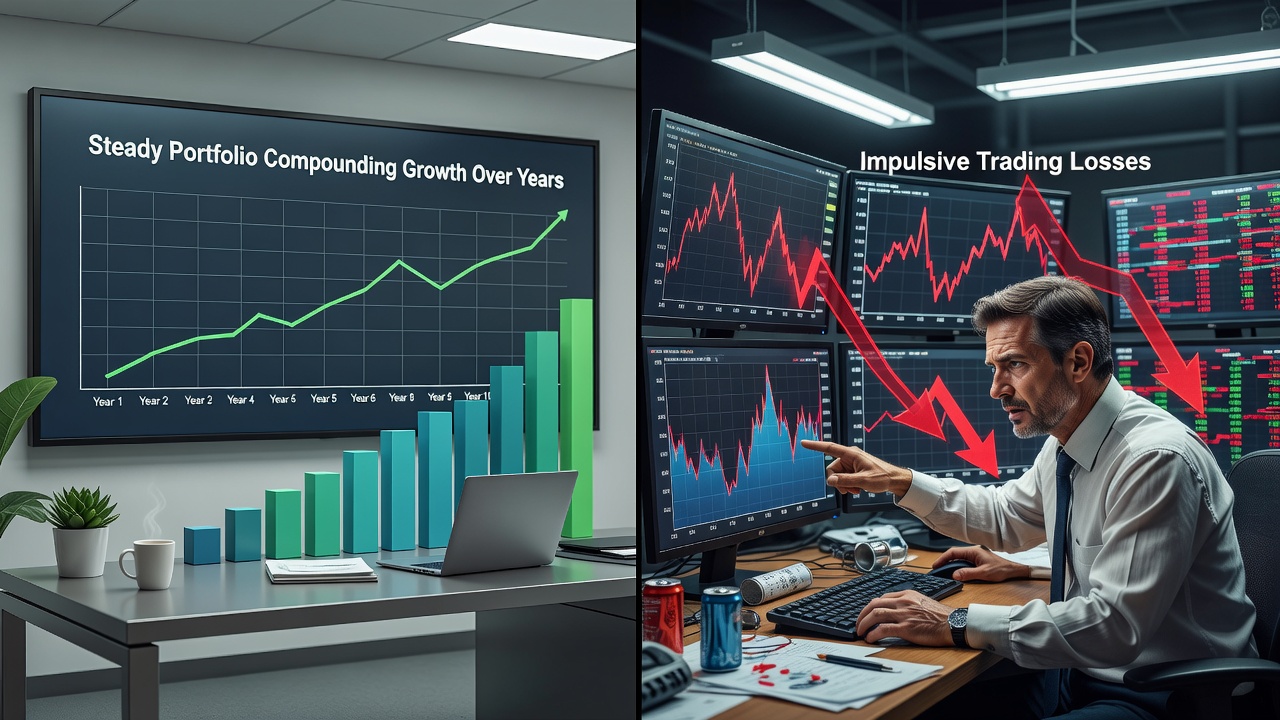
Another example involves reallocating during sector-specific dips while maintaining overall allocation discipline, demonstrating how extended timelines amplify active value advantages. A third case study might feature a mid-cap technology holding purchased at a discount to intrinsic value; despite two consecutive quarters of missed estimates, the investor reviewed only balance sheet strength and industry tailwinds before deciding to hold, ultimately benefiting from subsequent product launches and margin expansion over four years.
Patient Versus Impulsive Active Approaches Compared
Patient investors focus on intrinsic value updates and tolerate volatility for asymmetric upside. Impulsive traders often chase momentum, incur higher transaction costs, and miss recovery phases. Data from long-term studies consistently favor the patient methodology for sustainable alpha generation. The impulsive path frequently leads to tax inefficiencies and opportunity costs from constant repositioning, whereas patient frameworks align with business cycle realities and allow management teams time to execute strategies.
Actionable Timelines for 2026 Implementation
Months 1-3: Conduct deep fundamental screens and establish theses with supporting documentation. Months 4-12: Monitor without trading unless thesis breaks, using monthly summary reports instead of daily price checks. Year 2 onward: Evaluate compounding progress annually through total return attribution analysis. This timeline reinforces patience while allowing active adjustments when warranted. Extending beyond year three often reveals the full benefits of earnings power and free cash flow generation.
Common Pitfalls and Fixes
Pitfall 1: Selling after 10-20% drawdowns. Fix: Predefine tolerance levels tied to fundamentals and review the original purchase memo. Pitfall 2: Over-monitoring daily prices. Fix: Limit checks to monthly and redirect attention to industry reports. Pitfall 3: Ignoring portfolio rebalancing needs. Fix: Tie rebalancing to calendar or threshold rules only, avoiding ad-hoc changes. Pitfall 4: Yielding to peer comparison pressure. Fix: Maintain a private performance journal focused solely on personal goals rather than benchmarks.
Psychological Tools for Maintaining Patience
Techniques such as mindfulness meditation before market hours and visualization of long-term goals help sustain discipline. Some investors partner with accountability buddies who review decisions quarterly. These methods complement checklists by addressing the emotional dimension often overlooked in technical strategies.
FAQ: Rebalancing Without Panic Selling
How often should I rebalance in an active value portfolio? Rebalance annually or when allocations drift beyond 5-10% thresholds to maintain risk parameters without emotional decisions.
What signals indicate a true need to sell versus temporary noise? Only material deterioration in competitive position, management quality, or valuation safety margin justifies sales.
Can patience coexist with active management? Yes, active decisions occur at entry and during thesis reviews, while patience governs the holding phase for optimal compounding.
How does rebalancing interact with tax considerations? Use tax-loss harvesting opportunities only when they align with fundamental reviews rather than market timing impulses.
Conclusion
Patience forms the cornerstone of successful active value investing in 2026. By recognizing triggers, following structured checklists, and learning from examples, investors position themselves for enduring outperformance. Commit to the framework and let time work in your favor while consulting resources like SEC investor education materials for ongoing regulatory awareness.


No comments yet. Be the first!