 Bullish Portfolio

Introduction
Market volatility creates both challenges and opportunities for investors seeking to protect and grow their capital. Active value strategies blend the principles of active investing, which involves hands-on research and decision-making, with value investing, which focuses on purchasing securities at prices significantly below their intrinsic worth. This how-to guide delivers in-depth, actionable tactics for handling swings in uncertain markets, going far beyond basic comparisons to address real-world application. Investors will find detailed guidance on spotting undervalued assets amid turbulence, executing precise portfolio rebalancing, building robust risk assessment frameworks, and learning from historical downturns. The content also compares active and passive responses while offering a comprehensive FAQ and an implementation checklist to support disciplined execution in personal portfolios.
Understanding Active Value Strategies in Volatile Markets
Active value investing requires continuous monitoring of market conditions and company fundamentals rather than simply following an index. In periods of heightened volatility, price swings often detach from underlying business performance, creating openings for disciplined investors. The approach emphasizes a margin of safety, where assets are acquired only when trading at a meaningful discount to calculated intrinsic value. This method demands patience and analytical rigor, as short-term noise can obscure long-term opportunities. By combining quantitative screens with qualitative judgment on competitive positioning and management quality, investors can construct portfolios resilient to downturns while positioned for recovery gains.
Identifying Undervalued Assets During Market Swings
Successful identification begins with systematic screening using metrics such as price-to-earnings ratios below historical norms, elevated free cash flow yields, and low price-to-book values for asset-heavy businesses. During volatility spikes, focus shifts to sectors experiencing broad-based selling unrelated to company-specific issues, such as temporary supply chain disruptions or macroeconomic fears. For example, a consumer staples firm with stable demand and strong balance sheets might see its shares drop alongside weaker peers, presenting an entry point. Investors should then conduct deeper due diligence, reviewing earnings reports, debt levels, and industry trends. Tools like discounted cash flow models help quantify intrinsic value, while sentiment indicators reveal when fear has overly depressed prices. Cross-referencing multiple data sources reduces the risk of value traps where low prices reflect genuine deterioration rather than temporary mispricing.
Portfolio Rebalancing Steps
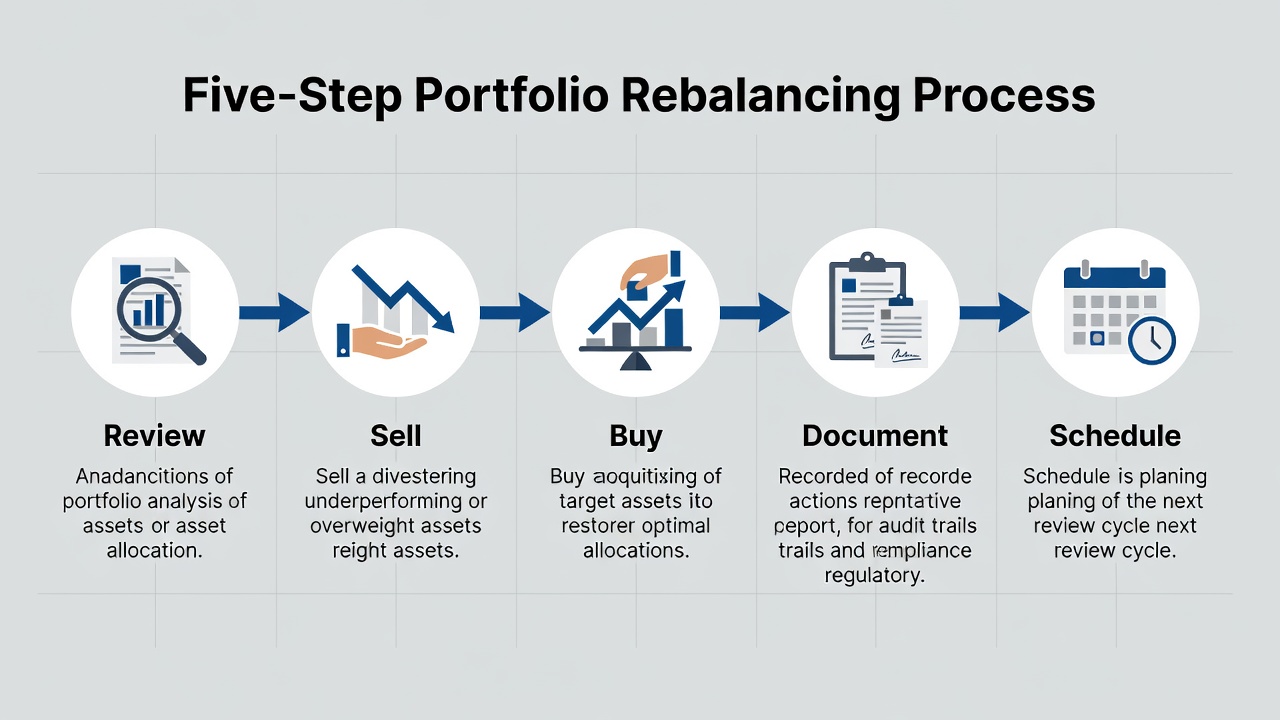
Rebalancing ensures allocations remain aligned with risk tolerance and value opportunities. The process involves several concrete phases executed methodically:
- Conduct a full portfolio audit comparing current weights to target percentages, noting any drift caused by price movements.
- Calculate updated intrinsic values for all holdings using refreshed financial data and economic assumptions.
- Trim or exit positions where prices have risen above fair value, freeing capital for redeployment.
- Allocate proceeds into newly identified undervalued securities that meet strict quality and discount criteria.
- Document every trade with supporting analysis, including the rationale and expected timeline for convergence to value.
- Schedule follow-up reviews quarterly or immediately after major market events exceeding predefined thresholds.
This structured approach prevents emotional reactions and maintains focus on long-term objectives.
Risk Assessment Frameworks
A comprehensive risk framework integrates quantitative and qualitative layers. Begin with statistical measures including beta relative to benchmarks and historical volatility calculations. Supplement these with scenario analysis testing portfolio performance under stress conditions such as rapid interest rate shifts or sector-specific shocks. Macro exposures are evaluated through sensitivity to inflation, currency fluctuations, and regulatory changes. Position sizing rules limit any single holding to a maximum percentage of the portfolio, while sector caps prevent over-concentration. Maintaining a cash reserve of 5 to 15 percent provides dry powder for opportunistic purchases without forcing sales of core holdings. Regular model updates incorporate the latest earnings guidance and forward-looking indicators to keep valuations current and realistic.
Historical Case Studies from Recent Downturns
The 2020 COVID-induced crash offers a clear illustration. Active value investors who targeted high-quality banks and energy companies trading at deep discounts recovered substantial ground within months as fundamentals reasserted themselves, outperforming broad passive indexes that remained fully exposed to the initial plunge. In the 2022 period marked by inflation and rising rates, portfolios emphasizing undervalued industrial and healthcare names benefited from disciplined trimming of overvalued growth stocks and reinvestment into defensive value opportunities. These episodes underscore the advantage of maintaining analytical discipline rather than capitulating during panic selling. Additional lessons from the 2018 volatility spike show how rebalancing into temporarily depressed materials companies delivered strong subsequent returns once supply concerns eased.
Active vs Passive Responses to Volatility
Passive strategies deliver low-cost, broad-market exposure but lack mechanisms for selective buying or selling during extremes. They perform reliably in steady upward trends yet suffer full drawdowns when volatility spikes. Active value strategies, by contrast, enable targeted purchases of undervalued securities during selloffs and profit-taking when prices normalize. While active approaches incur higher research and transaction costs, the potential for improved risk-adjusted returns in turbulent environments often justifies the effort for investors with sufficient time and expertise. A hybrid model allocating a core portion to low-cost index funds and a satellite allocation to active value selections balances efficiency with opportunistic flexibility.
FAQ: Timing Exits and Maintaining Discipline
How do I know when to exit a position?
Exit decisions should stem from valuation analysis rather than price movements alone. Sell when the security reaches or surpasses its estimated intrinsic value, or when fundamental deterioration such as declining competitive advantages or unsustainable debt levels becomes evident. Avoid reactive selling triggered purely by short-term volatility.
What prevents emotional decision-making?
Predefine investment criteria and valuation thresholds before markets turn volatile. Maintain written checklists and consult independent data sources for validation. Educational materials available through SEC investor resources reinforce disciplined habits and highlight common behavioral pitfalls.
Should I increase cash holdings during uncertainty?
Retain a moderate cash allocation for buying opportunities rather than attempting to time complete market exits. Excessive cash drag can significantly reduce long-term compounding potential.
How often should valuations be updated?
Review core valuation models quarterly or following material earnings releases and macroeconomic announcements. This frequency balances thoroughness with the avoidance of over-trading.
Checklist for Implementing Active Value Approaches
- Define and document valuation models along with required margin-of-safety thresholds for every potential holding.
- Set explicit rebalancing rules including drift tolerances and review cadence.
- Compile a diversified watchlist spanning multiple sectors and market capitalizations.
- Establish position sizing limits and sector exposure caps to control concentration risk.
- Integrate regular review of macroeconomic indicators from Federal Reserve economic data to inform broader context.
- Track performance using risk-adjusted metrics such as Sharpe ratio against relevant benchmarks.
- Account for tax consequences prior to executing any rebalancing trades.
- Continuously refine knowledge using authoritative references such as Investopedia strategy guides.
Conclusion
Active value strategies provide investors with a structured methodology to navigate market volatility effectively. By applying the identification techniques, rebalancing protocols, risk frameworks, and lessons from past downturns detailed in this guide, individuals can build portfolios that withstand turbulence while capturing opportunities created by price dislocations. Consistent application of these principles, supported by the provided checklist and FAQ insights, fosters the discipline required for long-term success in dynamic markets.

No comments yet. Be the first!