 Bullish Portfolio
Introduction to Active Value Investing Tools in 2026
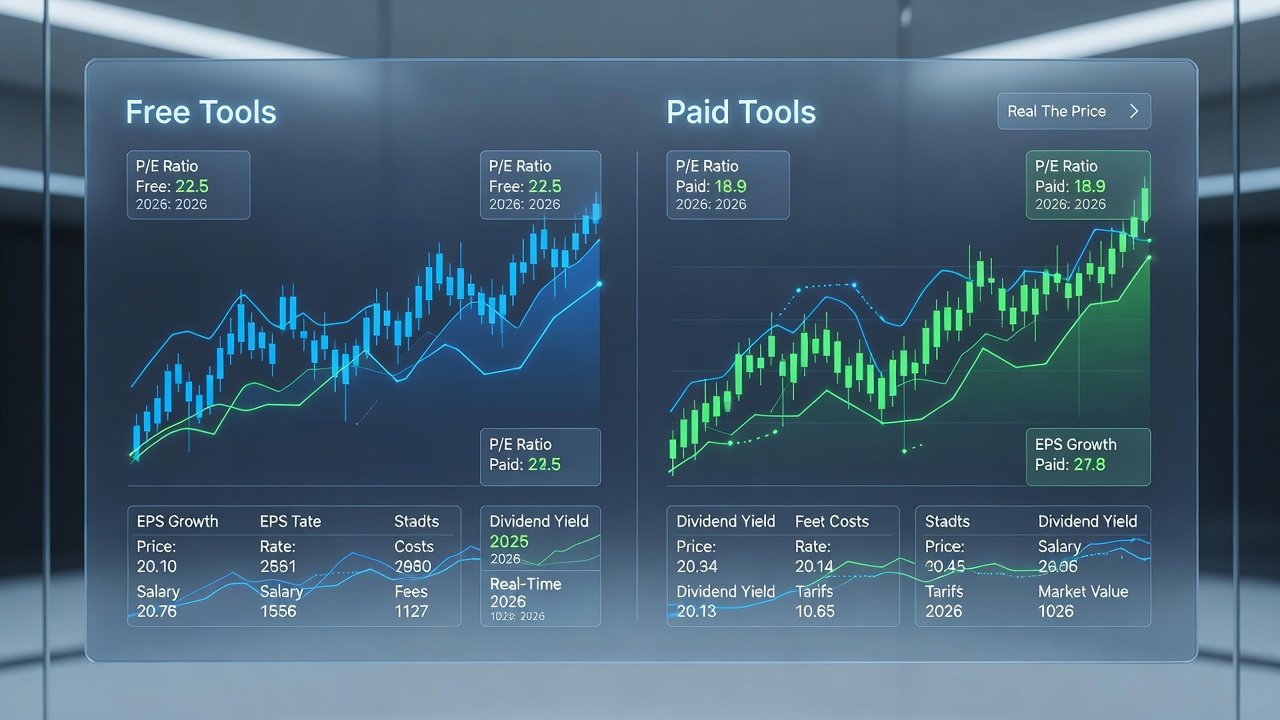
Active value investing blends the disciplined search for undervalued securities with hands-on portfolio management. Investors in 2026 use specialized software to identify companies trading below intrinsic value while actively monitoring positions for optimal entry and exit points. These tools must handle real-time market data, customizable screens for metrics such as price-to-earnings ratios, free cash flow yields, and balance sheet strength. Free platforms offer accessible entry points for learning, whereas paid solutions deliver advanced analytics, automation, and institutional-quality research that can improve decision speed and accuracy.
The 2026 market environment features heightened volatility driven by geopolitical shifts and technological disruption, making robust screening capabilities essential. This guide examines free versus paid options in depth, providing concrete examples of stock screening workflows, portfolio tracking setups, and integration patterns that align with value principles.
Core Principles of Active Value Investing
Value investing, rooted in the ideas of Benjamin Graham, focuses on purchasing assets at a discount to their true worth. Active management adds layers of ongoing analysis, including earnings revisions, competitive positioning, and macroeconomic overlays. Effective tools therefore support filters for low price-to-book ratios, high return on equity, and margin of safety calculations. For instance, an investor might screen for companies with a five-year average return on invested capital above 15 percent while excluding those with excessive leverage.
Practical application requires blending quantitative screens with qualitative review of 10-K filings. Tools that connect directly to primary data sources reduce errors from outdated information. Investors should also track portfolio-level metrics such as sector allocation and dividend coverage ratios to maintain diversification within a value framework.
Free Tools: Capabilities and Limitations
Free platforms such as Yahoo Finance and Finviz provide solid starting points. Yahoo Finance delivers real-time quotes, basic portfolio trackers, and fundamental data on thousands of equities. Users can create watchlists and apply simple filters for dividend yield or earnings growth. Finviz offers visual stock heatmaps and a screener with over 60 parameters, allowing quick identification of candidates trading at low multiples.
- Screening example on Finviz: Set P/E below 12, debt-to-equity under 0.6, and positive earnings surprise in the last quarter to surface potential value plays in the industrial sector.
- Portfolio tracking: Manually update holdings and view basic performance charts without export functions.
Limitations include delayed data feeds during peak hours, absence of backtesting modules, and restricted mobile notifications. Data coverage gaps appear in international small-cap names, forcing manual cross-checks with other sources.
Paid Tools: Advanced Features and Value Proposition
Subscription platforms like TradingView Pro, Morningstar Investor, and Portfolio Visualizer provide deeper functionality. TradingView supports multi-timeframe charting, custom Pine Script indicators, and community-shared value screens. Morningstar Investor adds analyst reports, moat ratings, and discounted cash flow models that quantify intrinsic value directly.
These services often include API access for automated data pulls and seamless brokerage integration. For example, an investor can link accounts to pull transaction history and run automated value-score calculations nightly. Investopedia supplies complementary educational modules on interpreting these outputs.
Detailed Feature Comparison
Free tiers typically cap historical data at five years and limit export formats to CSV. Paid versions extend coverage to twenty-plus years and enable Excel or Google Sheets synchronization for custom valuation models. Portfolio tracking in paid tools incorporates automatic rebalancing suggestions, tax-loss harvesting alerts, and risk-adjusted performance attribution.
Real-world example: A value investor screening for banks might use free tools to find low price-to-tangible-book names, then upgrade to paid software for stress-test scenario modeling using regulatory capital ratios. This layered approach improves both discovery and ongoing monitoring.
Step-by-Step Setup Guides for Top Options
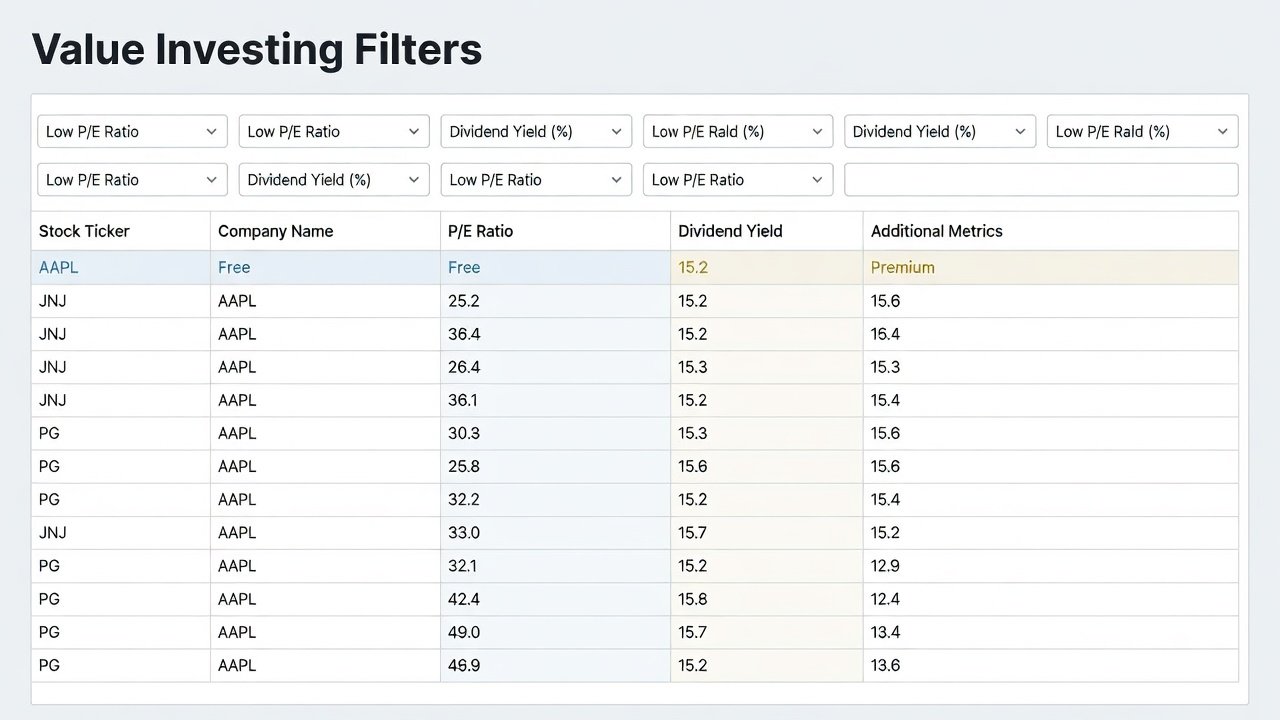
Yahoo Finance setup: Register for a free account, navigate to the screener, select “Value” preset, and refine with custom ratios such as enterprise value to EBITDA below eight. Add results to a portfolio and enable email summaries for weekly updates.
Morningstar Investor setup: Choose a plan, import existing holdings via CSV or direct brokerage link, then build a custom dashboard displaying fair value estimates alongside current prices. Set alerts for when securities trade more than 20 percent below fair value estimates.
TradingView Pro setup: Enable the screener widget, create a multi-factor layout combining value ratios with technical confirmation, and publish private scripts for repeated use across watchlists. Mobile app configuration involves enabling push notifications for price and news triggers.
Decision Framework Based on Experience Level
Beginners should start with free tools to master basic metrics without financial commitment. Focus on learning to interpret P/E, P/B, and dividend coverage before adding complexity. Intermediate investors benefit from paid upgrades once monthly screening volume exceeds 50 candidates or when portfolio size justifies risk-modeling features.
Advanced users require automation, API connectivity, and institutional data feeds to execute high-frequency value rotations. A practical checklist includes evaluating mobile responsiveness, data freshness, and customer support response times before committing to annual subscriptions.
Integration with Data Sources, Mobile Access, and Automation
Strong tools connect to authoritative feeds such as SEC EDGAR for filings and economic releases from the Federal Reserve. Mobile applications on both free and paid platforms now support biometric login and offline caching of key screens. Automation capabilities range from scheduled PDF reports in free tiers to webhook-driven alerts and Python library integrations in paid environments, allowing investors to trigger trades or rebalance notifications automatically.
Common Pitfalls and When Upgrading Makes Sense
Free tiers frequently suffer from incomplete international coverage and intrusive advertisements that slow workflows. Data staleness can lead to missed opportunities during earnings seasons. Upgrade when you consistently encounter export restrictions, require multi-year backtesting, or need collaborative portfolio sharing with advisors. Track usage for 30 days to quantify time saved versus subscription cost before deciding.
FAQ on Selecting Tools Aligned with Personal Strategies
How do I match tools to a conservative value strategy? Prioritize platforms with strong balance-sheet filters and long-term historical data over flashy charting.
Are free tools adequate for part-time investors? Yes, provided screening frequency remains low and manual verification supplements automated results.
What signals indicate it is time to upgrade? Repeated data gaps, need for automated alerts, or portfolio growth beyond six figures typically justify paid features.
Can multiple tools be combined effectively? Many investors run free screeners for discovery and paid platforms for deep due diligence and tracking.
How important is mobile access in 2026? Critical for active managers who monitor positions outside market hours or while traveling.
Conclusion
Choosing between free and paid tools for active value investing in 2026 depends on individual workflow demands, experience, and portfolio complexity. Starting with accessible free platforms builds foundational skills, while strategic upgrades unlock efficiency and analytical depth. By following structured setup processes and monitoring usage patterns, investors can assemble a toolkit that supports disciplined, data-driven decisions aligned with timeless value principles.

No comments yet. Be the first!