 Bullish Portfolio

Introduction: Unlocking Alpha Through Niche Sector ETFs
Many investors rely on broad market index funds for steady growth, yet 2026 presents opportunities in underrated sector ETFs that target specialized areas like advanced materials and digital infrastructure. These options can complement core holdings by providing targeted exposure and potential outperformance without duplicating the heavy weighting found in popular benchmarks. This comprehensive guide examines their role in diversified portfolios, backed by selection strategies, performance context, and real-world blending examples that help investors move beyond generic market exposure.
The appeal of these lesser-known ETFs lies in their ability to capture secular trends such as reshoring of manufacturing, expansion of hyperscale data facilities, and innovation in high-performance materials. While mainstream indexes deliver market beta, niche sector vehicles introduce elements of alpha through concentrated bets on emerging supply chains and technological infrastructure. Investors seeking fresh diversification angles will find actionable insights throughout this article on how to evaluate, select, and integrate these holdings responsibly.
Why Specialty Sectors Outperform Mainstream Themes
Popular themes such as broad technology or clean energy dominate headlines and often dominate index weightings, but specialty materials and digital infrastructure frequently deliver differentiated returns because they sit at the intersection of multiple megatrends. Specialty materials benefit from demand in aerospace, defense, electric vehicles, and semiconductor packaging, while digital infrastructure supports the physical backbone required for artificial intelligence training clusters and 5G rollout. By focusing on them, investors can reduce overlap with standard indexes like the S&P 500 while accessing unique growth drivers that respond differently to interest rate cycles and geopolitical events.
Spotlight on Specialty Materials ETFs
Specialty materials ETFs invest in companies producing advanced composites, rare earth elements, high-performance alloys, and engineered polymers. These holdings support critical industries from next-generation aircraft to medical device manufacturing. Unlike broad commodity funds that track price fluctuations in raw inputs, specialty materials ETFs emphasize innovation in materials science, offering differentiation through exposure to firms with proprietary processes and intellectual property moats. Examples include producers of carbon fiber for lightweight structures and suppliers of gallium nitride for high-efficiency electronics, creating a portfolio layer that benefits from both cyclical industrial recovery and structural technological advancement.
Digital Infrastructure ETFs: The Backbone of the Data Economy
Digital infrastructure ETFs focus on data centers, fiber optic networks, semiconductor fabrication facilities, and related real estate investment trusts. With rising demand for cloud computing, edge computing, and AI workloads, these ETFs capture revenue from essential physical assets that power the digital world. They provide a more tangible angle than pure software-focused tech funds because their performance ties closely to capital expenditure cycles by hyperscalers and telecom operators. This sector tends to exhibit more stable cash flows due to long-term lease agreements, making it attractive for investors balancing growth with income characteristics within an equity allocation.
Performance Comparisons Versus Popular Indexes
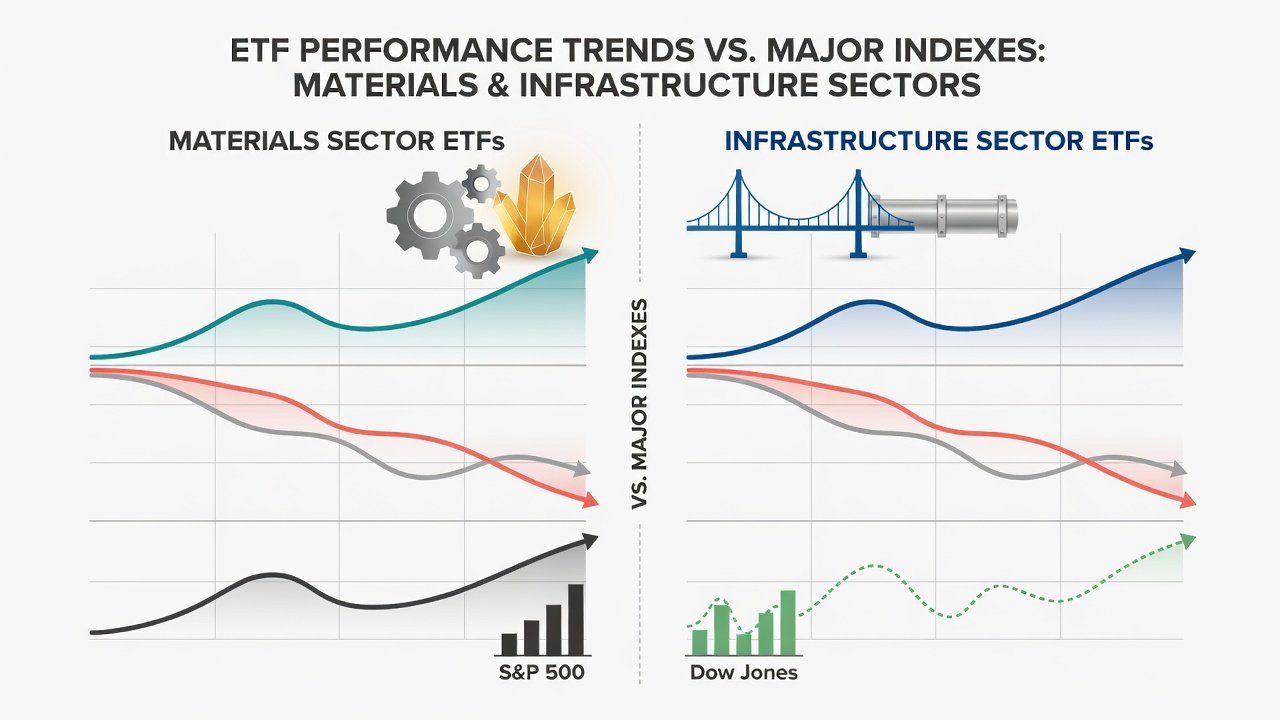
When evaluated against broad benchmarks, underrated sector ETFs frequently demonstrate distinct return patterns driven by sector-specific catalysts. Specialty materials vehicles have shown resilience during supply disruptions and trade policy shifts, often recovering faster than diversified industrial indexes when raw material bottlenecks ease. Digital infrastructure plays benefit from consistent capital expenditure by technology giants, delivering steadier performance during periods of market rotation away from high-valuation growth stocks. Investors should review rolling returns, sector correlation matrices, and drawdown profiles to understand how these assets behave relative to large-cap indexes over multi-year periods, recognizing that outperformance is rarely linear and requires patience through volatility cycles.
Key Selection Criteria: Liquidity and Overlap Metrics
- Liquidity assessment: Prioritize ETFs with high average daily trading volume to minimize slippage during rebalancing and to ensure tight bid-ask spreads even in stressed markets.
- Overlap analysis: Calculate holdings intersection with core index funds using third-party data platforms to avoid unintended concentration in a handful of mega-cap names that already dominate broad indexes.
- Expense ratio evaluation: Favor structures with competitive fees that preserve net returns over time, paying particular attention to any embedded costs from derivatives or securities lending programs.
- Tracking error review: Ensure the ETF closely follows its stated sector benchmark without excessive deviation that could undermine the intended exposure.
- Assets under management and premium/discount history: Larger funds with consistent trading near net asset value reduce the risk of structural inefficiencies that can erode returns for buy-and-hold investors.
Sample Allocation Examples for 2026 Portfolios
A balanced approach might allocate 5-10% to specialty materials ETFs and 7-12% to digital infrastructure within a diversified equity sleeve, depending on risk tolerance and existing sector exposures. For example, an investor with 60% in broad index funds could add 8% each to two niche ETFs, rebalancing quarterly to maintain targets. Another configuration involves pairing a specialty materials ETF with an existing industrial allocation to fine-tune exposure to advanced manufacturing themes, while a retiree might tilt toward digital infrastructure for its relatively more predictable revenue streams. These examples illustrate how modest tilts can enhance diversification without excessive concentration risk when sized appropriately relative to total portfolio value.
Practical Steps for Identifying These ETFs
- Screen reputable ETF databases for vehicles in underrepresented GICS sub-industries such as specialty chemicals or data center REITs.
- Cross-reference holdings transparency with regulatory filings available at https://www.sec.gov/ to verify alignment with stated investment objectives.
- Consult educational resources at https://www.investor.gov/ to understand sector-specific risks and regulatory considerations before committing capital.
- Backtest historical performance and correlation statistics using free portfolio simulators to quantify diversification benefits.
- Review prospectus language for any concentration limits or liquidity provisions that could affect performance during market stress.
- Consult a fiduciary advisor to integrate findings with overall financial planning and tax situation.
Real-World Case Examples of Blending Strategies
Consider a mid-sized retirement portfolio that added a specialty materials ETF in early 2025. The allocation helped offset volatility in traditional manufacturing holdings during material shortages and benefited from renewed defense spending that boosted demand for advanced alloys. Similarly, blending a digital infrastructure ETF with core tech index exposure improved overall yield stability amid fluctuating interest rates, as lease revenues from data center tenants provided a buffer during equity market drawdowns. A third example involves a taxable brokerage account that used these ETFs to harvest tax-loss opportunities while maintaining sector exposure, demonstrating how tactical implementation can serve multiple portfolio objectives simultaneously.
Common Pitfalls to Avoid
Investors often overlook liquidity in niche ETFs, leading to wide bid-ask spreads that erode returns during frequent trading. Another frequent error is ignoring tax implications from sector turnover, particularly in accounts where capital gains distributions can create unexpected tax liabilities. Over-concentration in a single thematic ETF without monitoring correlation drift can also undermine diversification goals. Finally, chasing recent performance without evaluating underlying holdings overlap with existing positions frequently results in unintended beta duplication rather than true alpha generation.
FAQs on Volatility and Tax Implications
How volatile are these underrated ETFs compared to broad indexes?
Specialty sectors can exhibit higher short-term swings due to concentrated exposures, yet they often provide lower long-term correlation, aiding overall portfolio stability when sized appropriately and combined with core holdings.
What are the tax considerations?
ETFs generally offer tax efficiency through in-kind creations and redemptions, but sector funds with higher turnover may generate more capital gains distributions. Review your account type, holding period, and any qualified dividend eligibility to optimize after-tax outcomes.
Should beginners start with small positions?
Yes, starting with modest allocations allows investors to observe how the ETFs behave within their specific portfolio context before scaling exposure, reducing the chance of behavioral mistakes during initial volatility.
Conclusion: Positioning for 2026 Success
Incorporating underrated sector ETFs into index-based strategies offers a pathway to enhanced diversification and potential alpha. By applying disciplined selection criteria, thoughtful allocations, and ongoing monitoring, investors can build more resilient portfolios for the year ahead while avoiding common implementation errors that diminish long-term results.


No comments yet. Be the first!