 Bullish Portfolio
Introduction to Thematic ETF Portfolios in 2026
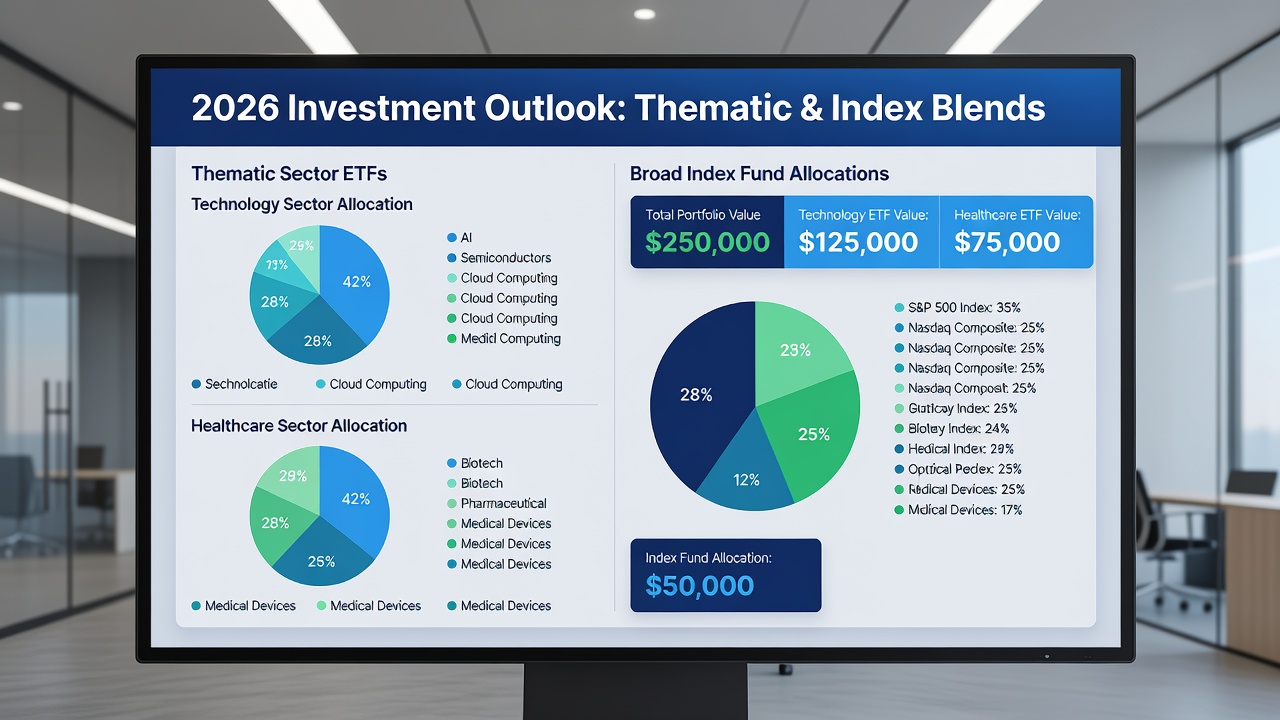
Advanced investors seeking growth in 2026 are increasingly turning to thematic portfolios that combine targeted sector ETFs with broad index funds. This approach allows exposure to high-potential areas like technology and healthcare while maintaining stability through low-cost market benchmarks. Unlike basic ETF selection, this strategy emphasizes deliberate allocation, ongoing performance monitoring, and proactive risk mitigation to navigate evolving market conditions.
Thematic investing focuses on long-term trends such as artificial intelligence, personalized medicine, and digital transformation. Pairing these with index funds helps anchor volatility. Investors benefit from diversification without sacrificing upside potential in emerging themes. In 2026, macroeconomic factors including technological acceleration and healthcare innovation create compelling opportunities for blended portfolios that balance aggressive growth with defensive positioning.
Key Emerging Themes for 2026
Technology and healthcare stand out as primary sectors for thematic allocation. Technology ETFs capture advancements in semiconductors, cloud computing, cybersecurity, and artificial intelligence infrastructure. These areas benefit from sustained corporate and consumer adoption of digital tools. Healthcare ETFs target biotech innovation, medical devices, genomics, telehealth expansion, and solutions for aging populations. These themes align with structural shifts expected to drive returns through the decade, including regulatory support for innovation and demographic changes.
Broad index funds, such as those tracking the S&P 500 or total stock market, provide ballast. They deliver market returns at minimal cost, reducing the impact of sector-specific downturns. By blending, investors capture thematic upside while participating in overall market growth. Additional themes worth considering include clean energy and cybersecurity, though technology and healthcare remain core for most 2026 portfolios due to their scale and momentum.
Technology Sector Deep Dive
Within technology, focus on sub-themes like semiconductor manufacturing and AI software platforms. Real-world examples show how companies in these spaces have driven outsized returns during previous cycles. A blended portfolio might allocate to a semiconductor-focused ETF alongside a broader tech ETF to capture both hardware and software growth vectors.
Healthcare Sector Deep Dive
Healthcare offers defensive qualities alongside growth. Sub-sectors such as biotechnology and healthcare services provide exposure to breakthrough therapies and operational efficiencies. Investors often pair these with index funds to offset regulatory or clinical trial risks inherent in pure healthcare plays.
Allocation Frameworks for Blended Portfolios
Effective allocation starts with defining risk tolerance and time horizon. A common framework suggests 40-60% in thematic sector ETFs and 40-60% in index funds for moderate growth profiles. Within themes, split exposure across 2-3 sectors to avoid concentration. Conservative investors may tilt toward 30% thematic and 70% index, while aggressive profiles reverse this ratio.
- Core allocation: 50% total market index fund for broad equity exposure and dividend stability.
- Thematic sleeve: 30% technology sector ETF and 20% healthcare sector ETF, adjustable based on valuation signals.
- Rebalancing: Quarterly reviews to maintain target weights and harvest gains from outperforming themes.
- Tax considerations: Hold thematic ETFs in tax-advantaged accounts where possible to manage capital gains distributions.
This structure supports growth from thematic drivers while limiting drawdowns during sector rotations. Advanced practitioners also incorporate small allocations to international index funds for further geographic diversification.
Step-by-Step Portfolio Building Process
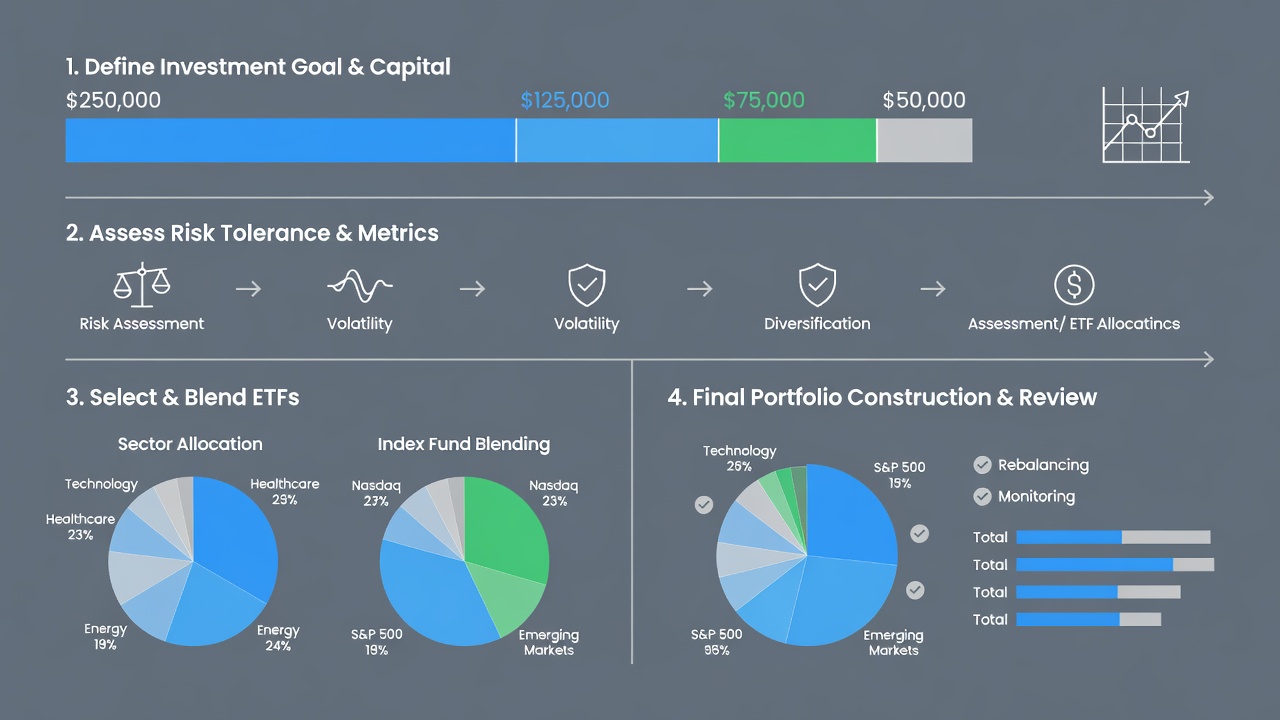
Follow this practical sequence to construct your thematic portfolio:
- Assess personal goals and risk parameters using a financial planning worksheet that incorporates expected returns, volatility tolerance, and liquidity needs.
- Select 1-2 low-cost index funds as the foundation, prioritizing broad market coverage and minimal tracking error.
- Identify 2-3 thematic sector ETFs aligned with 2026 macro trends through fundamental analysis of holdings and sector outlooks.
- Determine initial weights and execute purchases through a brokerage platform, considering dollar-cost averaging for larger sums.
- Set calendar reminders for performance reviews and rebalancing, including triggers for market events or life changes.
- Document the rationale for each holding to facilitate future adjustments and performance attribution.
Real-world example: An investor with a $250,000 portfolio might place $125,000 in a total market ETF, $75,000 in a technology sector ETF focused on innovation leaders, and $50,000 in a healthcare sector ETF emphasizing biotech and services. This setup is reviewed semi-annually, with adjustments made if one theme exceeds its target weight by more than 5%.
Performance Tracking Metrics
Monitor portfolios using metrics beyond simple returns. Track Sharpe ratio for risk-adjusted performance, tracking error relative to benchmarks, and sector contribution analysis. Tools from major providers allow comparison of blended returns against pure index or pure thematic strategies over multiple time horizons.
Compare leading options in a table format:
| ETF Type | Focus | Key Holdings Characteristics | Best For |
|---|---|---|---|
| Broad Index | Total Market | Large-cap dominance with mid and small-cap exposure | Stability anchor and long-term compounding |
| Sector ETF | Technology | Heavy in software, hardware, and internet services | Growth exposure and innovation capture |
| Sector ETF | Healthcare | Pharmaceuticals, providers, and equipment manufacturers | Defensive growth and demographic tailwinds |
Additional metrics include beta relative to the S&P 500 and maximum drawdown history during past market stress periods. Consistent tracking enables timely refinements without emotional decision-making.
Risk Mitigation Techniques
Mitigate risks through position sizing limits (no single sector exceeding 35%), geographic diversification where possible, and stop-loss rules on thematic holdings. Stress testing against historical sector bubbles helps prepare for volatility. Investors should also consider correlation analysis between chosen ETFs to ensure true diversification benefits. Resources from U.S. Securities and Exchange Commission provide regulatory guidance on ETF risks and disclosures, while Investor.gov offers educational materials on portfolio construction and investor protections. Further insights on market oversight are available via Federal Reserve publications on economic conditions affecting sectors.
Common Mistakes to Avoid
Many investors over-concentrate in a single hot theme without sufficient index anchoring. Others neglect rebalancing, allowing drift that increases unintended risk. Ignoring fees, even small differences, can compound over time and erode returns. Finally, chasing past performance without forward-looking analysis often leads to suboptimal entry points.
Frequently Asked Questions
How often should thematic portfolios be rebalanced?
Quarterly reviews are standard, with adjustments triggered by 5% or greater deviations from targets or significant market events.
Can international exposure enhance these portfolios?
Yes, adding a small allocation to global ex-U.S. index funds can reduce home-country bias and capture overseas thematic opportunities.
What role do bonds play in a 2026 thematic equity portfolio?
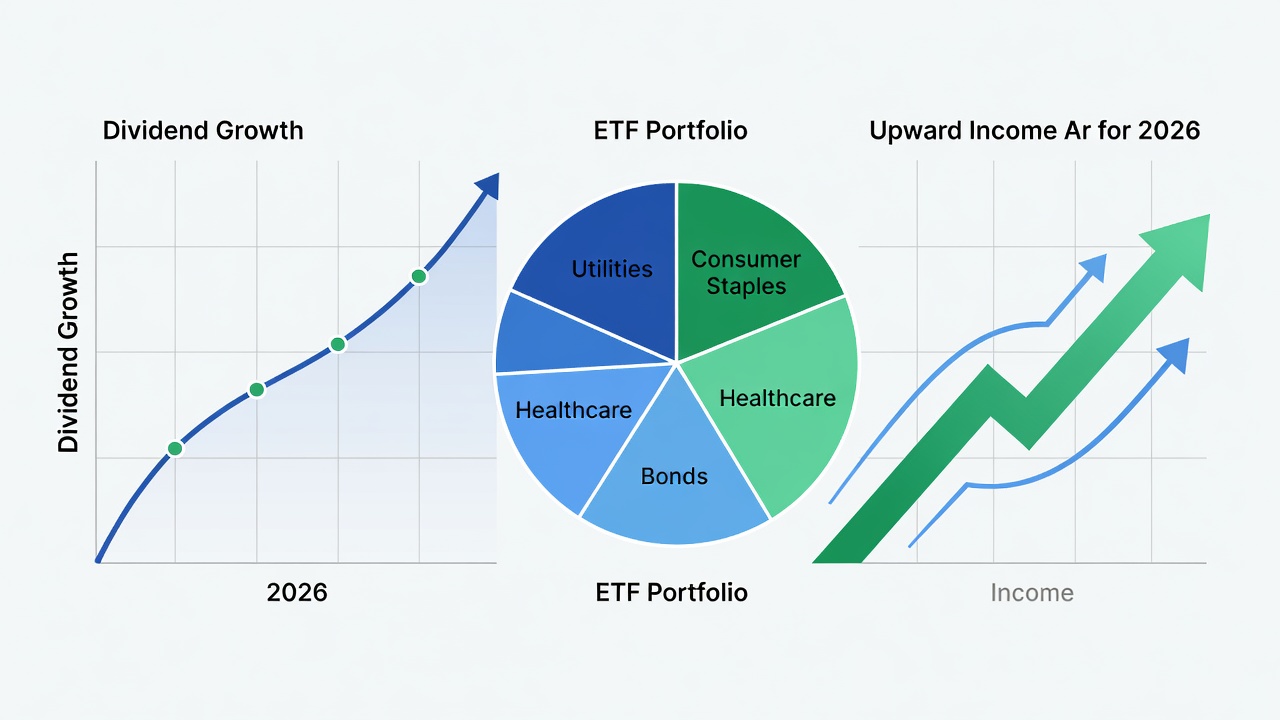
While the focus remains equity-centric, conservative investors may include short-duration bond index funds for additional stability during equity volatility spikes.
Conclusion
Blending sector ETFs with index funds creates resilient thematic portfolios suited for 2026 market conditions. By following structured allocation, rigorous tracking, and disciplined risk controls, sophisticated investors can pursue growth opportunities responsibly. Regular evaluation ensures alignment with evolving economic themes and personal objectives, delivering a complete framework for long-term success.
No comments yet. Be the first!