 Bullish Portfolio
Introduction to Dividend ETF Investing in 2026
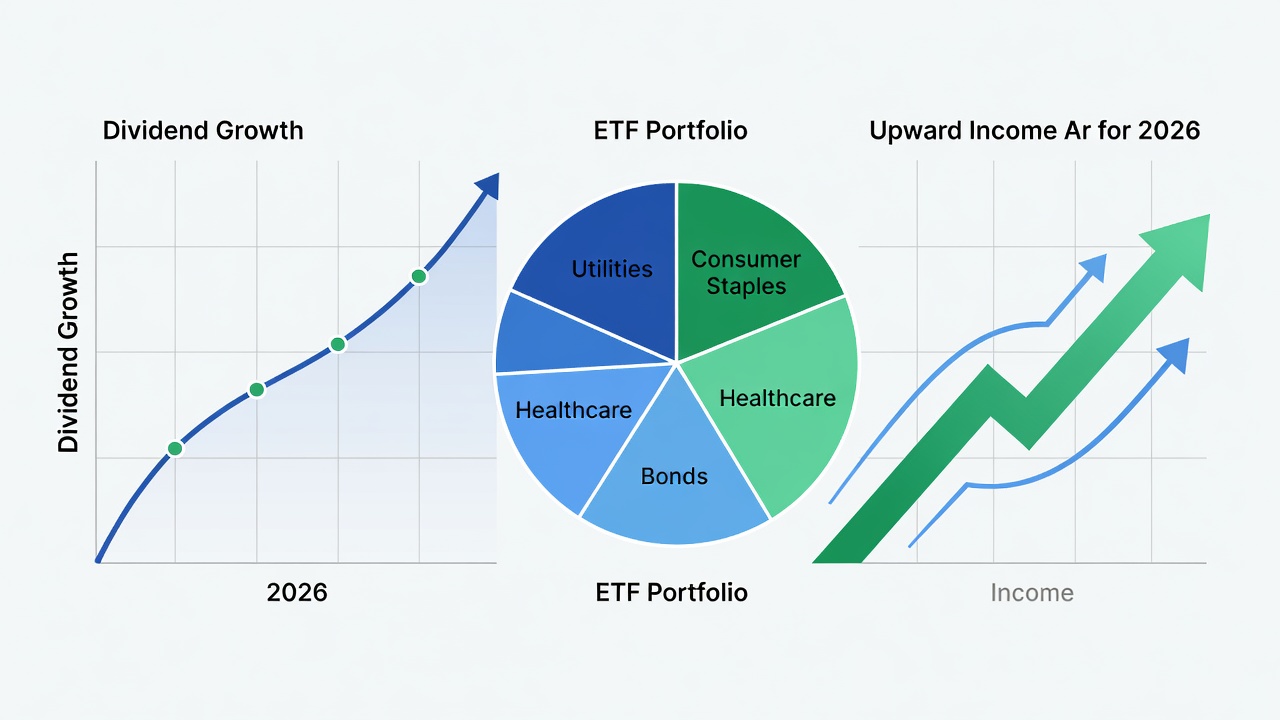
Dividend-focused ETFs remain a cornerstone for investors seeking reliable income streams without fully sacrificing growth potential. As markets evolve into 2026, strategies that emphasize sustainable payouts, reasonable valuations, and sector diversification are gaining traction among both new and experienced investors. This guide examines how to select between targeted sector ETFs in defensive industries and broad-market index funds, while covering essential evaluation criteria such as dividend sustainability, yield metrics, and payout ratios. Understanding these elements helps build portfolios that can weather varying economic conditions. Investors who prioritize quality over chasing the highest yields often achieve more consistent results over multi-year periods. Dividend investing through ETFs also provides built-in diversification, reducing the risks associated with holding individual stocks while offering professional management and liquidity.
Key Factors When Evaluating Dividend ETFs
Before selecting specific ETFs, consider several quantitative and qualitative measures. Dividend sustainability refers to a company’s or sector’s ability to maintain or grow payouts over time, often supported by strong cash flows and reasonable debt levels. Yield metrics provide a snapshot of current income generation, yet they must be viewed alongside historical consistency rather than isolated high numbers. Payout ratios, calculated as dividends divided by earnings, offer insight into whether distributions are comfortably covered. Ratios below 60% typically signal room for future increases, while higher figures may warrant closer scrutiny during economic slowdowns. Expense ratios also matter because lower costs compound advantages over long holding periods. Additional considerations include the underlying index methodology, liquidity of the ETF shares, and the fund manager’s track record in navigating different market regimes. Investors should also evaluate the geographic exposure and currency risks if the ETF includes international holdings.
Defensive Sector ETF Opportunities
Sectors such as utilities, healthcare, and consumer staples tend to exhibit more stable demand regardless of broader economic cycles. ETFs focused on these areas can deliver defensive characteristics alongside dividend income. For instance, utilities often feature regulated revenue models that support predictable payouts, while healthcare companies benefit from demographic trends like aging populations. Consumer staples companies produce essential goods that maintain sales volumes even during recessions. When constructing a sector allocation, investors should review historical performance during past downturns and assess current valuations relative to long-term averages. Defensive sector ETFs frequently show lower volatility than cyclical areas, making them suitable core holdings for income-oriented portfolios. It is also wise to examine the concentration within each sector ETF, as some may overweight a handful of large companies, potentially increasing single-stock risk.
Broad Index Funds for Diversified Dividend Exposure
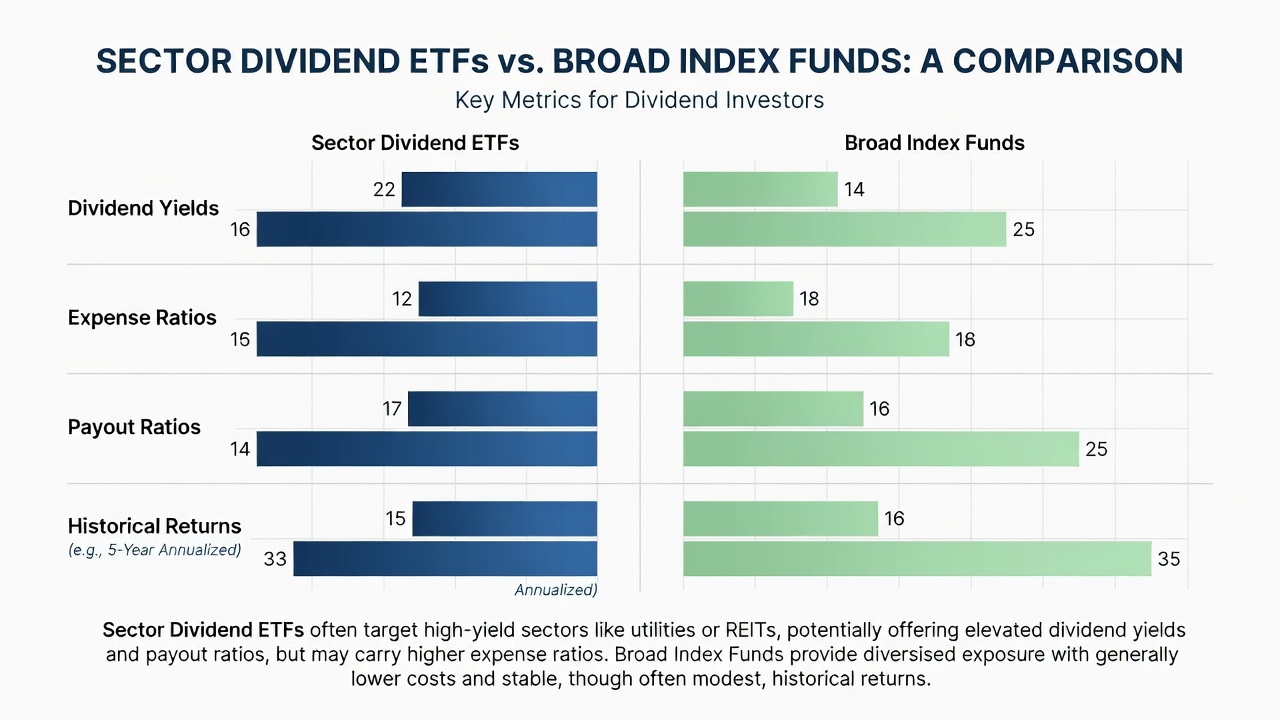
Broad dividend index funds provide exposure across multiple sectors and market capitalizations, reducing concentration risk. These vehicles typically track indexes that screen for consistent dividend growth or high quality metrics. They offer simplicity for investors who prefer a single-fund solution rather than managing multiple sector-specific holdings. Historical data shows that broad dividend indexes have delivered competitive total returns with lower drawdowns compared to the overall market during certain periods. Expense ratios for many established index products remain competitive, supporting long-term compounding. Investors can further enhance diversification by blending multiple broad indexes that emphasize different factors, such as dividend growth versus high current yield, to fine-tune the overall portfolio characteristics.
Comparing Expense Ratios and Historical Performance
Investors benefit from directly comparing total costs and past results across options. Lower expense ratios preserve more of the dividend income for reinvestment. Historical performance data, while not predictive, helps illustrate how different strategies behaved across interest-rate environments and market cycles. Combining sector ETFs with broad index funds often creates a balanced risk-return profile. When reviewing performance, focus on metrics such as standard deviation, Sharpe ratio, and maximum drawdown rather than raw returns alone. These measures provide a more complete picture of risk-adjusted outcomes and help determine whether an ETF’s income generation justifies its volatility.
Practical Steps to Build a Balanced Portfolio
- Define income goals and time horizon based on personal financial needs, including desired annual yield and growth targets.
- Screen ETFs using payout ratios, dividend growth history, sector exposure, and liquidity metrics from reliable financial platforms.
- Allocate across defensive sectors and broad indexes to achieve diversification, starting with smaller positions and scaling up as familiarity increases.
- Rebalance annually or when allocations drift beyond target ranges to maintain the intended risk profile.
- Monitor macroeconomic factors such as interest rates and inflation trends using official sources like the Federal Reserve.
- Document investment rationale and review decisions quarterly to avoid emotional reactions to short-term market movements.
Real-World Allocation Examples and Risk Considerations
A sample allocation might include 40% in broad dividend index exposure, 25% in utilities-focused ETFs, 20% in healthcare, and 15% in consumer staples. This mix balances income generation with growth potential. For a more conservative investor nearing retirement, the allocation could shift to 50% broad indexes, 30% utilities, and 20% healthcare to emphasize stability. In contrast, a growth-oriented investor might allocate 30% to broad indexes, 25% utilities, 25% healthcare, and 20% consumer staples while adding a small satellite position in dividend growth ETFs. In rising-rate environments, investors may tilt toward sectors with stronger pricing power, while in uncertain markets, increasing broad index weightings can enhance stability. Risk considerations include interest-rate sensitivity, sector-specific regulatory changes, and overall market drawdowns. Diversification across both sectors and fund types helps mitigate these factors. Regular portfolio reviews ensure alignment with evolving personal circumstances and changing economic outlooks.
Tax Implications and Reinvestment Strategies
Understanding tax treatment is essential for maximizing after-tax returns. Qualified dividends often receive favorable rates, yet investors should consult official resources for current rules. IRS guidelines provide detailed information on reporting requirements. Reinvesting dividends through automatic plans accelerates compounding without additional transaction costs. In taxable accounts, consider the impact of dividend reinvestment on cost basis tracking. Tax-advantaged accounts such as IRAs or 401(k)s allow tax-deferred or tax-free growth, making them ideal vehicles for high-yielding dividend ETFs. Investors should also be aware of foreign tax withholding if any holdings are international and explore ways to claim foreign tax credits where applicable.
Common Mistakes to Avoid
Many investors chase the highest-yielding ETFs without examining payout sustainability, leading to potential dividend cuts during downturns. Over-concentration in a single sector can amplify losses if that industry faces headwinds. Ignoring expense ratios erodes returns over time, while failing to rebalance allows drift from the original risk targets. Another frequent error is neglecting to consider the overall portfolio correlation with existing holdings, which can unintentionally increase market exposure.
Frequently Asked Questions
How often should I review my dividend ETF holdings?
Annual reviews are typically sufficient unless major market shifts occur. Rebalancing once per year maintains target allocations without excessive trading.
What are the tax implications of reinvesting dividends?
Reinvested dividends are still taxable in most accounts. Tax-advantaged accounts such as IRAs can defer or eliminate immediate tax consequences. Refer to SEC investor resources for additional education.
Can sector ETFs outperform broad index funds in 2026?
Performance depends on economic conditions. Defensive sectors may provide relative stability, while broad indexes capture wider market participation. A blended approach often delivers the most consistent income experience.
Should I use dollar-cost averaging when building dividend ETF positions?
Yes, dollar-cost averaging reduces the impact of market timing and allows investors to accumulate shares at varying price points, smoothing the overall entry cost over time.

No comments yet. Be the first!