 Bullish Portfolio
Introduction to Sector ETFs and Index Funds
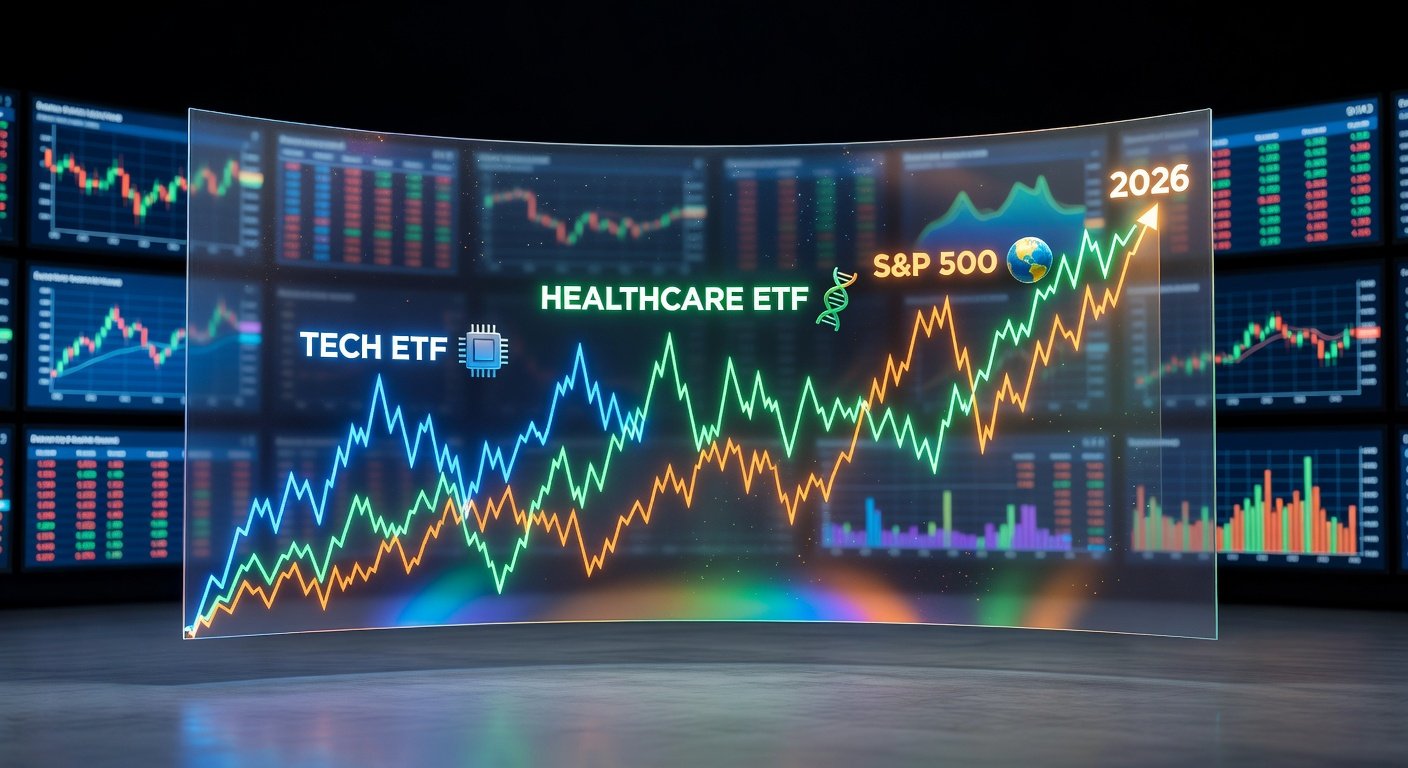
In the evolving landscape of ETF investing, 2026 promises exciting opportunities amid technological advancements and healthcare innovations. Sector ETFs target specific industries like technology or healthcare for potentially explosive growth, while broad index funds mirror entire markets like the S&P 500 for steady diversification. Which is right for you? This guide compares their pros, cons, performance data, and more to help you decide.
Sector ETFs, such as the Technology Select Sector SPDR Fund (XLK), focus on high-growth areas. Index funds, like Vanguard's S&P 500 ETF (VOO), offer exposure to hundreds of stocks across sectors. With markets facing volatility from AI booms and geopolitical shifts, understanding these vehicles is crucial.
Key Pros and Cons: Targeted Growth vs. Broad Stability
Sector ETFs Pros:
- Targeted Growth: Capitalize on booming sectors. Tech ETFs have outperformed broad markets in bull runs.
- Higher Potential Returns: In 2023-2025, XLK returned over 20% annually amid AI hype.
- Thematic Investing: Align with trends like biotech or renewables.
Sector ETFs Cons:
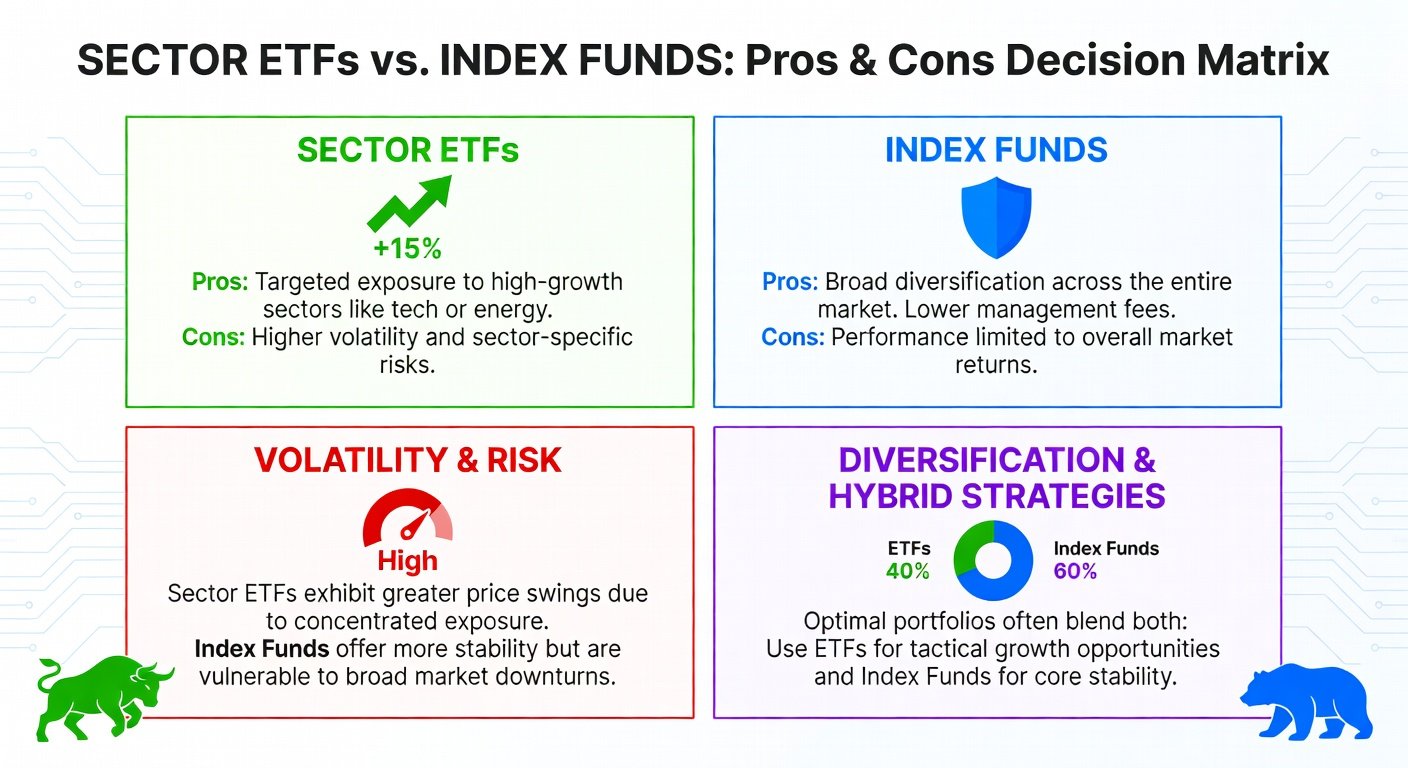
- Higher Volatility: Tech crashed 30%+ in 2022.
- Sector Risk: Over-reliance on one industry.
- Higher Expense Ratios: Often 0.10-0.20% vs. index funds' 0.03%.
Index Funds Pros:
- Diversification: Reduces risk across 500+ stocks.
- Lower Volatility: S&P 500 standard deviation ~15% vs. sector's 25%+.
- Cost-Effective: Passive tracking keeps fees minimal.
Index Funds Cons:
- Limited Upside: Misses sector-specific surges.
- Market Dependency: Dragged down by underperformers.
For more on ETF structures, check iShares, a leader in both sector and broad funds.
Data-Driven Examples: Top Performers and Risk Metrics
Let's dive into real data from 2020-2025 (as of mid-2025), projecting relevance for 2026 with ongoing trends like AI and aging populations.
Top Sector ETF Performers
- XLK (Tech): 5-year annualized return: 22.5%. Beat S&P by 8%. Sharpe ratio: 1.2 (solid risk-adjusted).
- XLV (Healthcare): 5-year return: 14.2%. Lower vol (std dev 18%) amid steady demand. Sharpe: 0.9.
- XLE (Energy): Volatile but rebounding; 2024-2025 +25% on oil prices.
Broad Index Funds
- VOO (S&P 500): 5-year return: 15.1%. Sharpe: 0.8. Std dev: 17%.
- VTI (Total Market): Similar at 14.8%, even broader exposure.
Volatility comparison (2022 bear market): XLK -28%, XLV -12%, VOO -19%. Sectors amplify ups/downs. For S&P data, visit S&P Dow Jones Indices.
In 2026, expect tech/healthcare to lead if innovation persists, per analyst forecasts.
Risk-Adjusted Returns Deep Dive
Sharpe ratio measures return per unit of risk. XLK's 1.2 edges VOO's 0.8 over 5 years, rewarding risk-takers. Healthcare's stability shines in downturns—XLV's max drawdown was 15% vs. market's 25%.
Sortino ratio (downside risk) favors index funds: VOO 1.1 vs. XLK 1.0. Use tools like Portfolio Visualizer for custom calcs.
Decision Matrix: Choose Your Strategy
Assess based on your profile:
| Factor | Sector ETFs | Index Funds | Best For |
|---|---|---|---|
| Risk Tolerance | High | Low-Medium | Aggressive vs Conservative |
| Time Horizon | 5+ years | Any | Growth vs Income |
| Expected Return | 15-25% | 8-12% | Bull Markets vs Stability |
| Volatility | High (20-30%) | Medium (15-20%) | Thrill vs Peace |
| Fees | 0.10-0.20% | 0.03-0.05% | Cost-Sensitive |
Source: Adapted from historical ETF data via Vanguard research.
Hybrid Portfolio Tips for Optimal 2026 Results
Don't choose—combine! A balanced approach mitigates risks while capturing growth.
- Core-Satellite: 70% index funds (VOO/VTI), 30% sectors (XLK 15%, XLV 15%).
- Rebalance Quarterly: Sell winners, buy laggards.
- Risk Parity: Allocate by volatility—less to volatile tech.
- 2026 Focus: Tilt to AI/tech (20%) and healthcare (10%), rest broad. Monitor Fed rates.
- Tax Efficiency: Use Roth IRA for sectors.
Explore Vanguard's tools at Vanguard for portfolio building.
Conclusion: Tailor to Your Goals
For 2026, sector ETFs suit aggressive investors eyeing tech/healthcare booms, while index funds provide reliable stability. Hybrids often win, blending 12-18% returns with managed risk. Always consider your risk tolerance, diversify, and consult a advisor. Start small, track performance, and adjust as markets shift.

No comments yet. Be the first!