 Bullish Portfolio
Understanding ETFs: The Gateway to Smart Investing
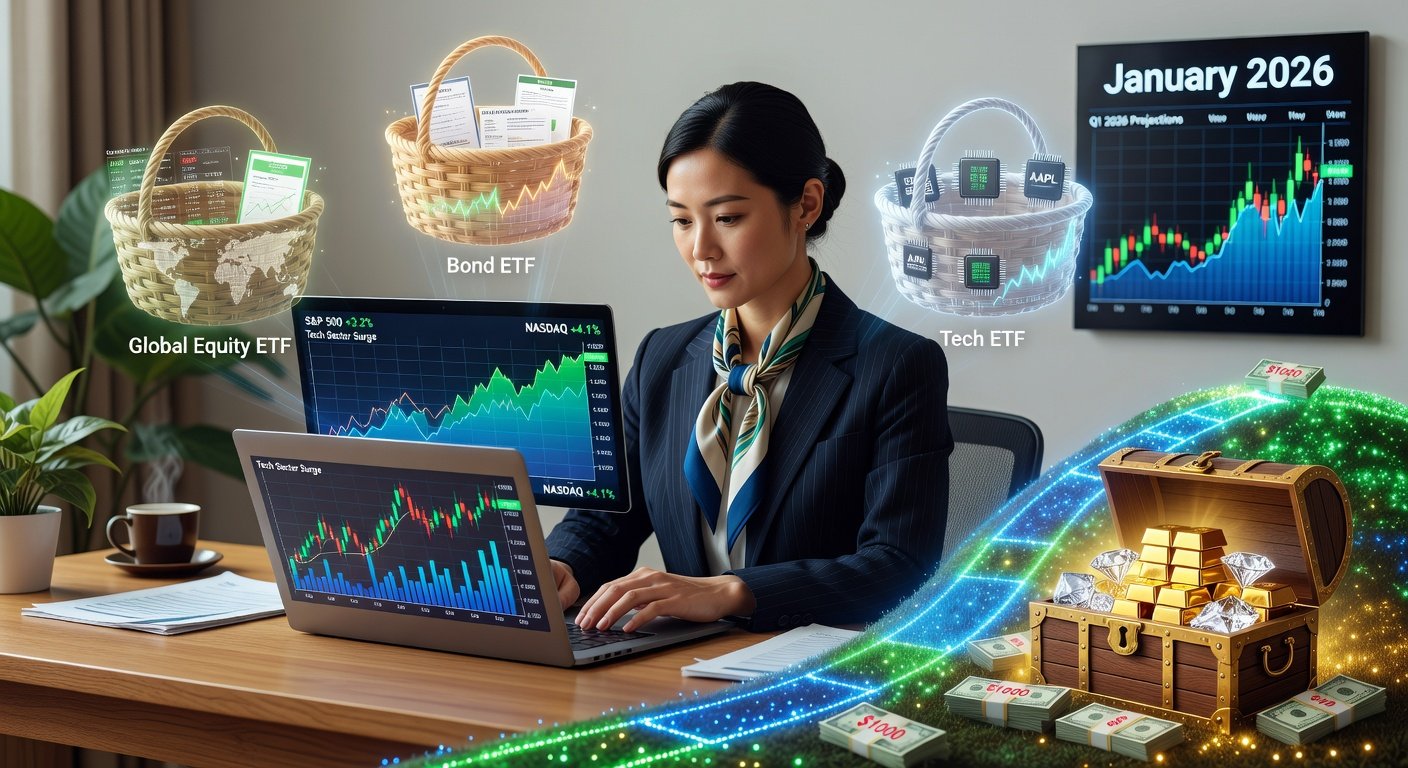
Exchange-Traded Funds (ETFs) have revolutionized investing by offering the benefits of mutual funds with the flexibility of stocks. Traded on exchanges like individual shares, ETFs allow you to buy into a basket of assets—stocks, bonds, commodities—with a single transaction. For newcomers, ETFs provide an accessible entry point to the markets without needing to pick individual stocks.
Why start with ETFs? They offer instant diversification, low costs, and liquidity. In 2024, global ETF assets surpassed $12 trillion, per industry reports, signaling their growing popularity. Whether you're saving for retirement or building wealth, ETFs can form the core of your portfolio.
Broad Index Funds vs. Targeted Sector ETFs: Key Differences
Broad index ETFs track major market indices like the S&P 500, providing exposure to hundreds or thousands of companies across sectors. Examples include the Vanguard S&P 500 ETF (VOO) or SPDR S&P 500 ETF (SPY). These 'set-it-and-forget-it' options mirror the market's performance, ideal for long-term growth.
In contrast, sector ETFs focus on specific industries like technology (e.g., XLK), healthcare (XLV), or energy (XLE). They amplify gains (and losses) in booming sectors but increase risk due to concentration.
| Aspect | Broad Index ETFs | Sector ETFs |
|---|---|---|
| Diversification | High (market-wide) | Low (industry-specific) |
| Risk Level | Moderate | High |
| Best For | Core holdings | Tactical bets |
| Expense Ratio | 0.03-0.10% | 0.10-0.50% |
Broad index funds suit beginners for stability, while sector ETFs add growth potential. A balanced approach? Allocate 70-80% to broad indexes and 20-30% to sectors.
The Role of ETFs in Portfolio Diversification
Diversification reduces risk by spreading investments across assets. Broad index ETFs inherently diversify via market-cap weighting, capturing leaders like Apple and Microsoft alongside smaller firms.
Sector ETFs enhance this by targeting underrepresented areas. For instance, if tech dominates your broad ETF, add a clean energy sector fund for balance.
- Asset Classes: Mix equity ETFs with bond or international ones (e.g., BND for bonds, VXUS for global stocks).
- Risk Mitigation: Avoid overexposure; use tools like correlation matrices.
- Rebalancing: Annually adjust to maintain targets.
Studies from Vanguard show diversified portfolios weather downturns better, with lower volatility.
Steps to Select Promising ETFs for Your 2026 Portfolio
Looking ahead to 2026? Focus on trends like AI, renewables, and demographics. Here's a step-by-step guide:
- Define Goals: Growth, income, or preservation? Match ETF types accordingly.
- Research Fundamentals: Check assets under management (AUM > $1B for liquidity), tracking error (<0.5%), and holdings.
- Evaluate Costs: Prioritize expense ratios under 0.20%. Use screeners on sites like Morningstar.
- Assess Performance: Review 5-10 year returns vs. benchmarks, but avoid recency bias.
- Consider Themes for 2026: AI/tech (e.g., ARKK or QQQ), ESG (e.g., ESGU), or dividend-focused (SCHD).
For authoritative ETF data, consult Morningstar's ETF section.
Risk Assessment: Don't Skip This
Every ETF carries risks: market, sector-specific, or liquidity. Use beta (market sensitivity) and standard deviation for measurement.
- Low-Risk: Broad bond ETFs (e.g., AGG).
- Medium-Risk: S&P 500 trackers.
- High-Risk: Leveraged or niche sectors.
Match risk to your timeline—higher for 2026 goals, conservative nearer term. The U.S. Securities and Exchange Commission (SEC) offers investor education on ETF risks.
Prioritizing Low-Cost Options
Fees compound over time; a 0.10% vs. 0.50% ratio saves thousands. Providers like Vanguard, BlackRock (iShares), and State Street dominate with rock-bottom costs. Aim for 'passive' ETFs over active ones, which underperform 80% of the time per S&P data.
Actionable Tips for First-Time ETF Investors
Ready to launch? Follow these confidence-boosters:
- Open a Brokerage: Choose low-commission platforms like Fidelity or Schwab (zero ETF trades).
- Start Small: Invest $1,000-5,000 initially; dollar-cost average monthly.
- Use Robo-Advisors: Betterment or Wealthfront auto-build ETF portfolios.
- Monitor Quarterly: Track via apps like Yahoo Finance or Personal Capital.
- Educate Continuously: Read prospectuses and join communities like r/ETFs on Reddit.
- Avoid Timing: Invest consistently; time in the market beats timing the market.
Sample Beginner Portfolio for 2026:
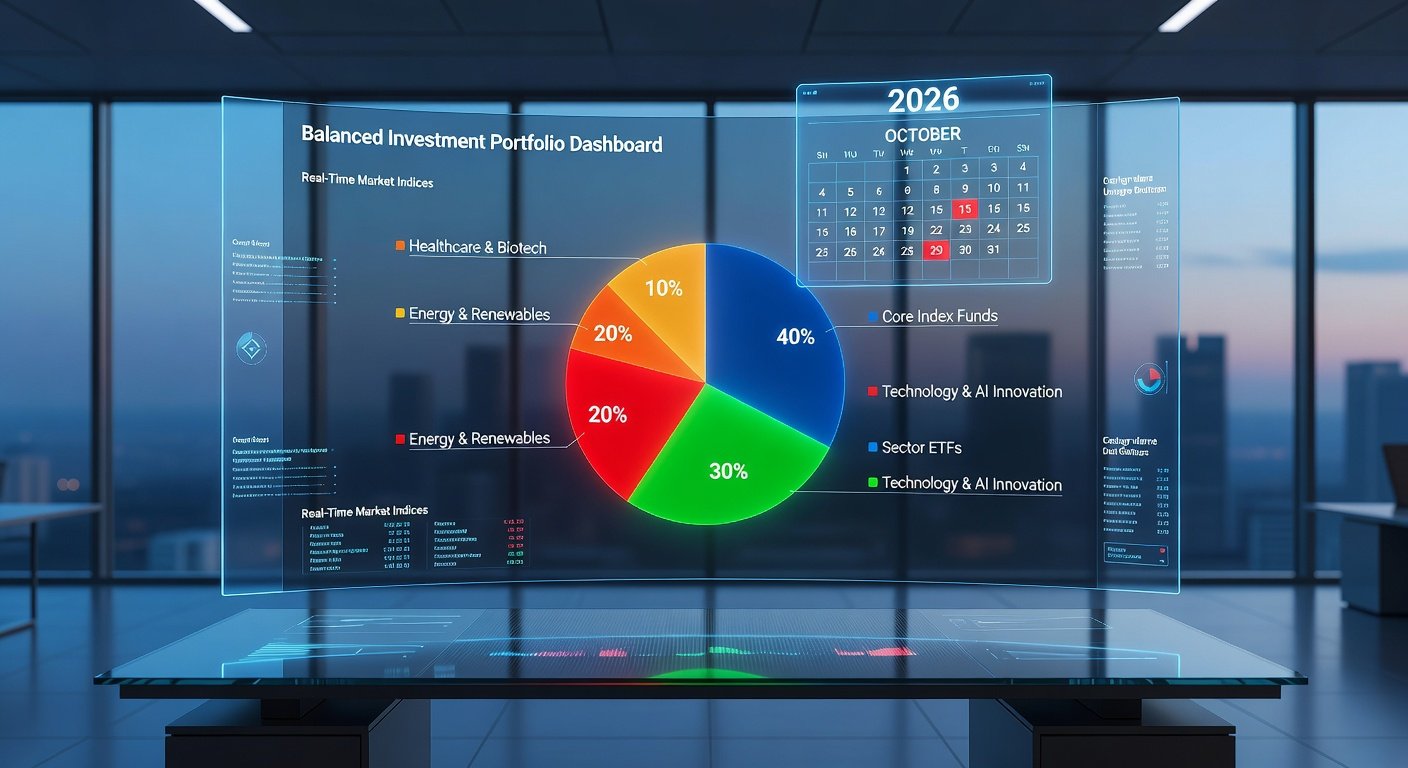
- 50% VTI (Total U.S. Stock Market)
- 20% VXUS (International)
- 20% BND (Total Bond)
- 10% Sector Tilt (e.g., ICLN for clean energy)
With discipline, your ETF journey can yield compounding returns. Projected S&P 500 growth of 7-10% annually supports optimistic 2026 outlooks.
ETFs democratize investing—start today for a brighter financial future.
No comments yet. Be the first!