 Bullish Portfolio
Introduction to Risk Management with ETFs and Index Funds
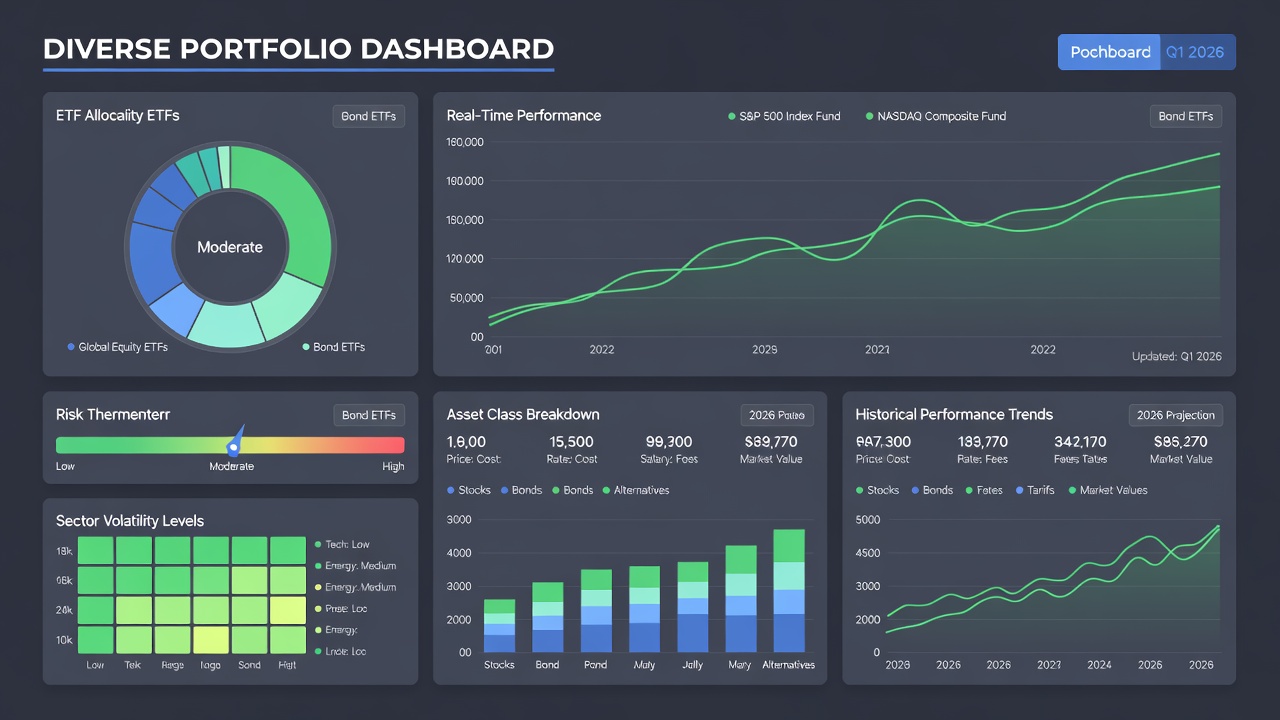
In 2026, intermediate investors face evolving market conditions that demand robust risk controls. ETFs and index funds offer efficient ways to implement diversification and hedging while maintaining broad market exposure. This guide explores actionable strategies tailored to current volatility patterns, helping you protect returns without sacrificing growth potential. Effective risk management begins with understanding how sector ETFs and index funds interact under stress. By combining these tools, investors can build portfolios that withstand sector-specific shocks and broader economic shifts, creating a foundation for long-term resilience in uncertain times.
Intermediate investors often seek more than basic buy-and-hold approaches. They require methods that actively monitor and mitigate downside exposure while capitalizing on upside opportunities. Throughout this article, we examine hedging tactics, diversification across sectors, and volatility buffers suited specifically to 2026 market conditions, providing concrete examples that translate theory into practice.
Key Risks in 2026 Market Conditions
Market environments in 2026 feature heightened geopolitical tensions, interest rate fluctuations, and rapid technological disruptions. These factors amplify both opportunities and downside risks for ETF investors. Index funds tracking major benchmarks provide stability, but sector ETFs can introduce concentration that requires careful oversight. Investors must also contend with inflation variability and supply chain challenges that can disproportionately affect certain industries. Understanding these risks allows for proactive positioning rather than reactive adjustments after losses occur.
Global events continue to influence domestic markets, making it essential to monitor macroeconomic indicators regularly. Index funds tied to broad benchmarks may still experience amplified swings when sector-specific pressures arise. Sector ETFs, while offering targeted exposure, heighten vulnerability if an industry faces sudden regulatory or technological headwinds. A balanced approach integrates both vehicles to offset these inherent exposures.
Diversification Across Sectors
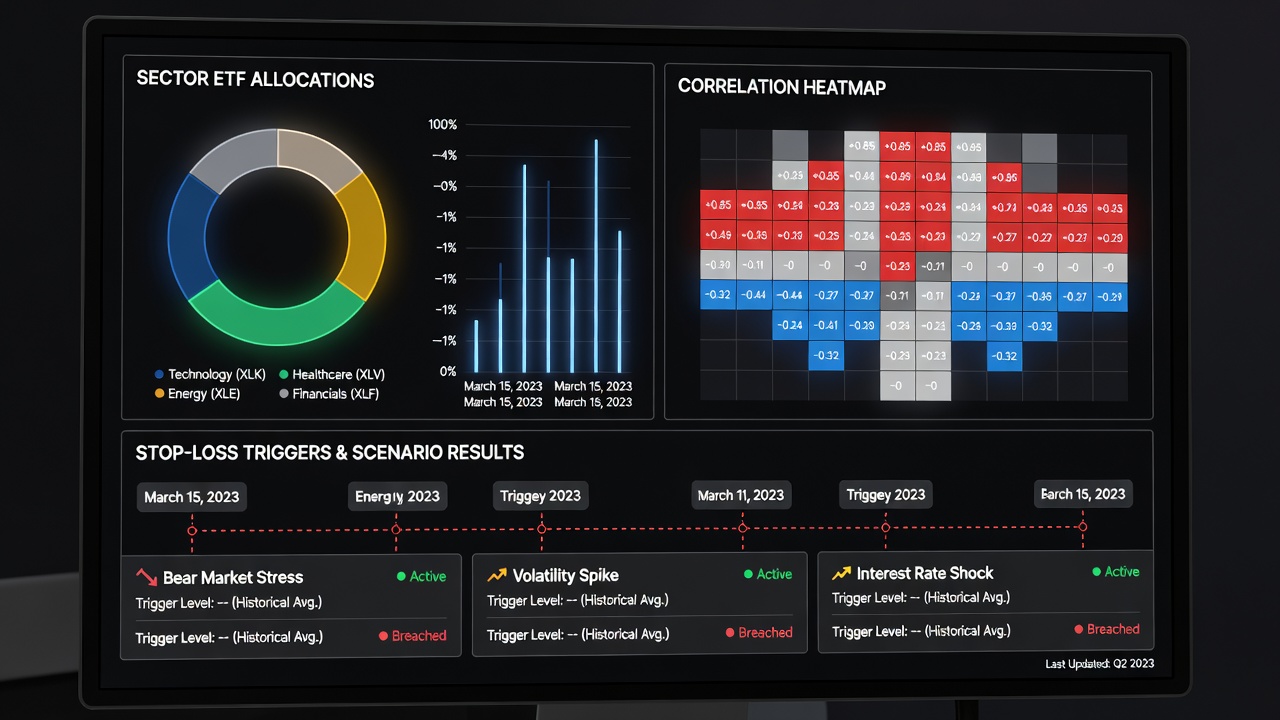
Diversifying holdings across multiple sector ETFs reduces the impact of any single industry's downturn. For example, balancing technology, healthcare, and consumer staples ETFs creates natural offsets during economic cycles. Index funds serve as the core holding, while targeted sector ETFs allow tactical adjustments. This layered structure helps smooth overall portfolio returns when one area experiences volatility spikes. Investors benefit from spreading exposure so that no single theme dominates performance outcomes.
Effective sector diversification requires periodic evaluation of economic cycles and their typical impacts on different industries. During expansionary phases, cyclical sectors such as industrials and consumer discretionary may outperform, whereas defensive sectors like utilities and healthcare provide stability in contractionary periods. Combining these within an ETF framework creates built-in buffers against unexpected shifts.
Practical Steps for Sector Allocation
- Assess your risk tolerance and time horizon through a detailed review of personal financial goals and liquidity needs.
- Allocate 60-70% to broad index funds like total market ETFs to establish a stable foundation.
- Distribute the remainder across 4-6 sector ETFs with low historical correlations to enhance resilience.
- Rebalance quarterly to maintain target weights and capture any drift caused by market movements.
- Document allocation decisions and review performance attribution to refine future adjustments.
Hedging Tactics Using ETFs
Hedging protects against downside moves. Inverse or volatility-focused ETFs can offset losses in equity index funds. Pairing a core S&P 500 index fund with a modest allocation to a volatility ETF creates a buffer during turbulent periods. This approach allows investors to maintain core market exposure while adding a layer of protection that activates automatically when market stress rises. Hedging should remain modest to avoid eroding long-term returns through over-protection.
Another effective tactic involves using bond or treasury ETFs as partial hedges against equity drawdowns. When equity markets decline sharply, high-quality fixed-income ETFs often appreciate or hold steady, providing ballast. Intermediate investors can test small allocations, such as 10-15% in intermediate treasury ETFs, to observe how they interact with equity holdings during simulated stress events.
Correlation Checks and Portfolio Construction
Regular correlation analysis ensures your ETF mix does not inadvertently increase risk. Tools that measure rolling correlations between sector ETFs and your core index funds help identify unintended overlaps. Aim for average correlations below 0.6 across holdings to maintain true diversification benefits. For instance, pairing a technology sector ETF with a utilities ETF typically yields lower correlations than combining two growth-oriented sectors.
Portfolio construction benefits from visualizing these relationships through heatmaps or matrices generated by analytics platforms. By reviewing three-year and five-year correlation data, investors can adjust weights before correlations spike during crises. This proactive step prevents over-concentration that might only become apparent after a market shock materializes.
Implementing Stop-Loss Setups
Stop-loss orders on individual ETF positions provide mechanical risk controls. Set levels based on technical support zones or percentage drawdowns, typically 8-12% below entry for intermediate investors. Combine with trailing stops on index fund positions to lock in gains during uptrends. These automated mechanisms remove emotional decision-making during rapid market moves.
Variations include time-based stops that exit positions after prolonged underperformance or volatility-adjusted stops that widen during high-VIX periods. Testing these setups on historical data helps calibrate levels that balance protection with the avoidance of premature exits triggered by normal fluctuations.
Portfolio Stress Testing Methods
Stress testing simulates adverse scenarios such as a 20% equity decline or sector-specific crash. Use portfolio analysis platforms to model how your ETF allocations perform under historical events like 2022 inflation shocks or 2020 pandemic volatility. Adjust weights based on test results to improve resilience. Running multiple scenarios, including simultaneous interest rate spikes and sector rotations, reveals hidden vulnerabilities.
Advanced stress testing incorporates forward-looking assumptions about 2026-specific risks such as accelerated AI adoption or energy transition policies. By layering these hypothetical events onto current holdings, investors gain insight into potential drawdown magnitudes and recovery timelines, enabling more informed allocation decisions.
Recommended Tools and Step-by-Step Guidance
- Begin with free brokerage screeners to evaluate ETF holdings, expense ratios, and liquidity metrics before committing capital.
- Import your portfolio into risk analytics software for correlation matrices, scenario modeling, and automated alerts on threshold breaches.
- Schedule monthly reviews to update stop-loss levels, re-run stress tests, and incorporate new economic data releases.
- Document all changes to track strategy effectiveness over time and identify patterns in successful adjustments.
- Integrate news aggregation tools focused on sector developments to stay ahead of emerging risks that could affect specific ETFs.
Common Mistakes to Avoid
One frequent error involves over-allocating to recently strong sectors without re-evaluating correlations. Another is neglecting to update stop-loss levels as positions appreciate, leaving gains unprotected. Investors sometimes rely solely on single-scenario stress tests rather than exploring a range of outcomes. Avoiding these pitfalls requires disciplined processes and regular education on evolving market dynamics.
FAQ: Avoiding Over-Concentration
How many sector ETFs should I hold?
Limit sector exposure to no more than 30% of total portfolio value to prevent concentration risk while still capturing targeted opportunities.
What signals indicate over-concentration?
Watch for any single sector exceeding 15% of holdings or correlations rising above 0.8 between positions, both of which can amplify losses during downturns.
Should I use options alongside ETFs for hedging?
Options add complexity; most intermediate investors achieve sufficient protection through ETF allocation adjustments alone, preserving simplicity and lowering costs.
Conclusion
Mastering risk management with ETFs and index funds in 2026 requires ongoing monitoring, disciplined diversification, and proactive testing. By applying the strategies outlined above, investors can navigate uncertainty while positioning for long-term success. Additional context is available through SEC, Investor.gov, and Federal Reserve resources that support responsible implementation of these approaches.

No comments yet. Be the first!