 Bullish Portfolio

Introduction: Building Resilience Against Inflation in 2026
Rising prices can erode purchasing power and diminish investment returns over time. In 2026, investors are turning to targeted ETF strategies that combine inflation-resistant sectors with broad market exposure. This guide provides actionable steps to construct a portfolio using sector ETFs and index funds, focusing on energy, commodities, and real estate while maintaining balance through core holdings. Inflation has historically challenged traditional stock and bond allocations, prompting many to seek assets that maintain or increase value as consumer costs climb. By understanding the mechanics of how different sectors respond to price pressures, you can create a more durable investment mix that supports long-term goals such as retirement or wealth preservation.
Inflation historically favors certain asset classes. Energy and commodity producers often see revenue growth as input costs rise, while real estate benefits from higher rental incomes and property values. Pairing these with low-cost index funds helps diversify risk without sacrificing growth potential. The approach outlined here emphasizes forward-looking construction rather than reactive trading, giving readers concrete tools to implement immediately.
Why Sector ETFs Excel During Inflationary Periods
Sector ETFs offer concentrated exposure to industries that have demonstrated resilience when consumer prices climb. Unlike individual stocks, ETFs provide instant diversification within a sector at a single share price. They also tend to have lower expense ratios than actively managed funds, making them suitable for long-term holding. These vehicles track benchmarks composed of multiple companies within a theme, reducing the impact of any single firm's underperformance. For instance, an energy ETF might hold positions across exploration, production, and midstream infrastructure, spreading exposure across the value chain.
Key sectors include energy, which benefits from higher oil and gas prices; commodities, covering metals and agricultural goods; and real estate, which can pass along increased costs to tenants. These areas have shown positive correlations with inflation metrics in multiple economic cycles. Investors appreciate the liquidity of ETFs, allowing easy entry and exit compared with direct ownership of physical commodities or individual properties. Additionally, many sector ETFs distribute regular income, which can help offset rising living expenses during periods of elevated inflation.
Top Sector ETFs for Inflation Protection
Investors can select from established ETFs tracking these themes. Energy ETFs focus on oil exploration, refining, and renewable transitions. Commodity ETFs hold futures contracts or physical assets like gold and copper. Real estate ETFs invest in REITs across commercial, residential, and industrial properties. When choosing specific products, examine factors such as assets under management, bid-ask spreads, and how closely the fund tracks its underlying index. Liquidity matters especially during volatile periods when quick adjustments may be necessary.
When evaluating options, consider tracking error, liquidity, and dividend yields. Many of these ETFs distribute income quarterly, providing a buffer against eroding cash flows. Real-world examples include funds that emphasize large-cap energy producers or broad commodity baskets, each offering distinct risk-return profiles suited to different investor preferences. Researching prospectus details helps ensure alignment with personal objectives before committing capital.
Blending Sector ETFs with Core Index Funds
A pure sector approach can lead to volatility. Core index funds tracking the S&P 500 or total stock market provide broad economic participation and stability. The combination allows investors to overweight inflation hedges while retaining growth from technology, healthcare, and consumer sectors. Index funds deliver market-wide returns at minimal cost, serving as the foundation that smooths out the sharper movements often seen in concentrated sector bets. This balanced structure supports both defensive positioning and participation in overall economic expansion.
For example, a portfolio might allocate 60-70% to a total market index fund and 30-40% across the three inflation sectors. This blend reduces drawdowns during unexpected economic shifts. The exact split should reflect individual circumstances, including age, income stability, and tolerance for short-term fluctuations. Reallocating gradually rather than all at once helps manage entry timing.
Sample 2026 Portfolio Construction and Allocation Guidance
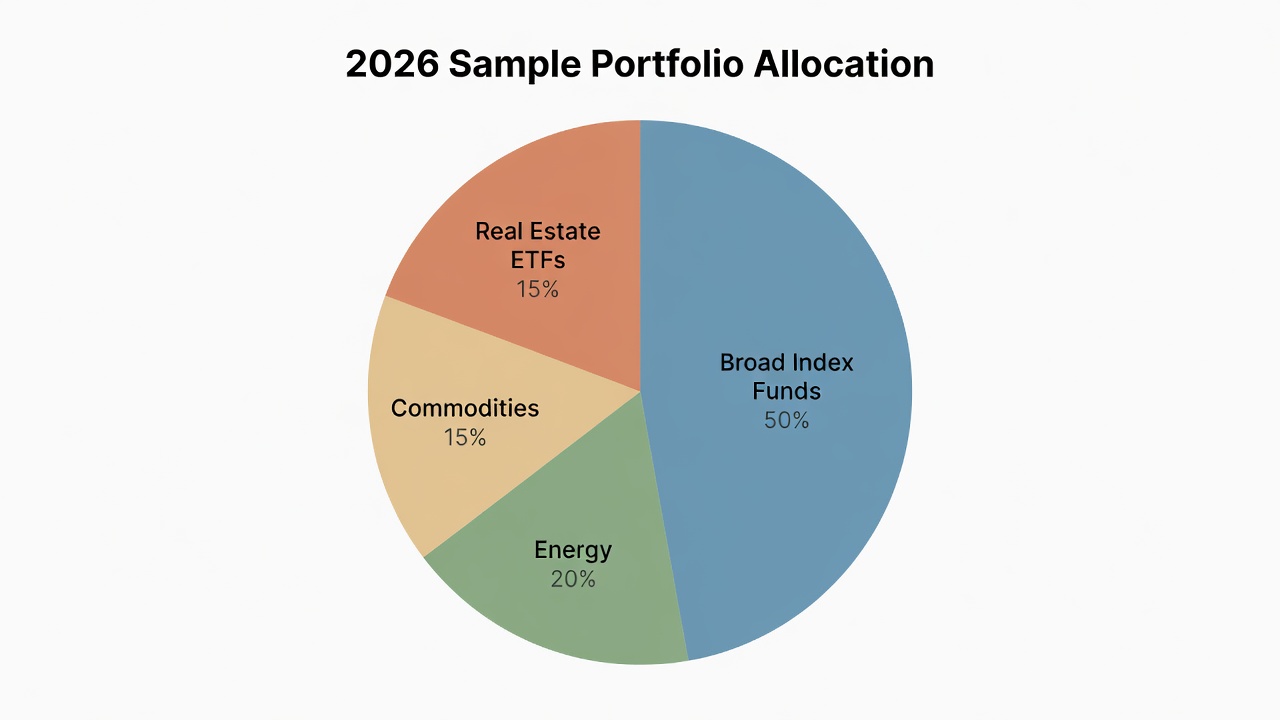
Here is a forward-looking example for a moderate-risk investor: 55% in a broad U.S. equity index fund for market beta, 15% in an energy sector ETF, 15% in a diversified commodity ETF, and 15% in a real estate ETF. This mix prioritizes inflation resilience while preserving upside from the wider market. Conservative investors might reduce sector weights to 10% each and increase the index allocation to 70%. Aggressive investors could raise sector exposure to 20% each, accepting higher volatility for potentially greater inflation protection.
Adjustments depend on risk tolerance and time horizon. Younger investors may increase sector weights slightly for higher expected returns, while those nearing retirement could tilt more toward index funds. Monitoring economic indicators such as CPI releases and central bank policy statements provides context for when to fine-tune these percentages over the coming year.
Step-by-Step Allocation Process
- Assess your current portfolio for inflation exposure using free tools from major brokerages.
- Determine target percentages based on age, goals, and market outlook.
- Select specific ETFs with strong trading volume and reasonable costs.
- Execute purchases gradually over several weeks to mitigate timing risk.
- Set calendar reminders for quarterly reviews.
Historical Performance Comparisons
During past inflation spikes, energy and commodity sectors have often outperformed the broader market by double-digit margins in peak years. Real estate has provided steadier gains through income generation. Index funds deliver consistent long-term compounding that smooths sector-specific swings. Past results do not guarantee future outcomes, but the patterns offer useful context for 2026 planning. Comparing rolling periods of elevated inflation versus disinflationary environments reveals how each component contributes to overall portfolio stability.
Risk Considerations and Mitigation
Sector concentration increases volatility and can lead to underperformance if inflation moderates quickly. Commodity ETFs may face contango losses in futures markets. Real estate is sensitive to interest rate changes. Mitigation includes position sizing below 20% per sector, maintaining cash reserves, and using dollar-cost averaging. Currency fluctuations can also affect commodity prices, so investors should evaluate whether their chosen ETFs include any international holdings. Stress-testing the portfolio against various inflation scenarios helps identify potential weak points before they materialize.
Mistakes to Avoid When Implementing an Inflation Hedge
One common error is over-allocating to a single sector without considering correlations among energy, commodities, and real estate. Another is ignoring liquidity needs by selecting thinly traded ETFs that become costly to trade during market stress. Failing to account for tax implications of frequent rebalancing or dividend distributions can also reduce net returns. Finally, neglecting to review holdings after major life events or policy shifts may leave the portfolio misaligned with current inflation dynamics.
Fees, Rebalancing, and Ongoing Management
Expense ratios for sector ETFs typically range from 0.10% to 0.50%, while broad index funds often fall below 0.05%. Rebalance annually or when allocations drift more than 5% from targets. This discipline locks in gains from outperforming sectors and maintains the intended inflation hedge. Automated dividend reinvestment plans can further enhance compounding without additional effort. Keeping detailed records of purchases aids in calculating capital gains when positions are eventually sold.
Frequently Asked Questions
How often should I rebalance an inflation-focused portfolio?
Annual rebalancing is sufficient for most investors, with additional reviews after major market moves or life changes.
What are typical expense ratios for these ETFs?
Many inflation-hedge ETFs carry modest fees that remain competitive with the broader market as of mid-2026.
Can international exposure enhance inflation protection?
Yes, adding a small allocation to global commodity or emerging-market real estate ETFs can further diversify currency and regional risks.
How do rising interest rates interact with real estate ETFs?
Higher rates can pressure property values and borrowing costs, though income-focused REITs may still offer relative resilience through rent escalations.
Conclusion
Protecting a portfolio from inflation requires deliberate sector selection combined with broad diversification. By using energy, commodity, and real estate ETFs alongside core index funds, investors can position themselves for resilience in 2026. Follow the allocation steps outlined above, monitor performance, and adjust as needed to stay on track toward your financial goals.
Learn more about investment vehicles at Investopedia, regulatory considerations via SEC.gov, and economic data at FederalReserve.gov.
No comments yet. Be the first!