 Bullish Portfolio
Introduction to Leveraged ETF Strategies in 2026
Experienced investors seeking amplified returns in dynamic markets often turn to leveraged ETFs. These instruments deliver 2x or 3x the daily performance of underlying indexes or sectors. When combined strategically with core index funds, they allow targeted exposure to high-growth areas without sacrificing overall portfolio balance. This approach suits those comfortable with elevated volatility and active oversight. In 2026, with evolving economic conditions including potential shifts in interest rates and technological advancements, such blended strategies can help capture sector-specific momentum while preserving diversification benefits across broader markets.
Understanding Leveraged ETFs and Their Mechanics
Leveraged ETFs use derivatives like swaps and futures to multiply benchmark returns. A 3x technology sector ETF aims to return three times the daily move of its index. Compounding effects over multiple days can cause deviations from expected multiples, especially in sideways or volatile markets. Investors must monitor holding periods closely and rebalance to maintain intended leverage. The daily reset mechanism means that returns over periods longer than one day depend heavily on the volatility path taken by the underlying asset. For instance, in a market that rises sharply one day and falls the next, the leveraged product may deliver less than the expected multiple due to the mathematics of compounding on a changing base.
Key Differences from Traditional ETFs
Unlike unleveraged index funds that track benchmarks one-to-one, leveraged products reset daily. This daily reset creates path dependency, making them better suited for short-term tactical moves rather than long-term buy-and-hold strategies. Traditional ETFs provide straightforward exposure with lower costs and less complexity, while leveraged versions introduce financing costs embedded in the structure that can erode returns over extended periods. For more on regulatory oversight of these products, consult resources from the U.S. Securities and Exchange Commission.
Blending 2x or 3x Sector ETFs with Core Index Funds
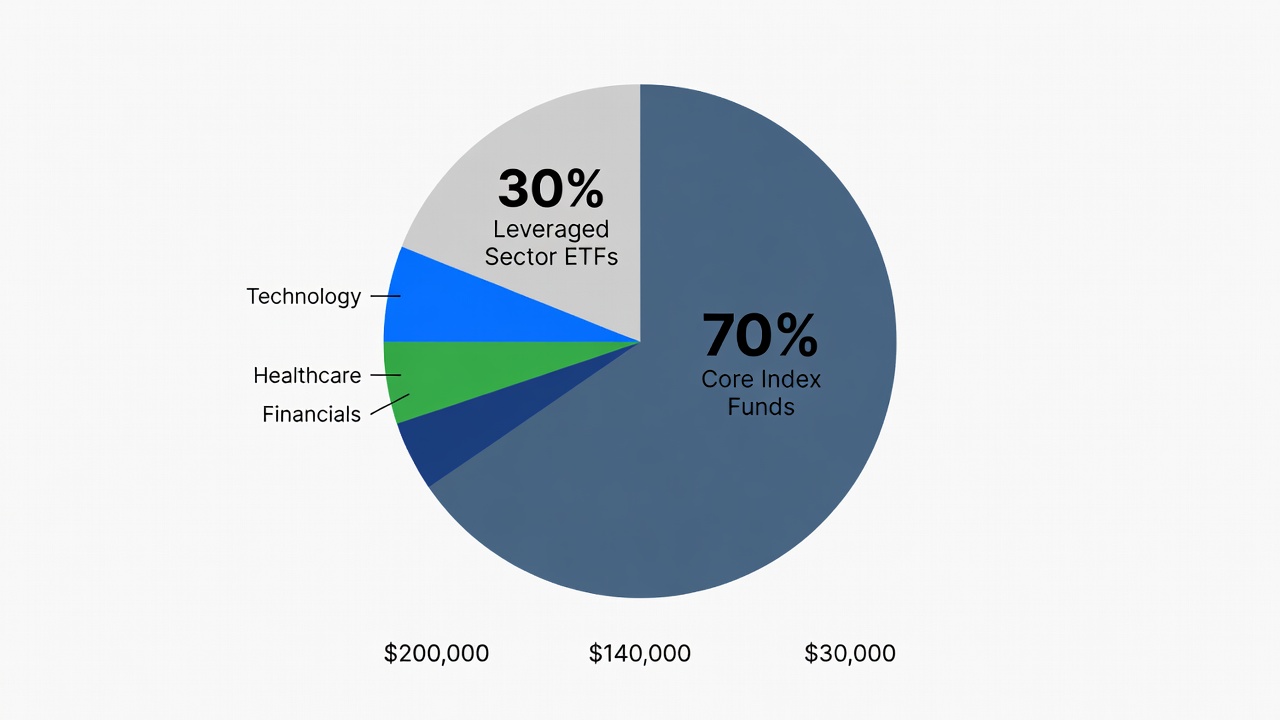
The core tactic involves allocating 70-85% of a portfolio to broad market index funds for stability while directing 15-30% to leveraged sector ETFs. This blend captures upside in targeted industries such as semiconductors, clean energy, or financial services while the index component cushions drawdowns. Integration starts with identifying sectors poised for outperformance based on macroeconomic trends like supply chain improvements or regulatory changes. Allocate the leveraged portion across two or three sectors to avoid concentration risk. Rebalance quarterly or when sector weights drift more than 5% from targets. Investors should also consider liquidity profiles of chosen ETFs and ensure the core holdings include both domestic and international exposure for true diversification.
Risk Management Steps and Practical Checklist
Effective risk controls are essential given the amplified losses possible with leveraged products. Follow this checklist for disciplined execution:
- Define maximum portfolio allocation to leveraged ETFs at 25% or less to prevent overexposure during unexpected downturns.
- Set stop-loss thresholds at 15-20% portfolio drawdown to trigger de-leveraging and protect capital.
- Monitor beta-adjusted exposure weekly using portfolio analytics tools to stay aligned with risk tolerance.
- Maintain 10-15% cash reserves for opportunistic re-entry after volatility spikes without needing to sell core positions.
- Review correlation between leveraged holdings and core index funds monthly to detect unintended overlaps.
- Document investment theses for each leveraged position to guide objective decision-making rather than emotional reactions.
These steps help mitigate sequence-of-returns risk and prevent emotional decision-making during market stress. Additional guidance on investor protections is available at Investor.gov.
Real-World Portfolio Examples
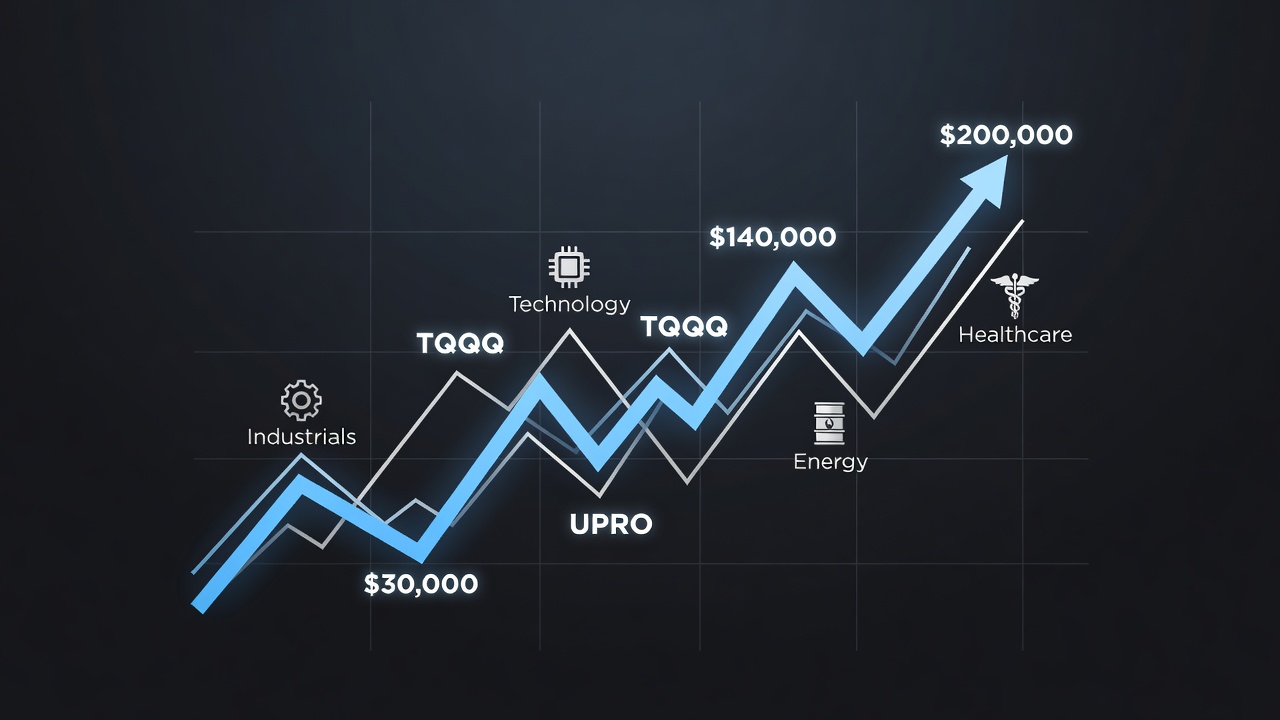
Consider a moderate-growth investor with $200,000 in assets. Allocate $140,000 to a total stock market index fund, $30,000 to a 2x broad technology ETF, and $30,000 split between 3x semiconductor and healthcare sector ETFs. This structure targets tech-driven growth while the core holding provides broad diversification. Rebalancing occurs when any component drifts beyond preset bands, and the investor tracks performance against a custom benchmark blending the S&P 500 with sector overlays.
Another example uses an 80/20 split during bull markets: 80% in S&P 500 index exposure and 20% in a 2x financials leveraged ETF when interest rate environments favor banks. Adjust allocations based on forward earnings guidance and sector rotation signals. A third scenario involves a retiree transitioning to more conservative exposure by reducing leveraged holdings to 10% during periods of heightened uncertainty, shifting the balance toward fixed-income index funds for income stability.
Performance Comparisons Under Different Market Scenarios
In strong trending bull markets, the leveraged overlay can significantly outperform a pure index portfolio. During recent technology rallies, blended allocations delivered returns nearly twice as high as unleveraged equivalents before fees. In choppy or bear markets, however, the same blend can underperform due to volatility decay, underscoring the need for tactical de-risking. Side-by-side scenario modeling shows that a 20% leveraged allocation historically adds meaningful annualized return in favorable conditions but increases maximum drawdown by notable percentage points. In sideways markets, the daily reset effect often leads to erosion of value even when the underlying index ends flat, highlighting why these strategies require active monitoring rather than passive holding.
Common Mistakes to Avoid
Many investors misuse leveraged ETFs by treating them as long-term core holdings instead of tactical tools. Another frequent error is failing to account for compounding and daily resets, leading to unexpected return shortfalls. Over-concentration in a single sector without proper hedges can amplify losses dramatically. Investors should also avoid ignoring expense ratios and trading costs, which compound over time. Finally, neglecting to set predefined exit rules often results in holding through severe drawdowns that erode portfolio value beyond recovery.
Tax Considerations and Integration Methods
Leveraged ETFs held in taxable accounts can generate significant short-term capital gains due to frequent trading and resets. Using them within tax-advantaged accounts like IRAs minimizes this impact. Integration works best when the leveraged sleeve is viewed as a satellite around a core satellite portfolio model. Start with broad index exposure, then layer sector bets based on conviction levels, and use periodic rebalancing to lock in gains or cut losses systematically.
Volatility Controls and Reallocation Triggers: FAQ
How often should I rebalance leveraged ETF holdings?
Rebalance when any leveraged position exceeds its target weight by more than 5% or after significant market moves exceeding 10% in either direction.
What volatility measures should I track?
Monitor VIX levels above 25 and the rolling 20-day realized volatility of each leveraged ETF. Consider reducing exposure when these metrics spike.
When should I fully exit leveraged positions?
Exit if macroeconomic indicators signal recession or if sector-specific news materially alters the investment thesis for more than two consecutive weeks.
How do correlations affect the overall strategy?
High correlations between sectors and the core index can reduce diversification benefits, so select holdings with moderate or low correlations where possible.
Conclusion
Leveraged ETF strategies blending sector and index exposure offer experienced investors powerful tools for 2026 growth targeting. Success depends on rigorous risk management, disciplined rebalancing, and clear allocation rules. Investors who implement these tactics with ongoing oversight can enhance returns while preserving diversification benefits. For broader economic context influencing these decisions, refer to the Federal Reserve.

No comments yet. Be the first!