 Bullish Portfolio
Introduction to ETF Diversification in Uncertain Times
As global markets prepare for potential shifts in 2026, intermediate investors are turning to sophisticated ETF strategies that blend core index funds with targeted sector ETFs. This approach helps balance growth opportunities against downside risks across economic cycles. Effective diversification goes beyond simple asset allocation by identifying cyclical versus defensive sectors and applying dynamic rebalancing techniques that respond to macroeconomic signals. Investors who understand these nuances can build portfolios that capture upside during expansions while protecting capital during contractions.
Economic cycles typically include expansion, peak, contraction, and trough phases. Sector ETFs allow precise exposure to industries that perform differently in each stage, while broad index ETFs provide stability. Investors who master these techniques can optimize returns while mitigating volatility. The key is recognizing early warning signs such as rising interest rates, changing consumer spending patterns, and shifts in corporate earnings guidance that often precede cycle transitions.
Understanding Cyclical and Defensive Sectors
Cyclical sectors thrive during economic expansions but suffer in downturns. These include technology, consumer discretionary, industrials, and financials. Defensive sectors such as healthcare, consumer staples, utilities, and energy tend to hold up better during contractions because demand remains steady regardless of economic conditions. For instance, a technology sector ETF might deliver strong gains when businesses invest heavily in innovation, yet it can decline sharply if corporate budgets tighten.
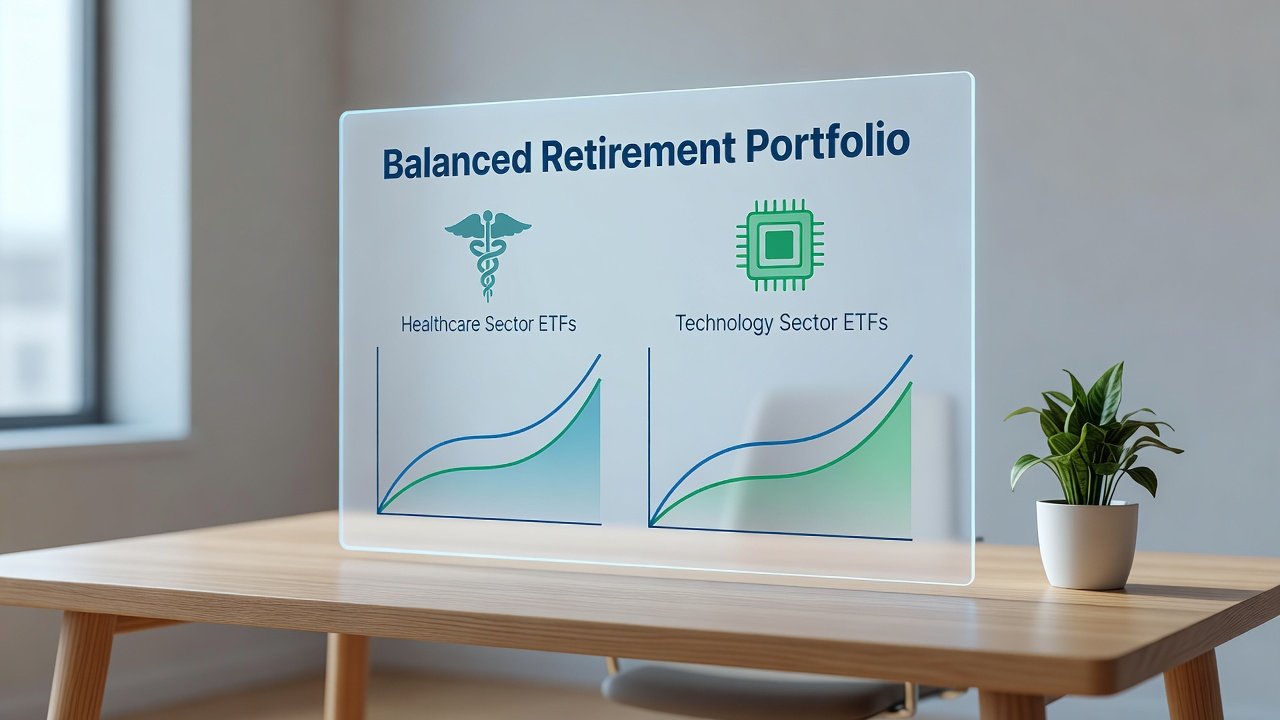
Defensive sectors often feature companies with stable cash flows and consistent dividends. A healthcare sector ETF may include firms focused on essential medical services and pharmaceuticals, which continue to generate revenue even when unemployment rises. Similarly, utilities sector ETFs benefit from regulated pricing models that provide predictable returns. Using sector ETFs lets investors tilt portfolios toward cyclicals early in an expansion and shift toward defensives as indicators signal a slowdown. Core holdings in broad market ETFs like those tracking the S&P 500 provide a foundation that reduces single-sector risk and offers broad diversification across market capitalizations.
Dynamic Allocation Models for 2026
Static buy-and-hold strategies often underperform in volatile environments. Dynamic models adjust weights based on leading economic indicators such as GDP growth, unemployment rates, and inflation data. A common framework starts with 60% in core index ETFs and 40% in sector ETFs, with periodic reallocation triggered by threshold breaches or new economic data releases. Another approach incorporates momentum signals, increasing exposure to outperforming sectors while reducing allocations to laggards.
For example, during early expansion phases, increase exposure to technology and consumer discretionary sector ETFs. As the cycle matures, rotate into healthcare and utilities. This model requires ongoing monitoring but has historically improved risk-adjusted returns compared to fixed allocations. Investors should also consider overlaying options-based ETFs for additional downside protection during periods of elevated uncertainty.
Performance Comparisons Across Cycle Phases
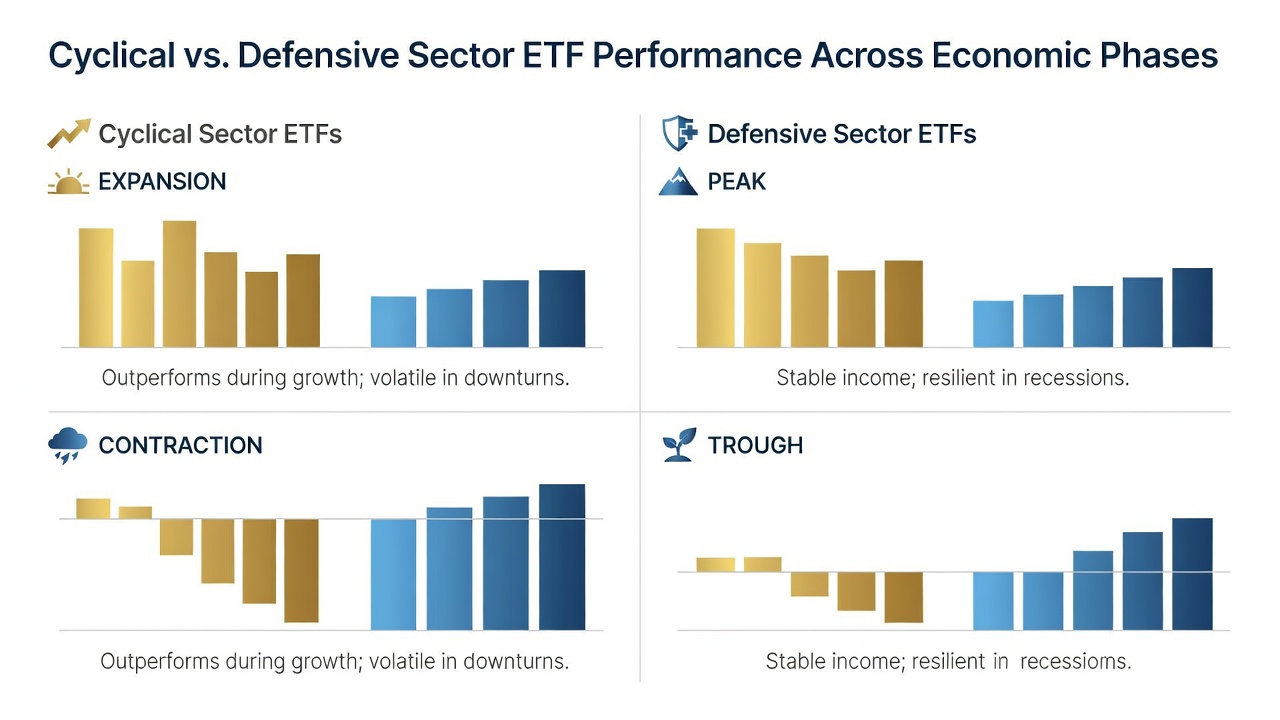
Historical data shows clear patterns. Cyclical sector ETFs often deliver higher returns during expansions but experience sharper drawdowns in contractions. Defensive ETFs provide lower volatility and more consistent dividends. Combining both within a diversified ETF portfolio smooths overall performance and helps investors stay invested through market turbulence. In expansion phases, cyclical ETFs may outperform by wide margins due to increased business activity, while defensive ETFs shine in contraction phases by preserving capital and generating income.
Intermediate investors benefit from backtesting these rotations against past cycles to understand expected behavior in 2026 scenarios. Tools from major financial institutions help simulate outcomes under different economic assumptions, allowing for scenario planning that incorporates variables like potential policy changes or geopolitical events.
Step-by-Step Implementation Guidance
- Assess current portfolio using risk metrics such as standard deviation and correlation analysis to identify concentration risks in specific sectors or asset classes.
- Select core index ETFs for broad market exposure and 3-5 sector ETFs aligned with the current cycle phase, ensuring low overlap between holdings.
- Establish target weights and set rebalancing thresholds, typically quarterly or when allocations drift beyond 5%, to maintain the intended risk profile without excessive trading.
- Incorporate tax-efficient vehicles like ETFs held in tax-advantaged accounts to minimize capital gains distributions during rotations.
- Review performance quarterly and adjust based on updated economic forecasts, incorporating both quantitative data and qualitative insights from reliable sources.
Real-World Portfolio Adjustment Examples
Consider an investor starting with a 70% core S&P 500 ETF allocation and 30% in a mix of technology and financial sector ETFs during an expansion phase. As leading indicators point to a slowdown, the investor might reduce technology exposure by 10% and increase healthcare and utilities sector ETFs by the same amount. This rotation aims to capture remaining growth while building resilience. Another example involves gradually adding a small allocation to an energy sector ETF during periods when global supply constraints emerge, then trimming it once stability returns.
Practical Tools for Monitoring and Risk Assessment
Investors can leverage free and paid platforms for real-time sector performance tracking, economic calendars, and portfolio analytics. Government resources such as Federal Reserve data offer reliable macroeconomic indicators. The U.S. Securities and Exchange Commission provides educational materials on ETF risks and disclosures. Additional guidance appears on Investor.gov for building resilient portfolios. The International Monetary Fund also publishes regular economic outlooks that can inform allocation decisions.
Risk assessment should include stress testing against recession scenarios and monitoring sector correlations that may rise during market stress. Regular use of these tools helps maintain discipline and avoid emotional decisions that derail long-term plans.
Common Mistakes to Avoid
Many investors over-rotate too frequently, incurring unnecessary transaction costs and taxes. Others ignore correlation changes during crises, leading to unintended concentration. Failing to maintain a core allocation can also expose the portfolio to excessive sector-specific volatility. Always document the rationale behind each adjustment to ensure decisions remain data-driven rather than reactive.
Conclusion
Mastering ETF portfolio diversification for 2026 requires understanding economic cycles, selecting the right mix of core and sector ETFs, and committing to dynamic yet disciplined allocation. By following the steps outlined above and utilizing authoritative monitoring resources, intermediate investors can position their portfolios for resilience and growth amid volatility.
No comments yet. Be the first!