 Bullish Portfolio
Introduction: Capturing 2026 Growth Through Strategic Blending
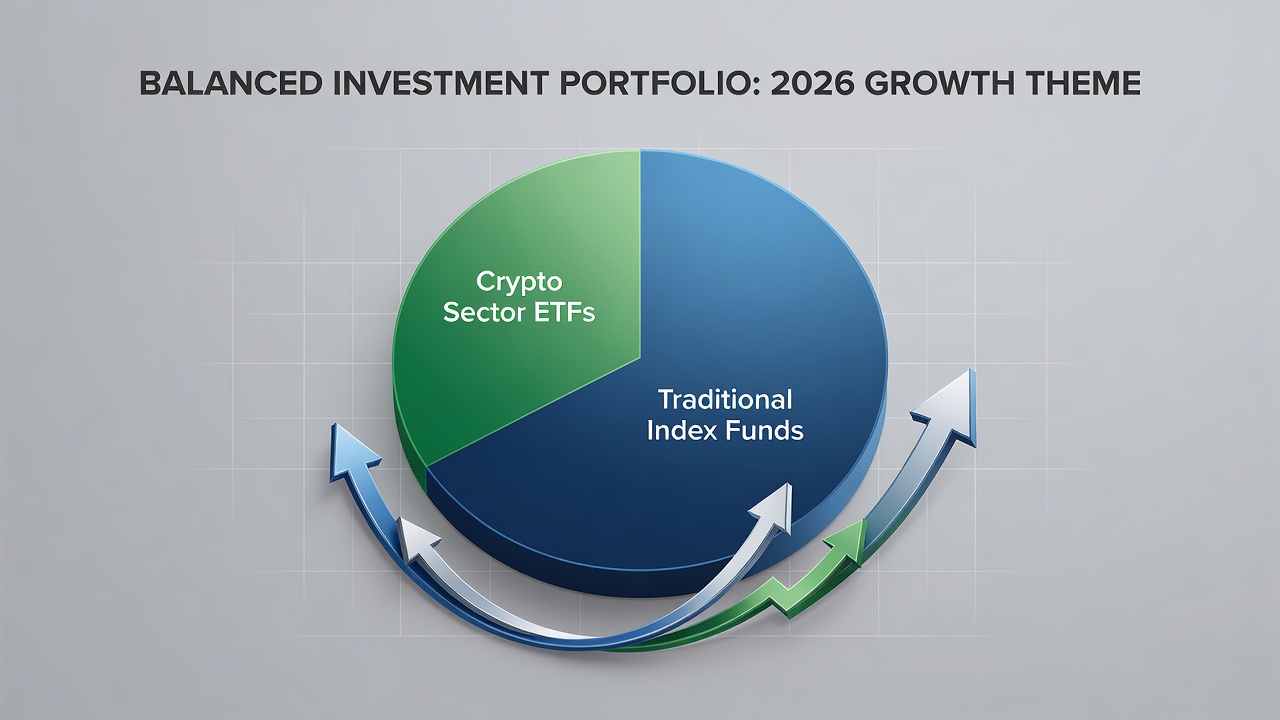
As markets evolve heading into 2026, investors are increasingly exploring ways to integrate crypto sector ETFs into established index fund portfolios. This approach allows for exposure to innovative digital asset sectors while maintaining the stability of broad-market index holdings. The strategy focuses on balancing innovation with proven diversification principles, helping investors pursue growth without overexposing themselves to volatility. Index funds have long served as the foundation of many portfolios due to their low costs and market-matching returns. Adding crypto sector ETFs introduces targeted exposure to blockchain, digital payments, and related technologies. This blend supports forward-looking tactics that align with emerging economic trends and technological advancements reshaping global finance.
Many investors seek this combination because pure index strategies may miss out on high-growth niches, while standalone crypto investments can introduce excessive risk. By blending the two, portfolios can benefit from the steady compounding of broad market exposure alongside selective upside from crypto-adjacent businesses. The key lies in measured integration rather than abrupt shifts, ensuring that core holdings remain intact while new elements enhance overall potential.
Understanding Crypto Sector ETFs and Their Role
Crypto sector ETFs provide investors with indirect access to cryptocurrency-related companies, including exchanges, miners, and technology providers. Unlike direct crypto holdings, these ETFs trade on traditional exchanges and offer regulatory oversight. They fit well alongside index funds because they target specific themes rather than replicating entire markets. This thematic focus allows investors to capture innovation in areas such as decentralized finance infrastructure and digital asset custody solutions without needing specialized wallets or private keys.
Key benefits include liquidity, transparency through daily holdings disclosure, and the ability to rebalance easily within standard brokerage accounts. However, they also carry unique risks such as regulatory shifts, sector-specific downturns, and sensitivity to broader technology valuations. Understanding these dynamics is essential before integration, as the crypto ecosystem continues to mature with increasing institutional participation and evolving global standards.
Top Crypto Sector ETFs for Consideration
Several established crypto sector ETFs stand out for their focus and liquidity. Investors should evaluate expense ratios, underlying holdings, and trading volume when selecting options. Popular choices often include funds tracking blockchain firms or digital asset ecosystems. When comparing these vehicles, pay close attention to assets under management, bid-ask spreads, and the diversity of companies represented in each portfolio. Some ETFs emphasize mining operations while others lean toward software developers and payment processors, creating opportunities for nuanced allocation decisions.
Reviewing the latest prospectus and holdings before investing remains critical, as the sector continues to mature rapidly with new entrants and consolidation among existing players. Diversifying across two or more crypto ETFs can further reduce single-fund concentration risk while maintaining targeted exposure.
Integration Steps with Core Index Fund Holdings
Integrating crypto sector ETFs requires a deliberate process to avoid disrupting overall portfolio balance. Start by assessing your current index fund allocations across equities, bonds, and international markets. Next, identify suitable crypto ETFs that complement rather than duplicate existing exposures. A thoughtful integration preserves the low-cost, broad diversification benefits of index funds while layering in growth-oriented elements.
- Review your risk tolerance and investment timeline through a detailed questionnaire or advisor consultation.
- Select 1-2 crypto ETFs with strong track records in liquidity and transparent management practices.
- Determine an initial allocation that fits within your overall strategy by testing scenarios in portfolio software.
- Rebalance periodically, typically quarterly, to maintain target weights and capture any drift caused by market movements.
- Monitor correlations with your core holdings to ensure diversification benefits persist over time.
- Document each decision and rationale to maintain discipline during periods of market turbulence.
This methodical approach helps preserve the stability of index funds while adding growth potential. Investors who skip these steps often find their portfolios become unintentionally concentrated in volatile themes.
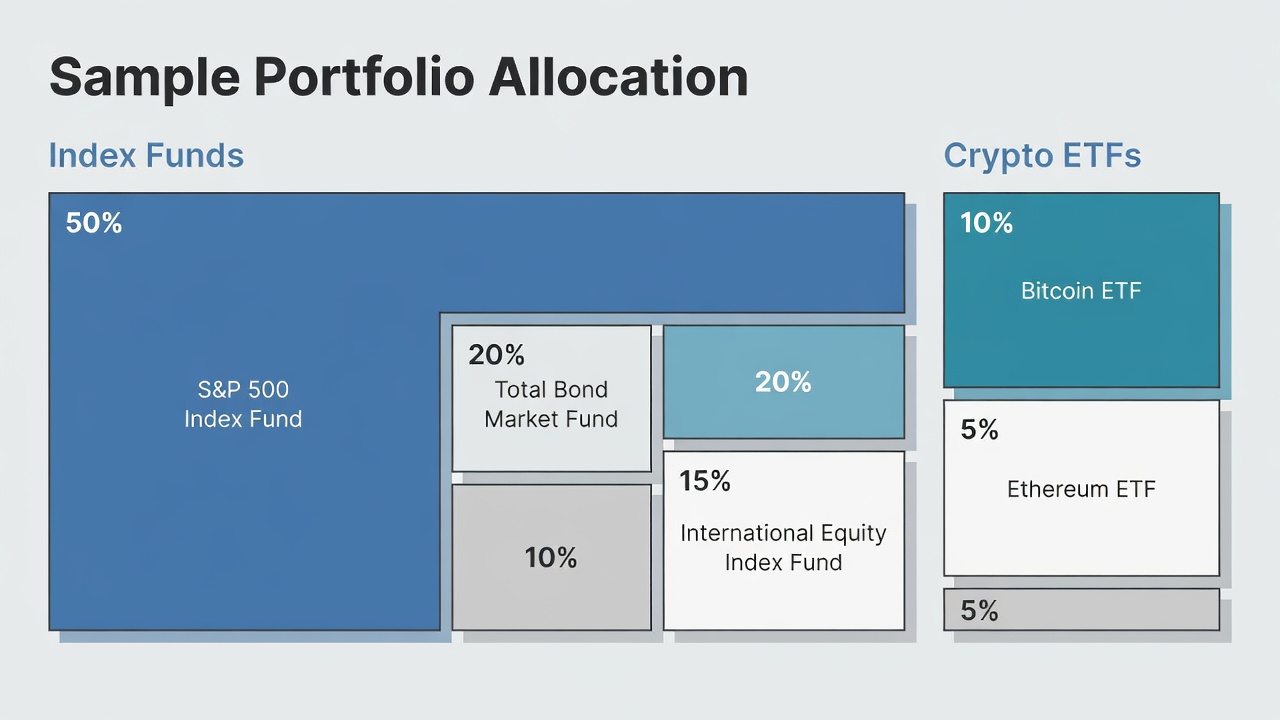
Sample Portfolio Allocation Example
A practical example for 2026 might involve a moderate-risk investor allocating the majority to traditional index funds and a smaller but meaningful portion to crypto sector ETFs. Within the crypto portion, one allocation could focus on a broad blockchain ETF while another targets a digital payments focused fund. This setup seeks growth from innovation while relying on index funds for core returns across domestic and international equities.
Adjustments should reflect personal circumstances, such as age, income stability, or changing market conditions. Younger investors with longer horizons may tilt slightly higher toward crypto exposure, whereas those nearing retirement might keep the addition more conservative. Regular reviews ensure the blend remains aligned with evolving goals and economic outlooks.
Risk Assessment and Correlation Analysis
Correlation analysis reveals how crypto ETFs move relative to index funds. Historically, these assets show lower correlations to traditional equities, offering potential diversification during certain market environments. However, correlations can rise during periods of broad risk-off sentiment when technology and growth assets move together. Effective risk assessment involves evaluating volatility metrics, stress testing against historical drawdowns, and considering macroeconomic factors such as interest rate changes or regulatory announcements.
Investors should also examine liquidity risk and tracking error relative to the underlying crypto theme. Tools available through major brokerages can help visualize rolling correlations and scenario outcomes, enabling more informed position sizing before committing capital.
Performance Comparisons Across Market Cycles
Comparing performance requires looking at both bull and bear markets over multiple cycles. Index funds typically deliver steady, market-average returns over long periods through broad economic participation. Crypto sector ETFs have demonstrated higher upside potential during favorable cycles driven by technological adoption but also steeper declines during sentiment shifts or regulatory uncertainty. Understanding these patterns helps investors set realistic expectations for blended portfolios in 2026 and beyond.
Back-testing blended allocations against past data can illustrate how even modest crypto ETF exposure might have enhanced returns during expansion phases while increasing drawdown severity in contraction phases. This analysis supports better decision-making around position limits and rebalancing rules.
Tax Implications to Consider
Tax treatment differs between index funds and crypto ETFs. Gains from ETF sales are subject to capital gains rules, while certain distributions may be taxed as ordinary income. Consult official resources such as the IRS for current guidelines on reporting requirements. Proper tax-lot accounting and holding periods can help optimize after-tax returns. Additionally, investors should be aware of wash-sale rules and the potential impact of ETF capital gains distributions on taxable accounts.
Working with a tax professional familiar with ETF structures ensures compliance and may uncover opportunities for tax-efficient placement of crypto sector holdings within tax-advantaged accounts where appropriate.
Common Mistakes to Avoid When Blending
Many investors make avoidable errors when adding crypto ETFs to index portfolios. Over-allocating in a single tranche without gradual entry can amplify volatility. Ignoring liquidity differences between funds may lead to higher trading costs during rebalancing. Failing to update the overall asset allocation after market movements often results in unintended risk creep. Another frequent issue is chasing recent performance rather than maintaining a rules-based approach grounded in long-term objectives. Avoiding these pitfalls requires discipline and periodic education on both index fund mechanics and crypto sector developments.
Volatility Management: Frequently Asked Questions
- How can I reduce volatility in a blended portfolio? Use dollar-cost averaging when adding crypto ETF exposure and maintain broad index fund diversification across asset classes.
- What allocation feels appropriate for beginners? Start with a modest percentage in crypto sector ETFs and increase gradually based on comfort level and market experience.
- Should I rebalance during high volatility? Yes, but avoid frequent trading; quarterly reviews often suffice unless extreme events occur.
- Are there tools to monitor correlations? Many brokerage platforms provide correlation data and portfolio analytics dashboards for ongoing oversight.
- How do regulatory changes affect these ETFs? Monitor updates from the SEC as new rules can influence fund operations and underlying company valuations.
- Can international index funds complement crypto ETFs? Yes, global diversification through index holdings often helps offset region-specific crypto sector risks.
Conclusion: Building a Resilient 2026 Strategy
Blending crypto sector ETFs with index funds offers a forward-looking way to pursue growth while retaining core stability. By focusing on thoughtful allocations, ongoing risk monitoring, and tax awareness, investors can position their portfolios effectively for 2026 opportunities. Success depends on disciplined execution and periodic adjustments rather than chasing short-term trends. Those who approach this integration methodically stand to benefit from both the reliability of index strategies and the selective upside of crypto-themed exposure.


No comments yet. Be the first!