 Bullish Portfolio
Introduction to ETF Laddering in 2026
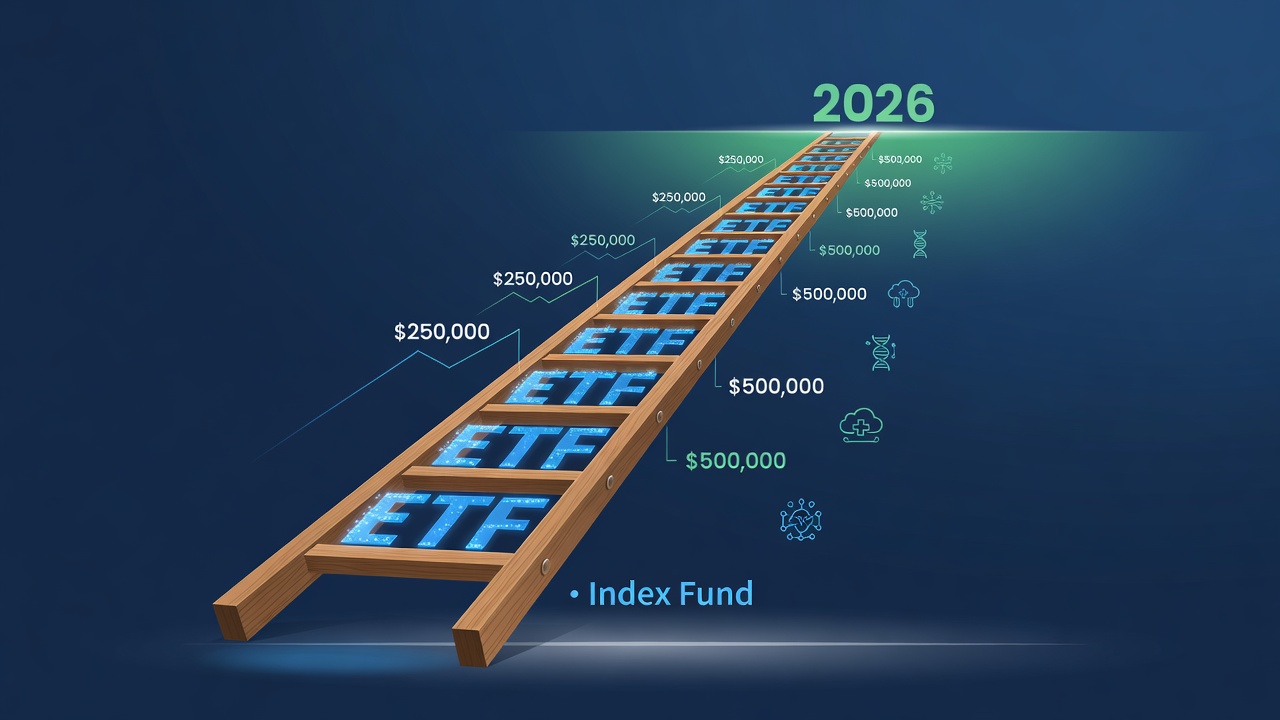
Market volatility continues to challenge intermediate investors who seek structured growth beyond simple buy-and-hold approaches. ETF laddering emerges as a sophisticated yet accessible strategy that organizes investments into maturity-based rungs. By blending sector-specific ETFs with core index funds, this method spreads exposure across different time horizons while targeting high-potential areas such as technology and healthcare. In 2026, investors encounter shifting interest rates, geopolitical tensions, and rapid sector rotations. ETF laddering addresses these dynamics through disciplined allocation rather than relying on broad diversification alone. This approach helps smooth returns and provides clear rebalancing triggers that reduce emotional decision-making during market swings.
The strategy builds on traditional bond laddering principles but adapts them to equity markets using ETFs. Investors create staggered positions that mature or reset on different schedules, allowing systematic harvesting of gains and reinvestment opportunities. This creates a built-in mechanism for capturing sector momentum while maintaining core market exposure through index funds.
What Is ETF Laddering?
ETF laddering structures a portfolio so that each holding functions like a rung on a ladder, with positions set to rebalance or roll over at staggered intervals. Sector ETFs deliver concentrated exposure to industries poised for growth, while index funds anchor the overall allocation to broad benchmarks such as the S&P 500 or total market indexes. The hybrid construction balances aggressive growth potential with defensive stability. Each rung carries its own target allocation and time horizon, typically ranging from six months to three years, creating natural cash flow events that fund rebalancing without forced sales during downturns.
Unlike static portfolios, laddered structures adapt to changing market conditions through predetermined rules. When one rung matures, investors can reassess sector strength and adjust weights accordingly. This flexibility proves especially valuable in 2026 as economic data and policy shifts influence sector leadership on a quarterly basis.
Why Use Sector ETFs Alongside Index Funds?
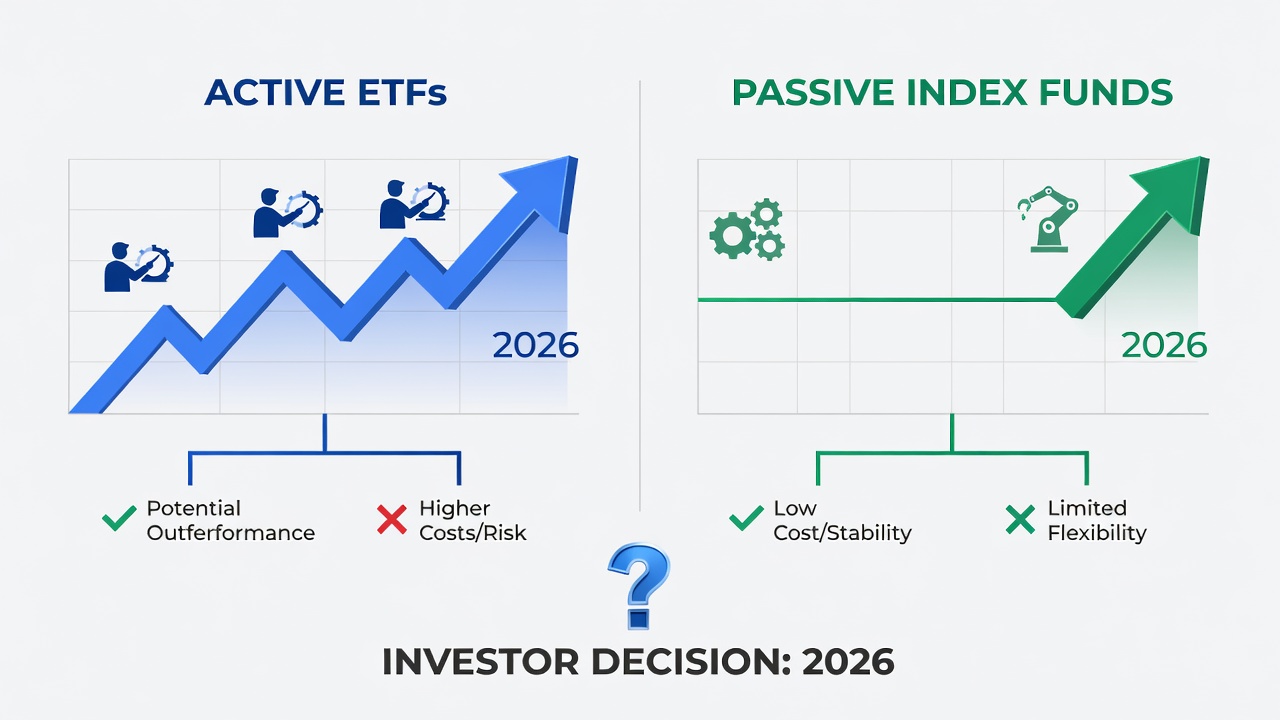
Sector ETFs enable targeted bets on industries with strong tailwinds, while index funds provide broad diversification that reduces single-stock or single-sector risk. The combination delivers resilience because defensive sectors can offset cyclical ones during rotations. For instance, pairing a healthcare sector ETF with an S&P 500 index fund spreads exposure across both growth-oriented and stable areas. Sector ETFs often carry lower expense ratios than mutual funds yet allow precise tactical adjustments. Index funds, meanwhile, deliver low-cost beta exposure that compounds reliably over long periods. Together they create a portfolio that participates in sector rallies without abandoning market-wide returns.
Selecting the Right Sectors for 2026
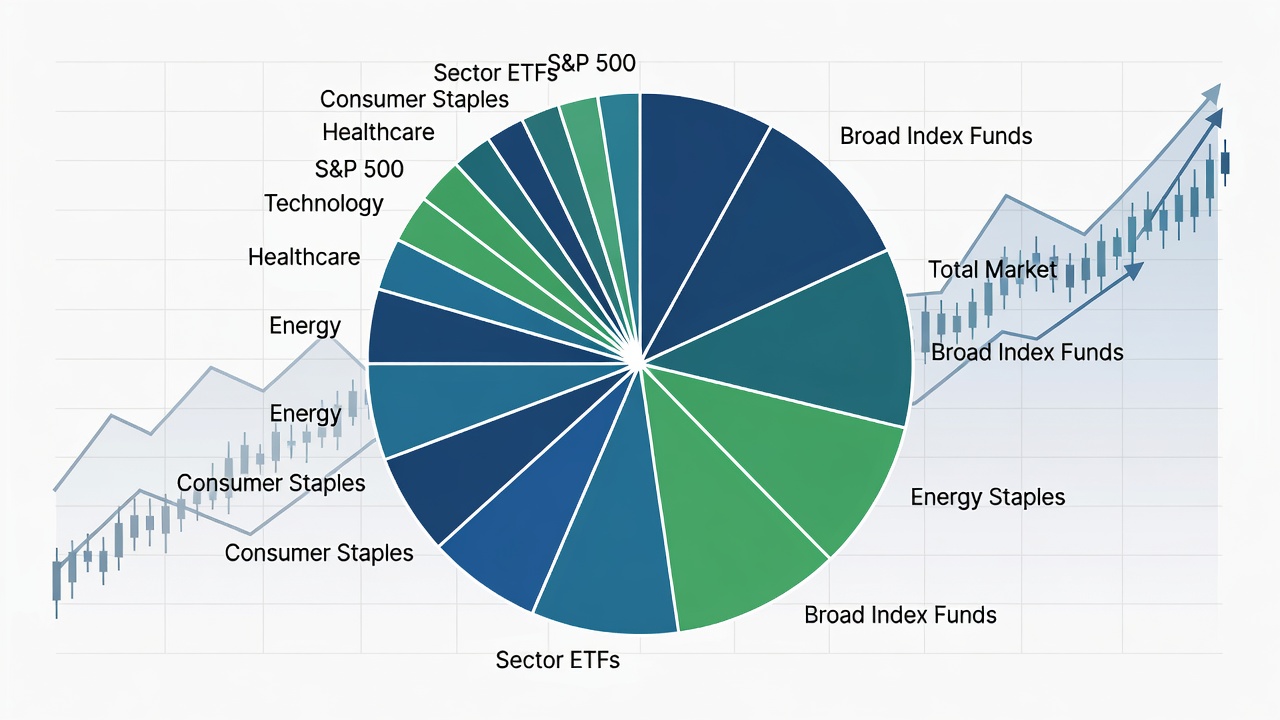
Choosing sectors requires evaluating earnings growth trajectories, regulatory landscapes, valuation multiples, and macroeconomic drivers. Technology continues to attract attention due to artificial intelligence adoption and cloud expansion, yet it remains sensitive to interest rate movements. Healthcare benefits from aging populations and breakthrough therapies, offering defensive characteristics alongside innovation upside. Energy provides commodity price diversification that can hedge inflation, while financials may gain from evolving monetary policy. Investors should screen sectors using criteria such as forward earnings estimates, debt levels within the sector, and historical performance during similar economic regimes. Avoid over-concentration by limiting any single sector to no more than 25 percent of the ladder.
- Technology: High growth potential but vulnerable to valuation compression
- Healthcare: Stable demand with regulatory and innovation catalysts
- Energy: Commodity-linked returns that diversify equity beta
- Financials: Interest rate sensitivity offering tactical opportunities
Step-by-Step Portfolio Construction
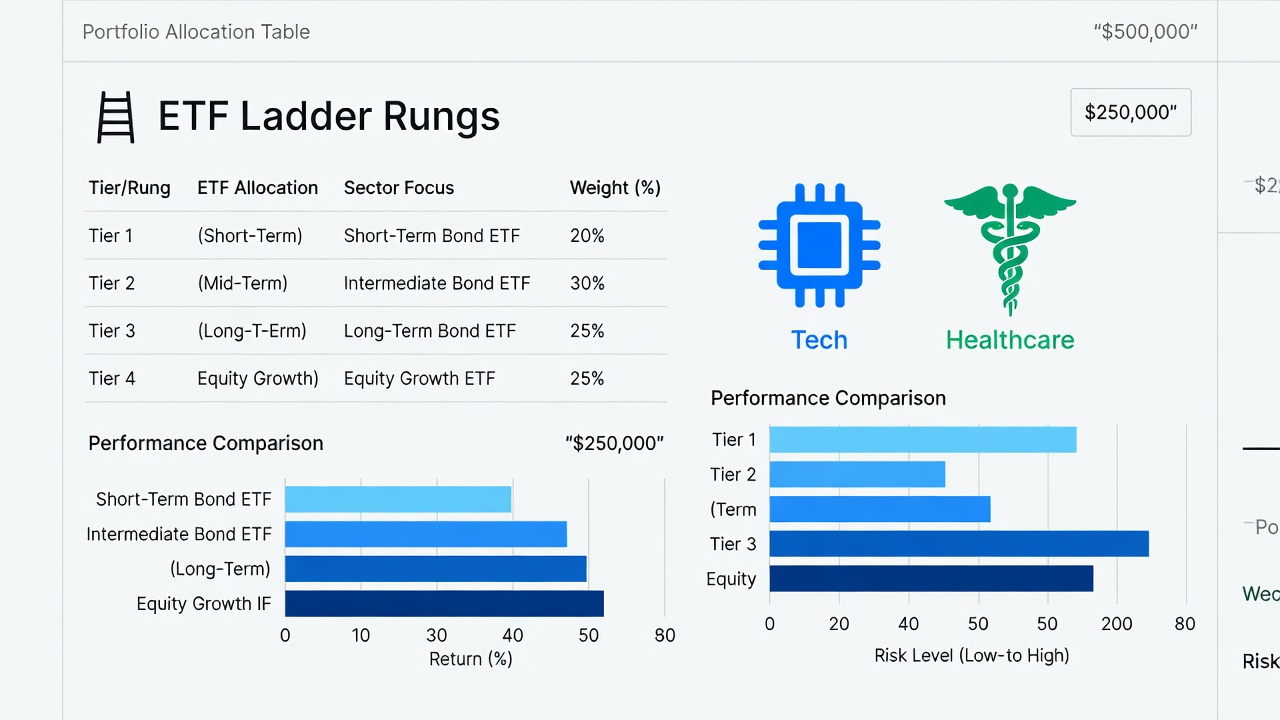
Start by clarifying your risk tolerance, investment horizon, and liquidity needs. Next, select three to five sector ETFs and two core index funds that align with your outlook. Assign specific maturity dates to each rung so that positions reset sequentially. Determine initial allocations based on conviction levels and sector correlations. Implement the ladder by purchasing positions in a single brokerage account that supports fractional shares for precise weighting. Schedule quarterly reviews to measure drift and execute rebalancing only when allocations deviate beyond preset thresholds. Document every decision to maintain discipline across market cycles.
| Rung | ETF Type | Allocation | Maturity |
|---|---|---|---|
| 1 | Tech Sector ETF | 20% | 6 months |
| 2 | Healthcare Sector ETF | 15% | 12 months |
| 3 | S&P 500 Index Fund | 30% | 18 months |
| 4 | Energy Sector ETF | 15% | 24 months |
| 5 | Total Market Index Fund | 20% | 36 months |
Performance Comparisons
Back-tested laddered portfolios have historically delivered smoother equity curves than static allocations during periods of elevated volatility. Sector rotation captured through staggered holdings reduces maximum drawdowns by allowing partial exits at different times. When comparing rolling three-year returns, laddered structures often show improved risk-adjusted metrics versus concentrated sector bets or pure index portfolios. Investors should examine performance across multiple regimes, including rising-rate environments and recessionary periods, to understand the strategy's behavior under stress. Tracking error relative to a simple 60/40 benchmark provides a useful yardstick for evaluating added value from the laddering overlay.
Real Portfolio Examples
Consider a $250,000 intermediate portfolio targeting moderate growth. Allocate 35 percent across three sector ETFs and 65 percent to two index funds using the ladder structure outlined above. After the first six-month rung matures, reassess technology exposure and potentially rotate into healthcare if valuations compress. A second example uses a $500,000 retirement account where the ladder extends to five years, incorporating an additional financial sector ETF rung at the 30-month mark. Both examples demonstrate how the staggered maturities create natural decision points that prevent emotional selling during short-term corrections.
Risk Mitigation Tips
Cap any individual sector exposure at 25 percent to avoid concentration risk. Establish stop-loss rules at the rung level rather than the total portfolio to preserve the ladder integrity. Maintain a small cash buffer equivalent to one rung's allocation for opportunistic re-entry after sharp declines. Monitor correlations between sectors and index funds to ensure the overall portfolio does not become unintentionally concentrated. Review tax-lot selection during rebalancing to minimize realized gains. Finally, stress-test the ladder against historical scenarios such as the 2022 rate-hike cycle to confirm the structure can withstand similar conditions without forced liquidation.
FAQ: Rebalancing and Taxes
How often should I rebalance an ETF ladder?
Conduct a full review quarterly and rebalance only when any rung drifts more than 5 percent from its target weight. This disciplined cadence prevents over-trading while keeping the structure aligned with your original plan.
What are the tax implications?
Hold positions longer than one year whenever possible to qualify for long-term capital gains rates. Utilize tax-advantaged accounts such as IRAs for the majority of the ladder to defer taxes on rebalancing events. Consult current guidance from IRS.gov for applicable rules on ETF distributions and wash-sale considerations.
Can I ladder in retirement accounts?
Yes, the strategy integrates seamlessly with IRAs and 401(k)s where tax-deferred growth amplifies the compounding benefits of staggered rebalancing. Contribution limits and required minimum distributions should factor into rung sizing.
How do I handle dividends within the ladder?
Reinvest dividends automatically into the same rung until maturity, then allow them to fund the next scheduled allocation. This maintains the ladder proportions without additional cash contributions.
Conclusion
ETF laddering delivers a repeatable framework for navigating 2026 markets by combining sector opportunities with index stability. Intermediate investors gain practical tools for volatility management and disciplined growth. Begin with a modest allocation, document clear rules, and refine the structure based on observed performance. Additional regulatory context is available through SEC.gov and Investor.gov. With consistent application, the ladder becomes a powerful engine for structured portfolio advancement.
No comments yet. Be the first!