 Bullish Portfolio
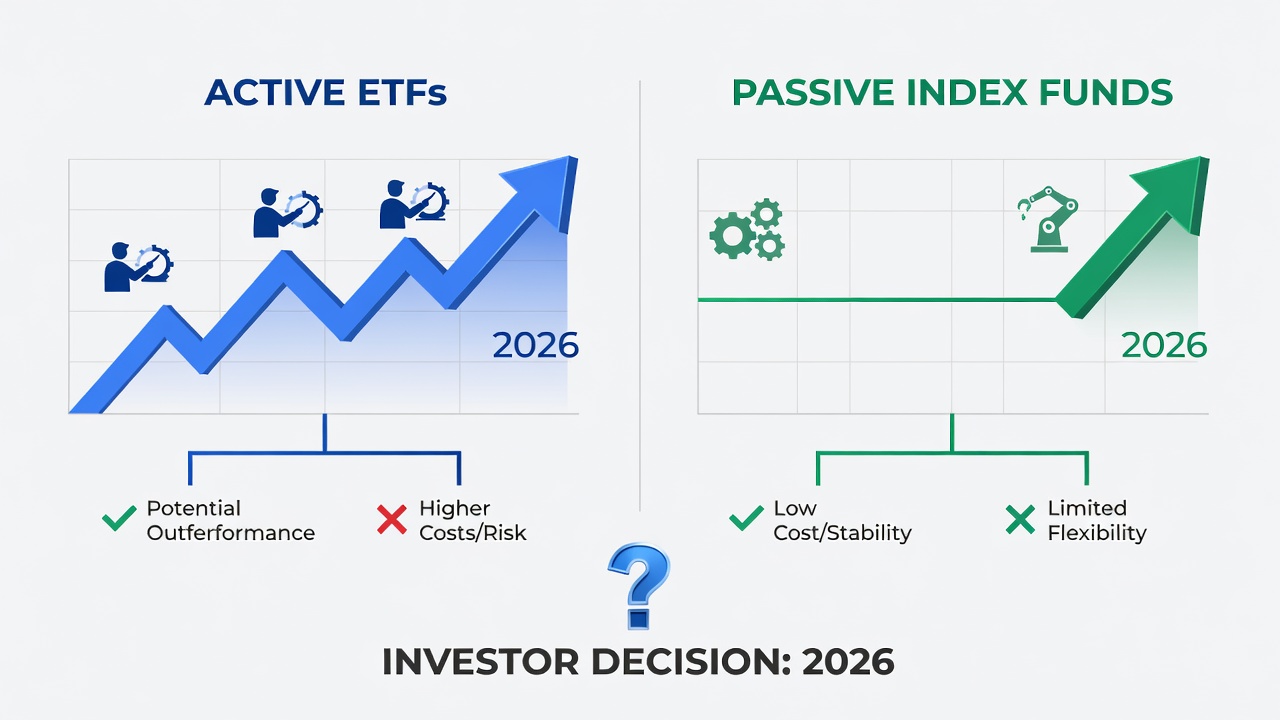
Introduction to Active ETFs and Passive Index Funds in 2026
Investors navigating 2026 markets encounter a sophisticated environment shaped by rapid technological advancements, regulatory changes, and shifting economic indicators. Choosing between active ETFs and passive index funds demands more than surface-level comparisons of returns. This comprehensive guide delves into scenarios where active ETFs may outperform sector-specific ETFs and broad index funds, with emphasis on technology and healthcare sectors. Readers will find detailed performance insights, fee analyses, real-world examples, step-by-step evaluation frameworks, risk-return considerations, and actionable allocation strategies for building resilient portfolios.
Understanding the Core Differences
Active ETFs rely on professional managers who conduct in-depth research, monitor market trends, and adjust holdings to pursue excess returns over benchmarks. In contrast, passive index funds mechanically replicate indices such as the S&P 500 or Russell 2000, minimizing trading activity and human judgment. The active approach introduces flexibility for capitalizing on mispriced opportunities, while passive strategies emphasize broad diversification and cost efficiency. Understanding these mechanics helps investors align choices with personal objectives like growth, income, or capital preservation.
Performance Comparisons Under 2026 Market Conditions
Throughout 2026, market conditions featuring heightened volatility from AI adoption and healthcare policy reforms have highlighted periods where skilled active management delivers advantages. Active ETFs concentrating on high-conviction technology holdings have captured upside during sector rotations more effectively than static index exposure. Data from recent quarters shows active strategies in dynamic sub-sectors occasionally generating meaningful alpha when passive vehicles remain tethered to index weights. However, consistency varies, underscoring the need for ongoing monitoring rather than blanket assumptions of superiority.
Fees, Costs, and Expense Ratios
Cost structures significantly influence net investor outcomes. Active ETFs generally feature elevated expense ratios reflecting research, trading, and management expertise. Passive index funds maintain streamlined operations with lower ongoing charges. When evaluating options, investors must calculate the impact of fees on compounded returns over multi-year horizons. Transparent disclosure of all costs, including bid-ask spreads and potential capital gains distributions, supports informed decision-making in both categories.
Sector-Specific Opportunities: Technology and Healthcare
Technology remains a fertile ground for active ETF strategies in 2026, as managers can overweight emerging leaders in artificial intelligence, cloud infrastructure, and cybersecurity ahead of broader index recognition. Healthcare presents parallel opportunities through targeted investments in biotech innovation, personalized medicine, and medical device advancements responding to demographic shifts. Active approaches allow nimble responses to clinical trial results or regulatory approvals that passive indices incorporate with delay. These sector tilts can enhance portfolio returns when executed with disciplined risk controls.

Real-World Examples of Top Active ETFs
Prominent active ETFs in 2026 include vehicles emphasizing AI-centric equities and precision healthcare innovators. These funds demonstrate how concentrated positions in high-potential companies differentiate performance from market-cap-weighted benchmarks. Investors reviewing holdings disclosures often observe meaningful deviations from index compositions, illustrating the active manager's conviction in forward-looking themes. Such examples provide concrete benchmarks for assessing whether similar strategies fit individual risk profiles.
Step-by-Step Evaluation Criteria
Selecting suitable vehicles requires systematic analysis. Begin by examining a fund's historical ability to generate alpha relative to its benchmark across multiple market cycles. Next, evaluate the portfolio manager's tenure and adherence to a clearly articulated investment process. Review metrics such as tracking error, portfolio turnover, and sector concentration limits. Assess liquidity through average daily trading volume and assets under management. Finally, compare after-fee performance against relevant passive alternatives during both bull and bear phases to gauge resilience.
- Examine rolling three- and five-year alpha generation.
- Verify consistency of strategy implementation through holdings reports.
- Analyze maximum drawdowns versus benchmark peers.
- Confirm tax efficiency via distribution history.
- Review independent analyst ratings from established research platforms.
Risk-Return Tradeoffs with Index Funds
Active ETFs carry manager-specific risks, including style drift and elevated volatility from concentrated bets, yet they offer pathways to outperformance during favorable conditions. Passive index funds provide reliable market beta at minimal cost with lower dispersion of returns. The optimal balance depends on factors such as investment timeline, tolerance for tracking error, and desire for downside protection. Many investors adopt a core-satellite framework that leverages passive stability alongside selective active exposure.
2026 Holdings Comparison Table
| Metric | Active ETF Example | Passive Index Fund |
|---|---|---|
| Holdings Focus | Concentrated tech leaders | Broad market cap weighted |
| Turnover | Moderate to high | Low |
| Sector Tilt | Overweight healthcare innovators | Market neutral |
| Risk Profile | Higher potential volatility | Market-level volatility |
Practical Allocation Tips
Effective portfolio construction often begins with a 60-70 percent allocation to low-cost passive index funds to secure broad market participation. The remaining 30-40 percent can target active ETFs in high-conviction areas such as technology or healthcare. Rebalance positions quarterly or when allocations drift beyond preset thresholds. Monitor performance relative to stated benchmarks and adjust based on evolving market regimes. This disciplined approach maintains diversification while allowing tactical flexibility.
Common Mistakes to Avoid
Investors frequently over-allocate to active strategies without sufficient due diligence, leading to disappointing net results after fees. Another pitfall involves chasing recent performance without evaluating manager consistency or strategy sustainability. Neglecting liquidity considerations can result in wide spreads that erode returns during volatile periods. Finally, failing to integrate active and passive holdings into a cohesive asset allocation plan often produces unintended overlaps or gaps in sector exposure.
Blending Active and Passive Strategies
A hybrid portfolio captures the efficiency of passive indexing while pursuing incremental gains through active selection. This method supports diversified outcomes adaptable to 2026 conditions. Regular reviews ensure the blend remains aligned with changing risk appetites and macroeconomic signals.
Frequently Asked Questions
Can active ETFs consistently outperform index funds?
Outperformance depends on market environment, manager expertise, and sector focus. While active ETFs have delivered excess returns in targeted areas during 2026, results are not guaranteed across all cycles.
What role do fees play in long-term returns?
Fees directly reduce compounded growth. Investors should prioritize net-of-fee performance when comparing active and passive options over extended holding periods.
How should beginners start blending strategies?
Start with a dominant passive core and introduce modest active positions in familiar sectors. Track results over at least four quarters before increasing allocations.
Are there tax implications when switching between active and passive funds?
Trading activity in active ETFs may generate taxable events. Passive funds tend to be more tax-efficient due to lower turnover, though specific circumstances vary by account type.
What monitoring frequency is recommended?
Quarterly reviews of holdings, performance, and fees suffice for most investors, with deeper annual assessments to confirm ongoing suitability.
Conclusion
Navigating active ETFs versus passive index funds in 2026 requires thoughtful integration of performance data, cost awareness, and sector insights. By applying structured evaluation criteria and balanced allocation principles, investors can construct diversified portfolios positioned for both stability and opportunistic growth. Authoritative resources such as SEC.gov, Investopedia, and Morningstar offer additional tools for continued education and decision support.
No comments yet. Be the first!