 Bullish Portfolio
Introduction to Bond Sector ETFs and Equity Diversification
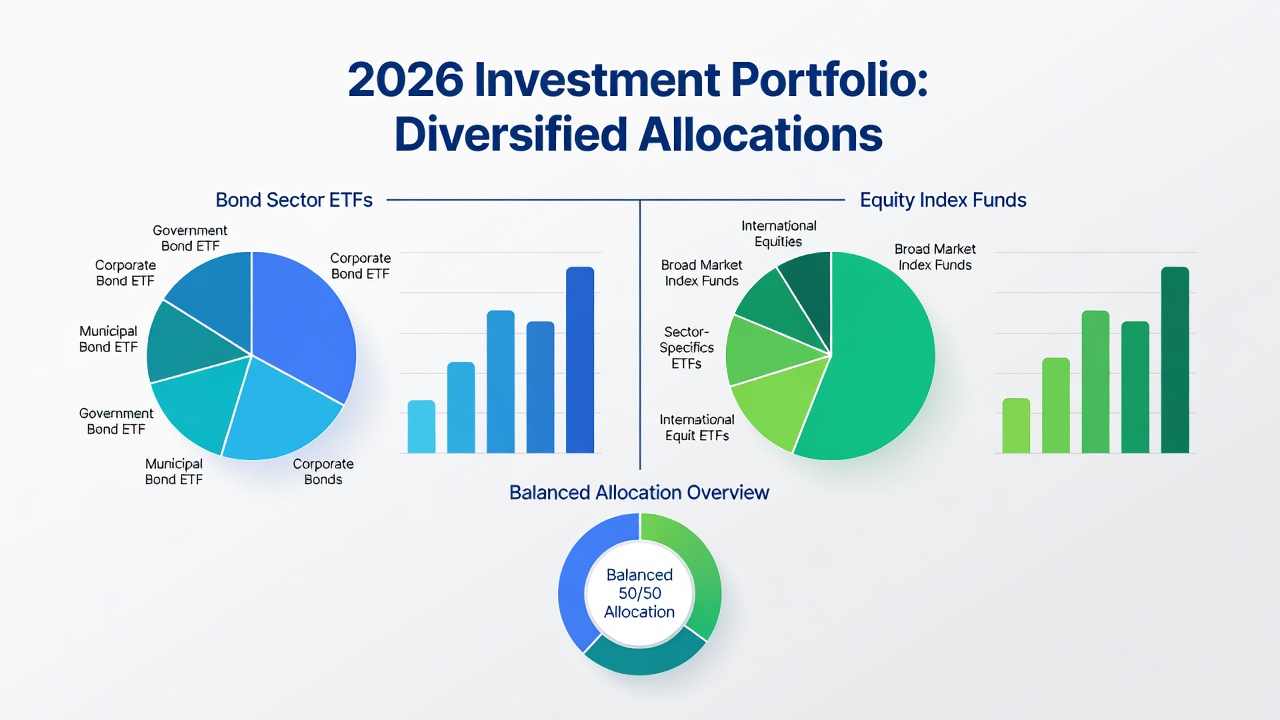
Building a resilient portfolio in 2026 requires thoughtful integration of fixed-income assets alongside core equity holdings. Bond sector ETFs offer targeted exposure to specific areas of the fixed-income market, helping investors reduce overall volatility while maintaining growth potential from equity index funds. This approach addresses search intent for practical diversification methods amid evolving market conditions. Equity index funds deliver broad market participation through low-cost vehicles that track major benchmarks, yet they remain subject to significant price swings driven by economic shifts, corporate earnings, and geopolitical events. Incorporating bond sector ETFs introduces a layer of stability by generating regular income and exhibiting lower correlation to stock movements, which supports smoother portfolio trajectories over multi-year periods.
Investors gain access to professional management, high liquidity, and transparent holdings through ETF structures. These features allow precise adjustments without the complexities of individual bond purchases. The result is a more complete asset allocation that balances growth objectives with downside protection, aligning well with forward-looking strategies for 2026.
Why Bond Sector ETFs Matter for 2026 Portfolios
Forward-looking strategies emphasize sectors such as U.S. Treasuries, investment-grade corporates, and municipals to create balanced exposures. These choices help stabilize portfolios when equity markets encounter volatility. Bond sector ETFs typically demonstrate lower price fluctuations than equities, supporting capital preservation goals while still offering competitive yields. Additional benefits include streamlined access to diversified bond baskets via single trades and the flexibility to tilt exposures according to changing economic signals. This adaptability benefits both novice and seasoned investors who seek efficient ways to enhance diversification without excessive complexity.
By blending these instruments with equity index funds, portfolios can better withstand periods of uncertainty while continuing to participate in equity upside. The combination promotes disciplined long-term investing rather than reactive trading.
Selecting Top Bond Sectors for Diversification
Investors should prioritize sectors that match 2026 objectives. Government bond ETFs deliver safety through holdings in high-quality sovereign debt instruments. Corporate bond ETFs seek higher income potential from established issuers across various industries. Municipal bond ETFs provide tax-efficient income streams particularly useful for investors in elevated tax brackets. International bond ETFs introduce geographic spread and exposure to non-U.S. interest rate environments. When evaluating sectors, consider factors including average duration, credit quality ratings, and prevailing yield levels. Compare expense ratios and trading liquidity metrics to confirm efficient implementation within any portfolio size. Authoritative resources like SEC.gov supply detailed guidance on ETF prospectuses and associated risks.
Understanding Key Metrics in Bond Sector Selection
Duration measures sensitivity to interest rate movements and helps match bond exposure to an investor's time horizon. Credit quality indicates the likelihood of timely interest and principal payments, influencing risk premiums. Yield to maturity provides an estimate of total return assuming bonds are held to maturity. Liquidity metrics such as average daily trading volume affect execution costs when entering or exiting positions. Reviewing these metrics side by side allows investors to construct complementary bond sector allocations that offset equity index fund risks effectively.
Practical Allocation Steps
Begin by assessing personal risk tolerance, investment timeline, and overall financial goals. Allocate between 20 and 40 percent of total portfolio assets to bond sector ETFs, adjusting the percentage based on individual circumstances. Start with foundational government and corporate sectors before adding specialized municipal or international exposure. Follow these sequential steps for implementation. First, conduct a thorough review of existing equity index fund positions to identify concentration risks. Second, pinpoint specific gaps in fixed-income coverage. Third, choose three to five bond sector ETFs that complement current holdings. Fourth, phase in positions gradually to control trading expenses. Fifth, record target allocation percentages for consistent future monitoring. This methodical process reduces emotional decision-making and supports sustainable portfolio construction.
Risk Comparisons and Performance Considerations
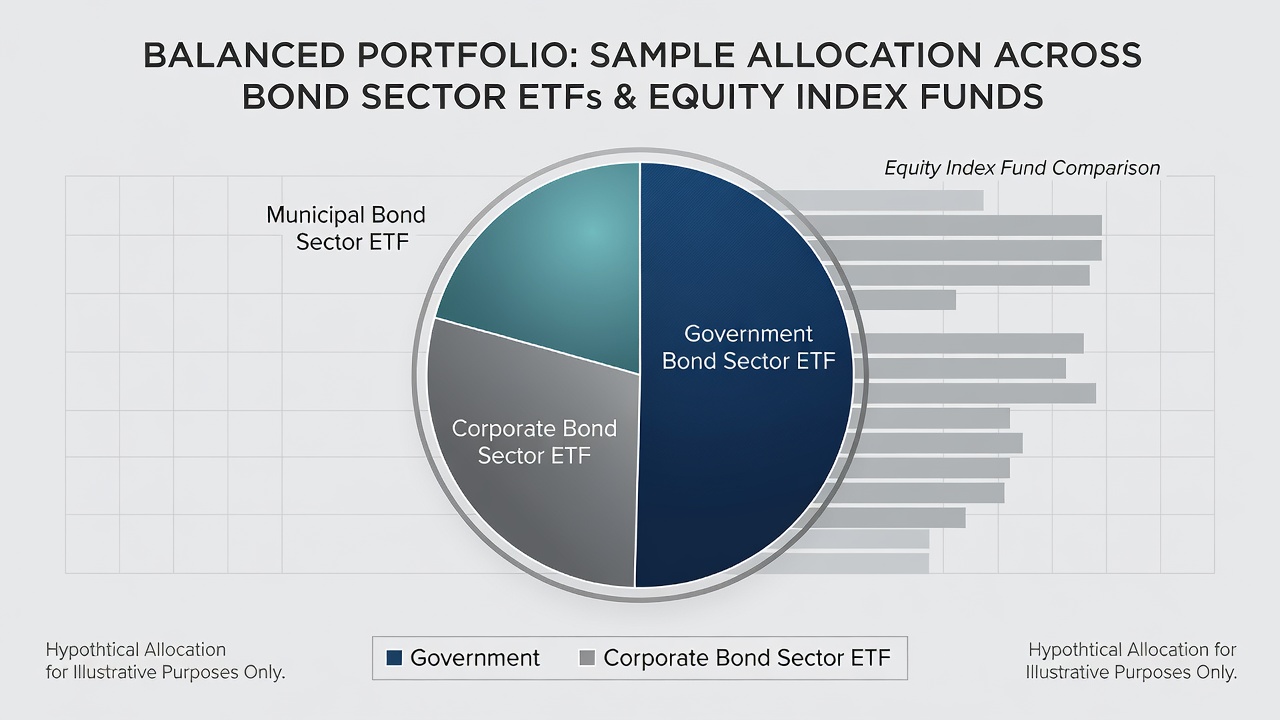
Bond sector ETFs generally maintain lower equity market beta, which can limit portfolio drawdowns during equity market declines. Interest rate sensitivity differs across sectors and duration profiles. Government bonds often strengthen during flight-to-safety episodes, whereas corporate bonds deliver elevated income accompanied by credit risk considerations. Performance illustrations from balanced allocations frequently show improved risk-adjusted metrics such as higher Sharpe ratios relative to equity-only approaches. Investors benefit from examining historical correlation patterns between selected bond sectors and their equity benchmarks to refine the overall mix. Ongoing review of these relationships helps maintain diversification benefits as market regimes evolve.
Rebalancing Techniques for Long-Term Success
Consistent rebalancing preserves intended risk exposures over time. Threshold-based methods trigger adjustments whenever any asset class deviates more than five percent from its target weight. Calendar-based schedules conducted quarterly or semi-annually offer simplicity and reduce the temptation to time markets. Within tax-advantaged accounts, rebalancing can occur with minimal tax consequences. Investors should also monitor sector-specific developments such as changes in credit spreads or policy announcements to make proactive weight adjustments while avoiding unnecessary turnover.
Tax Considerations When Using Bond Sector ETFs
Recognize the distinct tax treatment of different bond sector distributions. Municipal bond ETFs frequently generate federally tax-exempt interest income, which can be advantageous for investors subject to higher marginal rates. Corporate and government bond ETFs typically produce taxable interest payments, making them more suitable for placement inside retirement accounts. Consult Investor.gov for official explanations of ETF taxation mechanics. Maintain accurate cost-basis records to optimize capital gains outcomes when positions are sold. Strategic account placement and distribution management can meaningfully improve after-tax returns across the entire portfolio.
Real-World Portfolio Case Examples
Examine a moderate-risk scenario featuring 70 percent equity index funds paired with 30 percent bond sector ETFs allocated across Treasuries, corporates, and municipals. This structure tends to produce more stable equity curves alongside predictable income generation. An aggressive allocation example limits bond exposure to 15 percent concentrated in shorter-duration corporate sectors to retain higher growth orientation. A conservative case might increase bond weighting to 50 percent with heavier emphasis on government and municipal sectors. Compare these illustrations against personal objectives and refine sector weights to reflect unique risk preferences and liquidity needs. Modeling platforms available through Vanguard.com facilitate testing of similar allocation frameworks before execution.
Beginner-to-Advanced Checklist
- Beginner level actions: Clearly define investment goals and time horizons, select two or three broad bond ETFs, initiate positions with modest dollar amounts, and establish a simple tracking spreadsheet.
- Intermediate level actions: Calculate and review correlations between bond sectors and equity holdings, schedule quarterly rebalancing reviews, evaluate tax implications of distributions, and incorporate basic stress testing of the overall allocation.
- Advanced level actions: Apply sector rotation indicators derived from economic data, selectively utilize options overlays for risk management, conduct comprehensive scenario analysis under varied 2026 economic conditions, and integrate multi-asset optimization software for precise weighting decisions.
Monitoring Economic Indicators for 2026 Adjustments
Track key signals such as central bank policy statements, employment reports, and corporate earnings trends to inform timely allocation tweaks. Maintain a regular review cadence that balances responsiveness with avoidance of overtrading. Document decisions and outcomes to refine the process in subsequent periods.
Common Mistakes to Avoid
Over-concentration in a single bond sector, ignoring duration mismatches with investment horizons, neglecting tax-advantaged account placement, and failing to rebalance during market moves represent frequent pitfalls. Awareness of these issues supports more robust portfolio management.
FAQ on Yields and Correlations
How do bond ETF yields compare to equity dividends? Bond yields generally deliver more predictable income streams than variable stock dividends, aiding cash flow planning.
What is the typical correlation between bond sectors and equities? Most bond sectors display low to moderate correlations with equities, which enhances overall diversification benefits and reduces portfolio volatility.
Should beginners start with broad or sector-specific bond ETFs? Broad government and aggregate bond ETFs provide simpler entry points before progressing to specialized sectors.
How often should correlations be reassessed? Review correlations at least semi-annually or following major economic events to ensure ongoing diversification effectiveness.
Can bond sector ETFs be used inside retirement accounts? Yes, they integrate well within IRAs and similar vehicles where tax deferral maximizes compounding of interest income.
Conclusion
Integrating bond sector ETFs with equity index funds creates well-rounded 2026 portfolios capable of navigating uncertainty while pursuing growth. Through careful sector selection, disciplined allocation, regular rebalancing, and attention to tax efficiency, investors can achieve improved risk-adjusted returns. Apply these strategies methodically and adjust as personal circumstances evolve to meet long-term financial objectives.

No comments yet. Be the first!