 Bullish Portfolio

Introduction to India's Bullish Stock Market in 2026
India's economy continues to demonstrate resilience and expansion, positioning it as one of the most attractive emerging markets for equity investors. For beginners seeking exposure to high-growth opportunities, focusing on bullish stocks in key sectors offers a strategic entry point. This guide examines promising companies in technology, renewables, and consumer goods while providing practical tools for evaluation and allocation. The combination of policy support, demographic advantages, and digital adoption creates a fertile environment for sustained equity appreciation through 2026 and beyond. Beginners often benefit from understanding these macro drivers before diving into individual stock selection.
Why Focus on Bullish Growth Stocks in India
Structural drivers such as digital transformation, energy transition policies, and rising domestic consumption create sustained tailwinds. Investors benefit from a young demographic and supportive regulatory environment that favors scalable businesses. Recent market performance highlights how select Indian equities have outpaced global peers in recovery and expansion phases. Many sectors show improving corporate governance standards and increasing institutional participation, which adds stability to growth narratives. Beginners should recognize that bullish stocks typically exhibit above-average earnings growth potential combined with reasonable valuations relative to peers.
Technology Sector Leaders
Leading technology firms leverage India's software services dominance and growing digital infrastructure. Companies with strong order books, recurring revenue models, and global delivery capabilities stand out. Valuation metrics often emphasize forward earnings multiples and return on equity, helping beginners compare stability versus growth potential. Firms specializing in cloud migration, artificial intelligence services, and cybersecurity solutions have gained particular traction as enterprises worldwide accelerate digital initiatives. Supply chain advantages in talent availability further strengthen this sector's position.
Renewables: Powering the Energy Transition
Policy support for solar and wind capacity addition drives expansion in clean energy. Firms with integrated supply chains, project execution track records, and long-term power purchase agreements present compelling profiles. Supply chain insights reveal opportunities in domestic manufacturing incentives that reduce import dependence. The government's push for green hydrogen and offshore wind projects opens additional avenues for growth. Beginners can track capacity addition announcements and execution timelines to gauge future revenue visibility in this space.
Consumer Goods: Riding Domestic Demand
Fast-moving consumer goods and durable manufacturers benefit from urbanization and premiumization trends. Brands with wide distribution networks, pricing power, and innovation pipelines deliver consistent performance. Beginners should examine volume growth alongside margin trends for a complete picture. Rural consumption recovery and rising discretionary spending among middle-income households provide additional catalysts. Companies that successfully localize products while maintaining quality standards often achieve superior market share gains over time.
Evaluation Framework for Beginners
A simple framework includes assessing revenue visibility, competitive moats, balance sheet strength, and management execution history. Compare peer valuations using price-to-earnings and enterprise value multiples while factoring in sector growth rates. Always cross-reference with macroeconomic indicators such as GDP forecasts and interest rate cycles. Additional steps involve reviewing cash flow statements for free cash flow generation and analyzing promoter holdings for alignment of interests. Avoid relying solely on past performance; instead, project future earnings based on order books and industry tailwinds.
Supply Chain Insights and Global Positioning
India's improving logistics infrastructure and production-linked incentive schemes enhance manufacturing competitiveness. Technology and renewable players increasingly localize components, mitigating geopolitical risks. This shift supports margin expansion and faster project timelines compared to earlier decades. Global companies are diversifying sourcing away from single-country dependence, creating export opportunities for Indian manufacturers. Beginners should monitor quarterly updates on raw material sourcing and capacity utilization rates to identify operational efficiency improvements.
Risk Comparisons Across Sectors
- Technology stocks face currency fluctuation and client concentration risks but offer high scalability with relatively low capital intensity.
- Renewables encounter regulatory and execution delays yet benefit from long-duration contracts that provide revenue predictability once projects are commissioned.
- Consumer goods experience input cost volatility and intense competition but maintain defensive characteristics during economic slowdowns due to essential demand.
- Across all sectors, interest rate movements and global liquidity conditions can influence valuation multiples and should be monitored regularly.
Practical Steps for Portfolio Allocation
- Define risk tolerance and investment horizon before selecting stocks, ensuring alignment with personal financial goals.
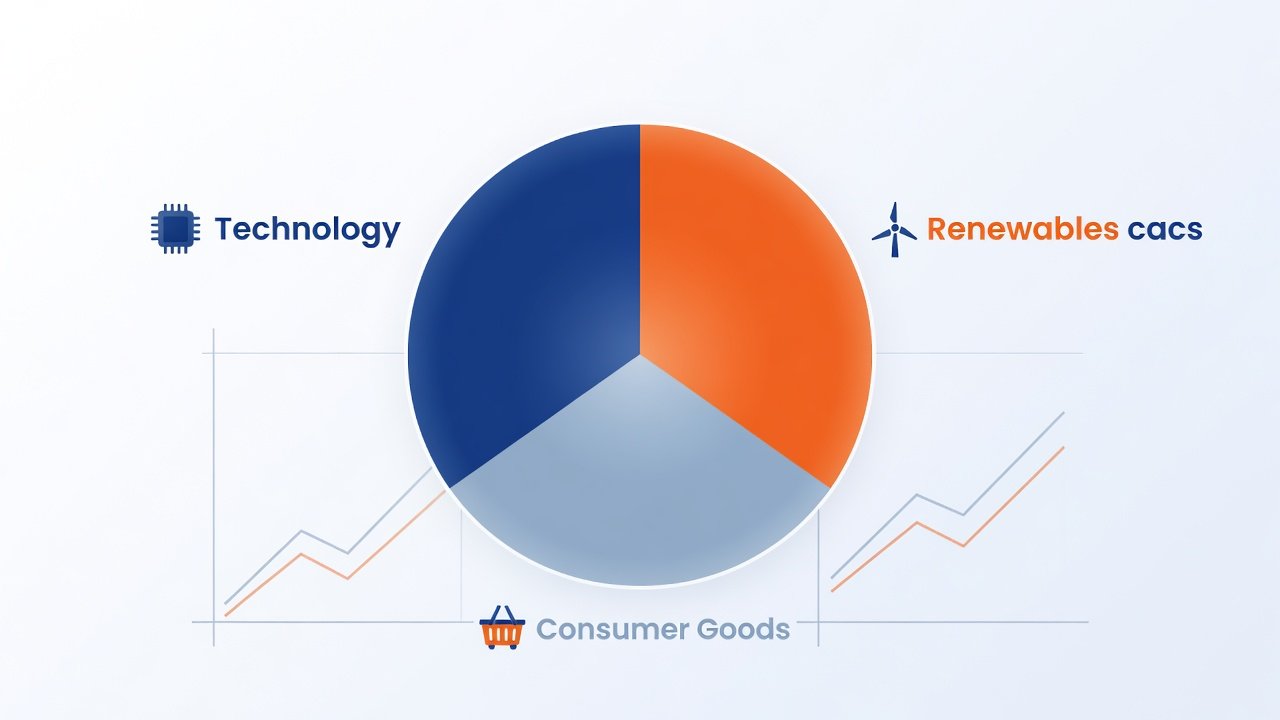
- Allocate across sectors to avoid overexposure, starting with 40-50% in technology for growth tilt while balancing with defensive consumer names.
- Review quarterly results and rebalance annually or upon major corporate events such as mergers or regulatory changes.
- Use systematic investment plans to average entry prices over time and reduce the impact of short-term volatility.
- Consult official resources such as NSE India for real-time data and filings.
- Consider maintaining a small cash buffer for opportunistic additions during market corrections.
Real-World Examples of Recent Performers
Several technology names demonstrated strong compound annual growth through expanded digital services contracts with multinational clients. Renewable developers that secured large-scale projects posted notable share price appreciation driven by capacity additions and improving execution capabilities. Consumer staples firms with rural penetration strategies outperformed during consumption rebounds, illustrating the value of diversified exposure. These examples underscore the importance of tracking both operational metrics and management commentary in earnings calls for forward guidance.
Mistakes Beginners Should Avoid
Common pitfalls include chasing momentum without understanding business fundamentals, ignoring diversification, and reacting emotionally to short-term price swings. Over-concentration in a single sector or stock can amplify losses during sector-specific downturns. Beginners are advised to start with smaller position sizes and gradually increase exposure as confidence and knowledge grow. Always verify information from multiple sources rather than relying on social media tips.
Short FAQ on Entry Points and Market Volatility
When is a good entry point for Indian growth stocks?
Monitor corrections tied to global events or earnings seasons. Dollar-cost averaging reduces timing pressure for beginners and helps build positions systematically.
How should investors handle market volatility?
Maintain a long-term view, diversify holdings, and avoid panic selling. Review SEBI guidelines for investor protection measures and consider consulting RBI reports on macroeconomic stability.
Conclusion
India's bullish stocks in technology, renewables, and consumer goods sectors offer structured growth avenues for 2026 and beyond. By applying a disciplined evaluation framework and thoughtful allocation, beginners can participate confidently while managing risks. Continuous learning through reputable market sources remains essential for sustained success in this dynamic environment.


No comments yet. Be the first!