 Bullish Portfolio

Introduction to Emerging Markets Bullish Stocks in 2026
Investors seeking international diversification beyond saturated US sectors are turning to emerging markets for meaningful growth. India, Brazil, and Southeast Asia stand out with strong demographic tailwinds, expanding middle classes, and policy support for consumer technology and renewable energy. This comprehensive guide examines bullish stock themes in these regions, providing 2026 projections, sector breakdowns, a practical evaluation framework, direct comparisons to US picks, and real-world portfolio examples to help beginners build balanced international exposure.
Why Focus on Emerging Markets Now
Emerging economies continue to deliver faster GDP expansion than developed markets thanks to young populations, urbanization, and rising infrastructure investment. As of mid-2026, reports from global institutions underscore sustained momentum across Asia and Latin America. Diversifying into these markets reduces over-reliance on mature US technology and financial stocks while offering exposure to consumer-driven and green-energy economies that are still in earlier stages of development. This approach can improve overall portfolio resilience during periods when US valuations appear stretched.
Key Sectors Driving Growth
Consumer technology and renewables remain the primary engines of opportunity. Consumer tech benefits from widespread smartphone penetration, digital payments adoption, and e-commerce expansion in previously underserved populations. Renewables attract heavy capital because of favorable government targets for solar and wind capacity, combined with declining technology costs. Additional supporting sectors include fintech services, electric mobility, and digital infrastructure. World Bank reports highlight ongoing infrastructure spending that underpins these themes through 2026 and beyond.
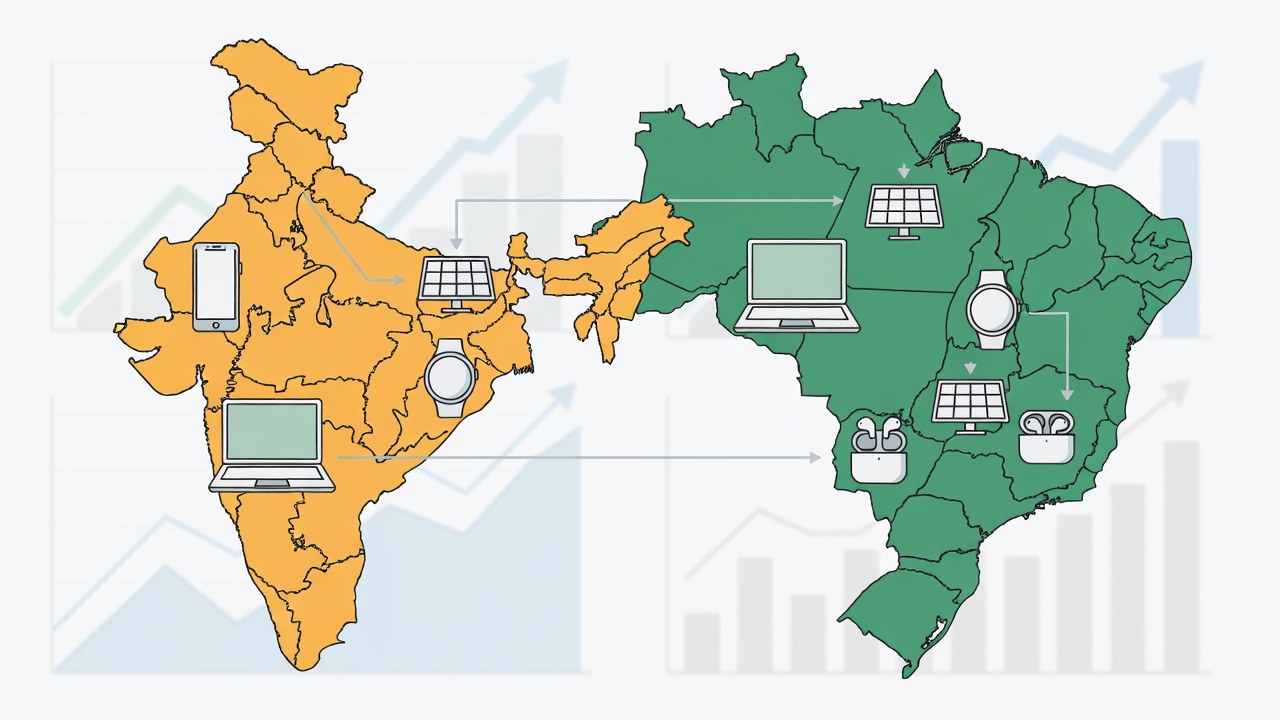
Promising Markets and Stock Themes
India
India’s combination of policy reforms, digital public infrastructure, and ambitious renewable targets creates multiple growth avenues. Key themes include digital lending platforms, solar module manufacturers, and electric vehicle component suppliers. Government production-linked incentive schemes continue to attract both domestic and foreign capital into manufacturing and clean energy. Investors should monitor quarterly capacity additions and regulatory updates that directly affect project pipelines.
Brazil
Brazil offers exposure to agrotech innovation and large-scale clean energy projects. Companies focused on precision agriculture, biofuel production, and offshore wind development stand to benefit from both domestic demand and export opportunities. Political stability and commodity price cycles remain important variables, yet structural improvements in corporate governance are gradually attracting longer-term institutional flows.
Southeast Asia
Vietnam, Indonesia, and Thailand represent dynamic consumer markets with rapidly rising digital adoption. Mobile-first fintech services, ride-hailing platforms, and last-mile logistics providers are expanding addressable markets. Regional renewable projects, particularly solar and hydropower, receive support from both national targets and multilateral financing. Cross-border supply-chain shifts also favor manufacturers in these economies.
Step-by-Step Evaluation Framework
Beginners can follow a structured process to identify suitable opportunities while managing risk.
- Review macroeconomic indicators including GDP growth forecasts, inflation trends, and central bank policy from authoritative sources such as the IMF economic outlooks.
- Examine company fundamentals: revenue growth rates, operating margins, net debt levels, and return on invested capital over multiple years.
- Assess sector-specific tailwinds such as government renewable targets, digital inclusion programs, or trade agreements that open new markets.
- Evaluate accessibility through American Depositary Receipts, exchange-traded funds, or direct local listings, considering liquidity and custody arrangements.
- Compare valuation multiples to both local peers and global counterparts to avoid overpaying for growth.
- Stress-test currency exposure and political risk factors before committing capital.
Comparing Emerging Market Picks to Domestic Options
US equities often deliver stability and high liquidity but face diminishing marginal returns in already mature sectors. Emerging market stocks frequently trade at lower multiples relative to expected earnings growth, reflecting higher perceived risk. A consumer technology company in Southeast Asia, for instance, may expand its user base faster than a comparable US platform because of lower current penetration rates. However, emerging positions require greater tolerance for volatility stemming from currency moves, regulatory shifts, and thinner trading volumes. A balanced allocation that blends both universes can capture complementary return drivers.
Real-World Portfolio Examples
Consider a moderate-risk international sleeve sized at 15–20 percent of total portfolio equity exposure. One illustrative allocation could place 40 percent in Indian renewable and fintech names, 30 percent in Brazilian agrotech and energy transition companies, and 30 percent in Southeast Asian consumer platforms. Rebalancing occurs annually or when any single holding exceeds its target band by more than five percentage points. Another example uses a regional ETF wrapper for the core holding supplemented by two to three individual names chosen after applying the evaluation framework above. Investors should document the original thesis for each position and review it quarterly against new data releases.
Practical Steps for Getting Started
New investors should open brokerage accounts that support international trading or ADR access. Begin with small position sizes to gain familiarity with settlement cycles and tax reporting. Use limit orders and avoid chasing momentum during periods of thin liquidity. Maintain a watchlist of five to seven names and update financial models whenever earnings or policy announcements occur. Educational resources from recognized institutions provide ongoing context for regional developments.
Common Mistakes to Avoid
- Over-concentrating in a single country or sector without diversification.
- Ignoring currency hedging options when local currency depreciation accelerates.
- Chasing headline growth stories without verifying underlying cash-flow sustainability.
- Neglecting liquidity considerations that can widen bid-ask spreads during market stress.
Addressing Key Risks in the FAQ
How do currency risks impact returns?
Currency movements can magnify or offset local-currency gains when translated back to USD. Strategies such as selecting exporters, using currency-hedged vehicles, or maintaining a multi-country mix help reduce single-currency exposure.
When is the best entry timing for 2026?
Monitor earnings seasons and major policy announcements rather than attempting precise market timing. Dollar-cost averaging across several quarters typically produces more consistent results than lump-sum entries amid elevated volatility.
Conclusion
Emerging markets bullish stocks in India, Brazil, and Southeast Asia continue to offer attractive diversification benefits for 2026. By applying a disciplined evaluation framework, focusing on high-conviction sectors, and constructing thoughtfully allocated portfolios, investors can participate in long-term growth stories while managing the unique risks these markets present. Professional financial advice remains essential before implementing any international strategy.


No comments yet. Be the first!