 Bullish Portfolio
Introduction to E-commerce Logistics Stocks
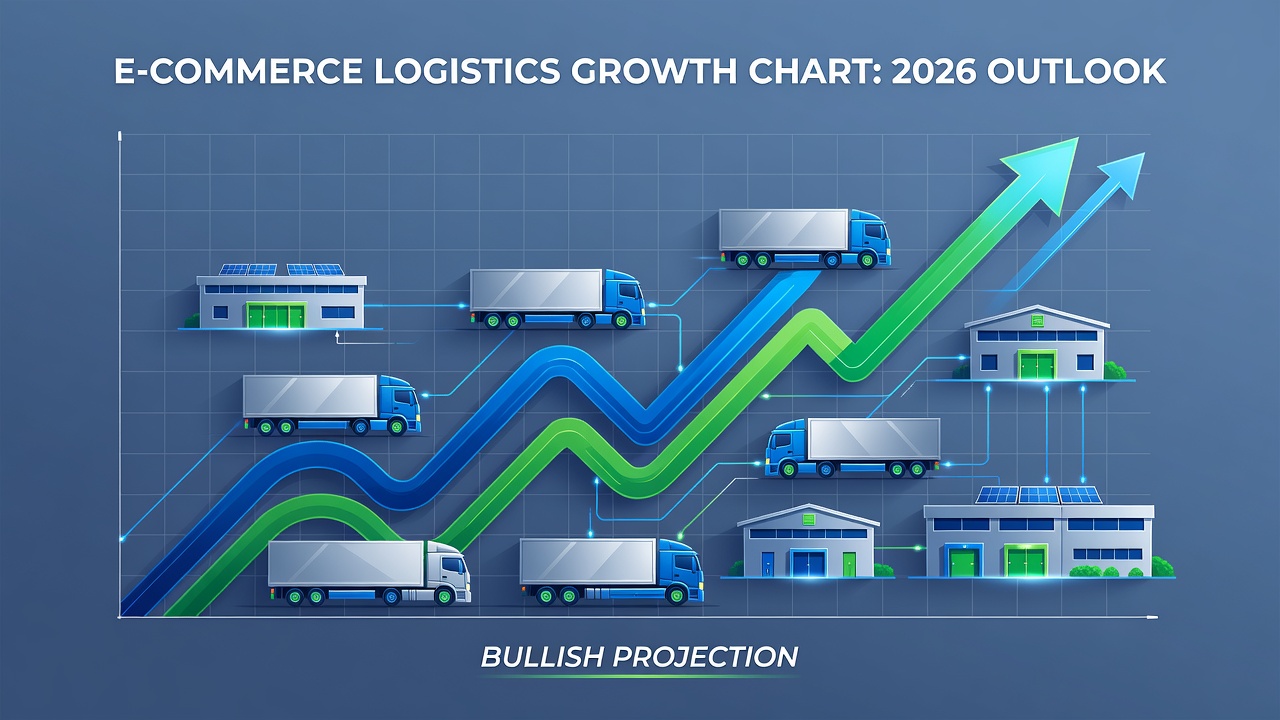
The e-commerce logistics sector stands out as a compelling area for investors seeking growth opportunities in 2026. Fueled by ongoing global supply chain digitization and rising consumer expectations for rapid fulfillment, companies in this space are positioned to benefit from structural tailwinds that extend well beyond short-term cycles. Unlike more saturated technology segments, e-commerce logistics focuses on the physical movement and optimization of goods, creating durable demand as online retail penetration continues to expand worldwide. Investors searching for underexplored growth sectors within bullish stocks and top stocks 2026 will find this niche particularly attractive because it combines tangible infrastructure with digital innovation in ways that generate recurring revenue.
Market analysts project sustained expansion through 2026, supported by advancements in warehouse automation, route optimization software, and last-mile delivery networks. This article examines the key drivers, profiles leading companies, compares valuation metrics, outlines risks, and provides a practical screening framework to help investors identify similar opportunities. By understanding these elements in depth, readers can make informed decisions that align with forward-looking portfolio strategies.
Key Market Drivers Through 2026
Global supply chain digitization represents a foundational driver, enabling real-time tracking, predictive analytics, and seamless integration between retailers and carriers. Same-day and next-day delivery expectations have become standard in major markets, pushing companies to invest heavily in localized fulfillment centers and electric vehicle fleets. These trends create recurring revenue streams from both established e-commerce platforms and emerging direct-to-consumer brands. For instance, the shift toward omnichannel retail means traditional brick-and-mortar stores now rely on sophisticated logistics partners to handle online order fulfillment and returns management.
Additional support comes from expanding cross-border trade and the growth of subscription-based delivery services. As urban populations increase and rural connectivity improves, logistics providers that can scale efficiently stand to capture disproportionate market share. Investors monitoring quarterly volume reports from major carriers often see early signals of these broader shifts. Furthermore, government initiatives promoting infrastructure modernization and sustainable transportation add another layer of support, encouraging adoption of advanced technologies that reduce delivery times while lowering environmental impact. The combination of consumer demand, technological progress, and regulatory backing creates a multi-year growth runway that differentiates this sector from more cyclical industries.
Leading E-commerce Logistics Companies
Several established players dominate the space with diversified operations spanning parcel delivery, freight brokerage, and supply chain management. UPS maintains a vast domestic and international network with strong exposure to e-commerce volumes through its extensive ground and air operations. FedEx offers integrated air and ground solutions that excel in time-sensitive shipments, particularly for high-value goods requiring precise handling. XPO Logistics focuses on less-than-truckload and truckload services with technology-driven efficiencies that improve asset utilization. GXO Logistics specializes in warehouse automation for major retailers, deploying robotics and AI to optimize inventory movement. Ryder System provides fleet management and dedicated transportation services that support e-commerce fulfillment for companies lacking in-house capabilities. C.H. Robinson acts as a leading freight broker connecting shippers with carriers through digital platforms that match loads in real time. Old Dominion Freight Line emphasizes premium less-than-truckload services with high customer retention rates built on reliability and service consistency.
Revenue projections for these firms generally point to mid-to-high single-digit annual growth through 2026, driven by volume increases and pricing power in constrained capacity environments. Each company continues to report incremental gains from technology investments that lower operating costs while improving service reliability. For example, firms investing in electric delivery vans and automated sorting facilities are seeing measurable improvements in on-time performance metrics, which in turn supports higher contract renewals with major online retailers.
Valuation Metrics Comparison
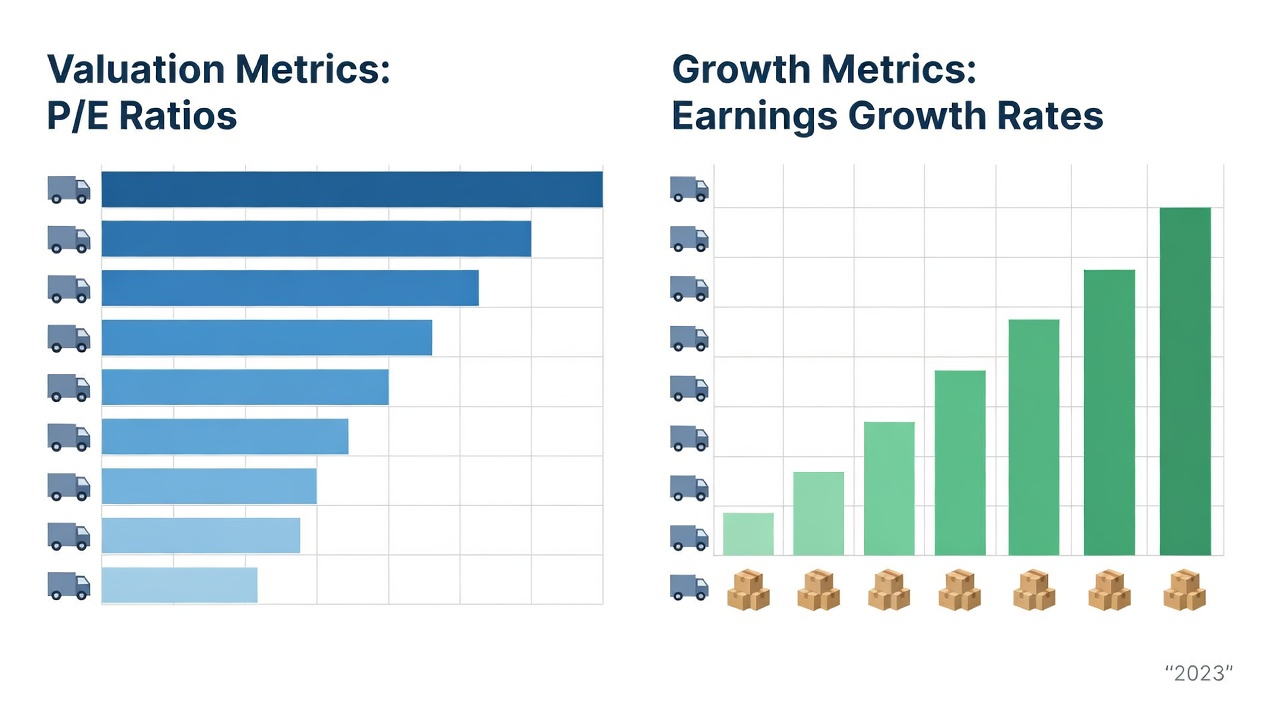
When evaluating these stocks, forward price-to-earnings ratios and projected earnings growth rates provide useful context. Carriers with heavier e-commerce exposure often trade at moderate multiples relative to their long-term growth potential, reflecting both cyclical sensitivity and operational leverage. Growth rates in earnings per share are expected to outpace broader industrial averages for firms successfully executing network modernization initiatives. Investors should cross-reference these metrics against free cash flow generation and return on invested capital to assess sustainability. Comparing companies side-by-side reveals that those with diversified revenue streams across domestic and international markets tend to exhibit more stable valuation profiles during periods of economic uncertainty.
Risk Factors to Consider
Fuel price volatility remains a primary concern, as diesel and jet fuel costs directly impact margins for asset-heavy operators. Regulatory changes around emissions standards and labor practices can also raise compliance expenses. Economic slowdowns may temporarily reduce shipment volumes, while intense competition in last-mile delivery continues to pressure pricing. Geopolitical tensions affecting global trade lanes represent an additional layer of uncertainty that could disrupt established routes. To mitigate these risks, leading companies are increasingly hedging fuel costs through long-term contracts and transitioning to alternative energy sources. Investors should also monitor labor relations closely, as union negotiations can influence operational flexibility in the coming years.
Step-by-Step Evaluation Framework
Investors can apply a structured approach when screening additional e-commerce logistics opportunities. First, review recent volume and revenue trends from quarterly filings to confirm alignment with e-commerce growth. Second, analyze capital expenditure plans for evidence of network expansion and technology adoption. Third, compare operating margins against industry peers to identify efficiency leaders. Fourth, assess balance sheet strength through debt-to-equity ratios and liquidity metrics. Fifth, evaluate management commentary on same-day delivery initiatives and partnerships with major online retailers. This framework helps isolate companies with durable competitive advantages. Applying it consistently across multiple candidates allows investors to build a focused watchlist that can be refined further using technical analysis or macroeconomic indicators.
Portfolio Allocation FAQ
- How much should I allocate to e-commerce logistics stocks? Many diversified investors limit sector exposure to 5-10% of equity holdings to balance growth potential with volatility considerations, adjusting based on personal risk tolerance and overall market conditions.
- Should these stocks be held in taxable or retirement accounts? Tax-advantaged accounts often suit dividend-paying logistics firms, while growth-oriented names may fit better in taxable accounts depending on individual tax situations and time horizons.
- What role do they play alongside broader market ETFs? They can serve as a tactical complement to broad industrial or consumer discretionary ETFs, adding targeted exposure to fulfillment infrastructure that benefits from secular e-commerce trends.
- How frequently should holdings be rebalanced? Annual reviews aligned with earnings seasons are typically sufficient, though major shifts in fuel prices or trade policy may warrant more frequent assessments.
Conclusion
E-commerce logistics stocks offer forward-looking investors exposure to durable secular trends in digital commerce and supply chain modernization. By focusing on companies with strong operational execution, reasonable valuations, and clear paths to volume growth, portfolios can capture meaningful upside through 2026 while managing identified risks. Regular monitoring of industry data from sources such as the Bureau of Labor Statistics, U.S. Department of Commerce, and U.S. Census Bureau provides valuable context for ongoing decisions. This sector's blend of physical assets and digital efficiency positions it well for sustained investor interest in the years ahead.

No comments yet. Be the first!