 Bullish Portfolio
Introduction to Portfolio Diversification in 2026
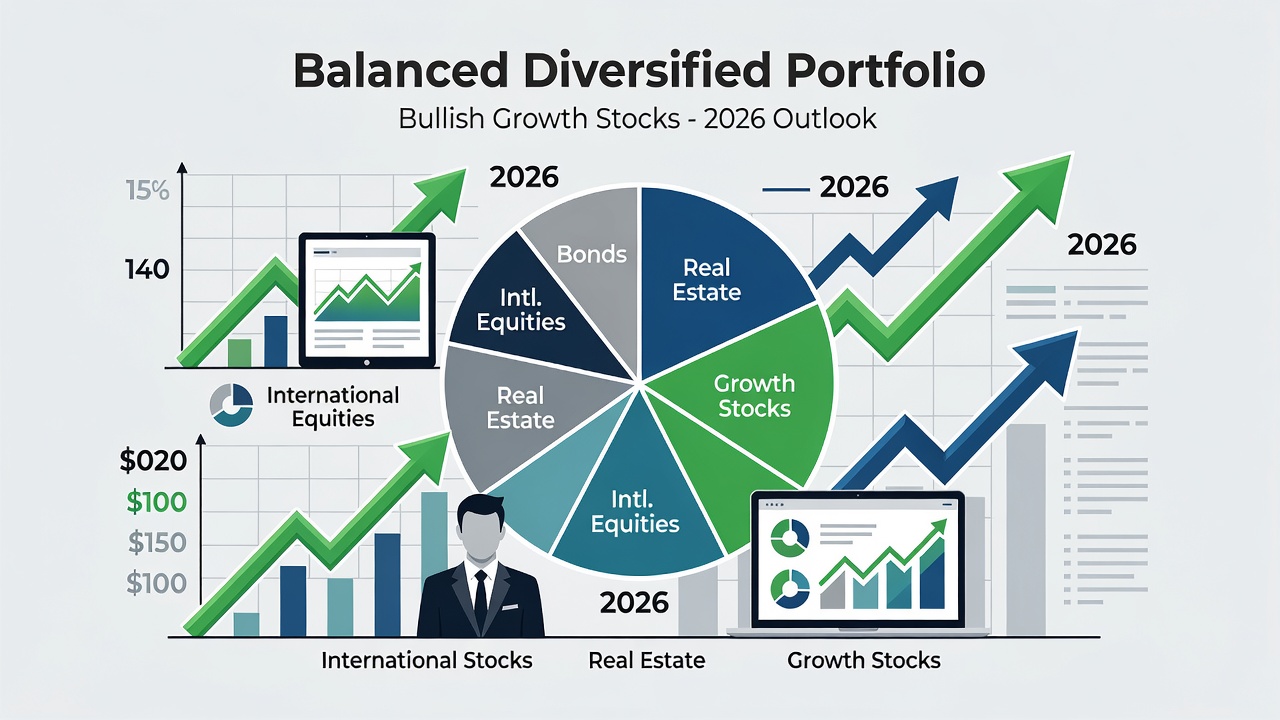
Building a resilient investment portfolio requires balancing high-growth opportunities with prudent risk controls, especially amid evolving 2026 market trends. Bullish growth stocks—shares in companies poised for significant expansion—offer compelling returns but come with volatility. This guide provides actionable steps for beginners to diversify effectively using these assets while maintaining overall stability. Diversification reduces the impact of any single investment's poor performance. In a bullish environment, growth stocks in emerging technologies and consumer sectors can drive gains, yet over-concentration exposes investors to sharp downturns. Effective strategies focus on spreading holdings across uncorrelated assets to create a buffer against sector-specific downturns.
Investors entering 2026 face unique opportunities in areas like artificial intelligence infrastructure and sustainable energy solutions. However, without proper diversification, even strong bull markets can lead to concentrated losses during corrections. The goal is to construct a portfolio that captures upside potential while incorporating safeguards such as bonds, international exposure, and alternative assets. This approach aligns with time-tested principles of modern portfolio theory, helping beginners build confidence through structured decision-making.
Understanding Bullish Growth Stocks and Market Context
Bullish growth stocks typically belong to innovative companies with strong earnings momentum and expanding market share. In 2026, sectors like artificial intelligence, renewable energy, and biotechnology continue to attract attention due to technological advancements and supportive policy frameworks. These stocks often trade at premium valuations because of their future earnings potential rather than current profits. Understanding their characteristics is essential before integrating them into a diversified mix.
Growth stocks frequently exhibit higher beta values, making them more sensitive to economic shifts and investor sentiment. For example, a technology firm developing next-generation chips may surge on positive earnings but decline sharply if supply chain issues arise. Pairing them with defensive holdings such as consumer staples or government bonds creates natural balance. Market context in 2026 also includes considerations around interest rate environments and global trade dynamics, which can influence growth trajectories across borders.
Step-by-Step Asset Allocation Across Sectors
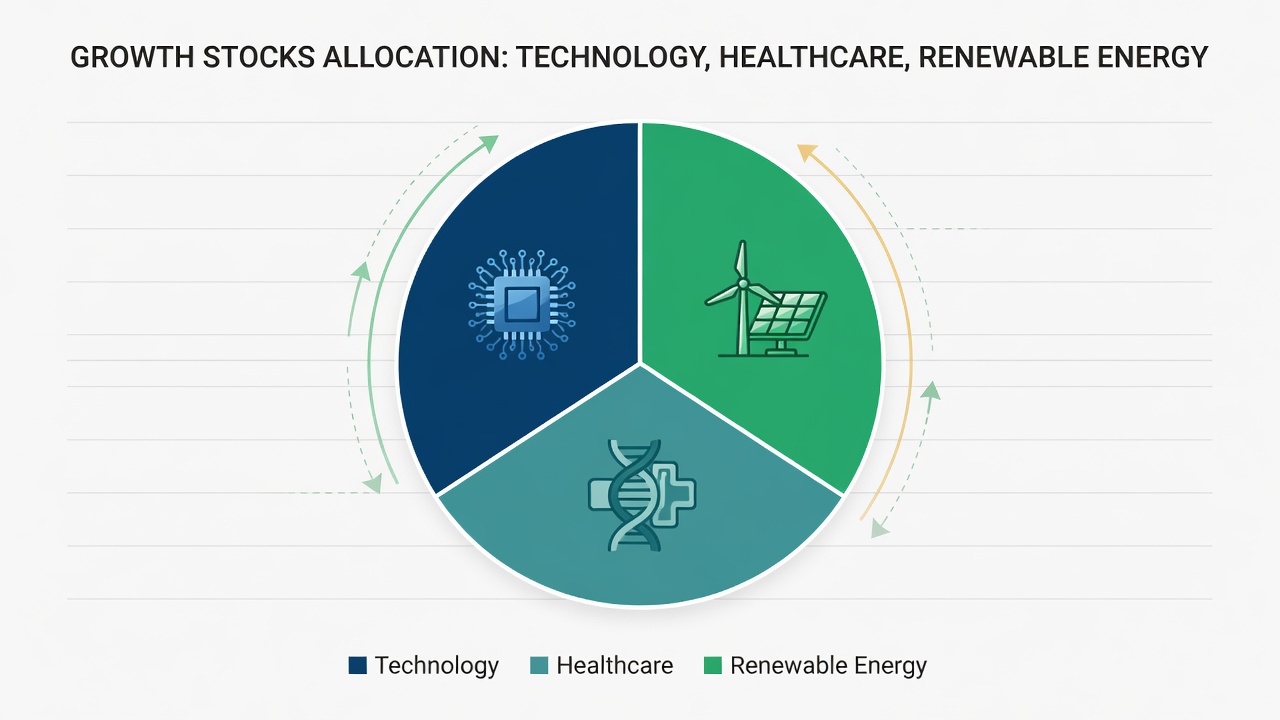
Start by assessing your risk tolerance, investment timeline, and liquidity needs. A foundational framework allocates 60-70% of the portfolio to equities, with a meaningful portion dedicated to growth stocks. Within equities, distribute across multiple sectors such as technology, healthcare, consumer discretionary, and industrials to minimize overlap. Avoid placing more than 25% in any single sector to prevent concentration risk.
- Define core growth themes relevant to 2026 economic drivers like digital transformation and clean energy adoption.
- Assign initial percentages based on expected returns and historical volatility patterns.
- Incorporate 20-30% in fixed income instruments or alternative assets for downside protection.
- Factor in geographic diversification by including 10-15% in international growth opportunities.
- Establish clear rebalancing triggers tied to percentage deviations rather than emotional reactions.
- Document every allocation decision with written rationale for future reference.
This methodical process ensures consistent exposure to bullish opportunities without sacrificing resilience during periods of uncertainty.
Correlation Analysis Examples
Correlation analysis quantifies how different assets move in relation to one another, with values ranging from -1 to +1. Low or negative correlations between holdings improve overall diversification benefits. Growth stocks within the same sector often show correlations above 0.7, while pairings with bonds or real estate investment trusts frequently fall below 0.4. Understanding these relationships allows investors to construct more stable combinations.
Consider a practical example portfolio: 35% allocated to U.S. large-cap technology growth stocks, 15% to healthcare innovators, 15% to emerging market growth equities, 15% to broad equity index funds, 10% to investment-grade corporate bonds, and 10% to commodities. Analysis of historical movements reveals that adding the bond and commodity components can reduce portfolio standard deviation by 15-20% compared to an all-equity growth mix. Investors can use free correlation matrix tools available on major financial websites to run similar tests on their own holdings. The target is to maintain an average pairwise correlation under 0.55 across the entire portfolio for optimal risk reduction.
Rebalancing Techniques for Long-Term Success
Rebalancing restores original target weights after market movements cause drift. Two primary methods exist: calendar-based reviews conducted every six months and threshold-based adjustments triggered when any asset class moves more than 5 percentage points from its target. Both approaches help lock in gains from outperforming growth stocks and reinvest in underweighted areas.
Tax-efficient rebalancing strategies include directing new contributions toward under-allocated asset classes instead of selling appreciated positions. This minimizes capital gains exposure while maintaining diversification. During strong bull markets for growth stocks, investors may find themselves needing to trim positions more frequently to prevent any single holding from dominating the portfolio. Automated portfolio management platforms can simplify this process by providing alerts and executing trades according to preset rules.
Sample Diversified Portfolios
Here are two detailed examples tailored to different risk profiles. The moderate growth portfolio suits investors with 5-10 year horizons: 30% U.S. large-cap growth equities, 15% small-cap innovative companies, 15% international developed market growth stocks, 20% broad market ETFs, 15% investment-grade bonds, and 5% real estate investment trusts. This mix emphasizes growth while incorporating stabilizers.
The aggressive growth portfolio targets higher returns for those with longer time horizons: 45% sector-focused growth equities across technology and biotech, 20% emerging market opportunities, 15% global equity ETFs, 10% short-term fixed income, and 10% cash equivalents for opportunistic buying. Both samples illustrate how to blend bullish growth exposure with protective elements that reduce overall drawdowns during market corrections.
Common Pitfalls to Avoid
Many beginners chase recent high-performing growth stocks, resulting in unintended concentration. Another frequent error involves neglecting ongoing correlation shifts that occur during market stress when previously uncorrelated assets begin moving together. Overlooking expense ratios and trading costs can also erode long-term compounding benefits significantly. Failing to maintain written investment policy statements often leads to reactive decisions driven by short-term news cycles rather than strategic objectives. Regular education and periodic third-party reviews help mitigate these issues.
Practical Steps for Implementation and Monitoring
Beginners should open accounts with reputable brokers offering low-cost index options and research tools. Next, construct the initial allocation using fractional shares where possible to achieve precise percentages. Set calendar reminders for quarterly performance reviews and annual deep-dive analyses that include updated correlation data. During 2026, pay particular attention to macroeconomic indicators such as inflation trends and central bank policies that disproportionately affect growth valuations. Maintaining a cash reserve equivalent to 3-6 months of living expenses outside the portfolio provides additional flexibility without disrupting long-term diversification.
Frequently Asked Questions
How does volatility affect growth stock diversification?
Volatility is inherent in growth stocks, but diversification across low-correlation assets mitigates portfolio-level swings. Regular rebalancing and the inclusion of fixed income components help manage this effectively over multi-year periods.
What role do bonds play in a growth-focused portfolio?
Bonds provide stability, income generation, and a counterbalance during equity market declines, allowing investors to maintain growth exposure without excessive overall risk.
How often should beginners review their allocations?
Quarterly reviews are ideal for most new investors, with adjustments implemented only when allocations drift beyond predefined thresholds to avoid unnecessary trading.
Conclusion
Diversifying with bullish growth stocks in 2026 empowers investors to capture meaningful market upside while building resilience against volatility. By following structured allocation processes, monitoring correlations closely, and applying disciplined rebalancing, beginners can construct portfolios aligned with long-term financial goals. Start with modest positions, continue educating yourself on market dynamics, and consider professional guidance for personalized strategies. For foundational investment education, visit Investopedia, explore regulatory resources at SEC.gov, and review official investor protection materials from Investor.gov.

No comments yet. Be the first!