 Bullish Portfolio
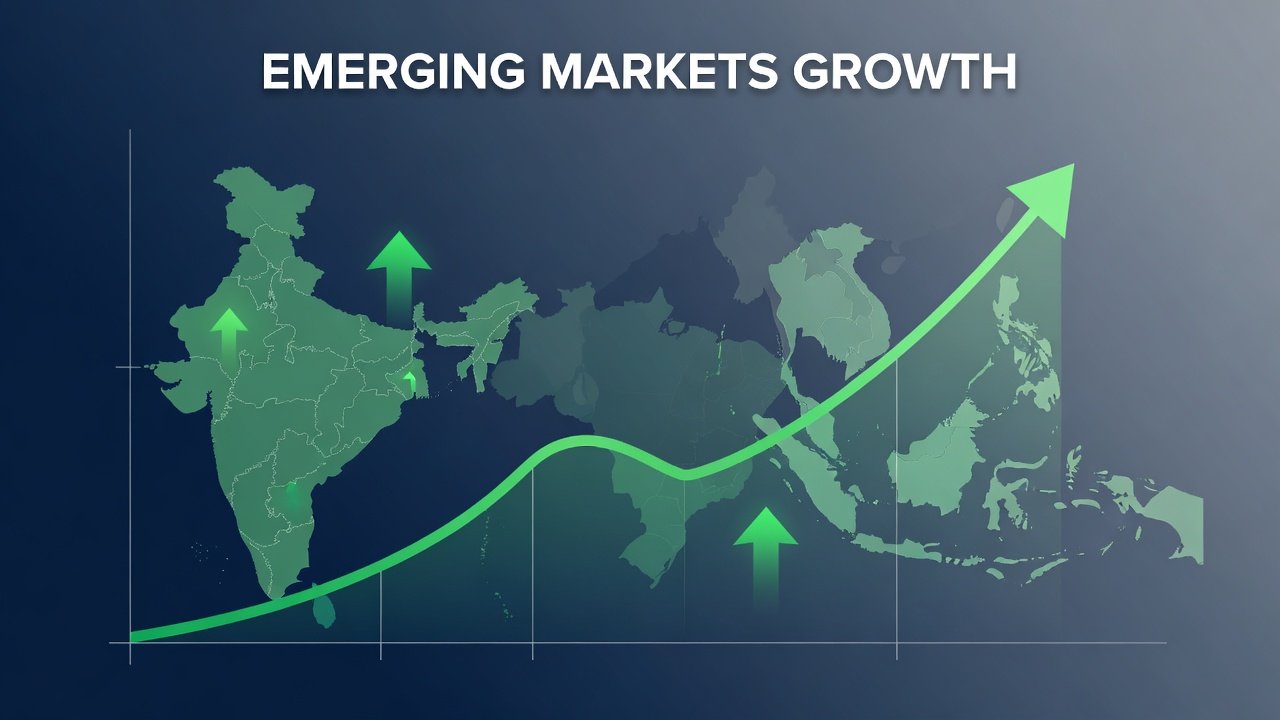
Why India, Brazil, and Southeast Asia Offer Strong 2026 Growth Potential
Emerging markets in Asia and Latin America continue to attract investors seeking higher returns than developed economies. India benefits from digital transformation and infrastructure spending, Brazil from commodity exports and renewable energy shifts, while Southeast Asia leverages supply chain diversification and rising middle-class consumption. These regions show resilient GDP projections heading into 2026, driven by policy reforms and foreign direct investment inflows. Global institutions like the World Bank highlight how structural reforms in these areas support long-term expansion beyond short-term volatility.
Retail investors should focus on companies with strong balance sheets, scalable business models, and exposure to high-growth sectors. This article examines key drivers, provides specific stock examples, and outlines a practical evaluation process that beginners can apply immediately. Understanding regional differences helps avoid common pitfalls such as over-concentration in one market or ignoring local regulatory nuances.
Key Sectors Driving Performance in 2026
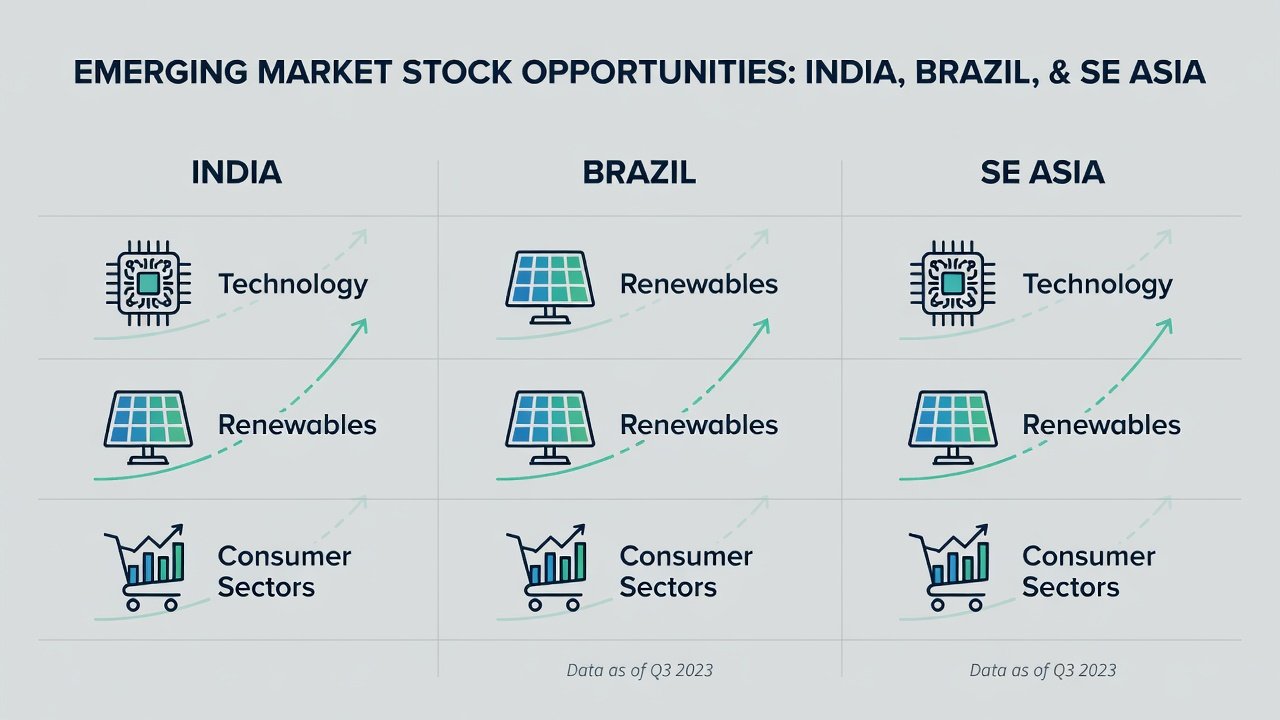
Tech remains a standout across India and Southeast Asia, fueled by AI adoption and e-commerce expansion. Consumer goods benefit from demographic dividends and urbanization in all three regions. Renewables stand out in Brazil and India due to government targets for clean energy and declining technology costs. Performance drivers include favorable interest rate environments, export competitiveness, and regulatory tailwinds. Valuation metrics such as forward P/E ratios and EV/EBITDA help identify undervalued opportunities compared to global peers.
Additional sector momentum comes from electric vehicle supply chains in Brazil and data center buildouts in Southeast Asia. Investors who monitor quarterly earnings and policy announcements gain an edge. The International Monetary Fund regularly updates regional outlooks that can inform sector rotation decisions.
Top Stock Examples Across Regions
Here are seven specific stocks positioned for potential gains in 2026, selected for sector leadership and growth catalysts. Each overview includes business focus, recent performance drivers, and key risks to consider.
India
India's economy continues expanding through services exports and domestic consumption. Two flagship companies illustrate this trend.
- Reliance Industries (NSE: RELIANCE) – Diversified conglomerate with strong positions in telecom, retail, and green energy. Catalyst: Expansion of renewable capacity and 5G rollout that could unlock new revenue streams from enterprise customers and consumer data services.
- Tata Consultancy Services (NSE: TCS) – Leading IT services provider. Catalyst: Demand for digital transformation services in global markets, particularly cloud migration and artificial intelligence implementations for Fortune 500 clients.
Brazil
Brazil offers commodity-linked growth alongside a push toward sustainable energy. Investors should note political cycles that occasionally influence market sentiment.
- Petrobras (NYSE: PBR) – Major oil and gas producer shifting toward renewables. Catalyst: Offshore discoveries and biofuel investments that align with global decarbonization trends while maintaining cash flow from traditional operations.
- Vale (NYSE: VALE) – Leading iron ore and nickel miner. Catalyst: Electric vehicle battery demand boosting nickel output, supported by long-term supply agreements with international automakers.
Southeast Asia
Regional digitalization and infrastructure upgrades create fertile ground for tech and telecom leaders.
- Sea Limited (NYSE: SE) – Singapore-based e-commerce and gaming giant. Catalyst: Regional digital payments growth that increases transaction volumes across its Shopee and Garena platforms.
- PT Telkom Indonesia (NYSE: TLK) – Dominant telecom operator. Catalyst: 5G infrastructure buildout and data center expansion serving both domestic users and regional cloud providers.
- Grab Holdings (NASDAQ: GRAB) – Super-app for ride-hailing and deliveries. Catalyst: Path to profitability and Southeast Asian market consolidation as smaller competitors exit or merge.
Simple Evaluation Framework for Retail Investors
Follow these steps to assess opportunities systematically and reduce emotional decision-making:
- Review macroeconomic indicators such as GDP growth forecasts and currency stability for each country using reputable sources.
- Analyze company financials focusing on revenue growth, profit margins, and debt levels over at least three years.
- Compare valuations using metrics like PEG ratio against sector averages and historical ranges.
- Evaluate catalysts including earnings reports, policy changes, and industry trends that could accelerate earnings.
- Assess risks such as geopolitical tensions or regulatory shifts before allocating capital.
- Determine position sizing based on overall portfolio diversification and personal risk tolerance.
Practical Steps to Get Started Investing in These Markets
Beginners can access these stocks through international brokers offering ADR listings or local exchange access. Start by opening an account with a platform that supports emerging market equities and enables currency conversion. Next, research each company's latest annual report and listen to recent earnings calls. Set price alerts for key catalysts and review holdings quarterly rather than daily. Consider dollar-cost averaging to smooth entry points across volatile periods. Always maintain an emergency fund separate from investment capital.
Comparison Table of Regional Opportunities
| Region | Key Sectors | Primary Catalysts | Risk Factors | Typical Valuation Range |
|---|---|---|---|---|
| India | Tech, Renewables, Consumer | Infrastructure push, digital economy | Inflation, policy changes | Moderate to Premium |
| Brazil | Commodities, Renewables | Export demand, energy transition | Political volatility, commodity prices | Attractive |
| SE Asia | Tech, Consumer, Telecom | Supply chain shifts, urbanization | Currency fluctuations, competition | Moderate |
Risks and Mitigation Strategies
Currency risks arise from local currency depreciation against the USD. Investors can mitigate this through hedging or choosing ADRs listed on major exchanges. Regulatory risks vary by country; staying updated via official sources helps. Portfolio allocation should limit emerging market exposure to 10-20% for most retail investors to balance growth with diversification. Liquidity can also vary, so focus on larger, frequently traded names when building initial positions.
FAQ on Investing in These Markets for 2026
How do currency risks affect returns?
Local currency movements can amplify or reduce USD-denominated gains. Monitoring central bank policies provides early signals and allows timely adjustments.
What regulations should investors watch?
Foreign ownership limits, tax changes, and environmental rules differ across markets. Consulting local compliance resources is advisable before committing larger sums.
How much should be allocated to these stocks?
Beginners may start with 5-15% of a diversified portfolio, adjusting based on risk tolerance and time horizon as familiarity grows.
Are ADRs safer than local shares?
ADRs offer convenience and U.S. regulatory oversight but may carry custody fees and less direct voting rights. Weigh these factors against local market access options.
Conclusion
India, Brazil, and Southeast Asia present compelling opportunities for 2026 through targeted exposure to tech, consumer, and renewable sectors. By applying a structured evaluation framework, following practical implementation steps, and understanding regional nuances, retail investors can position portfolios for potential growth while managing downside risks effectively. Consistent monitoring and disciplined allocation remain essential for long-term success in these dynamic markets.


No comments yet. Be the first!