 Bullish Portfolio

Introduction to 5G Infrastructure Investment Opportunities
As 5G networks continue their global expansion, infrastructure stocks offer compelling opportunities for investors looking beyond AI and semiconductor themes. The rollout of advanced wireless technology is driving demand for towers, fiber optics, and equipment providers, positioning select companies for sustained growth into 2026 and beyond. This article provides a detailed examination of accelerating deployment trends, key players, supply chain dynamics, and practical strategies to evaluate these investments. Unlike semiconductor-focused plays that often tie directly to chip cycles, 5G infrastructure benefits from multi-year network buildouts and recurring service revenues, creating a more stable growth profile for long-term holders.
5G technology enables faster speeds, lower latency, and greater connectivity, fueling applications in smart cities, autonomous vehicles, and industrial automation. Governments and telecom operators are investing heavily, creating tailwinds for infrastructure firms that build and maintain the physical networks. Investors seeking sector-specific exposure will find that infrastructure names often trade on deployment milestones rather than pure technology hype, offering a distinct risk profile compared to broader tech equities.
Accelerating 5G Rollout Trends Through 2026
Global 5G adoption is progressing rapidly, with major markets like the United States, China, and Europe leading the charge. Regulatory support from bodies such as the Federal Communications Commission has streamlined spectrum allocation and infrastructure approvals. By 2026, experts anticipate denser small-cell deployments and expanded coverage in rural areas, boosting revenue for tower operators and equipment suppliers. In the U.S. alone, carriers continue mid-band spectrum auctions that enable faster nationwide coverage, while European nations focus on industrial 5G use cases in manufacturing hubs.
These trends directly influence stock performance. Companies involved in tower leasing and network hardware often see recurring revenue from long-term contracts, providing stability amid market volatility. Investors should monitor deployment metrics from operators to gauge momentum. Additional growth catalysts include the integration of 5G with edge computing and private networks, which require extensive backhaul infrastructure. Emerging markets in Asia and Latin America are also entering accelerated build phases, extending the investment runway well past initial urban rollouts.
Leading Company Profiles in 5G Infrastructure
Several established firms dominate the 5G infrastructure space. Tower companies like American Tower and Crown Castle benefit from leasing space on existing structures to multiple carriers, generating predictable cash flows through multi-year agreements. Equipment providers such as Ericsson and Nokia supply the radios and base stations essential for network upgrades, with Ericsson holding strong positions in North American and European markets. Nokia has emphasized open RAN solutions that appeal to operators seeking vendor diversification.
Innovators focusing on next-generation solutions, including millimeter-wave technology and open RAN architectures, present higher-growth but riskier options. For example, firms specializing in fiber backhaul infrastructure support the increased data demands of 5G. Each profile reveals unique exposure to rollout phases, with tower owners often enjoying more predictable cash flows compared to hardware manufacturers tied to capex cycles. American Tower has expanded its portfolio through international acquisitions, while Crown Castle maintains a heavy U.S. focus on small cells. These differences matter when constructing a diversified basket of 5G infrastructure holdings.
Supply Chain Implications for 5G Stocks
The 5G supply chain spans semiconductors, antennas, fiber cables, and power systems. Disruptions in any segment can affect timelines and costs, influencing stock valuations. Recent global efforts to diversify manufacturing away from single regions have created opportunities for U.S. and European suppliers. Fiber optic cable producers and antenna manufacturers stand to gain as operators scale small-cell installations in dense urban environments.
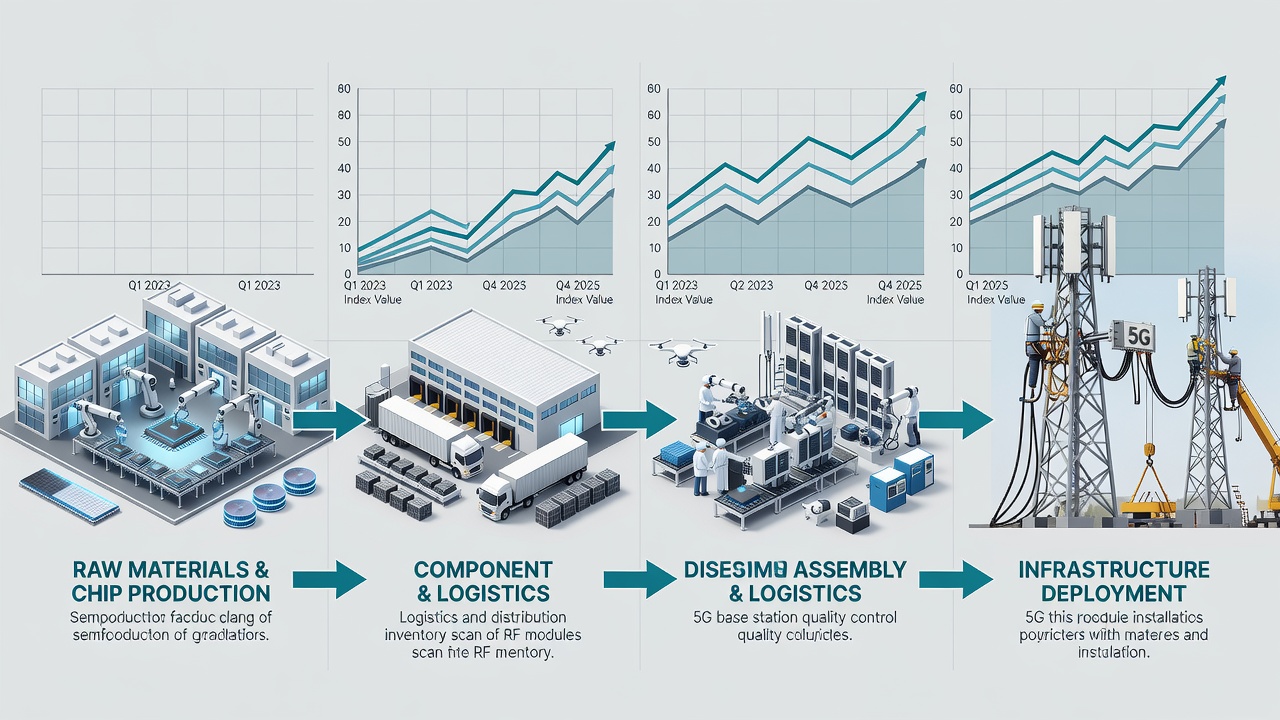
Investors evaluating these stocks should assess exposure to critical components. Companies with robust supplier relationships and vertical integration tend to navigate shortages more effectively. This dynamic underscores the importance of monitoring geopolitical factors and raw material availability through 2026. Supply chain resilience has become a key differentiator, as delays in component sourcing can push back revenue recognition for equipment vendors. Firms that have secured long-term contracts with multiple tier-one suppliers often demonstrate better margin stability during periods of elevated demand.
Risk-Reward Comparison: Established Players vs. Innovators
Established infrastructure companies generally offer lower volatility and dividend yields, appealing to conservative investors. In contrast, innovators in emerging 5G applications may deliver outsized returns but face execution risks and competition from larger players. Tower operators, for instance, benefit from high barriers to entry due to zoning regulations and existing asset footprints, whereas newer entrants in private 5G networking must prove technology differentiation quickly.
A balanced portfolio might combine both categories. Established firms provide downside protection during economic slowdowns, while innovators capture upside from technological breakthroughs. Key risks include regulatory delays, technological obsolescence, and interest rate sensitivity affecting capital-intensive projects. Investors comparing these segments should examine historical performance during past network upgrade cycles to understand how each type of company reacts to shifting capex patterns from major carriers.
Step-by-Step Evaluation Criteria for 5G Infrastructure Stocks
Follow these practical steps to identify promising opportunities:
- Analyze deployment contracts and backlog growth from major telecom operators. Review quarterly filings for signed tower leases or equipment orders that extend into 2026 and beyond.
- Review financial metrics such as free cash flow, debt levels, and recurring revenue percentages. Strong free cash flow generation supports dividend growth and share buybacks in mature infrastructure names.
- Assess technological moats, including patents and partnerships with chipset leaders. Companies holding key 5G spectrum-related intellectual property often maintain pricing power.
- Compare valuation multiples against sector peers and historical averages. Look for companies trading at reasonable enterprise value to EBITDA ratios relative to their growth rates.
- Monitor regulatory developments and spectrum auction outcomes. Positive policy changes can accelerate deployment timelines and lift entire subsectors.
- Evaluate management track records in executing large-scale infrastructure projects. Leadership teams with proven international expansion experience reduce operational risk.
Applying this framework helps distinguish sustainable growth stories from speculative plays. Investors should also consider ESG factors, as tower siting and energy consumption become increasingly scrutinized by regulators and communities.
Portfolio Allocation Strategies for 5G Exposure
Building a position in 5G infrastructure stocks requires thoughtful allocation. Start with core holdings in established tower companies for stability, then layer in selective equipment providers for growth. Dollar-cost averaging over several quarters can smooth entry points during periods of sector volatility. Rebalancing annually helps maintain target weights as individual names outperform or lag. Investors may also consider pairing these stocks with broader telecom ETFs to capture complementary exposure without over-concentration.
Common Investor Concerns: FAQ
How volatile are 5G infrastructure stocks?
Volatility varies by subsector. Tower companies tend to exhibit lower swings due to stable lease agreements, while equipment providers can fluctuate with order cycles. Diversification across the value chain mitigates overall portfolio risk.
What timelines should investors consider for returns?
Meaningful revenue impacts from 5G often materialize over 3–5 years as networks densify. Early movers in infrastructure have already captured initial buildout phases, with 2026 expected to mark mid-cycle acceleration.
Are there macroeconomic risks to watch?
Interest rates, inflation in construction materials, and trade policies can influence project economics. Investors should track indicators from authoritative sources like the GSMA for industry-wide insights.
How do 5G infrastructure stocks perform during recessions?
Many names show relative resilience because of contractual revenue streams, though capital spending cuts by carriers can temporarily pressure equipment suppliers. Tower operators with diversified geographic footprints often weather downturns better than single-market players.
Should investors focus on dividends or growth?
A mix works best. Dividend-paying tower companies provide income, while growth-oriented equipment firms offer capital appreciation potential. Balancing both within a 5G allocation supports total return objectives through 2026.
Conclusion
5G infrastructure stocks represent a focused avenue for bullish growth through 2026, driven by relentless network expansion. By understanding company profiles, supply chain factors, and structured evaluation methods, investors can position themselves effectively while managing inherent risks. This sector rewards those who prioritize long-term fundamentals over short-term hype, offering a clear path for sector-specific allocation beyond traditional tech themes.


No comments yet. Be the first!