 Bullish Portfolio

Introduction to Real Estate Crowdfunding for Long-Term Wealth
Real estate crowdfunding has emerged as a powerful tool for investors seeking accessible paths to financial independence. By pooling resources through online platforms, individuals can participate in property investments that were once reserved for large institutions or wealthy individuals. This guide explores proven tactics for 2026, focusing on compounding returns through strategic selection, diversification, and disciplined execution. Unlike traditional real estate, crowdfunding lowers the entry barrier while offering exposure to residential, commercial, and development projects. Investors benefit from potential rental income, appreciation, and equity returns that compound over time when reinvested wisely. The approach appeals especially to those looking for alternatives to stock market volatility or direct property ownership hassles such as maintenance and tenant management.
Compounding wealth through real estate crowdfunding requires patience and a clear plan. Returns from one project can be reinvested into others, creating a snowball effect where initial capital grows exponentially. In 2026, with evolving economic conditions and technological advancements in platform transparency, this method continues to gain traction among retail investors aiming for steady, long-term gains.
Understanding the Basics of Compounding in Crowdfunding
Compounding occurs when returns are reinvested to generate additional earnings. In real estate crowdfunding, this might involve quarterly distributions rolled back into new projects or using profits to increase stake in high-performing assets. Over five to ten years, consistent reinvestment can significantly accelerate portfolio growth compared to one-time investments. For example, an investor who receives annual distributions and immediately allocates them to new opportunities sees the principal base expand each cycle, leading to larger absolute returns in subsequent periods. This process mirrors traditional compound interest but applies to asset-backed opportunities with tangible underlying properties.
Why 2026 Is an Opportune Time
Market conditions in 2026 favor diversified real estate exposure amid evolving interest rates and urban development trends. Crowdfunding platforms continue to expand offerings in sustainable and multifamily properties, providing fresh opportunities for compounding strategies. Demographic shifts toward urban living and remote work patterns create demand for specific property types, allowing investors to target sectors with resilient cash flows. Additionally, regulatory improvements have enhanced investor protections, making it easier to evaluate deals with greater confidence.
Top Platforms in 2026 and Selection Criteria
Choosing the right platform is foundational. Focus on those with strong track records, transparent fee structures, and diverse deal flow. Evaluate based on minimum investment, historical returns, and investor protections rather than chasing the highest advertised yields. Key factors include platform regulation, project vetting processes, and liquidity options. Always review the latest disclosures before committing capital. Reputable platforms provide detailed financial models, sponsor backgrounds, and ongoing reporting dashboards that help track performance metrics such as occupancy rates and net operating income.
When comparing options, consider the breadth of property categories available and the platform's history of successful exits. Some specialize in debt investments while others focus on equity positions, each carrying different risk-return profiles suitable for various investor goals.
5-Step Implementation Process for 2026
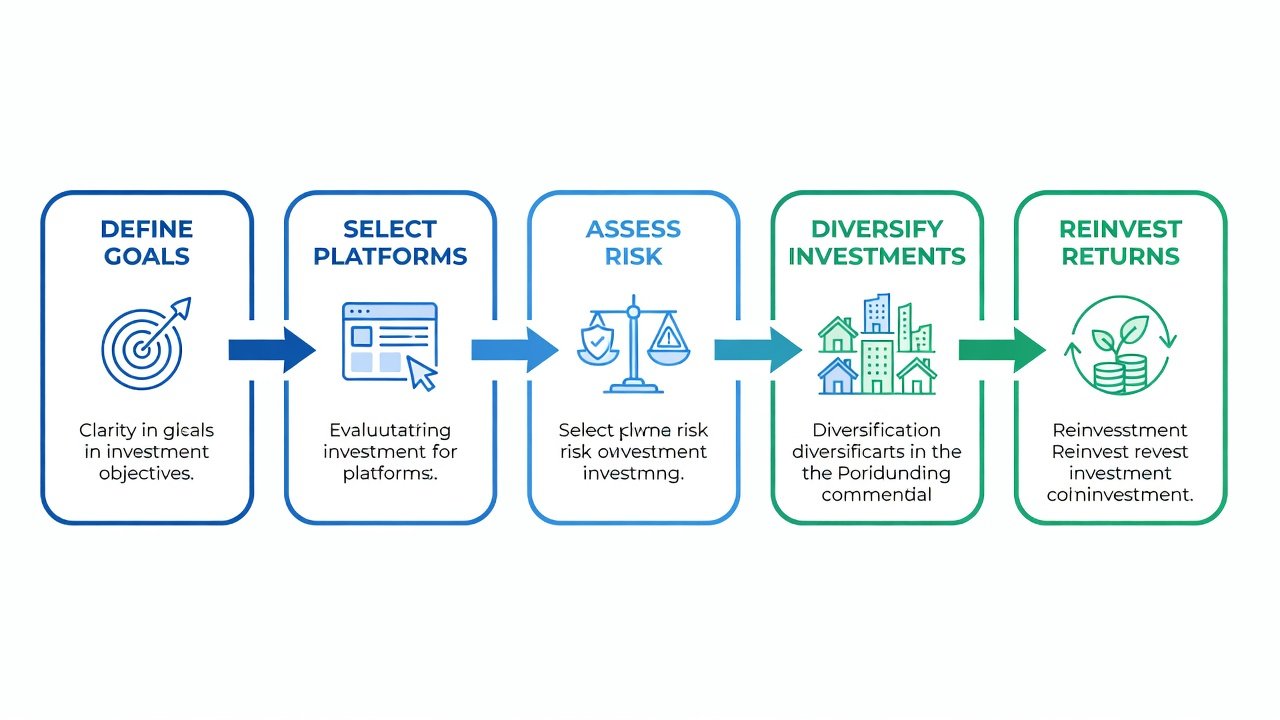
- Define Your Goals and Risk Tolerance: Assess how real estate crowdfunding fits your overall financial plan and timeline for compounding. Start by calculating your available capital and desired allocation percentage relative to other investments like stocks or bonds. Consider time horizons of five years or more to allow compounding to take effect.
- Research and Select Platforms: Compare options using official resources like the U.S. Securities and Exchange Commission for regulatory compliance. Look for platforms registered with appropriate authorities and read user reviews from independent sources to gauge reliability.
- Conduct Risk Assessment: Analyze each deal for location risks, tenant quality, and exit strategies. Review local market reports, economic indicators, and comparable property sales to understand potential downside scenarios.
- Build a Diversified Portfolio: Allocate across property types and geographic regions to mitigate volatility. Begin with smaller positions in multiple deals rather than concentrating capital in one opportunity.
- Monitor, Reinvest, and Adjust: Track performance quarterly and reinvest distributions to harness compounding effects. Set calendar reminders for reviewing statements and rebalancing when certain asset classes outperform or underperform expectations.
Risk Assessment Steps
Effective risk management begins with due diligence. Review sponsor experience, market demographics, and economic indicators. Consider stress-testing scenarios for interest rate changes or vacancy spikes. Liquidity concerns remain a common pitfall; most crowdfunding investments lock capital for 3–7 years, so align commitments with your cash flow needs. Additional steps include examining environmental reports for commercial properties, verifying insurance coverage levels, and understanding the legal structure of each offering. Investors should also evaluate sponsor alignment by checking how much of their own capital is invested alongside yours.
Portfolio Diversification Examples
- 40% multifamily rentals for steady income across different cities
- 30% commercial properties for higher yields in established business districts
- 20% development projects for growth potential in emerging neighborhoods
- 10% international or specialized assets for further spread of geographic risk
This allocation balances stability with upside, allowing returns to compound across cycles. A practical example involves an investor who spreads holdings among three multifamily projects in the Midwest, two office buildings on the coasts, and one mixed-use development, resulting in more consistent distributions even when one sector faces temporary headwinds.
Tax Implications and Strategies
Real estate crowdfunding often generates ordinary income, capital gains, or depreciation benefits. Consult tax professionals to optimize deductions. Resources from the Internal Revenue Service provide guidance on reporting requirements. Depreciation can offset taxable income, enhancing net compounding returns when structured properly. Investors may also encounter pass-through deductions or opportunity zone benefits depending on the deal structure. Keeping detailed records of all distributions and expenses helps maximize legitimate deductions and simplifies annual tax filings. Some platforms offer tax documents in standardized formats that integrate directly with common accounting software.
Real Investor Case Studies
One investor started with modest contributions in 2021 and reinvested all distributions, achieving accelerated portfolio growth by 2026 through consistent platform selection. Another diversified across five deals, reducing downside risk while maintaining strong average annual returns that compounded into meaningful wealth accumulation. A third case involved an investor who focused initially on debt-based crowdfunding before shifting to equity positions after gaining experience, demonstrating how learning curves can lead to refined strategies over time. These examples highlight the importance of patience and adaptability in realizing full compounding potential.
Common Pitfalls and FAQ
How liquid are crowdfunding investments?
Most offerings have limited liquidity; plan for longer holding periods to avoid forced sales at unfavorable times.
What are typical minimum investments?
Many platforms allow entry with amounts accessible to a wide range of investors, supporting gradual portfolio building.
How do I handle market downturns?
Maintain diversification and focus on long-term holding rather than reacting to short-term fluctuations in property values.
Are there hidden fees to watch for?
Always review the full fee schedule including acquisition, management, and disposition fees that can impact net returns.
Can I use retirement accounts for crowdfunding?
Some platforms support self-directed IRAs, enabling tax-advantaged compounding within retirement vehicles.
Conclusion
Real estate crowdfunding offers a practical route to compounding wealth in 2026 when approached with discipline and strategy. By following the outlined steps, assessing risks thoroughly, and reinvesting returns, investors can build lasting financial independence while navigating market conditions effectively.
No comments yet. Be the first!