 Bullish Portfolio
Introduction: Why Timing Matters for Compounding in 2026
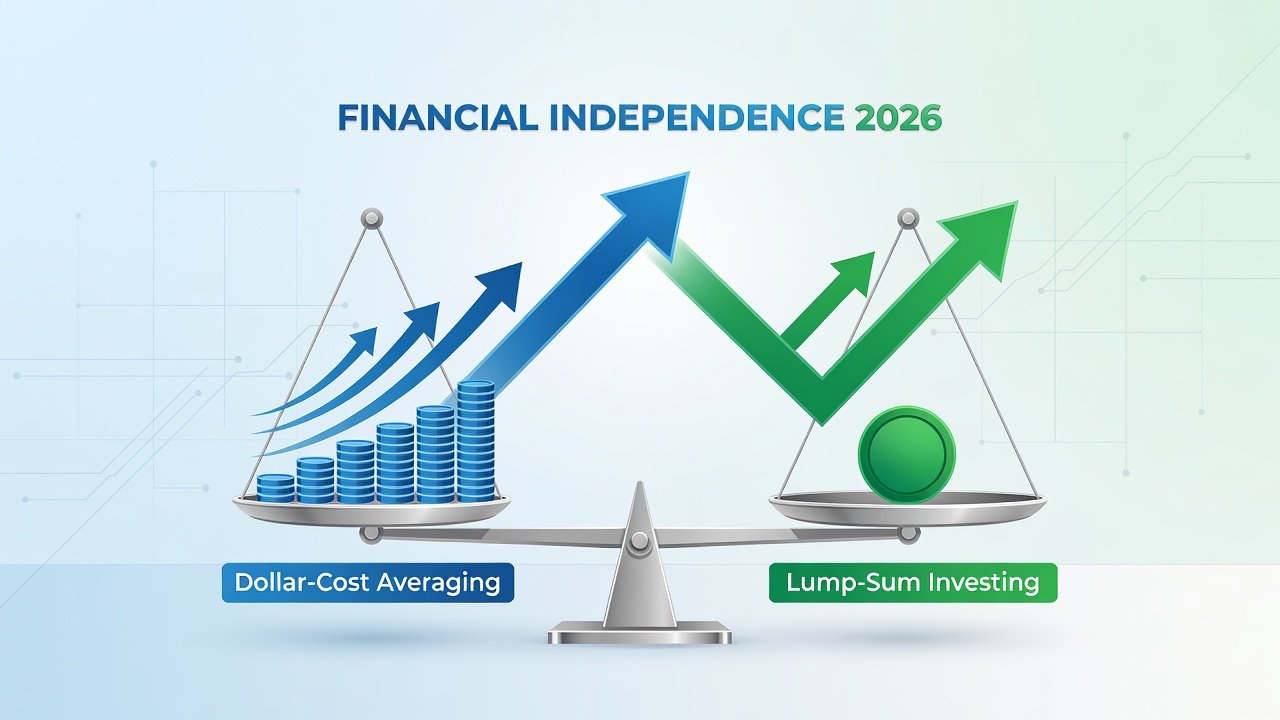
Financial independence (FI) by 2026 requires maximizing every percentage point of return through compounding. Dollar-cost averaging (DCA) and lump-sum investing represent two primary strategies for deploying capital into markets. This guide examines their impact on long-term wealth using historical patterns and forward projections. Investors often wonder whether spreading purchases or committing capital immediately produces superior results. The answer depends on market conditions, risk tolerance, and cash flow realities. Understanding the nuances helps beginners and intermediate investors build portfolios that accelerate wealth accumulation without unnecessary stress.
Compounding works best when capital remains invested for the longest possible time. Any delay in deployment means missed growth opportunities. Yet market volatility can tempt even seasoned investors to pause. Exploring both DCA and lump sum through real data and practical frameworks provides clarity for 2026 planning.
Defining DCA and Lump-Sum Investing
Dollar-cost averaging involves investing fixed amounts at regular intervals regardless of price. This approach removes the pressure of choosing the perfect entry point. Lump-sum investing deploys the entire available capital at once. Both approaches benefit from compounding, but their paths differ significantly in how they interact with market fluctuations.
Core Mechanics of Each Strategy
- DCA reduces the impact of volatility by buying more shares when prices fall and fewer when prices rise.
- Lump sum captures immediate market exposure and avoids the opportunity cost of holding cash in low-yield accounts.
- Hybrid approaches combine elements of both, such as investing a portion immediately and averaging the remainder.
Mathematical Impact on Compounding Returns
Compounding amplifies small differences over time. Historical data from major indices shows lump-sum investing outperforming DCA in roughly 68% of periods, yet DCA provides psychological comfort during downturns. Forward-looking models for 2026 assume moderate equity returns in the 7-9% annualized range after inflation. Consider a hypothetical portfolio over a decade. The difference between consistent monthly contributions and a single upfront investment grows substantially due to the time value of money. Early deployment allows dividends and capital gains to reinvest sooner, creating a snowball effect that becomes pronounced after five years or more.
Investors should model scenarios using expected return rates, contribution frequency, and time horizons. Even modest improvements in average annual return compound into meaningful wealth differences by the target FI date.
Historical Market Data Analysis
Backtests using broad U.S. equity data reveal that lump-sum approaches delivered higher median returns across multiple decades. However, DCA mitigated losses during volatile periods such as 2008 and 2020. These patterns inform expectations for 2026 market environments where valuations remain elevated and economic uncertainty persists. Examining rolling periods of five, ten, and twenty years shows consistent trends favoring immediate investment, yet the standard deviation of outcomes narrows with DCA. This trade-off between expected return and reduced regret forms the basis for personalized strategy selection.
2026 Projections and Forward-Looking Scenarios
With interest rates stabilizing and equity valuations elevated, 2026 may favor disciplined DCA for new capital inflows. Investors should model both strategies under optimistic, baseline, and pessimistic return assumptions. Factors such as corporate earnings growth, geopolitical events, and monetary policy shifts will influence outcomes. Scenario planning helps prepare for environments where markets may stagnate or surge, ensuring the chosen method aligns with overall FI timelines.
Step-by-Step Decision Framework
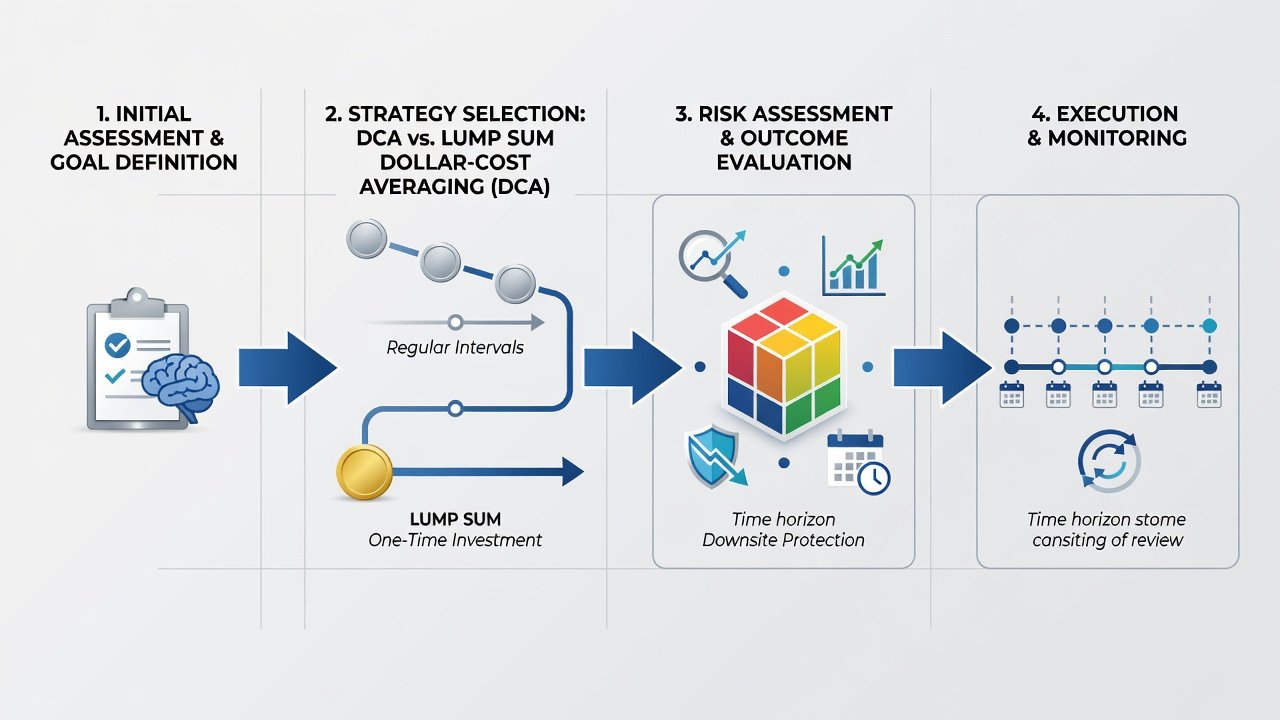
- Assess available capital and time horizon to determine urgency of deployment.
- Evaluate current market valuations using metrics like CAPE ratios and compare to long-term averages.
- Match strategy to risk tolerance and cash flow stability, considering whether income arrives in lumps or steadily.
- Rebalance annually regardless of entry method to maintain target asset allocation.
- Review tax implications of each approach in taxable versus retirement accounts.
Real-World Portfolio Examples
A beginner with steady employment income might allocate a portion of each paycheck into broad index funds over twelve months. This builds discipline while reducing timing anxiety. An intermediate investor receiving a large bonus could deploy the majority immediately into diversified ETFs while averaging a smaller buffer over six months. Another example involves retirees transitioning from accumulation to preservation, where DCA helps manage sequence-of-returns risk during early retirement years. These cases illustrate how personal circumstances dictate optimal choices rather than a universal rule.
Risk Scenarios and Mitigation
Market crashes, prolonged sideways periods, and inflation spikes affect both strategies differently. DCA shines in bear markets by lowering average cost basis, while lump sum excels in strong bull runs by maximizing exposure. Diversification across asset classes remains essential. Mitigation tactics include maintaining emergency reserves outside the investment account, using low-cost index vehicles, and avoiding leverage. Investors should also prepare for behavioral risks such as abandoning DCA during euphoria or panic-selling after a lump-sum deployment.
Simple Calculator Walkthrough
Use an online compound interest tool or spreadsheet. Input initial amount, expected annual return, contribution frequency, and time horizon. Run parallel calculations for both DCA and lump-sum entries to visualize the compounding gap. Adjust variables such as return rates and contribution timing to test sensitivity. This exercise reveals how even small changes in deployment speed influence final portfolio size at the 2026 milestone.
Mistakes to Avoid When Choosing Between DCA and Lump Sum
- Attempting to time the market perfectly instead of following a predetermined plan.
- Ignoring fees and taxes that can erode compounding advantages over time.
- Overlooking emergency fund needs before committing large sums.
- Switching strategies midstream due to short-term market noise.
FAQ: Common Timing Concerns
Should I wait for a market dip before investing?
Timing attempts often reduce long-term compounding. Historical evidence favors staying invested over waiting for perceived bargains.
How does DCA help during high volatility?
Regular purchases average entry prices, lowering the cost basis and smoothing returns across market cycles.
Is lump sum better for large windfalls?
Yes, when the full amount is available immediately and the investor maintains high risk tolerance and a long horizon.
What role does psychology play in strategy selection?
DCA often reduces regret and improves adherence, which matters more than marginal return differences for many individuals.
How frequently should I review my chosen approach?
Annual reviews suffice for most investors unless major life changes occur that alter cash flow or risk capacity.
Conclusion: Choosing the Right Path for 2026 FI
Both DCA and lump-sum strategies support compounding when executed consistently. Select based on personal circumstances rather than attempting to predict short-term market moves. Resources from Investopedia, SEC.gov, and Federal Reserve provide additional educational depth for implementation and ongoing education.
No comments yet. Be the first!