 Bullish Portfolio
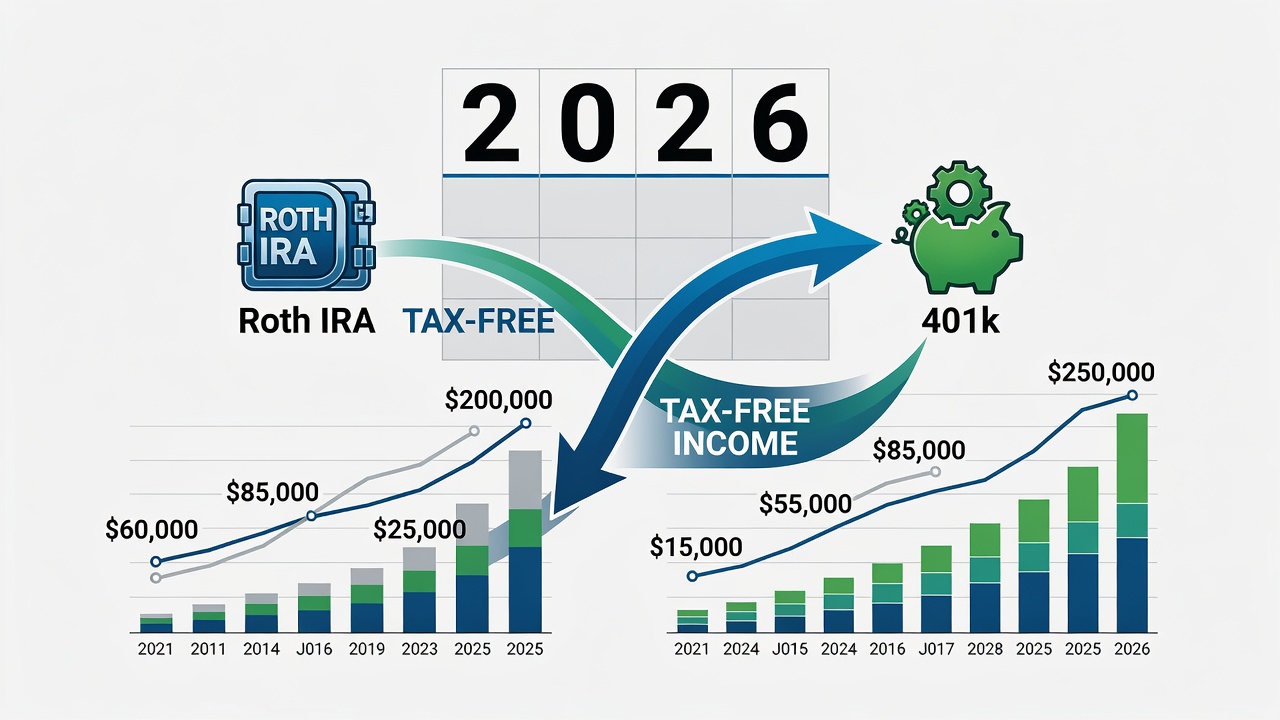
Introduction to 2026 Roth IRA and 401(k) Withdrawal Planning
Retirees planning income streams in 2026 can significantly reduce their lifetime tax burden by mastering withdrawal strategies from Roth IRAs and traditional 401(k)s. These accounts offer powerful tax advantages, but the order in which you tap them matters greatly. A thoughtful sequence protects growth in Roth accounts, satisfies IRS rules on required minimum distributions, and keeps you in lower tax brackets. This comprehensive guide explores every critical element, from qualified distribution requirements to real-world examples across different income levels.
Qualified Distribution Rules for Roth Accounts
Qualified distributions from Roth IRAs and designated Roth portions of 401(k)s are entirely tax-free and penalty-free. To qualify, you must meet two tests: first, you must be at least age 59½, and second, the Roth account must have been open for five tax years. Contributions can always be withdrawn tax-free at any time because they were made with after-tax dollars. Earnings, however, require both conditions to be satisfied. Understanding these rules prevents costly mistakes when funding retirement expenses.
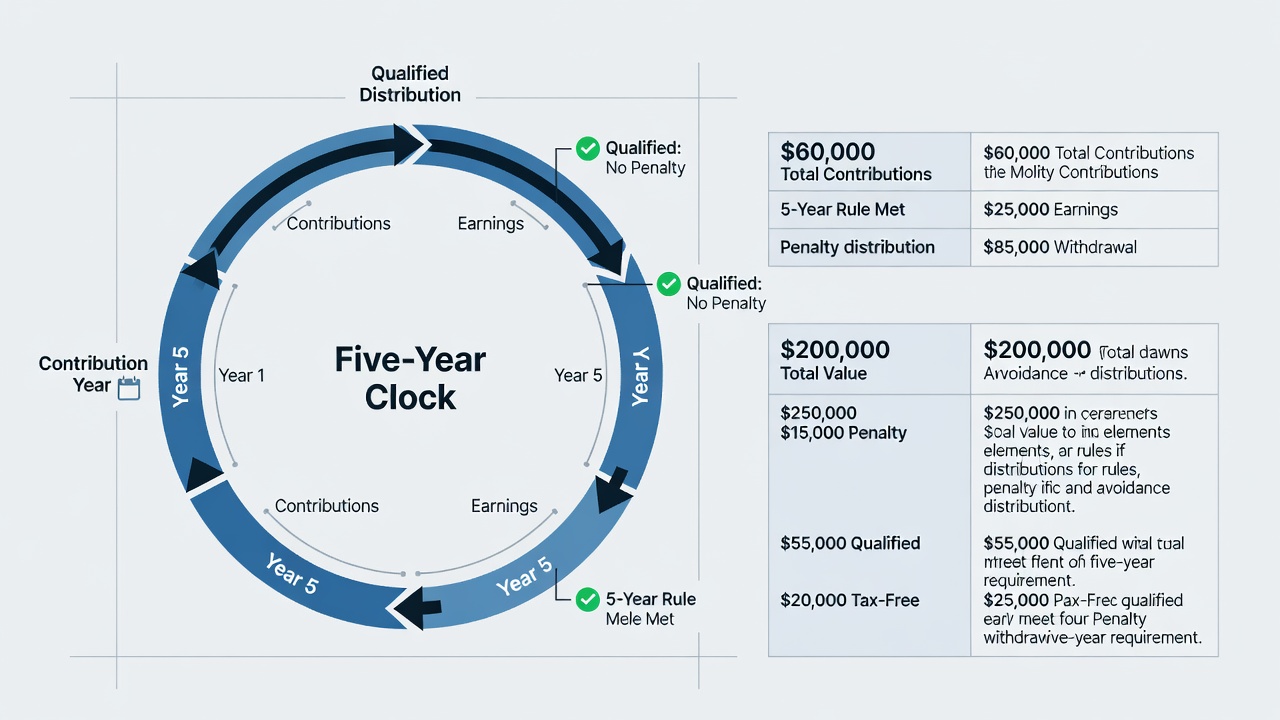
Understanding the Five-Year Clocks
Every Roth conversion carries its own five-year clock that determines when converted amounts can be accessed without the 10% early withdrawal penalty. If you convert funds in 2026, the five-year period begins January 1, 2026, and ends December 31, 2030. Multiple conversions mean tracking several clocks simultaneously. For example, a 2024 conversion clock ends in 2028 while a 2026 conversion clock ends in 2030. Proper record-keeping ensures you never accidentally trigger penalties on earnings or converted principal before the clock expires.
Optimal Account Withdrawal Sequence
The recommended withdrawal order starts with taxable brokerage accounts, moves to traditional 401(k) or IRA funds only up to the top of your current tax bracket, and reserves Roth accounts for later years. This sequence minimizes taxes while allowing Roth balances to compound tax-free for as long as possible. Spending from taxable accounts first also resets capital gains annually at potentially lower rates. Delaying Roth withdrawals preserves the account for years when other income sources are reduced or when large medical expenses arise.
Managing RMDs on Traditional 401(k)s
Required minimum distributions from traditional 401(k)s begin at age 73 for individuals born between 1951 and 1959 and at age 75 for those born in 1960 or later. The first RMD must be taken by December 31 of the year you reach the required age. Calculating the correct amount involves dividing the prior year-end account balance by the IRS life expectancy factor. Missing or under-withdrawing triggers a 25% excise tax that can be reduced to 10% if corrected within two years. Strategic Roth conversions in prior low-income years can shrink future RMDs dramatically.
Strategic Roth Conversions
Executing Roth conversions during years when taxable income sits in lower brackets permanently removes assets from the RMD system. For instance, a retiree with $60,000 in projected income might convert enough to reach the top of the 12% bracket without entering the 22% bracket. The converted amount becomes available tax-free after five years, and all future growth occurs without taxation. This tactic is especially powerful in years before Social Security or pension income begins.
Step-by-Step 2026 Withdrawal Calendar
- January through March: Gather year-end statements, project taxable income, and decide on any Roth conversions before markets move significantly.
- April through June: Complete conversions and begin modest withdrawals from taxable accounts to cover living expenses while monitoring bracket thresholds.
- July through September: Take partial RMDs if asset values have risen, allowing rebalancing opportunities within the traditional 401(k).
- October through December: Finalize all withdrawals, confirm RMD compliance, and review the following year’s projected income for early conversion planning.
Early vs. Delayed Access Scenarios
Accessing Roth contributions early avoids penalties but forgoes future tax-free growth. A retiree needing $25,000 for a one-time expense before age 59½ can withdraw contributions penalty-free. In contrast, delaying withdrawals until later years lets the account grow substantially. Comparing scenarios shows that patients who wait often enjoy larger tax-free estates, while those with immediate needs benefit from the flexibility of contribution withdrawals.
Avoiding Net Investment Income Tax
The 3.8% Net Investment Income Tax applies when modified adjusted gross income exceeds $200,000 for single filers or $250,000 for married couples filing jointly. Careful timing of traditional 401(k) withdrawals and Roth conversions can keep income below these thresholds. Pairing this strategy with tax-loss harvesting in taxable accounts further reduces exposure to the additional tax.
Real-World Tax Bracket Examples
Consider a married couple filing jointly with $85,000 in projected 2026 taxable income. They could withdraw $15,000 from a traditional 401(k) to stay within the 12% bracket, then draw the remainder from Roth accounts. Another example involves a single filer at $55,000 income who converts $20,000 to Roth while remaining in the 12% bracket, lowering future RMDs. These examples illustrate how bracket management creates lasting tax savings.
Common Mistakes to Avoid
- Ignoring separate five-year clocks on each conversion, leading to unexpected penalties.
- Taking RMDs from Roth accounts unnecessarily instead of traditional accounts first.
- Failing to coordinate withdrawal timing with Social Security claiming decisions.
- Overlooking state-level tax rules that may differ from federal treatment.
- Neglecting to rebalance portfolios after large withdrawals or conversions.
Additional Considerations for 2026
Market volatility can affect the optimal timing of asset sales within taxable accounts. Retirees should maintain a cash buffer to avoid selling during downturns. State income taxes also vary widely; some states conform to federal Roth rules while others do not. Finally, healthcare costs and long-term care planning often influence whether to accelerate Roth conversions before Medicare premiums rise with income.
FAQ
Can I withdraw Roth contributions penalty-free before age 59½?
Yes. Contributions may be withdrawn at any time without taxes or penalties because they were funded with after-tax dollars.
What happens if I miss an RMD deadline?
The IRS assesses a 25% excise tax on the shortfall amount. Correcting the error within two years reduces the penalty to 10%. Official details are available at IRS.gov.
Are Roth 401(k) accounts subject to RMDs?
Yes, unless the plan permits an in-plan rollover to a Roth IRA, which eliminates future RMD requirements on the rolled-over balance.
How do Roth conversions affect Medicare premiums?
Conversions increase modified adjusted gross income and can raise Medicare Part B and D premiums two years later through IRMAA surcharges.
Can I reverse a Roth conversion?
Recharacterizations are no longer permitted after 2017, making conversion decisions permanent.
Conclusion
Mastering 2026 withdrawal strategies from Roth IRAs and 401(k)s requires attention to distribution rules, five-year clocks, RMD management, and bracket planning. By following a disciplined sequence and using conversions strategically, retirees can generate reliable tax-free income while minimizing lifetime taxes. Resources such as IRS.gov and SSA.gov provide additional official guidance. Professional advice tailored to individual circumstances remains essential for optimal results.


No comments yet. Be the first!