 Bullish Portfolio

Introduction to RMD Management in 2026
Required minimum distributions (RMDs) from traditional 401(k)s and IRAs can significantly increase taxable income during retirement. For 2026, proactive planning with Roth IRAs and coordinated account strategies offers powerful ways to minimize these impacts. This guide provides actionable steps to lower your overall tax burden while maintaining compliance with IRS rules. Retirement savers who understand the interplay between account types can preserve more wealth by shifting assets strategically before mandatory withdrawals begin.
2026 Contribution Rules and Their Impact on RMDs
Understanding contribution limits helps set the stage for long-term RMD reduction. Roth accounts grow tax-free, meaning future distributions avoid taxation. Traditional accounts, however, trigger RMDs starting at age 73 for most individuals. Coordinating contributions between account types allows for better control over future taxable income. Individuals should evaluate whether maximizing Roth contributions now reduces the size of future taxable accounts subject to RMDs. Backdoor Roth strategies remain available for high earners who exceed direct contribution income limits, providing another avenue to build tax-free growth.
How RMD Calculations Work for Different Age Brackets
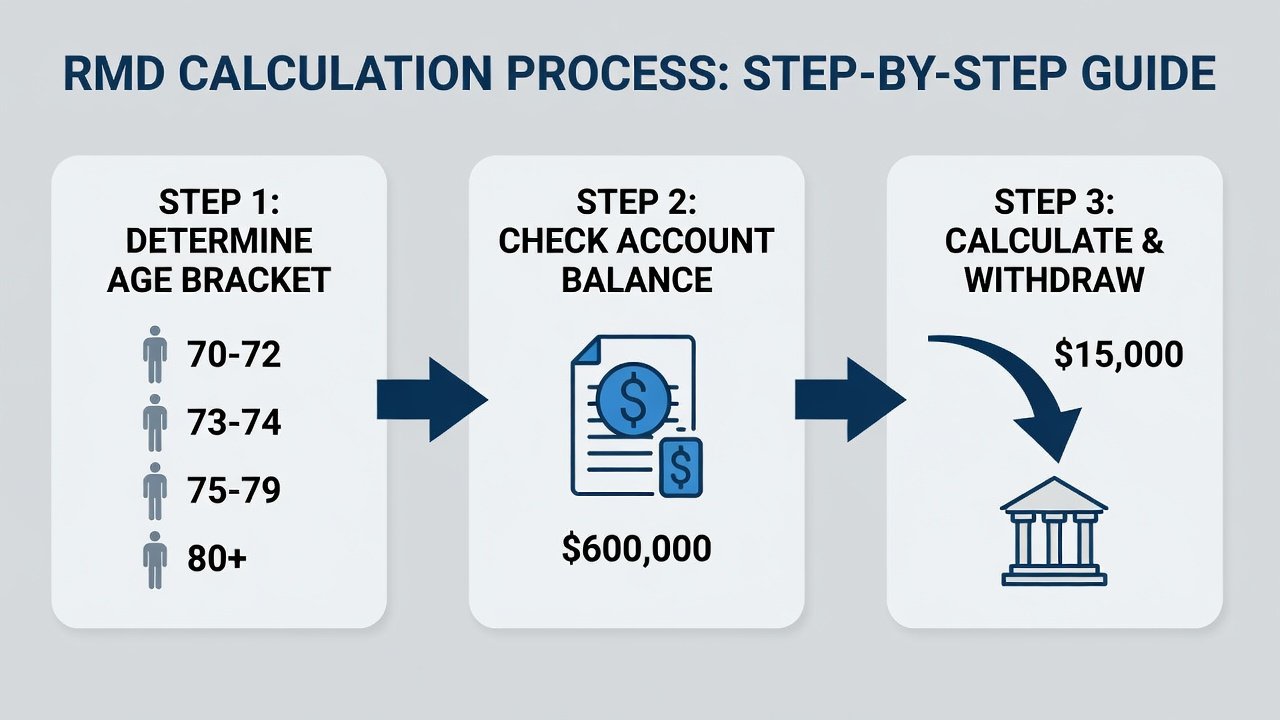
RMDs are calculated by dividing the account balance by a life expectancy factor from IRS tables. For example, someone age 73 uses one factor while those 75 or older apply a different one. Roth IRAs have no RMDs during the owner's lifetime, making them ideal for legacy planning. Traditional 401(k) owners must begin withdrawals or face penalties. The Uniform Lifetime Table applies to most unmarried owners and married owners whose spouses are not more than ten years younger. Separate tables exist for beneficiaries and owners with much younger spouses. Accurate calculations require using the prior year-end balance and the correct factor for your exact age in the distribution year.
Strategic Roth Conversions to Lower Future RMDs
Converting portions of traditional accounts to Roth IRAs before RMD age can reduce the balance subject to mandatory withdrawals. Timing these conversions during lower-income years minimizes immediate tax costs while shrinking future RMDs. Consider spreading conversions over multiple years to stay in favorable tax brackets. Partial conversions also allow you to manage the impact on Medicare premiums and Social Security taxation. After conversion, the five-year rule applies to each converted amount for penalty-free access, but the converted principal itself is never subject to RMDs for the original owner.
Using Qualified Charitable Distributions (QCDs) Effectively
QCDs allow direct transfers from IRAs to qualified charities, counting toward RMDs without adding to taxable income. This strategy works well for individuals who itemize deductions or support causes regularly. QCDs are especially useful after age 70½ and can satisfy RMD requirements without increasing reported income. The maximum annual QCD amount is indexed for inflation, and funds must transfer directly from the IRA custodian to the charity. Keeping records of each QCD ensures proper reporting on Form 1099-R and your tax return.
Coordinating Withdrawals Across Multiple Accounts
Aligning withdrawals from traditional, Roth, and taxable accounts helps manage taxable income. Prioritizing Roth distributions or taxable account sales in certain years can keep you below Medicare IRMAA thresholds or Social Security taxation limits. A coordinated plan often yields better results than treating each account in isolation. For married couples, consider the timing of spousal RMDs when one partner reaches the required age first. Taxable brokerage accounts can serve as a buffer to fill lower tax brackets before tapping retirement accounts.
Step-by-Step RMD Reduction Checklist
- Review all retirement account balances and projected RMD dates across every traditional IRA and 401(k).
- Calculate potential tax impact of upcoming RMDs using current brackets and project Medicare premium surcharges.
- Schedule Roth conversions during low-income periods such as early retirement years or years with capital losses.
- Identify charitable giving goals and set up QCDs where beneficial to satisfy RMDs tax-efficiently.
- Coordinate annual withdrawal sequences across accounts to optimize tax brackets and avoid IRMAA cliffs.
- Consult a tax professional for personalized modeling that incorporates state taxes and estate planning goals.
- Reassess the plan annually as rules and personal circumstances change, including updates to life expectancy tables.
- Document all conversions and QCDs with custodian statements for accurate IRS reporting.
Real-World Case Examples
Consider a retiree aged 74 with a $600,000 traditional IRA. By completing partial Roth conversions over three years, they reduced their RMD by 25% and lowered lifetime taxes. Another example involves a couple using QCDs to fulfill $15,000 in annual charitable commitments while avoiding inclusion of that amount in taxable income. A third scenario features a 68-year-old who began systematic conversions during a period of reduced work income, resulting in RMDs that stayed entirely within the 12% federal bracket upon reaching age 73.
Common Pitfalls and How to Avoid Them
- Ignoring the five-year rule on conversions, which can trigger unexpected taxes if distributions occur too soon.
- Failing to coordinate spousal accounts when one partner reaches RMD age first, leading to unnecessary taxable income spikes.
- Overlooking state tax implications alongside federal rules, especially in states that do not conform to federal treatment of Roth conversions.
- Delaying planning until RMDs begin, limiting available options and increasing the risk of higher tax brackets.
- Miscalculating life expectancy factors or using the wrong IRS table for your situation.
Frequently Asked Questions
Can I avoid RMDs entirely with Roth accounts?
Roth IRAs do not require lifetime distributions for the original owner, though beneficiaries face RMD rules after inheritance.
Are QCDs available from 401(k) plans?
QCDs are limited to IRAs, though some plans allow in-plan rollovers to IRAs first to enable the strategy.
How do RMDs affect Medicare premiums?
Higher taxable income from RMDs can increase IRMAA surcharges; strategic planning helps mitigate this impact on Part B and Part D costs.
What happens if I miss an RMD deadline?
The IRS imposes a 25% excise tax on the shortfall, reducible to 10% if corrected promptly, making timely planning essential.
Can I take more than the RMD amount?
Yes, you may withdraw additional funds, but extra amounts are still taxable and may push you into higher brackets or affect other benefits.
Conclusion
Effective RMD management in 2026 combines Roth conversions, QCDs, and thoughtful withdrawal sequencing. Implementing these tactics early provides greater control over retirement taxes and preserves more wealth for heirs or personal use. Start reviewing your accounts today to build a customized reduction strategy. For official guidance, visit IRS.gov, Medicare.gov, and SSA.gov.

No comments yet. Be the first!