 Bullish Portfolio
Introduction to Diversified Portfolios in 2026
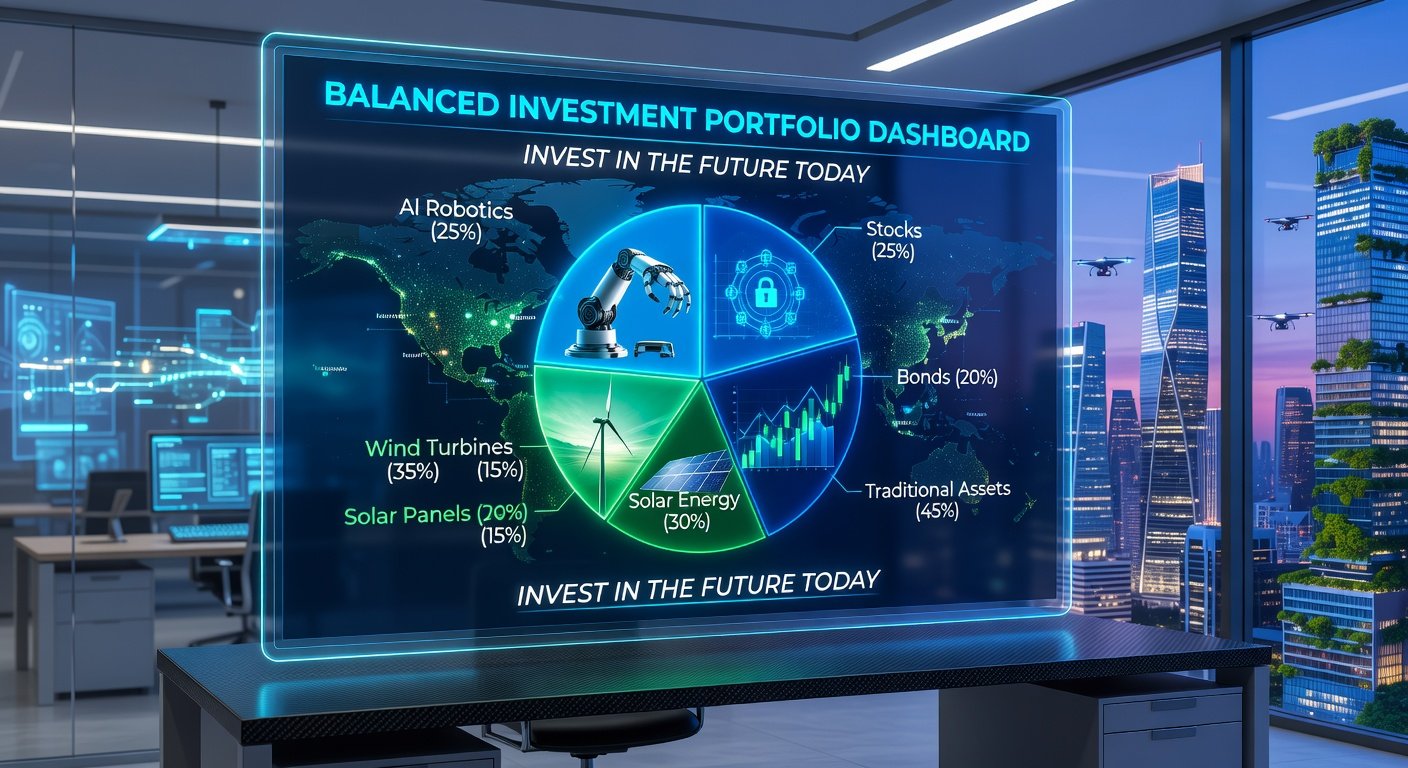
Building a diversified portfolio is the cornerstone of smart investing, spreading risk across assets to maximize returns while minimizing losses. As we approach 2026, trends like AI-driven assets and green energy are reshaping the landscape. AI technologies promise explosive growth in automation and data analytics, while green energy—think solar, wind, and hydrogen—rides the wave of global sustainability mandates.
This beginner-friendly guide walks you through step-by-step portfolio construction, risk assessment, sector balancing, and annual rebalancing. Whether you're new to investing or refining your strategy, these tips incorporate 2026 forecasts for resilient wealth building.
Step 1: Assess Your Risk Tolerance and Goals
Before diving in, evaluate your risk profile. Are you conservative (prefer stability), moderate (balanced growth), or aggressive (high-reward seeker)? Tools like Vanguard's Investor Questionnaire or Personal Capital's risk analyzer make this easy.
- Conservative: 60-80% bonds/fixed income, 20-40% equities.
- Moderate: 50% equities, 30% bonds, 20% alternatives.
- Aggressive: 70-90% equities/alternatives, 10-30% bonds.
Set clear goals: retirement in 10 years? Emergency fund growth? Use the SMART framework (Specific, Measurable, Achievable, Relevant, Time-bound). For 2026, factor in inflation at 2-3% and potential Fed rate cuts boosting equities.
Step 2: Choose Core Asset Classes
A diversified portfolio typically includes stocks, bonds, ETFs, real estate, and alternatives. Allocate based on risk:
- Equities (40-60%): Broad index funds like S&P 500 ETFs (VOO).
- Bonds (20-40%): Treasuries or corporate bond ETFs (BND).
- Alternatives (10-20%): REITs, commodities.
Incorporate 2026 trends:
- AI-Driven Assets: Invest in ETFs like BOTZ (Global X Robotics & AI) or ARKQ (ARK Autonomous Tech). Expect 20-30% CAGR as AI integrates into healthcare, finance, and manufacturing.
- Green Energy: ICLN (iShares Global Clean Energy) or TAN (solar-focused). With EU Green Deal expansions and U.S. IRA incentives, this sector could surge 15-25% annually.
Step 3: Balance Sectors for Optimal Diversification
Sector balancing prevents overexposure. Aim for:
| Sector | Allocation (%) | 2026 Trend Example |
|---|---|---|
| Technology/AI | 15-25 | NVDA, QQQ |
| Energy/Green | 10-20 | ICLN, ENPH |
| Healthcare | 10-15 | XLV ETF |
| Consumer/Finance | 20-30 | Vanguard Value (VTV) |
| Defensives (Utilities) | 10-15 | XLU |
Use tools like Morningstar Portfolio X-Ray or Yahoo Finance's asset allocation scanner to visualize and adjust.
Step 4: Implement Risk Assessment Techniques
Risk isn't just volatility—it's also correlation. Diversify to ensure assets don't move in sync.
- Standard Deviation: Measure volatility; target under 12% for moderate portfolios via Portfolio Visualizer.
- Sharpe Ratio: Aim for >1 (return per risk unit). Backtest with AI/green tilts using Finbox.
- Stress Testing: Simulate recessions or AI bubbles bursting with tools like Thinkorswim.
Beginner example: A $10,000 moderate portfolio—$4,000 VOO (broad stocks), $2,000 BND (bonds), $1,500 BOTZ (AI), $1,500 ICLN (green), $1,000 VNQ (REITs). Correlation matrix shows low overlap between AI and green energy.
Step 5: Execute with Beginner-Friendly Tools and Examples
Leverage low-cost platforms:
- Brokerages: Fidelity, Schwab—commission-free ETFs.
- Robo-Advisors: Betterment or Wealthfront auto-diversify with AI/green options.
- Apps: Acorns for micro-investing, M1 Finance for pie-based portfolios.
Example Portfolio for Beginners ($50,000 investment):
- 30% S&P 500 ETF (SPY): $15,000
- 20% Total Bond (BND): $10,000
- 15% AI ETF (IRBO): $7,500
- 15% Green Energy (QCLN): $7,500
- 10% International (VXUS): $5,000
- 10% Gold/Commodities (GLD): $5,000
Projected 2026 return: 8-12% annually, per historical trends adjusted for growth sectors.
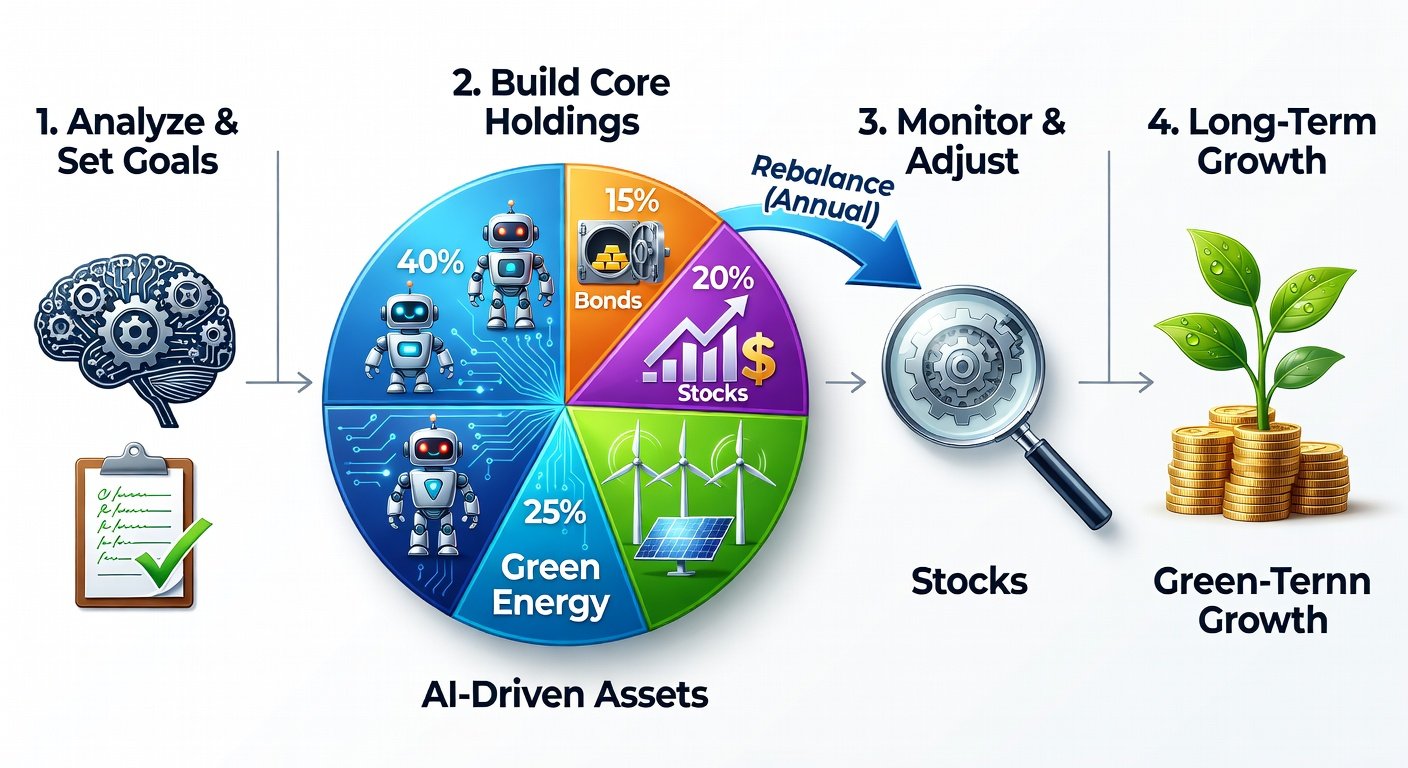
Step 6: Annual Rebalancing Strategies
Markets shift—rebalance yearly or when allocations drift 5-10%.
- Calendar Rebalancing: January 1st review.
- Threshold Rebalancing: Sell winners, buy laggards (e.g., if AI surges to 30%, trim to 20%).
- Tax-Loss Harvesting: Offset gains; use robo-advisors for automation.
Tool tip: Excel with GOOGLEFINANCE formulas or ETF.com's rebalancer. Example: Post-2025 AI boom, rebalance by selling 5% BOTZ into underweight green energy.
Common Pitfalls and Pro Tips
Avoid emotional trading. Stick to your plan amid 2026 hype around quantum AI or fusion energy. Monitor via Bloomberg app or Seeking Alpha newsletters.
- Start small: Paper trade on Investopedia simulator.
- Diversify globally: 20% emerging markets for green tech exposure.
- Stay educated: Follow ARK Invest for AI insights, BloombergNEF for energy.
Conclusion: Your Path to 2026 Wealth
Building a diversified portfolio with AI and green energy trends positions you for the future. Follow these steps, use the tools, and rebalance diligently for long-term success. Start today—your future self will thank you.
No comments yet. Be the first!