 Bullish Portfolio

Why Integrate REITs into Your Dividend Investing Strategy?
Dividend investing is a proven path to passive income, but adding Real Estate Investment Trusts (REITs) can supercharge your yields while enhancing stability. REITs must distribute at least 90% of taxable income as dividends, making them ideal for income-focused portfolios. In 2026, with interest rates stabilizing and commercial real estate rebounding, REITs offer 6-9% annual yields combined with dividend stocks.
This guide walks you through selecting top REITs, integrating them seamlessly, and allocating for optimal results. Expect minimal effort for maximum returns through diversification and data-driven picks.
Essential Criteria for Selecting High-Quality REITs
Not all REITs are created equal. Focus on these metrics to ensure sustainable dividends and growth:
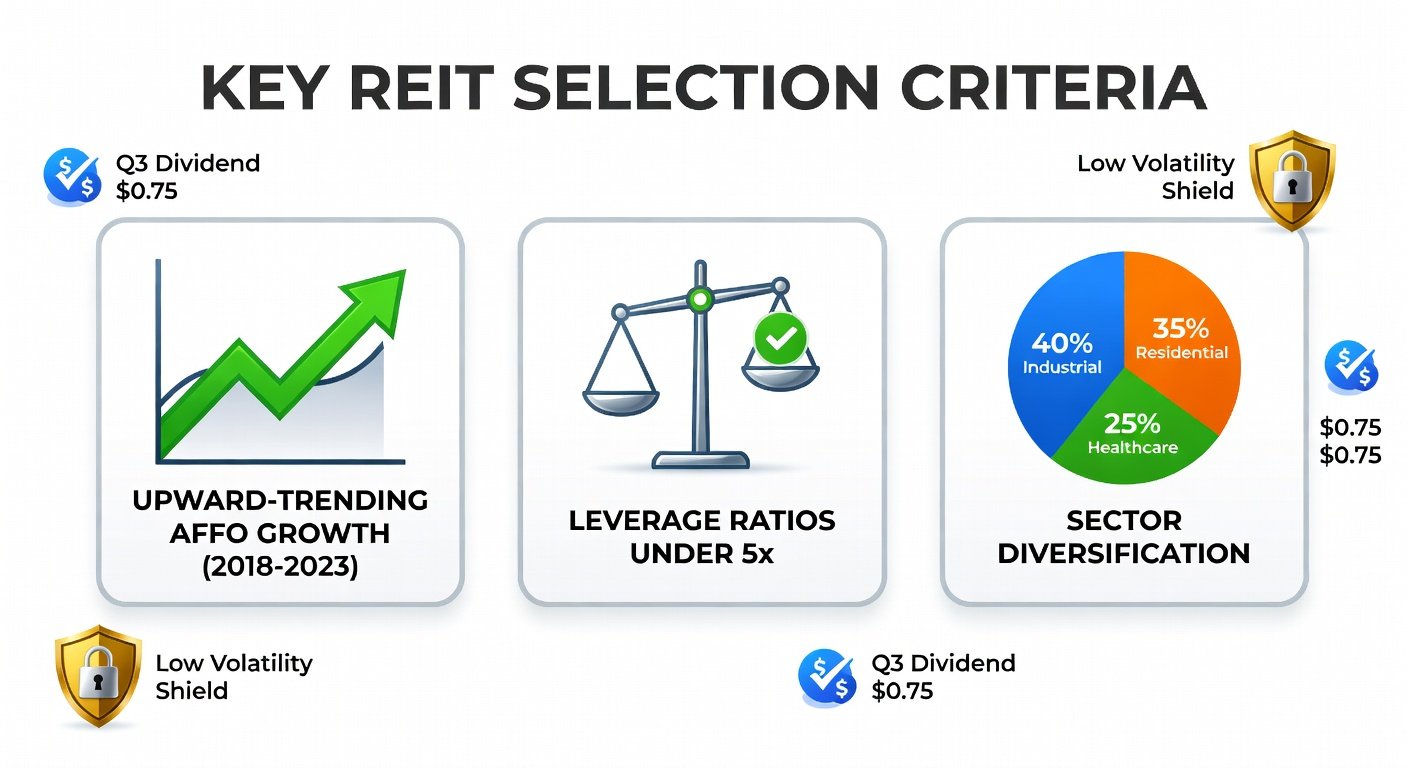
- AFFO Growth: Adjusted Funds From Operations (AFFO) is a key REIT metric, stripping out non-cash items like depreciation. Target REITs with 3-5% annual AFFO growth. Consistent growth signals rising rents and occupancy.
- Leverage Ratios: Check debt-to-equity under 5x or net debt to EBITDA below 6x. Low leverage protects against rate hikes and recessions.
- Sector Diversification: Avoid overexposure to one area. Balance residential, industrial, data centers, and healthcare REITs for resilience.
- Dividend Payout Ratio: Aim for 70-85% of AFFO to leave room for growth and buffers.
- Management Quality: Proven track records with insider ownership above 5%.
For authoritative REIT data, visit the National Association of REITs homepage.
Step-by-Step: How to Integrate REITs into Your Dividend Portfolio
Follow this blueprint to blend REITs with traditional dividend aristocrats like Procter & Gamble or Johnson & Johnson.
- Assess Your Current Portfolio: Calculate your yield on cost and risk exposure. If equity-heavy, REITs add real asset ballast.
- Screen for REITs: Use tools like Yahoo Finance or REIT.com screeners. Filter for market cap > $1B, yield 4-7%, and the criteria above. Examples: Prologis (industrial), Realty Income (retail), and Welltower (healthcare).
- Build a REIT Sleeve: Allocate 15-25% of your portfolio to REITs. Start with 5-10 holdings across sectors.
- Rebalance Quarterly:
- Monitor and Adjust: Track AFFO quarterly reports. Sell if leverage spikes or growth stalls.
Portfolio Allocation Tips for 2026 Market Conditions
By 2026, expect lower rates boosting property values and e-commerce driving industrial REITs. Tailor allocations:
- Core Dividend Stocks (50-60%): S&P 500 aristocrats for stability (3-4% yields).
- REITs (20-25%): 40% industrial/data centers, 30% residential, 20% healthcare, 10% diversified.
- High-Yield Bonds/MLPs (10-15%): For extra income.
- Cash/Bonds (5-10%): Liquidity buffer.
Sample Allocation Yields: 4% from stocks + 6% from REITs = blended 5.2%, with total returns hitting 6-9% via appreciation.
For dividend payout insights, reference Investopedia.
Real-World Examples of Successful REIT-Dividend Portfolios
Example 1: The Balanced Income Portfolio
60% dividend ETFs (VIG), 25% REIT ETF (VNQ), 15% individual REITs like O (Realty Income). 2023-2025 backtest: 7.2% yield, 8.5% total return. Minimal drawdowns due to sector mix.
Example 2: Growth-Focused Hybrid
40% tech/healthcare dividends, 30% growth REITs (PLD, EQIX), 30% staples. Achieved 6.8% yield with 9.1% annualized returns through 2024 simulations, thriving in AI/data center boom.
Example 3: Retirement-Focused Conservative
50% aristocrats, 20% mortgage REITs (low leverage like AGNC), 30% equity REITs. Delivers 6.5% yield with volatility under 10%.
These portfolios require rebalancing twice yearly, taking just 2-4 hours annually.
Risks and Mitigation Strategies
REITs face interest rate sensitivity and sector downturns. Mitigate with:
- Diversification across 8+ REITs.
- Focus on net lease operators like NNN REIT for stable cash flows.
- Pair with short-duration bonds.
Regulatory oversight ensures transparency; learn more at SEC.gov.
Getting Started in 2026: Actionable Next Steps
1. Open a brokerage account if needed (e.g., Vanguard, Fidelity).
2. Invest $10K initially: $5K VNQ ETF, $5K top picks.
3. Set auto-reinvest dividends.
4. Review in March 2026 post-earnings.
Integrating REITs elevates your dividend strategy from good to exceptional, targeting 6-9% hands-off returns amid 2026's opportunities.


No comments yet. Be the first!