 Bullish Portfolio

Introduction to Healthcare REITs for Passive Income
Healthcare REITs offer investors a specialized avenue for generating stable passive income through dividends in 2026. These real estate investment trusts own and operate properties such as hospitals, medical offices, senior housing, and life science facilities. Unlike broader REIT categories, healthcare REITs benefit from resilient demand driven by long-term demographic trends, making them attractive for those seeking consistent yields without excessive volatility. Investors appreciate the sector's defensive characteristics, which stem from the non-discretionary nature of healthcare services that remain essential regardless of economic conditions.
As the population ages, the need for healthcare infrastructure grows steadily. This creates a defensive investment profile that can weather economic fluctuations better than many other sectors. In addition, healthcare REITs typically feature triple-net leases that shift maintenance costs to tenants, further enhancing cash flow predictability for dividend distributions.
Unique Advantages of Healthcare REITs Amid Demographic Shifts
The healthcare sector stands out due to its essential nature. Aging populations worldwide increase occupancy rates in medical facilities and senior living communities. According to World Health Organization data on global aging, the number of people aged 60 and older is rising rapidly, fueling sustained demand. This demographic wave supports higher utilization of outpatient clinics, rehabilitation centers, and assisted living properties that form the core holdings of many healthcare REITs.
Healthcare REITs often feature long-term leases with creditworthy tenants like hospital systems and pharmaceutical companies. This structure supports predictable cash flows and dividend distributions. In addition, regulatory tailwinds in many countries support expansion of healthcare real estate, adding another layer of stability for income-focused investors. Government programs that reimburse medical providers indirectly bolster property values and rental income streams over multi-year periods.
Selecting Top Healthcare REITs for Dividend Growth
When evaluating healthcare REITs, focus on those with diversified portfolios across medical offices, hospitals, and senior housing. Leading examples include well-established trusts with strong occupancy rates and histories of dividend increases. Investors should review tenant quality, geographic spread, and exposure to high-growth subsectors like life sciences. Diversification across property types reduces concentration risk from any single tenant or region experiencing temporary headwinds.
Practical selection involves screening for REITs that balance growth potential with income reliability. Diversification within the healthcare space helps mitigate risks from any single property type. Examine management teams with proven track records in navigating regulatory changes and acquiring accretive assets. Look for portfolios with at least 80 percent occupancy and weighted average lease terms exceeding seven years to ensure steady revenue visibility.
Combining Healthcare REITs with Dividend Stocks for Diversified Yields
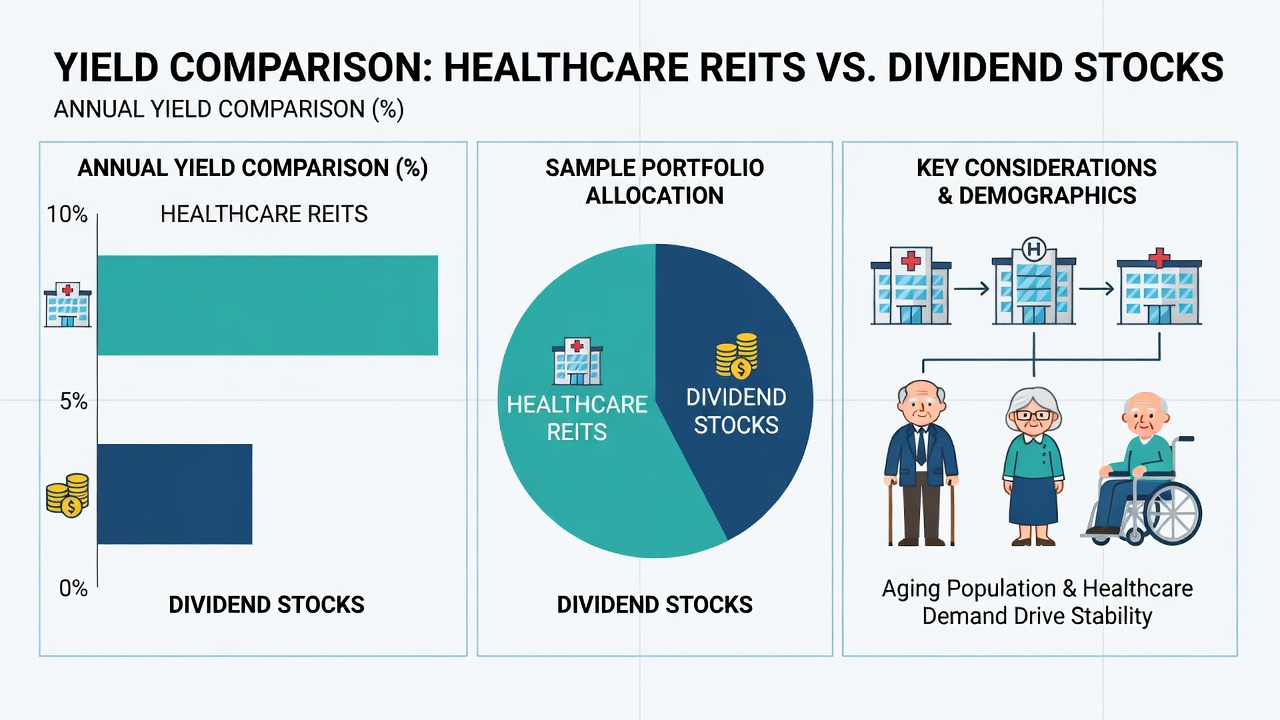
A balanced approach pairs healthcare REITs with high-quality dividend stocks from sectors like consumer staples or utilities. This combination can enhance overall portfolio resilience while maintaining attractive yields. REIT dividends often qualify for favorable tax treatment, complementing stock dividends that may offer growth components. The low correlation between real estate performance and equity markets provides natural hedging benefits during periods of stock market turbulence.
Allocation strategies typically suggest 40-60% in REITs for income stability, with the remainder in stocks for total return potential. This mix reduces correlation to broader market swings. For instance, an investor might hold positions in three healthcare REITs alongside blue-chip dividend payers in the healthcare and consumer sectors, creating layered income sources that compound over time through reinvestment or direct spending.
Evaluating Key Financial Metrics for Healthcare REITs
Critical metrics include funds from operations (FFO), dividend payout ratios, and debt-to-equity levels. Strong FFO growth indicates healthy property performance, while payout ratios below 80% suggest sustainable dividends. Low leverage protects against interest rate changes. Investors should track normalized FFO per share trends over multiple quarters to identify consistent operators rather than those relying on one-time gains.
Investors should also examine occupancy rates and lease renewal trends. Consistent metrics above industry averages signal management quality and long-term viability. Additional ratios such as net asset value per share and interest coverage provide further insight into balance sheet strength. Comparing these figures against sector medians helps identify undervalued opportunities with superior dividend coverage potential.
Practical Steps for Portfolio Integration
- Assess your current income needs and risk tolerance by reviewing existing holdings and projected cash flow requirements.
- Research and select 3-5 healthcare REITs with proven track records by analyzing annual reports and third-party research summaries.
- Determine allocation percentages based on total portfolio size, starting conservatively at 10-15 percent before scaling.
- Monitor quarterly reports for changes in occupancy or tenant health and adjust positions if metrics deteriorate beyond predefined thresholds.
- Rebalance annually to maintain target yields while accounting for any dividend growth or property acquisitions announced by the REITs.
Starting with a small position allows gradual scaling as familiarity grows. Dollar-cost averaging into positions over several months can smooth entry prices and reduce timing risk associated with market volatility.
Real-World Examples of Successful Allocations
Consider an investor who allocated 25% of their income portfolio to healthcare REITs in recent years. This portion delivered steady quarterly dividends while the overall portfolio benefited from sector resilience during broader market corrections. Another example involves blending two healthcare-focused REITs with utility stocks, achieving a blended yield that outperformed pure equity strategies during market dips. A third case study features a retiree who built a ladder of healthcare REIT positions maturing at different times, providing staggered income boosts aligned with rising healthcare demand projections.
Comparison of Yields Across Healthcare REITs and Alternatives
Healthcare REIT yields generally range in the mid-single digits, often exceeding those of broad market indices while offering lower volatility than cyclical sectors. Compared to traditional dividend stocks, REITs provide higher current income but may have different tax implications. Investors can use these comparisons to fine-tune allocations for optimal passive income. Yield spreads versus 10-year Treasury notes also serve as a useful benchmark for assessing relative attractiveness in varying interest rate environments.
Risks and Mitigation Strategies
While healthcare REITs offer stability, investors must consider interest rate sensitivity, regulatory shifts, and tenant concentration risks. Mitigation includes maintaining diversified holdings, favoring REITs with investment-grade credit tenants, and using stop-loss or trailing stop orders on a portion of the position. Regular review of occupancy trends and lease expiration schedules helps anticipate potential income disruptions before they materialize.
Conclusion
Healthcare REITs represent a compelling option for stable passive income in 2026. By understanding demographic drivers, selecting quality assets, and integrating thoughtfully with other dividend sources, investors can build resilient income streams. Always conduct thorough due diligence or consult a financial advisor before making allocation decisions.
FAQ
What makes healthcare REITs more stable than other REIT types?
Essential demand from healthcare services and long-term leases create more predictable revenue streams compared to retail or office properties subject to economic cycles.
How do demographic changes affect 2026 investment prospects?
Rising elderly populations increase utilization of medical and senior facilities, supporting occupancy and rents across the sector for years ahead.
Are there tax advantages to healthcare REIT dividends?
Many REIT dividends receive favorable tax treatment through pass-through structures, though investors should review individual circumstances with a tax professional.
What risks should investors monitor?
Interest rate sensitivity, regulatory changes, and tenant concentration are key areas to watch alongside broader real estate market conditions.
How frequently should portfolios be rebalanced?
Annual reviews combined with quarterly metric checks provide an effective cadence for maintaining desired income and risk profiles.


No comments yet. Be the first!