 Bullish Portfolio

Introduction: Building Reliable Passive Income in 2026
Many investors seek steady cash flow without daily market monitoring. This case study examines a hypothetical yet realistic scenario of constructing an 8% yielding portfolio using real estate investment trusts (REITs) and dividend stocks with an initial $50,000 investment. We focus on yield stability, growth metrics, and adaptability to market conditions throughout 2026.
Defining the Investment Objectives
The primary goal was generating consistent quarterly income while preserving capital for long-term compounding. Secondary aims included moderate growth in distributions and resilience against interest rate fluctuations. REITs were chosen for their mandated high payout ratios, while dividend aristocrats provided proven track records of increasing payouts.
Initial $50,000 Allocation Strategy
The portfolio was divided into 60% REITs and 40% high-quality dividend stocks. This mix balanced real estate exposure with corporate dividend reliability. Within REITs, allocations favored diversified equity REITs over mortgage REITs for lower volatility. Dividend holdings targeted companies with payout ratios below 60% and consistent dividend growth histories.
Breakdown included:
- 25% in residential and industrial REITs
- 20% in healthcare and retail REITs
- 15% in data center and infrastructure REITs
- 40% across consumer staples and healthcare dividend payers
Selection Process: Focusing on Yield Stability and Growth
Each holding was screened for current yield, five-year dividend growth rate, and debt-to-equity ratios. Emphasis was placed on companies with strong balance sheets and sector tailwinds like e-commerce logistics and aging demographics. Learn more about REIT fundamentals from Nareit. This approach avoided high-yield traps by prioritizing sustainable payouts over maximum immediate returns.
Quarterly Performance Updates
Performance was tracked across four quarters, with reinvestment of distributions to accelerate compounding. 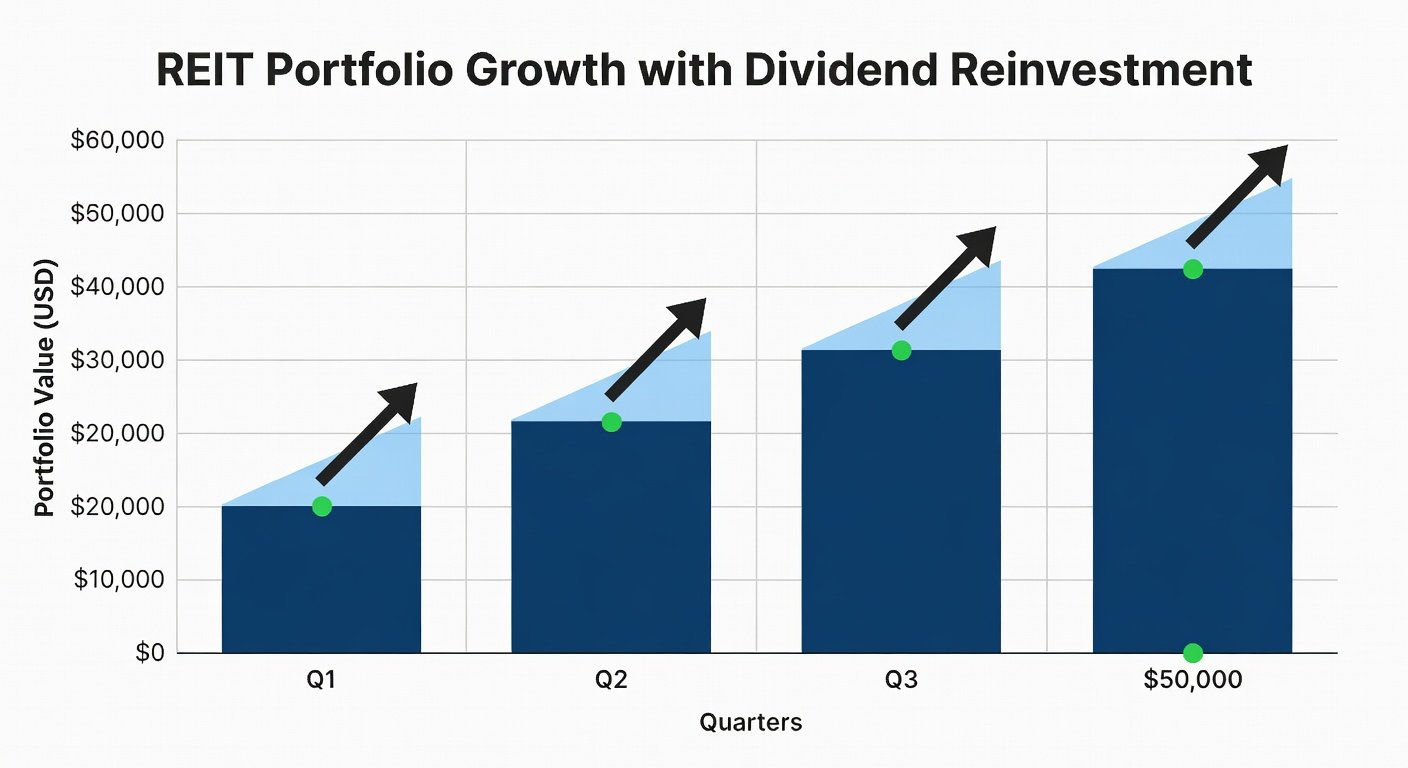
Early quarters showed resilience despite modest economic softening, while later periods benefited from sector rotations into defensive assets.
Key Adjustments Amid Market Shifts
When interest rates showed signs of stabilization mid-year, the portfolio increased exposure to longer-duration REITs. One underperforming retail holding was trimmed in favor of a data center REIT with superior growth prospects. These tactical moves helped maintain the overall yield target near 8%.
Replicable Steps for Readers
- Assess personal risk tolerance and time horizon.
- Screen candidates using free tools from financial data providers.
- Diversify across 10-15 holdings to mitigate single-asset risk.
- Monitor quarterly reports and adjust only when fundamentals deteriorate.
- Reinvest distributions automatically for compounding benefits.
Risk Assessments
Primary risks included interest rate sensitivity for REITs and sector-specific downturns. The diversified approach reduced concentration risk, while maintaining a cash buffer equivalent to six months of expected income provided liquidity. Review Investopedia's guide to dividend investing risks for deeper context on volatility management.
Projected Long-Term Compounding
Assuming consistent 8% yields with 3% annual distribution growth and reinvestment, the initial investment could generate meaningful income growth over a decade. This strategy illustrates how disciplined allocation can support financial independence goals.
Conclusion
This case study demonstrates a practical path to 8% passive income through REITs and dividend stocks. By prioritizing stability and making measured adjustments, investors can build resilient portfolios suited to 2026 market realities. Always consult a financial advisor before implementing any strategy.

No comments yet. Be the first!